
The Ancestors of Christ: Zerubbabel, Abiud and Eliakim — History & Facts
When Michelangelo began painting the ceiling of the Sistine Chapel in 1508, he included a remarkable series of lunettes and spandrels depicting the ancestors of Christ—a subject rarely given such prominence. Among these, The Ancestors of Christ: Zerubbabel, Abiud and Eliakim stands out for its enigmatic grouping of three generations, linking the Old Testament to the New. The identities of these figures come directly from the Gospel of Matthew’s genealogy, a visual thread connecting Christ to the house of David.
This focus on ancestry was a bold choice; while popes and princes vied to trace their own lineages, here Michelangelo gave dignity to otherwise obscure biblical names, elevating them to the vaults of the Vatican. In this lunette, the trio of Zerubbabel, Abiud, and Eliakim are depicted in a quiet, almost domestic moment, seated together in a sparse architectural niche. Zerubbabel, a leader of the Jewish people after the Babylonian exile, is shown in a thoughtful pose, his hand resting on his knee as if burdened by memory and responsibility. Abiud and Eliakim flank him, their gestures subdued—one gazes outward, the other turns inward, lost in thought.
The muted palette and sculptural drapery recall Michelangelo’s own work on the Medici tombs, while the psychological intensity of the figures sets them apart from earlier, more decorative genealogies such as those by Ghirlandaio in Santa Maria Novella. The play of shadow across their faces draws the viewer into their shared silence, suggesting the weight of history and expectation each carries. Commissioned by Pope Julius II as part of the grand project to decorate the Sistine Chapel ceiling, the lunettes were painted in fresco, though the precise technique and assistants involved remain debated. Unlike the central scenes of Genesis, these ancestor portraits have often been overlooked, yet they form a crucial visual link between the Old and New Testaments.
Over the centuries, the Sistine Chapel has survived wars, papal conclaves, and countless restorations, with Michelangelo’s ancestors weathering each transformation. Today, The Ancestors of Christ: Zerubbabel, Abiud and Eliakim remains in its original place, high above the chapel floor, a testament to the artist’s ability to find humanity and drama even in the quiet corners of scripture.
More Artworks by Michelangelo

Libyan Sibyl
Michelangelo
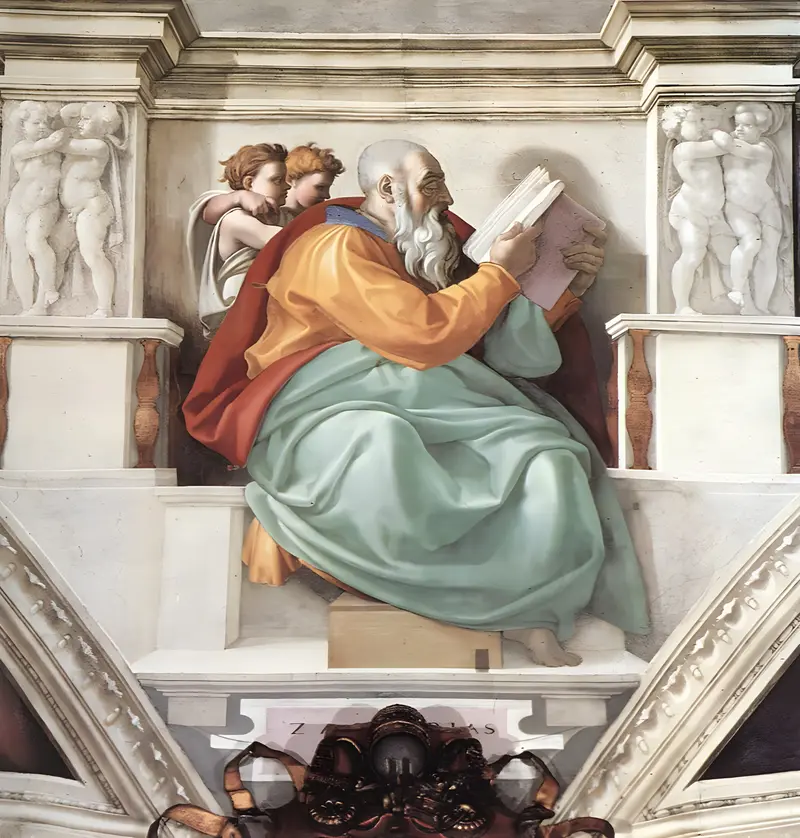
Prophet Zechariah
Michelangelo

Cumaean Sibyl
Michelangelo
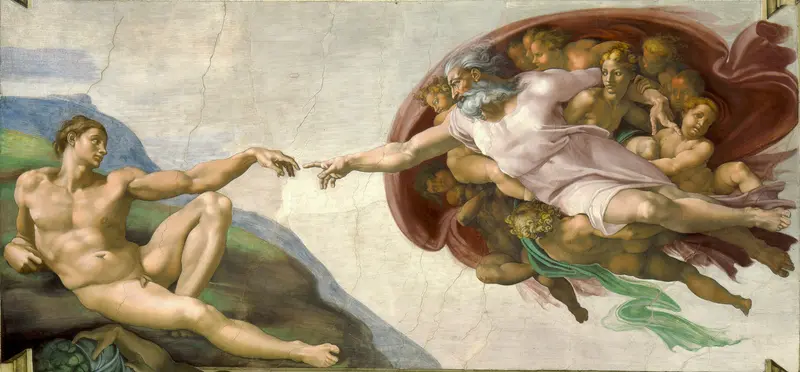
The Creation of Adam
Michelangelo
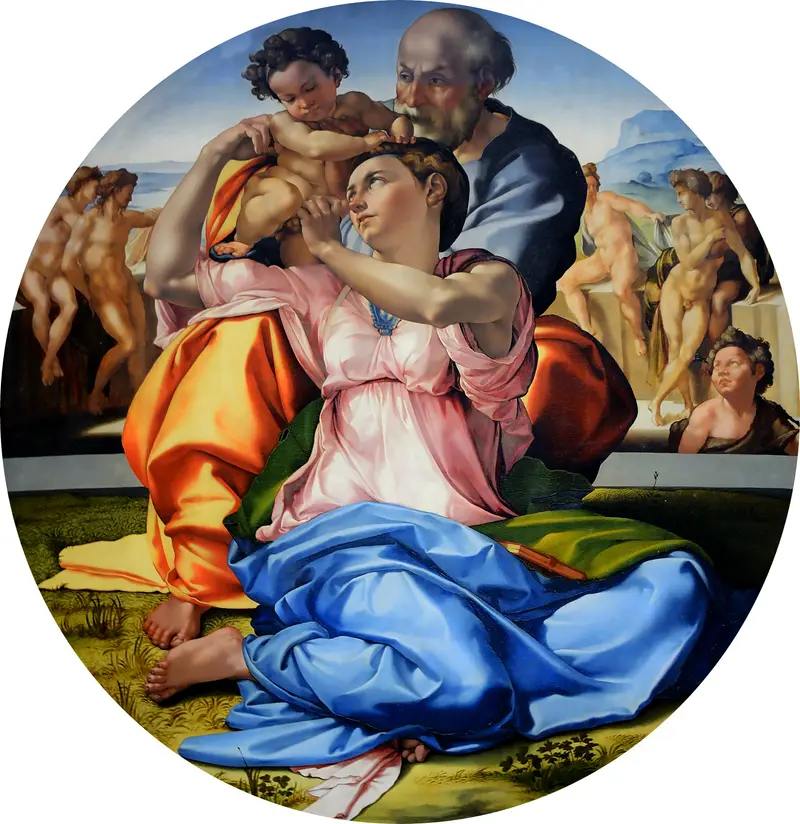
Doni Tondo
Michelangelo
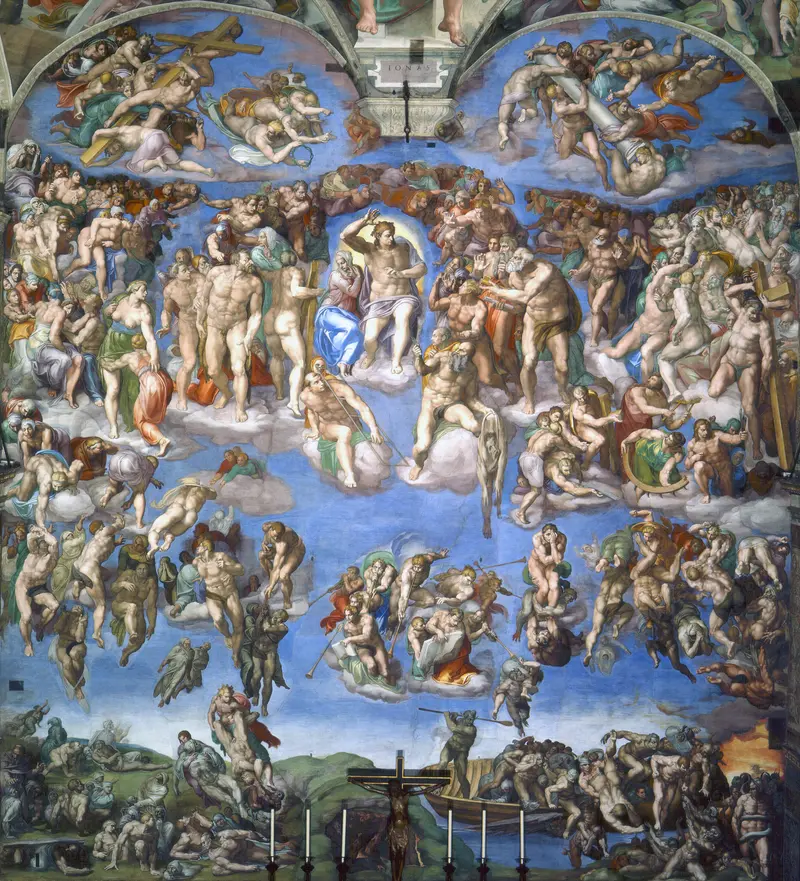
The Last Judgment
Michelangelo
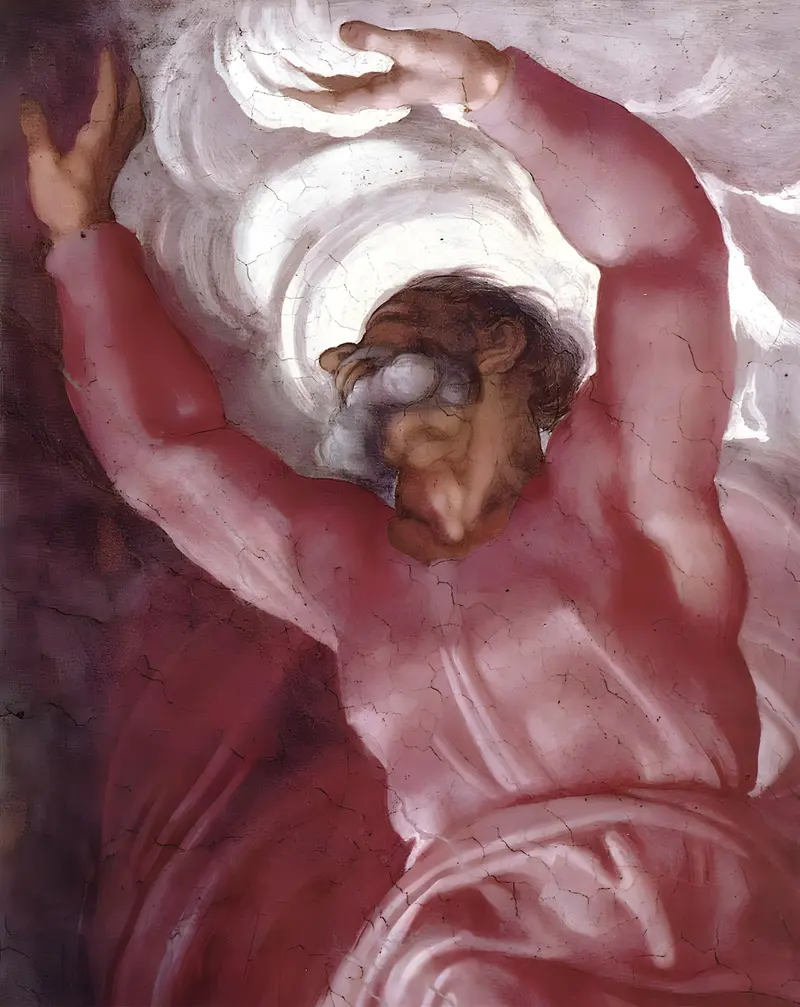
Separation of Light from Darkness
Michelangelo
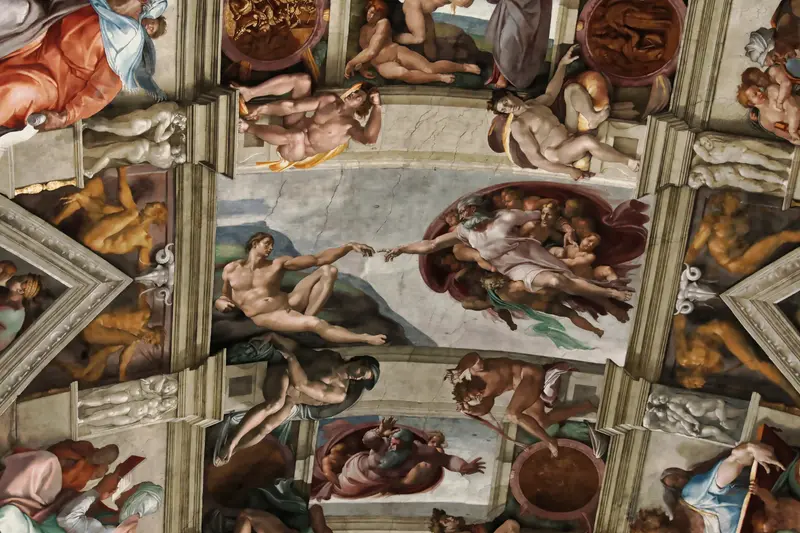
The Separation of the Earth and Waters
Michelangelo

Erythraean Sibyl
Michelangelo
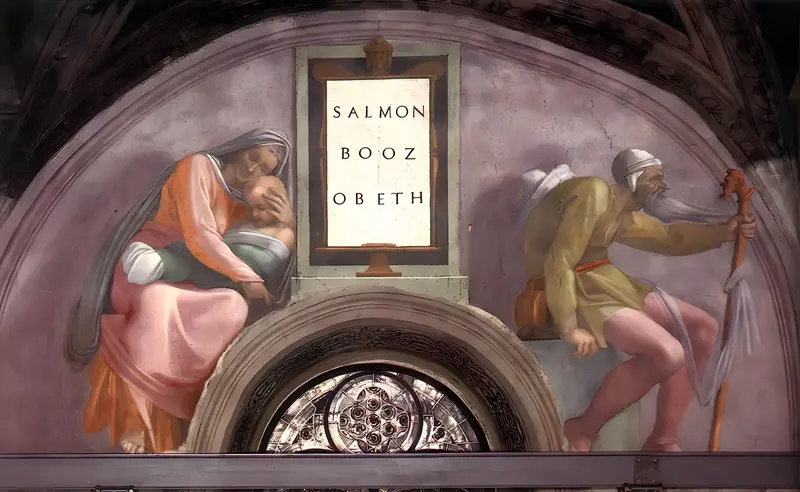
Salmon, Boaz, Obed
Michelangelo




