
The Banquet of Ahasuerus — History & Facts
A heavy-lidded king in a turban leans across a red-draped table, his jeweled robe slipping from his shoulder as he pours wine with a languid, almost careless hand. The scene is thick with the warmth and shadow of candlelight, drawing the viewer into the intimate, conspiratorial air of a royal banquet. Faces crowd in close, their features animated by drink and gossip, while a servant presents a platter piled high with oranges—luxuries that glint with the promise of excess.
The king’s gaze drifts downward, lost in thought or perhaps dulled by wine, while the others seem caught somewhere between anticipation and calculation. The brushwork is loose, almost tactile, the colors deep and earthy, lending the moment a sense of lived immediacy rather than distant grandeur. Painted in the 1680s by Aert de Gelder, this scene belongs to a tradition of biblical and historical banquets that fascinated Dutch artists of the late Baroque period. Such works were often commissioned by wealthy patrons eager to display both their piety and their taste for drama, with Old Testament stories providing a pretext for sumptuous costumes and theatrical gestures.
De Gelder, a late pupil of Rembrandt, brings a distinctively human touch to the genre—less concerned with ideal beauty than with the play of light over flesh, fabric, and metal. The painting’s current presence in a digital collection speaks to the shifting fortunes of such works: history has kept few traces of its early journey, but its vivid storytelling still invites us to linger over every gesture and glance.
More Artworks by Aert de Gelder

Portrait of a Young Woman
Aert de Gelder

Hermanus Boerhaave (1668-1738), Professor of Medicine at the University of Leiden, with his Wife Maria Drolenvaux (1686-1746) and their Daughter Johanna Maria (1712-91)
Aert de Gelder
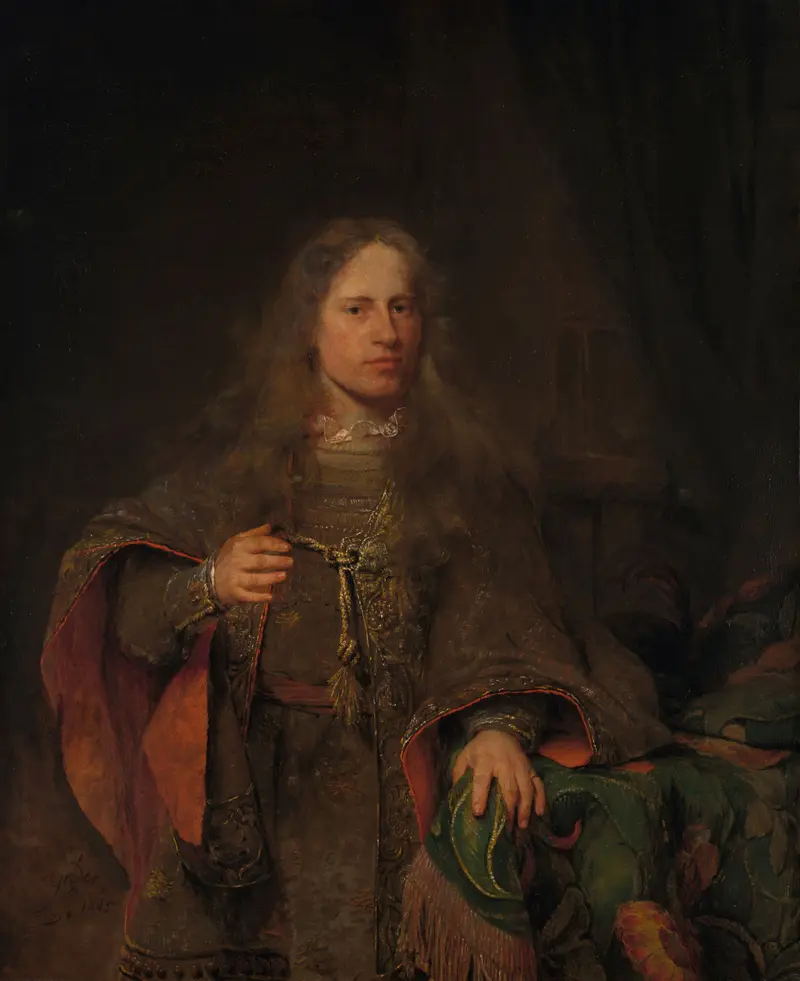
Portrait of Ernest de Beveren, Lord of West-IJsselmonde and De Lindt
Aert de Gelder
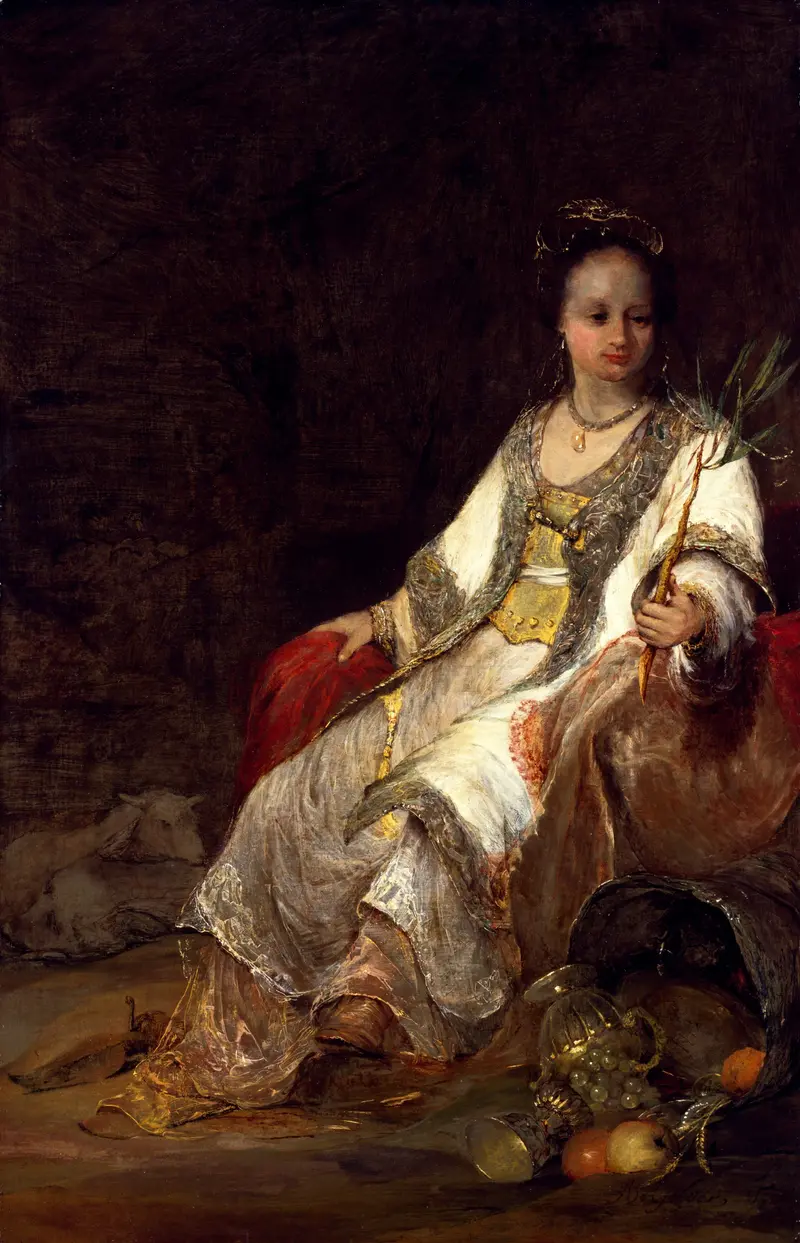
Allegory on Peace
Aert de Gelder
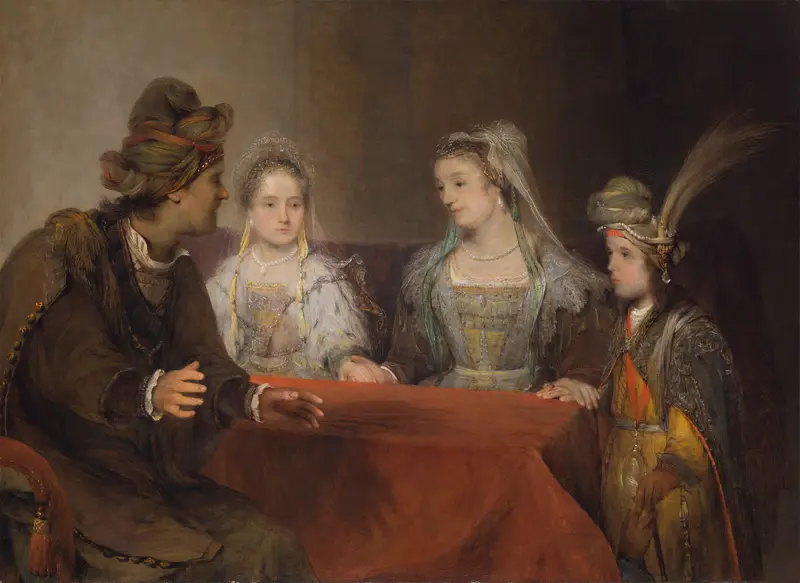
Edna Entrusting Tobias with Sarah
Aert de Gelder
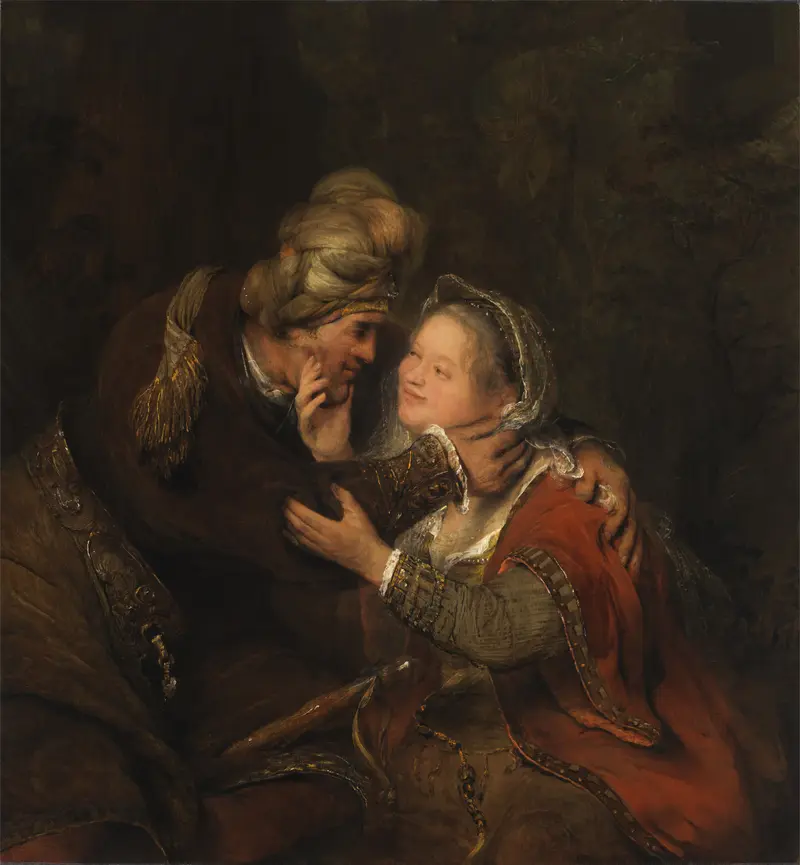
Judah and Tamar
Aert de Gelder
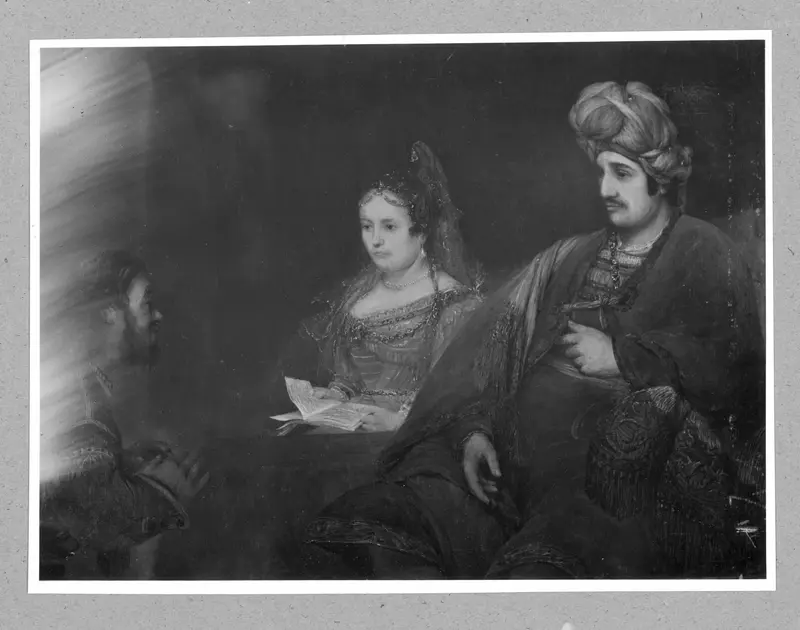
Hamas before Ahasver
Aert de Gelder
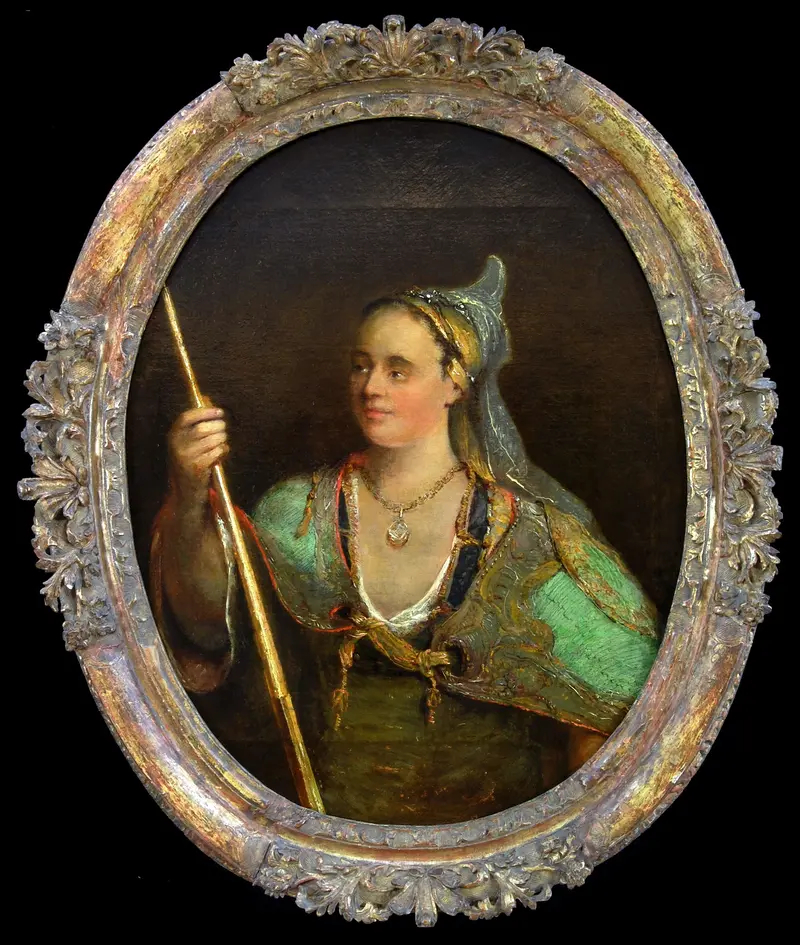
A female allegorical figure
Aert de Gelder
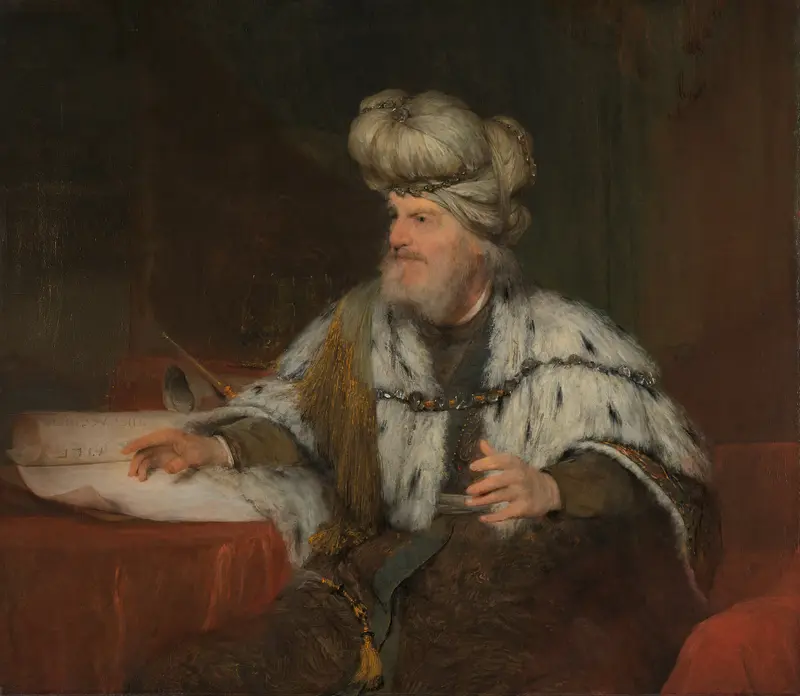
King David
Aert de Gelder
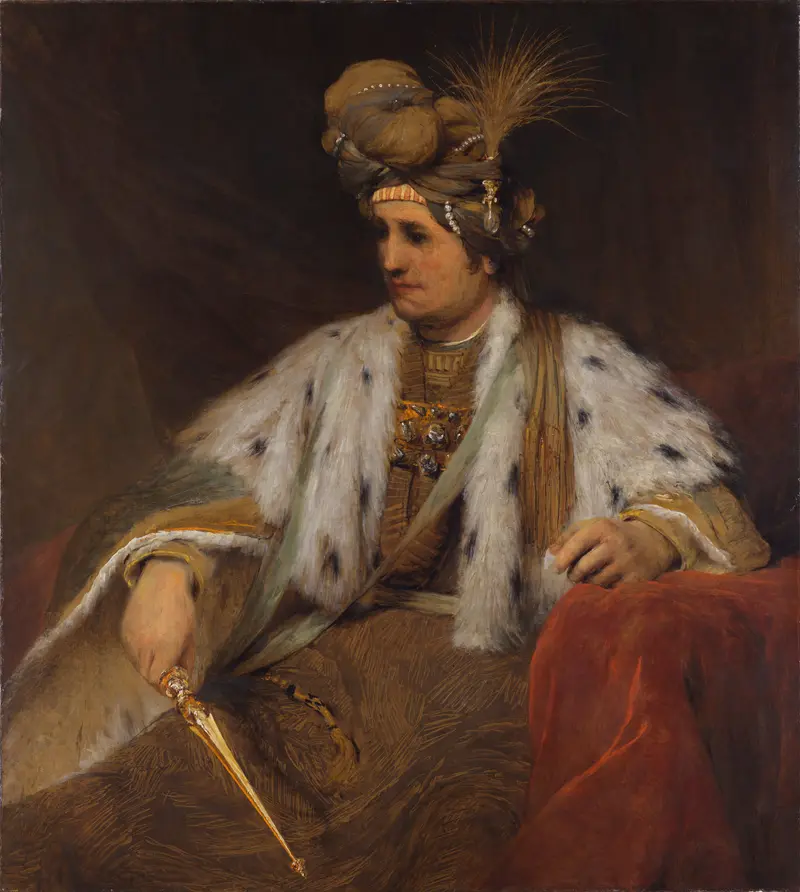
Old Testament Figure, Probably King Solomon
Aert de Gelder





