The Carpenter’s Shop — History & Facts
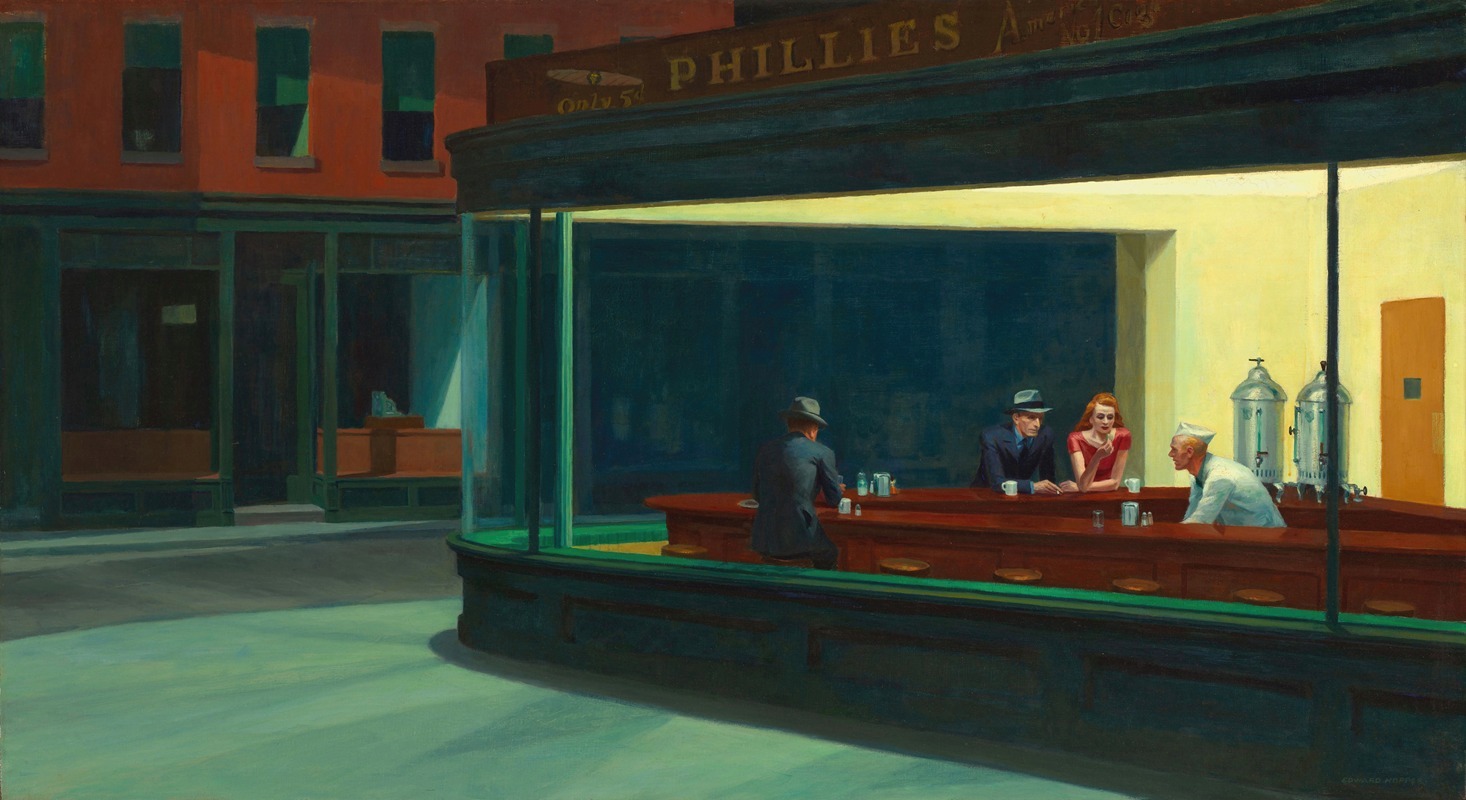
Is this a mirror — or a memory? In The Carpenter’s Shop, the boundaries between labor and artistry blur, inviting us to reflect on our own awakenings within the mundane. Focus on the warm, inviting light that pours in from the left, illuminating the wooden forms and casting gentle shadows across the workshop floor. Notice how the figures seem to converge around the central workbench, their postures relaxed yet purposeful. The earthy palette of ochres and browns envelops the scene in a sense of harmony, while the rough textures of wood contrast with the smoothness of their tools, illustrating the intimate relationship between man and his craft. Hidden within this seemingly simple composition are profound explorations of creation and labor.
The carpenter’s concentration hints at a deeper journey of self-discovery, embodying the tension between work and the fulfillment that arises from it. The young boy in the foreground, eyes wide with wonder, represents a spark of awakening, suggesting that beneath the surface of everyday life lies potential for growth and inspiration. In 1891, Weir was settled in Connecticut, deeply influenced by the American Impressionist movement. At this time, he was exploring themes of rural life and the beauty found in craftsmanship, a reflection of his own experiences and the shifting perceptions of art in a rapidly industrializing world.
This work encapsulates not just a moment in time but the enduring spirit of creation that connects us all.
More Artworks by Julian Alden Weir
Browse all →
My Back Yard no. 1
Julian Alden Weir
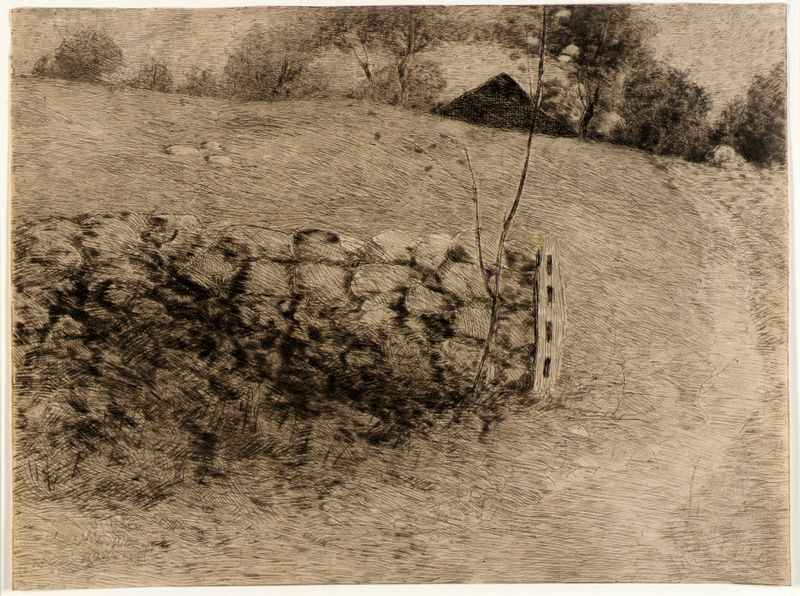
The Barn Lot
Julian Alden Weir

The Webb Farm
Julian Alden Weir
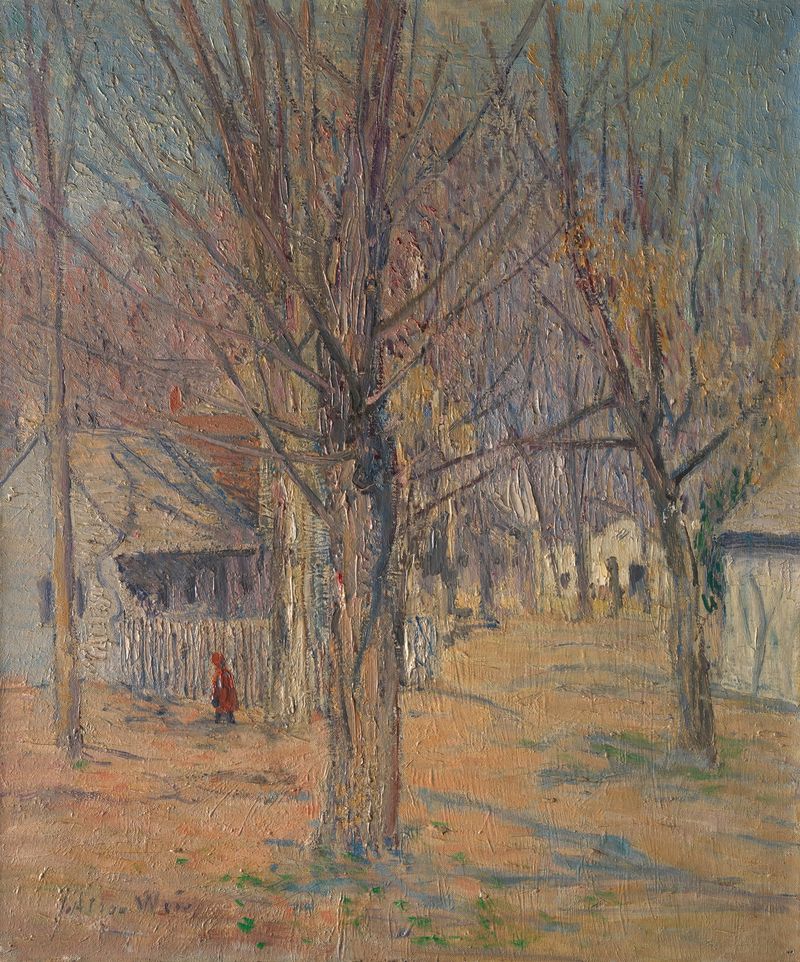
Connecticut Village (Going to School)
Julian Alden Weir

The Stone Bridge
Julian Alden Weir

The Webb Farm 2
Julian Alden Weir

The Lane
Julian Alden Weir

U.S. Thread Company Mills,Willimantic,Connecticut
Julian Alden Weir

Neighboring Farm
Julian Alden Weir

Coon Alley
Julian Alden Weir