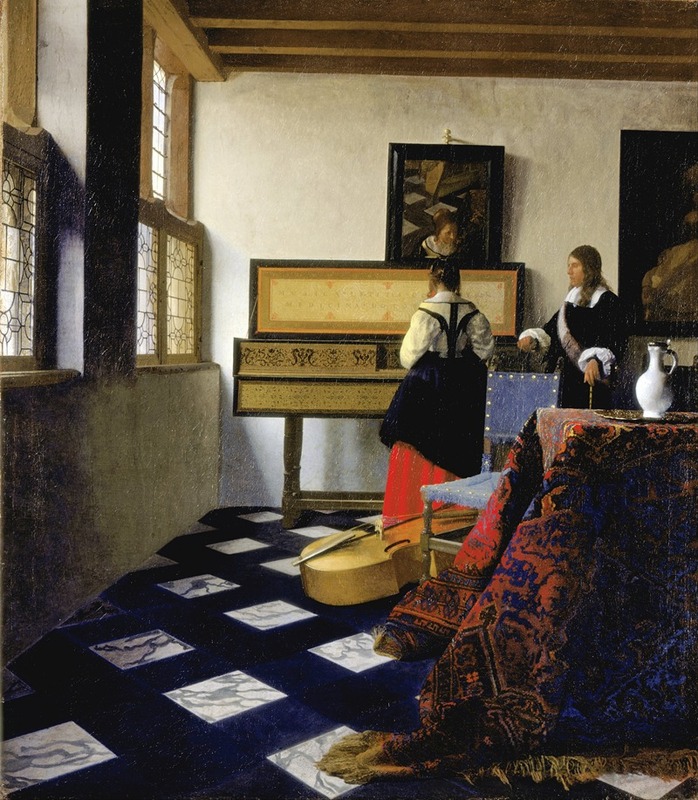
The Carriage House (Le wagon-logement) — History & Facts
Can paint confess what words never could? In The Carriage House, movement breathes life into a still moment, whispering stories of the everyday. Look to the left at the rustic charm of the wooden structure, where the weathered textures draw the eye. The artist employs soft, muted colors, blending browns and greens that evoke a comforting sense of nostalgia. Notice how the light filters through the trees, casting dappled shadows that play across the ground, inviting the viewer into this intimate space.
The composition, anchored by the carriage house, creates a sense of depth that pulls you into its world, as if you have stumbled upon a hidden sanctuary. Within this serene landscape lies a tension between stillness and the suggestion of movement. The brushstrokes suggest life beyond the frame; perhaps a horse waits patiently to be harnessed, or a figure lingers just out of view, hinting at the stories woven into daily routines. This juxtaposition captures the essence of rural life, where moments stretch and pulse with unspoken energy.
The carriage house stands as a silent witness, holding the secrets of those who pass through. In 1886, during a time of great change in the art world, the artist painted this work in France, where Impressionism was beginning to reshape perceptions of light and movement. Lepère, an influential printmaker and painter, found inspiration in the simplicity of rural life, reflecting a shift towards a more personal and intimate approach in a rapidly industrializing society. His focus on everyday scenes captured the heartbeat of a world on the cusp of transformation.
More Artworks by Auguste Louis Lepère
Browse all →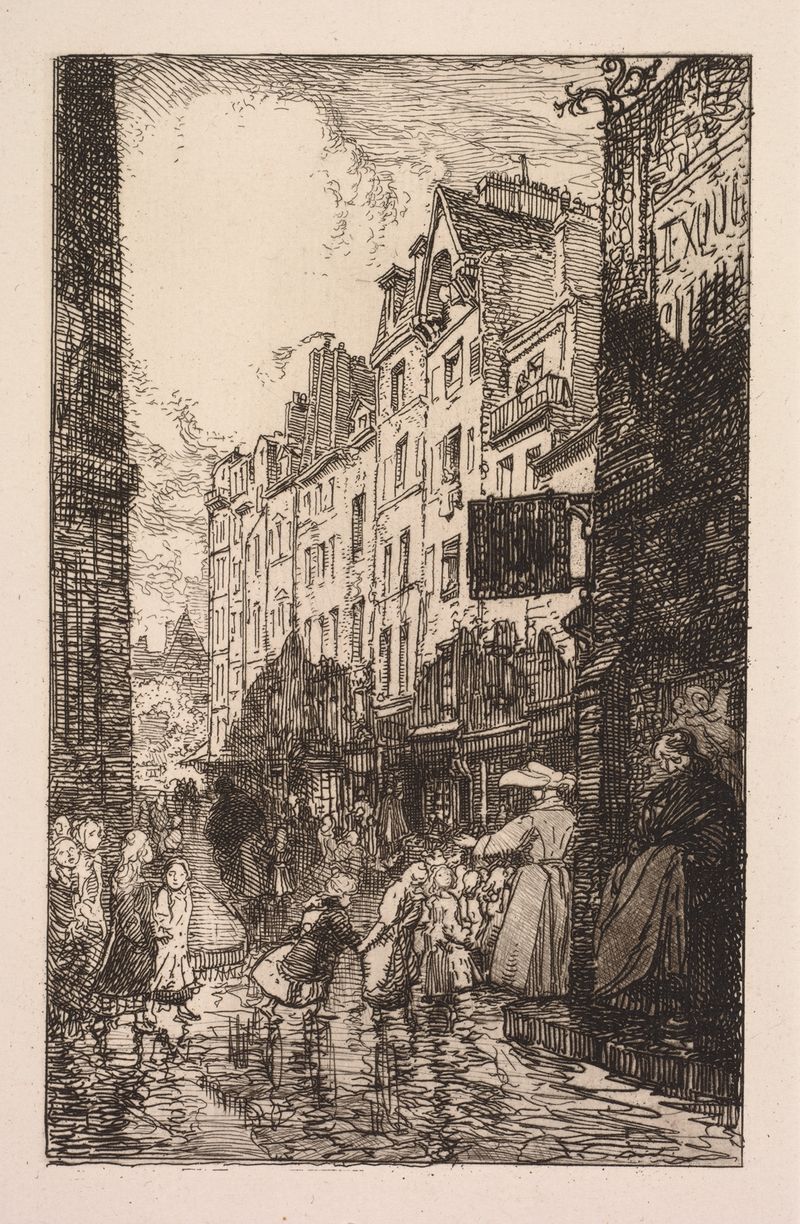
La Rue des Prêtres Saint-Séverin
Auguste Louis Lepère
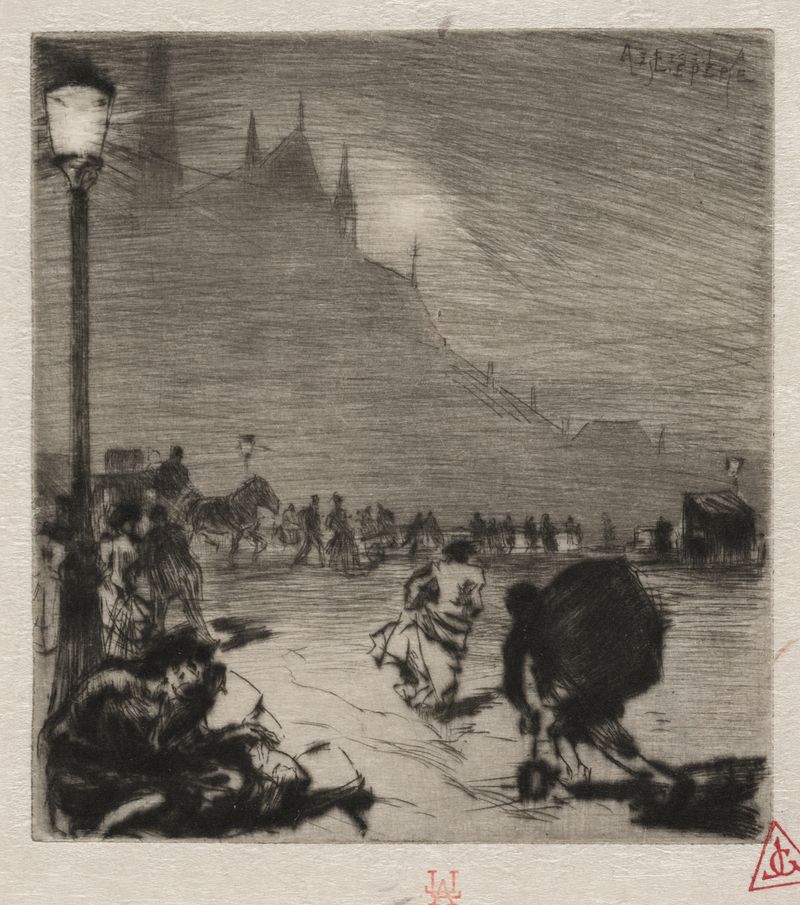
Au Coin du Pont-aux-Doubles
Auguste Louis Lepère
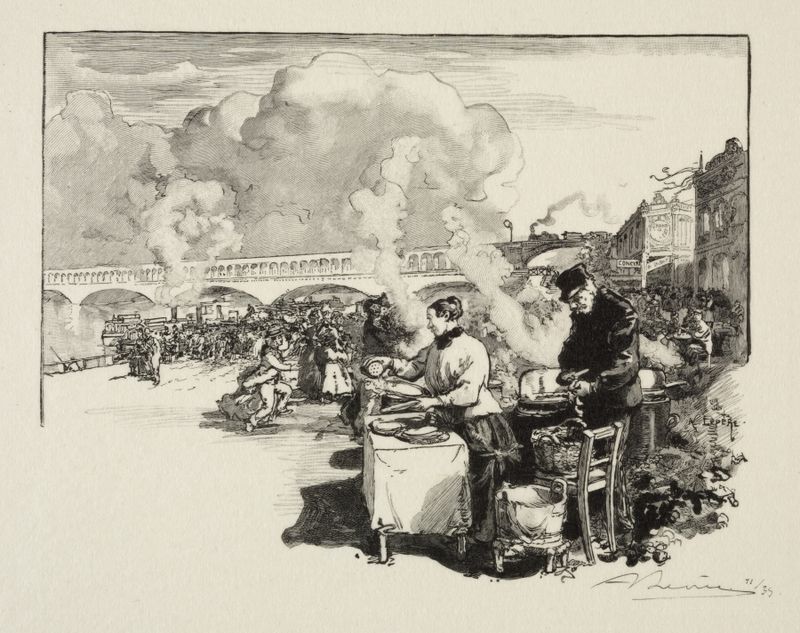
Debarcadère des bateaux-omnibus
Auguste Louis Lepère

La Seine, au quai de la Rapée
Auguste Louis Lepère
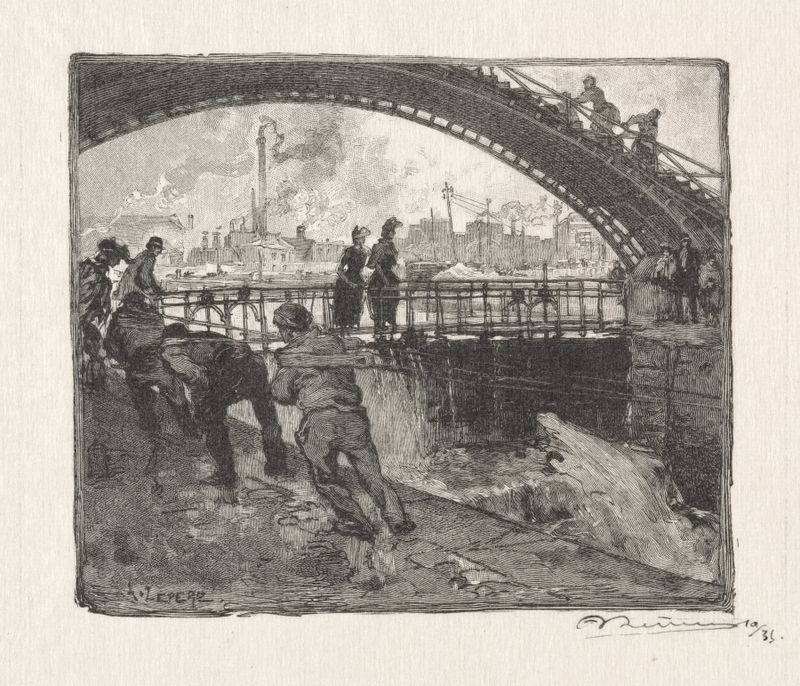
L’Ecluse du Canal St. Martin
Auguste Louis Lepère

Le Boulevard Montmartre, le Soir
Auguste Louis Lepère

Une Chasse au Mont Gérard
Auguste Louis Lepère
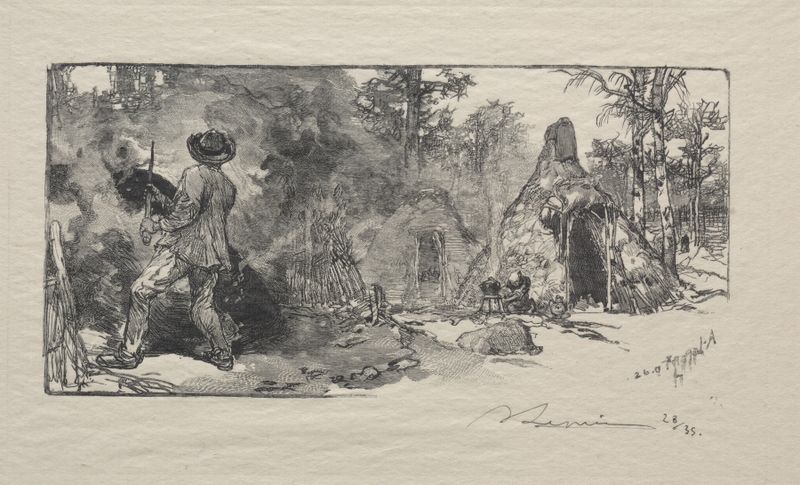
Les Charbonniere
Auguste Louis Lepère
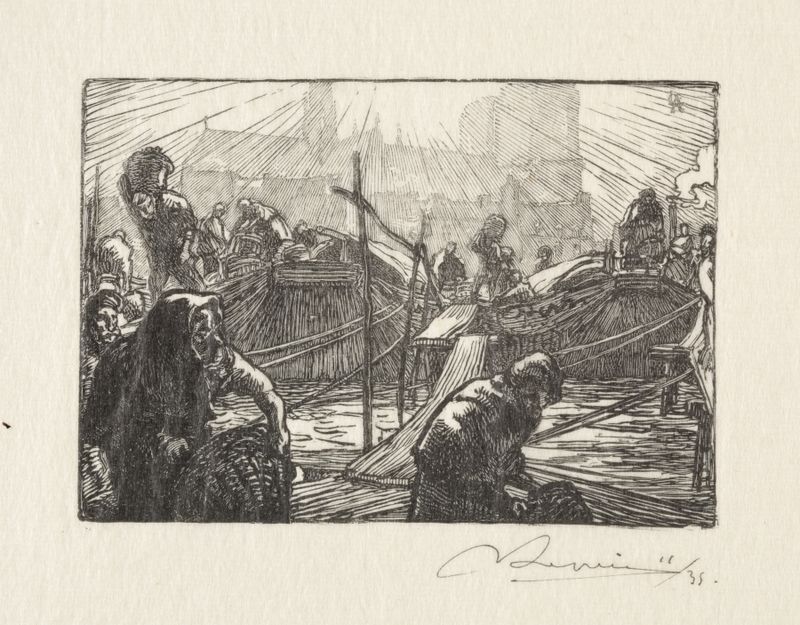
Notre Dame vue du Marché aux pommes
Auguste Louis Lepère

Le Palais des Arts Liberaux, Intèrieur
Auguste Louis Lepère