
The Crucifixion — History & Facts
In the mid-15th century, the city of Borgo Sansepolcro in Tuscany was home to one of the most original minds of the Italian Renaissance: Piero della Francesca. His The Crucifixion, painted in 1461, is remarkable for its mathematical rigor and serene restraint—qualities that made Piero a legend among his contemporaries and later, a touchstone for modern artists. The painting was likely commissioned for the church of Sansepolcro, which claimed to possess a relic of the True Cross, giving the work a special local resonance.
While the exact original location and patron remain uncertain, what is clear is that The Crucifixion stands apart from the emotional turbulence found in other depictions of the same scene. At the heart of the image, Christ hangs on the cross, his body rendered with a calm dignity rather than agony. Around him, the Virgin Mary and Saint John stand in silent grief, their gestures measured and their faces composed, while soldiers and onlookers populate the foreground, some indifferent, some absorbed in their own thoughts. Piero arranges these figures in a shallow, almost stage-like space, using light and geometry to create a sense of order and clarity.
The landscape behind is bathed in a cool, pale light, suggesting the stillness of early morning—a stark contrast to the emotional drama of, for example, Rogier van der Weyden’s Crucifixion, where anguish dominates every face. Here, the meaning is meditative: suffering is real, but so is the promise of redemption. Though the medium of The Crucifixion is uncertain—possibly tempera on panel, as was typical for the time—the painting’s journey is less well documented than its artistic impact. It remains in Sansepolcro, a testament to the town’s pride in its native son, and is often discussed alongside Piero’s other great religious works, such as The Resurrection.
Over the centuries, The Crucifixion has been admired for its balance and restraint, hallmarks of Piero della Francesca’s mature style. Today, it is celebrated not only as a devotional image but as a milestone in the development of Renaissance painting, where mathematics and faith found a rare harmony.
More Artworks by Piero Della Francesca

Portrait of the Duchess of Urbino, Battista Sforza
Piero Della Francesca

Portrait of Federico da Montefeltro
Piero Della Francesca

Federico da Montefeltro, Duke of Urbino
Piero Della Francesca
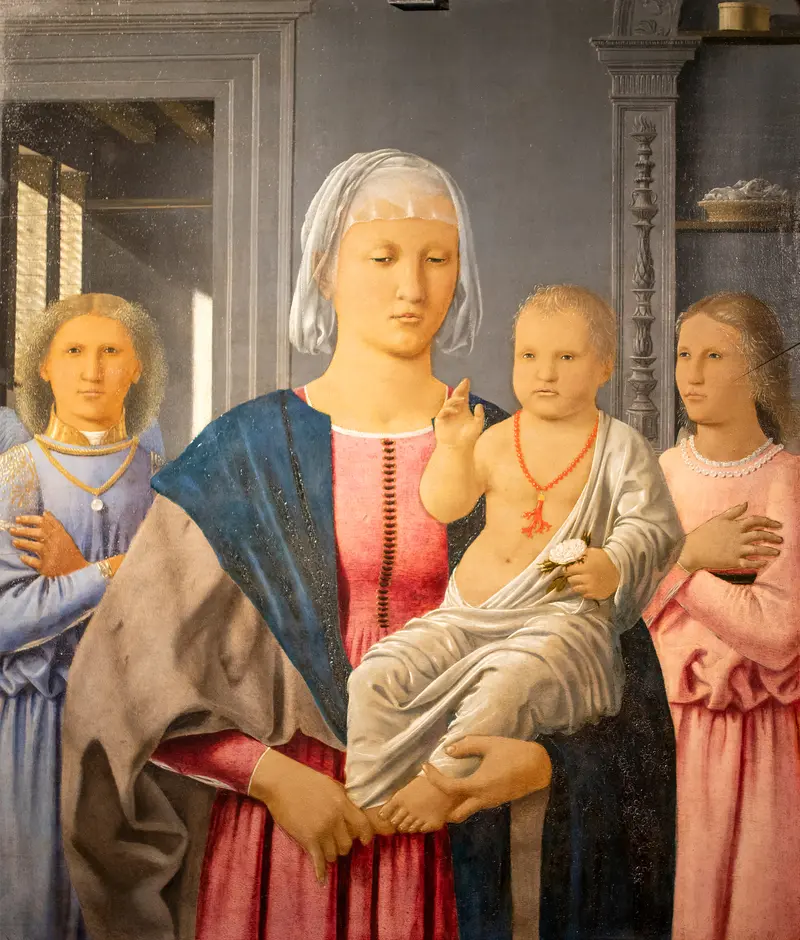
Madonna di Senigallia
Piero Della Francesca
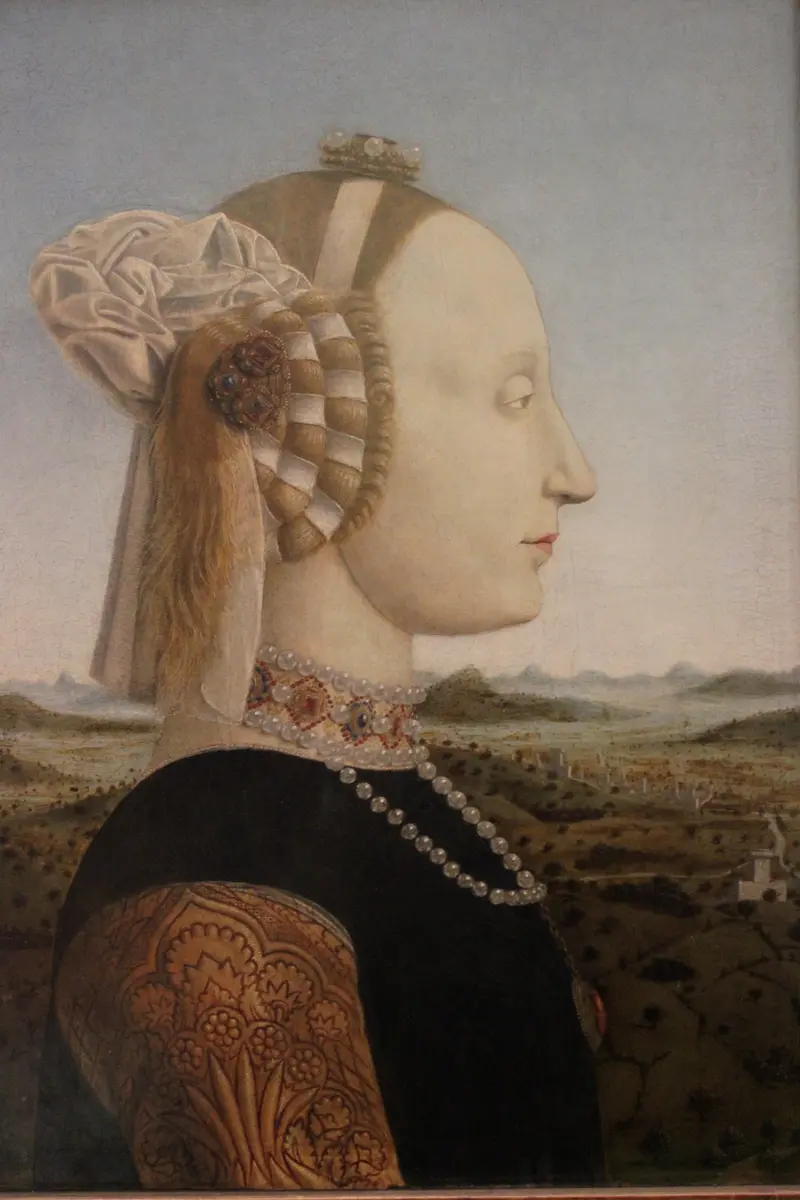
Portrait of Battista Sforza
Piero Della Francesca
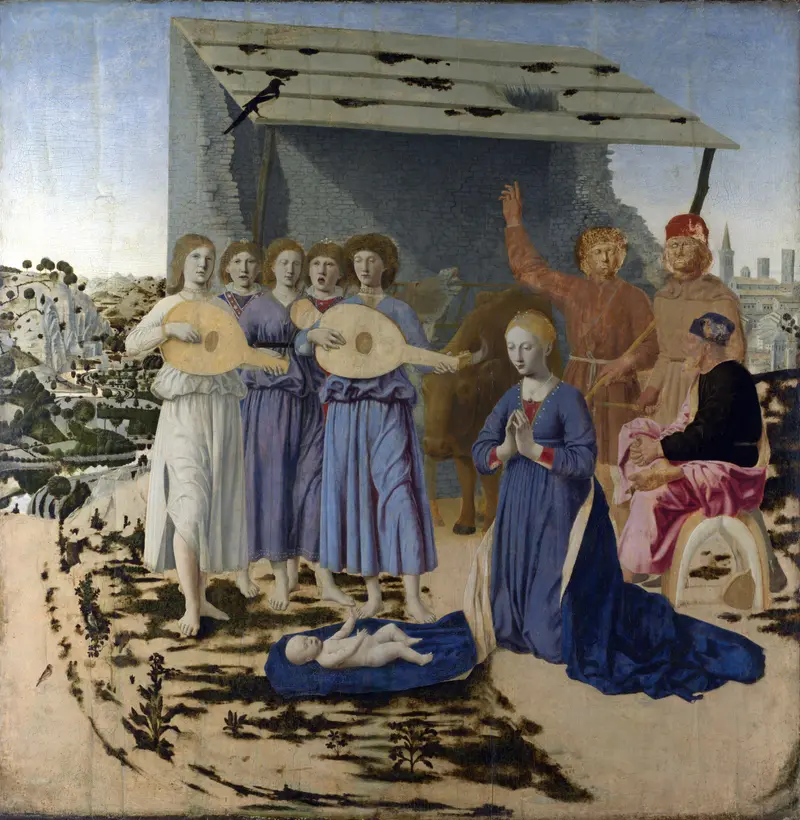
The Nativity
Piero Della Francesca
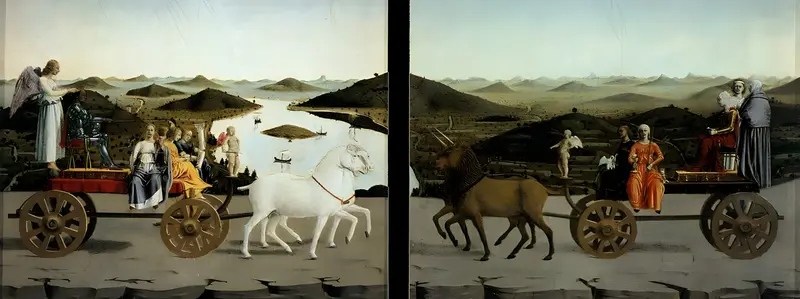
Diptych of Federico da Montefeltro and Battista Sforza
Piero Della Francesca
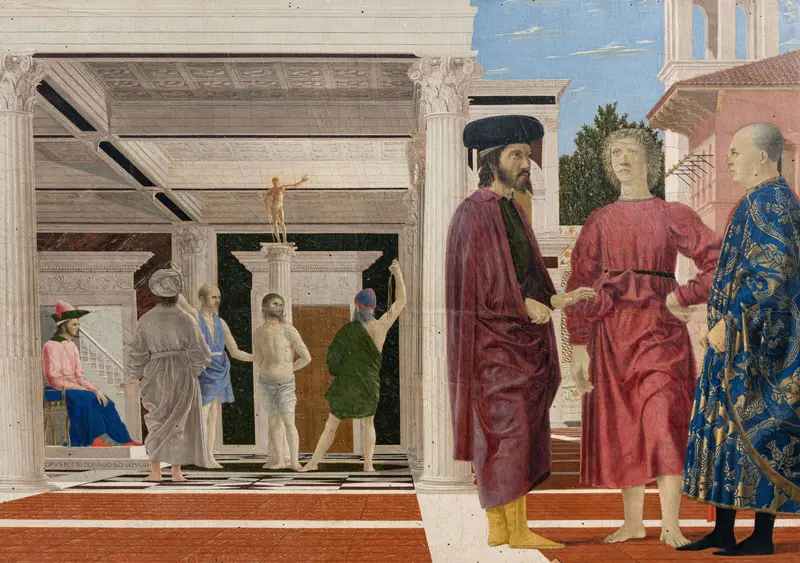
Flagellation of Christ
Piero Della Francesca
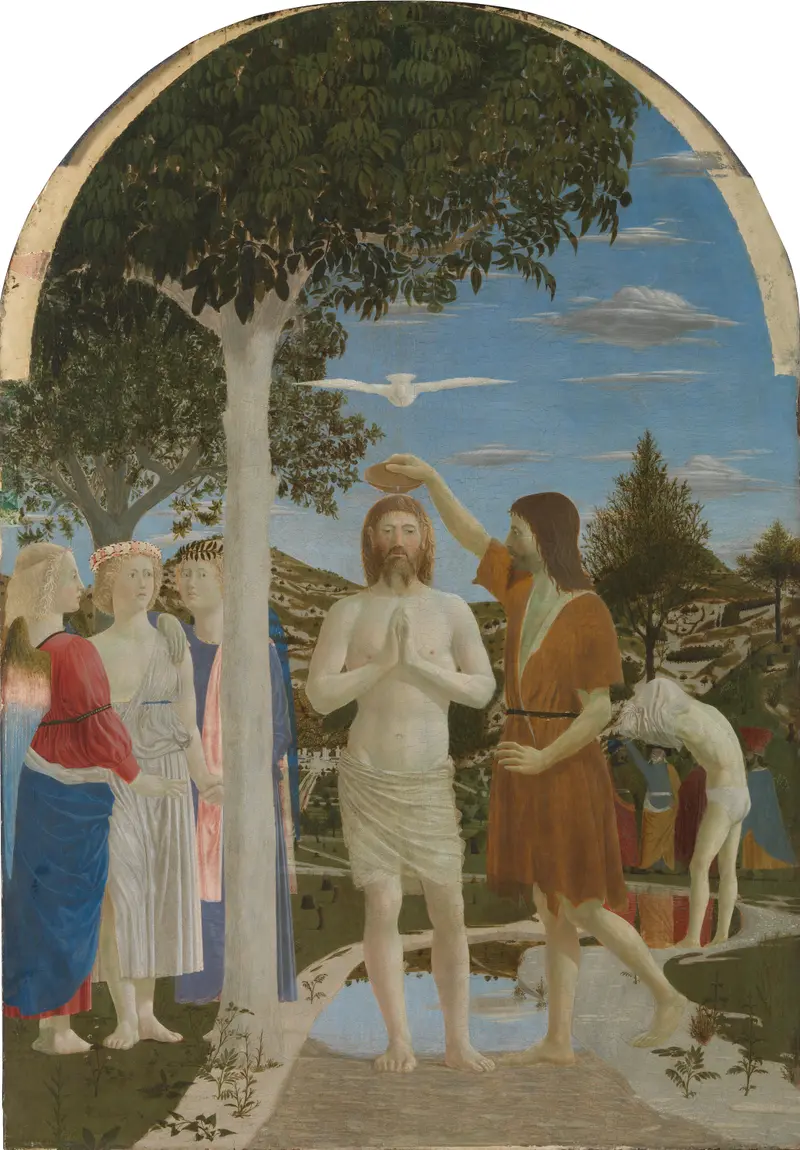
The Baptism of Christ
Piero Della Francesca
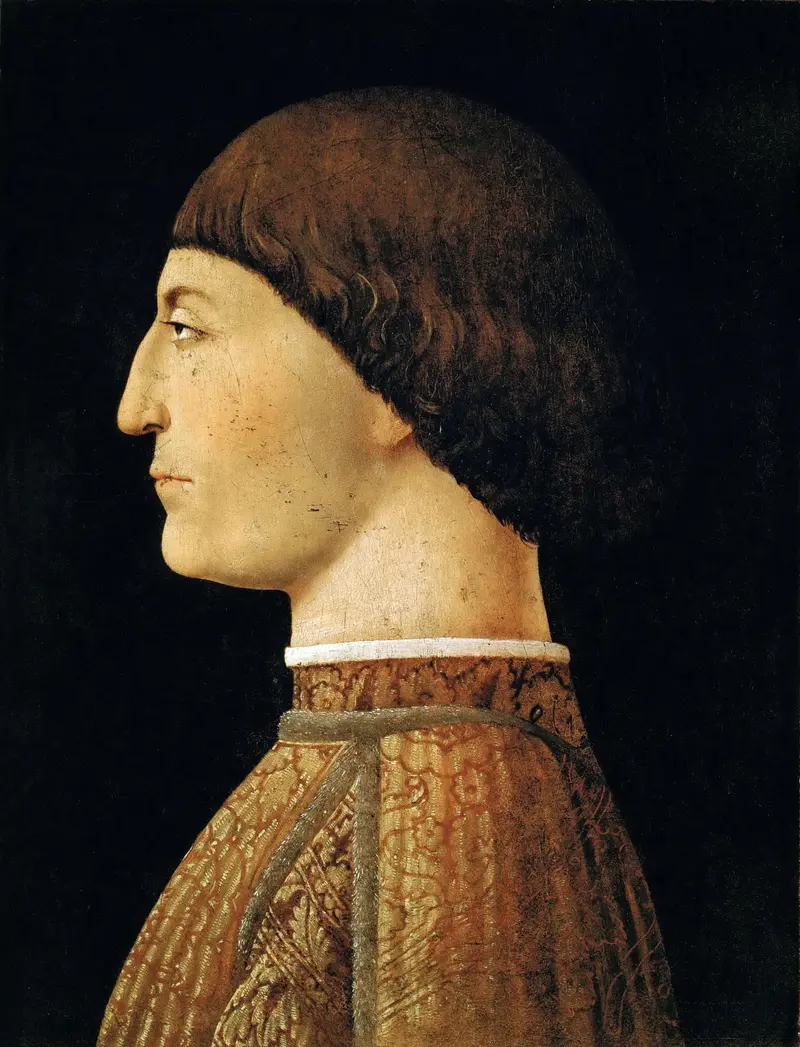
Portrait of Sigismondo Pandolfo Malatesta
Piero Della Francesca





