
Flagellation of Christ — History & Facts
A scene of the Flagellation of Christ unfolds in the left middle ground, set within a grand architectural hall defined by white columns and a deep coffered ceiling. Christ stands at the center of this space, nearly nude except for a loincloth, bound to a column as two men in short tunics and bare legs strike him with whips. To the left, a seated figure in a pink robe and blue headdress observes the scene, while another man in a long robe and turban stands with his back to the viewer, both separated from the violence by their posture and distance.
The floor beneath the figures is rendered in a striking black-and-white checkerboard pattern, emphasizing the precise geometry and perspective that structure the composition. Above Christ, a small golden statue stands atop a column, its gesture echoing the drama below, and the architecture recedes in careful perspective, creating a sense of depth and order. The central figure of this group gazes outward, while the other two engage in conversation, their gestures calm and deliberate, contrasting with the violence in the background.
The sky above is a pale blue, dotted with wispy clouds, and a tree rises behind the architectural structures, adding a note of naturalism to the otherwise highly ordered scene. The paint surface is smooth, with delicate transitions of color and subtle modeling of form, especially in the rendering of flesh and drapery, while the architectural details are crisply defined. The composition is divided almost exactly in half by a pair of columns, separating the sacred narrative from the secular figures, yet linking them through the shared space and harmonious geometry. Flagellation of Christ was painted by Piero della Francesca in the 1450s, during the Early Renaissance, and is now associated with the Galleria Nazionale delle Marche.
The three men in the foreground have been the subject of much scholarly debate, with interpretations ranging from representations of the three ages of man to contemporary historical figures. Flagellation of Christ is recognized as a key work of the Early Renaissance for its mastery of perspective, architectural realism, and psychological intensity.
Sources: Galleria Nazionale delle Marche, record DE 229 · Wikidata Q1212920 · Wikipedia: Flagellation of Christ (Piero della Francesca) · Image source (Wikimedia Commons)
More Artworks by Piero Della Francesca

Portrait of the Duchess of Urbino, Battista Sforza
Piero Della Francesca

Portrait of Federico da Montefeltro
Piero Della Francesca

Federico da Montefeltro, Duke of Urbino
Piero Della Francesca
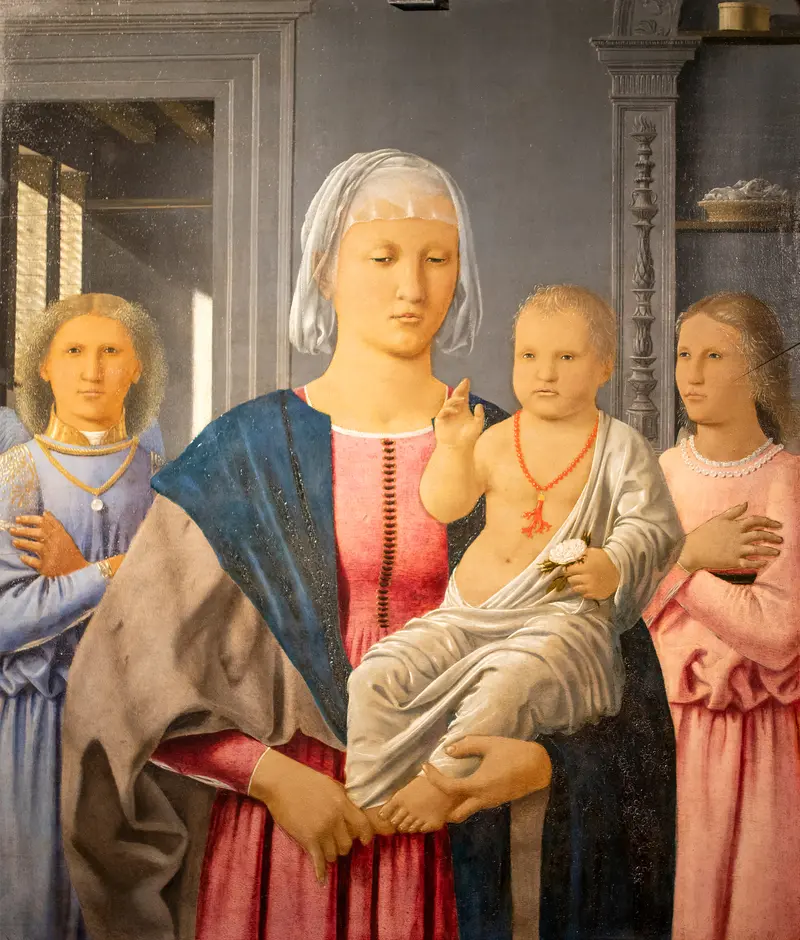
Madonna di Senigallia
Piero Della Francesca
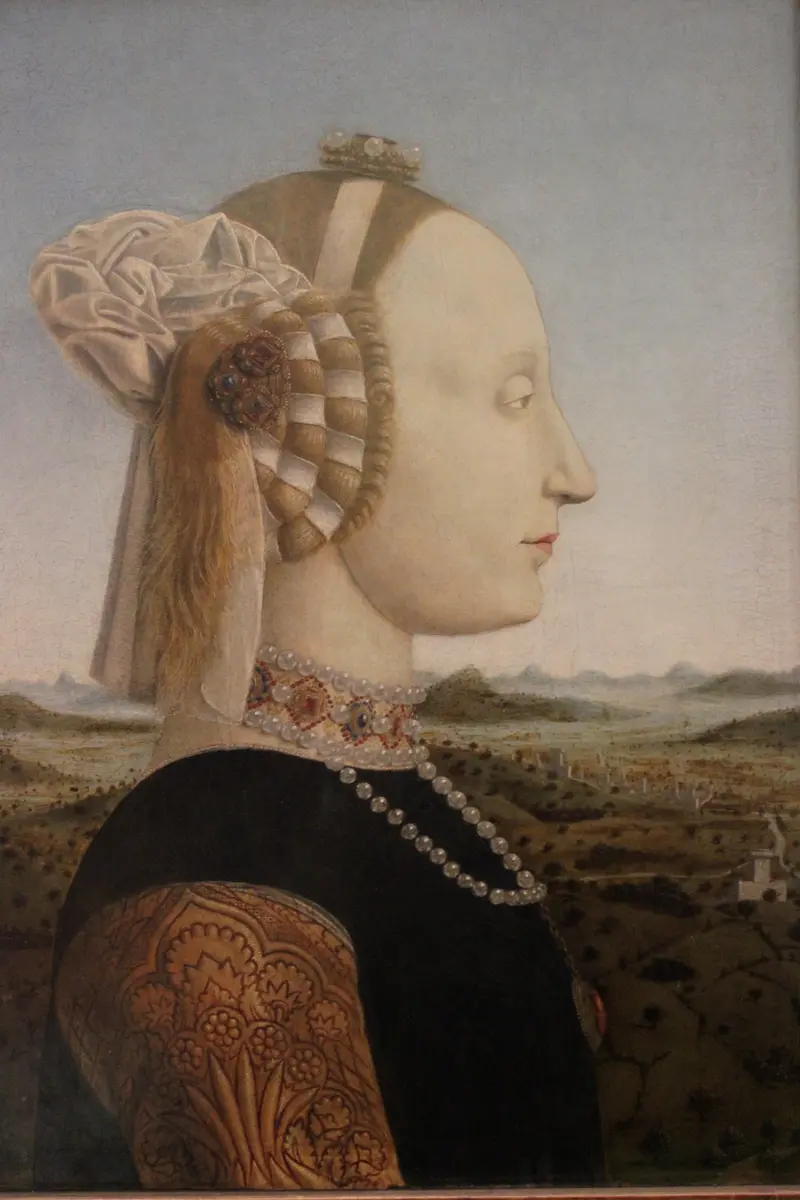
Portrait of Battista Sforza
Piero Della Francesca
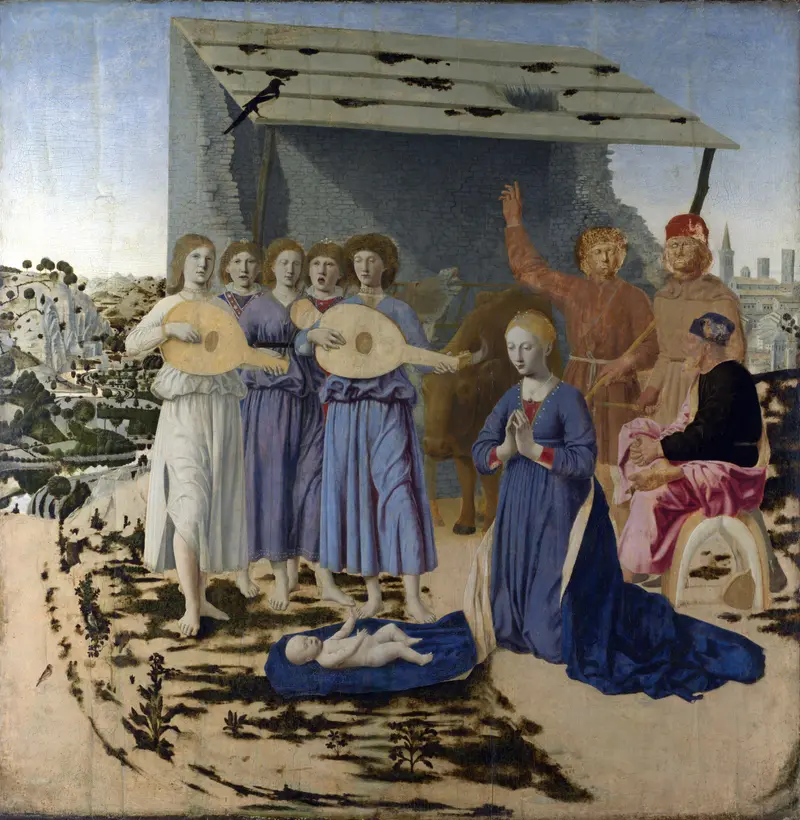
The Nativity
Piero Della Francesca
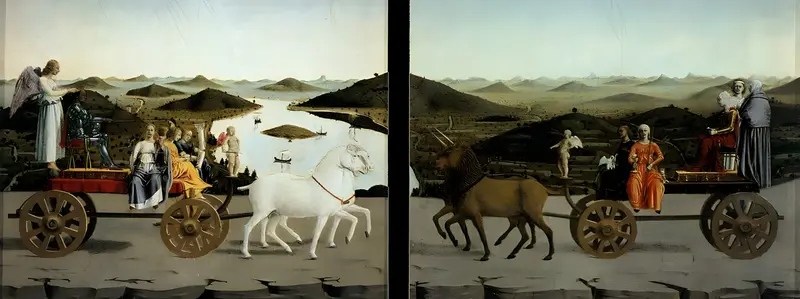
Diptych of Federico da Montefeltro and Battista Sforza
Piero Della Francesca
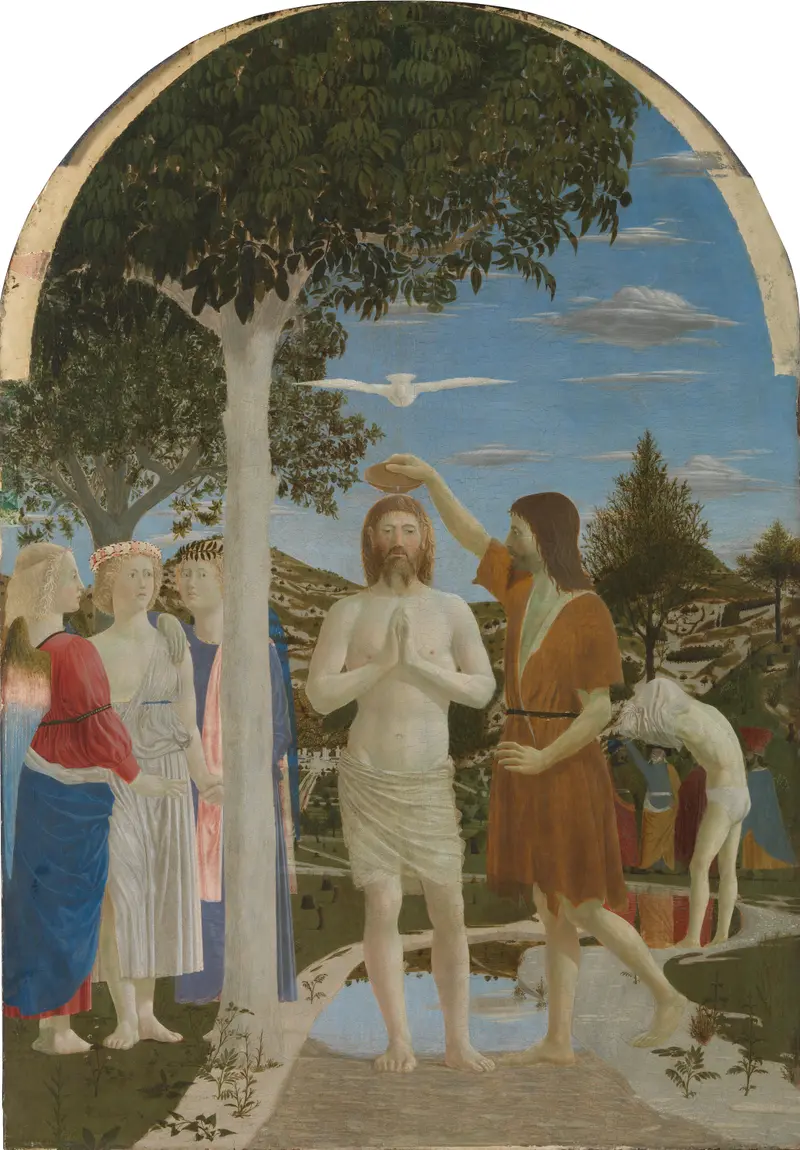
The Baptism of Christ
Piero Della Francesca
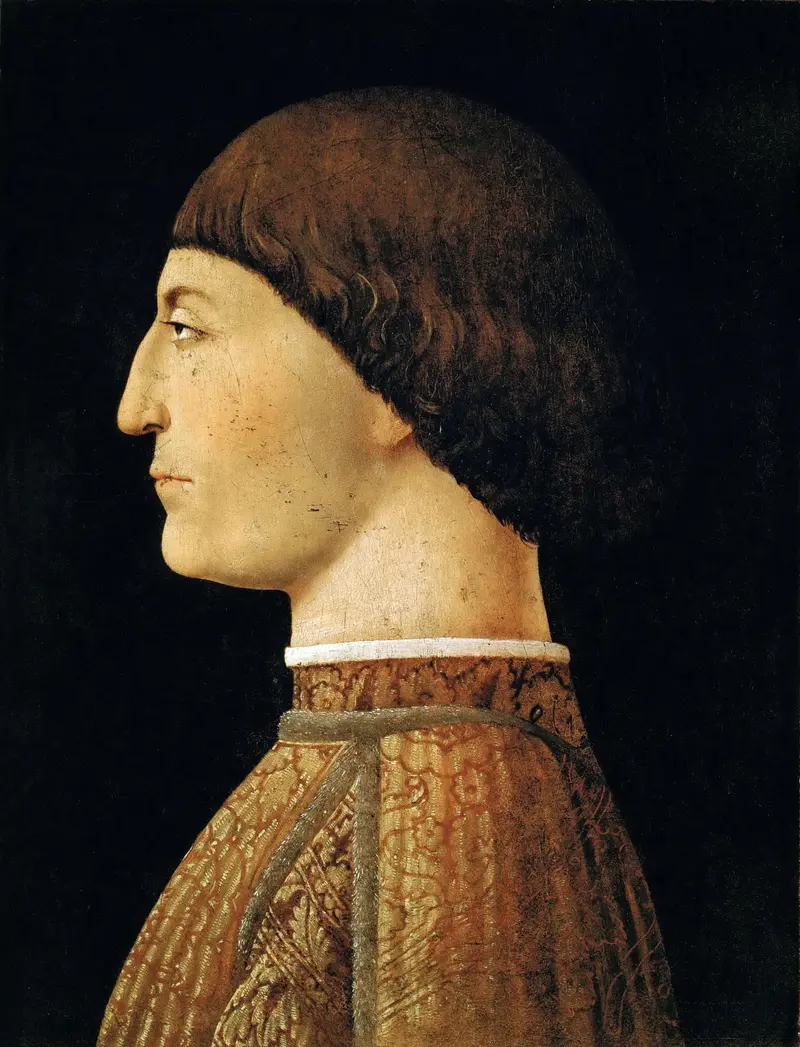
Portrait of Sigismondo Pandolfo Malatesta
Piero Della Francesca
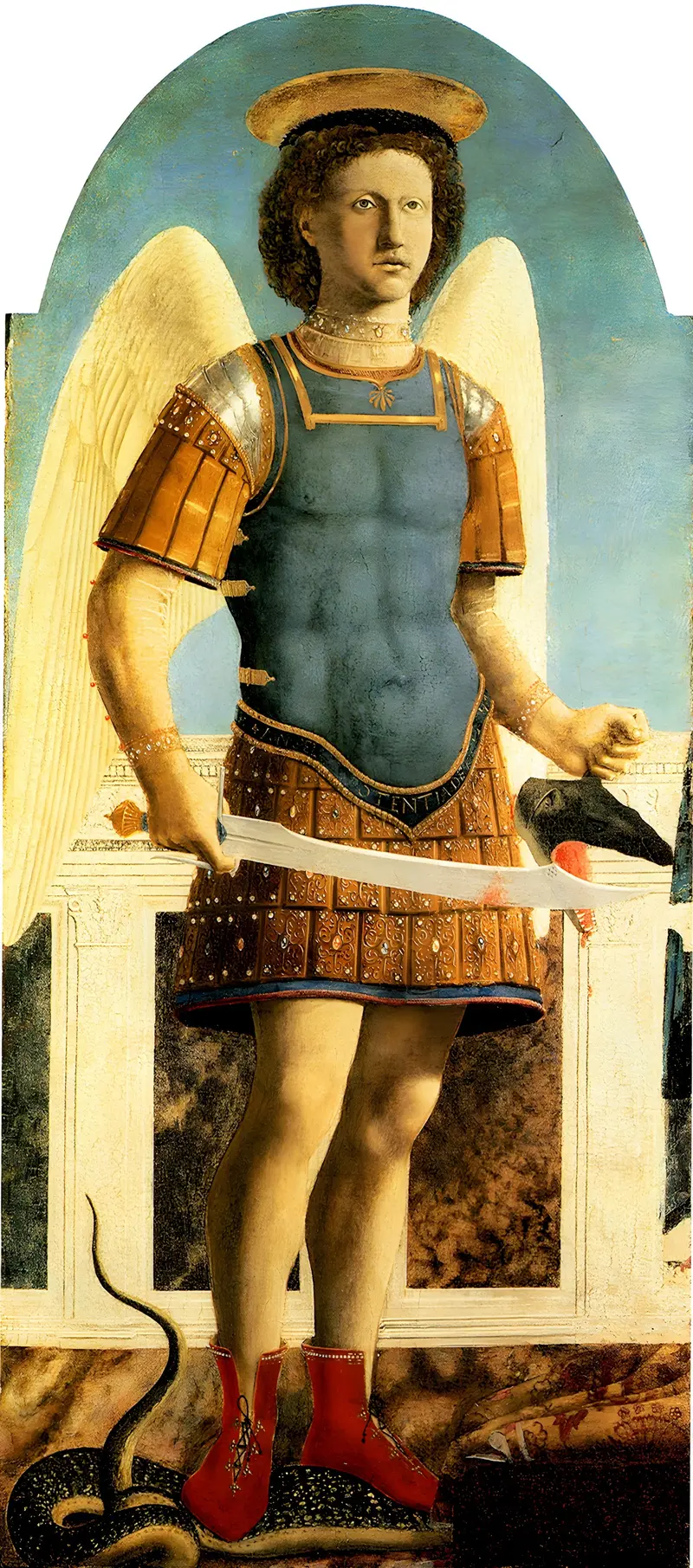
Saint Michael
Piero Della Francesca





