
The desert — History & Facts
Can paint confess what words never could? In The desert, Daniel A. Jenks captures the essence of rebirth amid stark desolation, inviting viewers to reflect on renewal in the unlikeliest places. Look to the vast expanse of ochre and sandy hues that dominate the canvas; they create an overwhelming sense of openness and isolation. Notice how the light dances delicately over the arid terrain, illuminating the subtle textures of the land while casting deep shadows that hint at both hardship and resilience.
The sparse vegetation, almost fragile in its tenacity, draws your eye to the small clusters of life—each one a testament to survival against the odds. Within this desolate landscape lies an emotional tension between beauty and barrenness. The stark contrast of the vibrant colors against the muted background reflects the struggle for life in an environment seemingly devoid of hope. The way the sunlight breaks through the clouds symbolizes a promise of renewal, suggesting that even in the most inhospitable settings, rebirth is possible.
Here, nature’s cycle becomes emblematic of human endurance, reminding us that hope can blossom even in the harshest conditions. In 1859, Jenks was immersed in the artistic exploration of the American landscape, influenced by the burgeoning Romantic movement that celebrated nature's majesty. Living in a time of rapid change, both socially and politically, he sought to convey deeper emotional truths through his works. This painting emerged during a period when artists were beginning to recognize the power of the natural world as a reflection of inner human experiences, marking a significant moment in the evolution of American art.
More Artworks by Daniel A. Jenks
Browse all →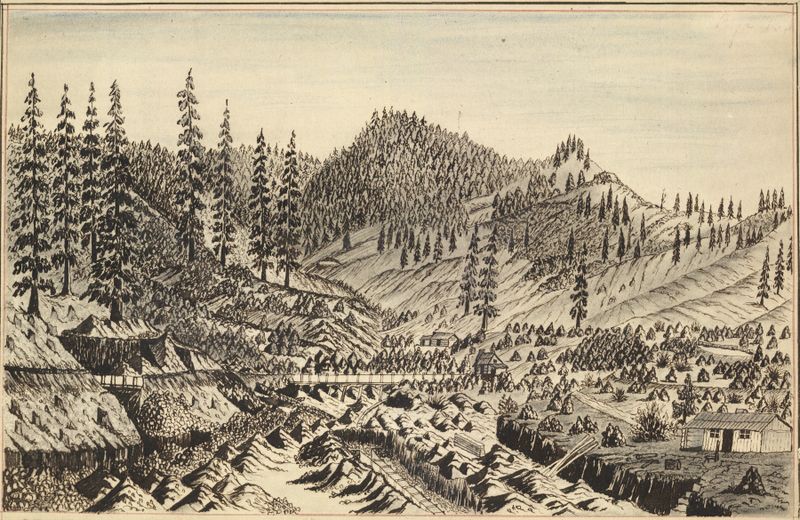
View of the mine at Long Gulch
Daniel A. Jenks
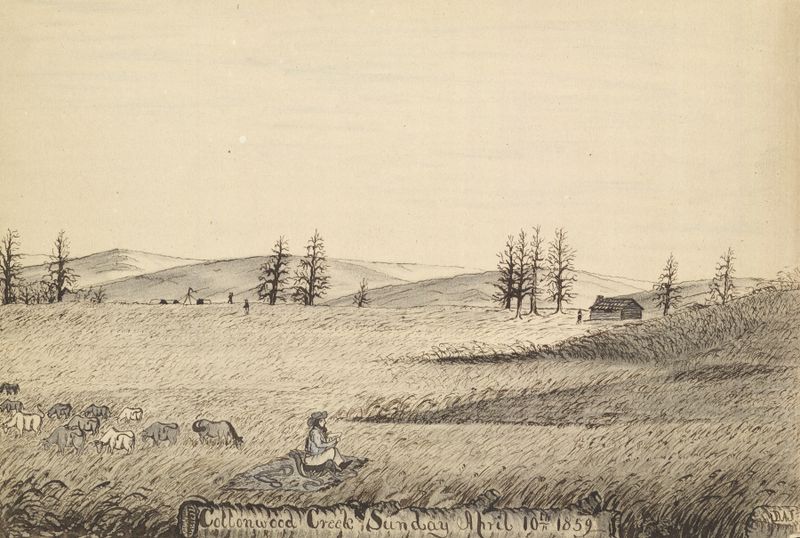
Cottonwood Creek, Sunday April 10th 1859
Daniel A. Jenks
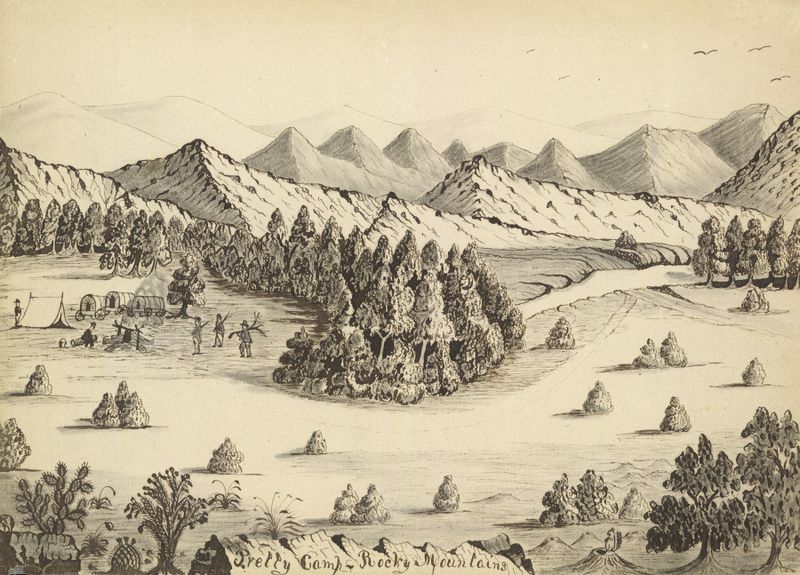
Pretty camp – Rocky Mountains
Daniel A. Jenks
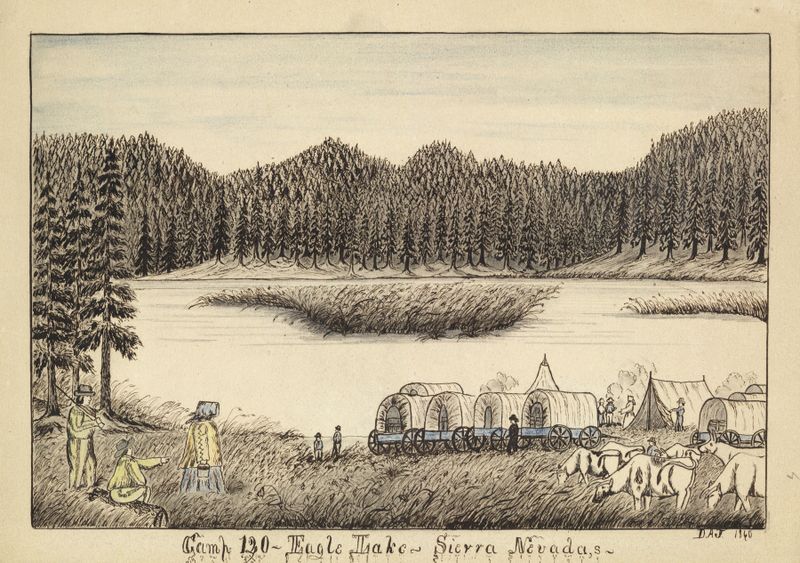
Camp 120, Eagle Lake, Sierra Nevadas
Daniel A. Jenks

Chavis Creek, camp 14th
Daniel A. Jenks
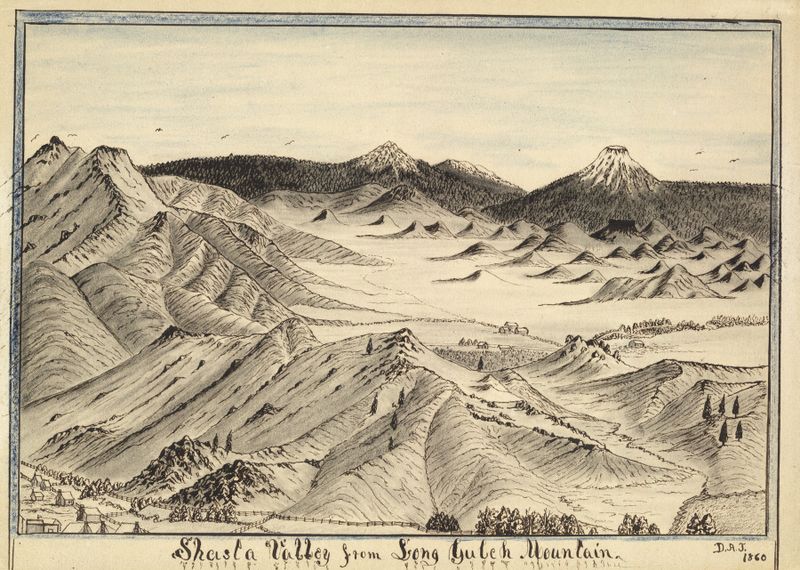
Shasta Valley from Long Gulch Mountain
Daniel A. Jenks
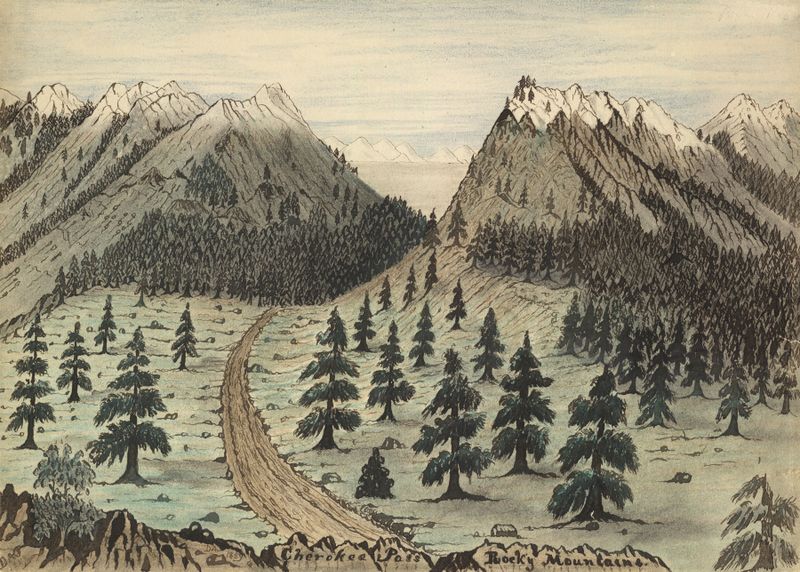
Cherokee Pass, Rocky Mountains
Daniel A. Jenks

Camp 100 – Humbolt River
Daniel A. Jenks
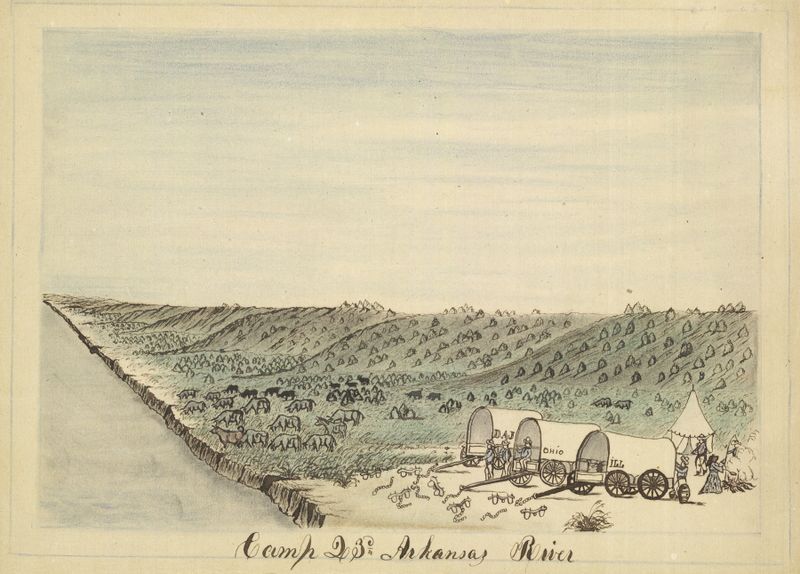
Camp 23rd Arkansas River
Daniel A. Jenks
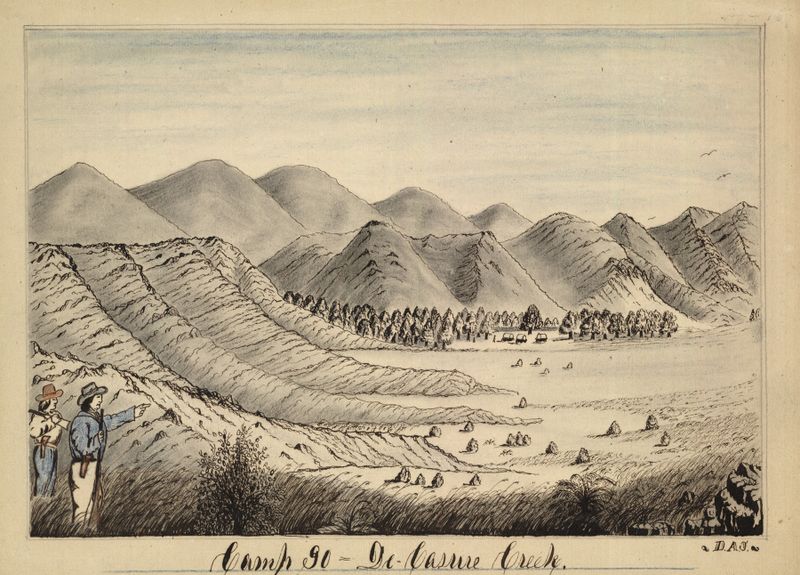
Camp 90, De Casure Creek
Daniel A. Jenks





