
The East entrance to the Museum in Rotterdam — History & Facts
Where does light end, and longing begin? In the intricate interplay of shadow and illumination, the essence of desire unfurls like a delicate petal under the sun. Look to the left at the striking archway that frames the entrance, inviting yet enigmatic. The light filters through, casting a warm glow that contrasts with the cooler tones of the surrounding brick facades. Notice how Probst meticulously captures the interplay of architectural lines—each angle and curve designed to lead the viewer’s gaze deeper into the scene, suggesting an unending journey.
The subdued palette shifts seamlessly from earthy browns to vibrant blues, echoing a balance between the natural and the constructed. Beneath the surface, this work reveals a tension between solidity and ephemerality. The entrance, robust and steadfast, speaks of permanence, while the light spilling forth hints at fleeting possibilities. Each figure depicted, though diminished in scale, carries an air of purpose, yet their paths remain unresolved, igniting an echo of yearning within the viewer.
The choice of perspective amplifies this longing, as if the viewer is perpetually on the threshold of discovery, caught between the known and the unknown. Probst painted this work during a period marked by the rise of neoclassicism in art, likely in the late 18th century. Residing in Germany, he was keenly aware of the shifts in artistic expression that emphasized clarity and order. This work exemplifies his intricate attention to architectural detail, a hallmark of his career as a cartographer and artist, as he sought to connect the viewer to the cultural significance of public spaces.
More Artworks by Georg Balthasar Probst
Browse all →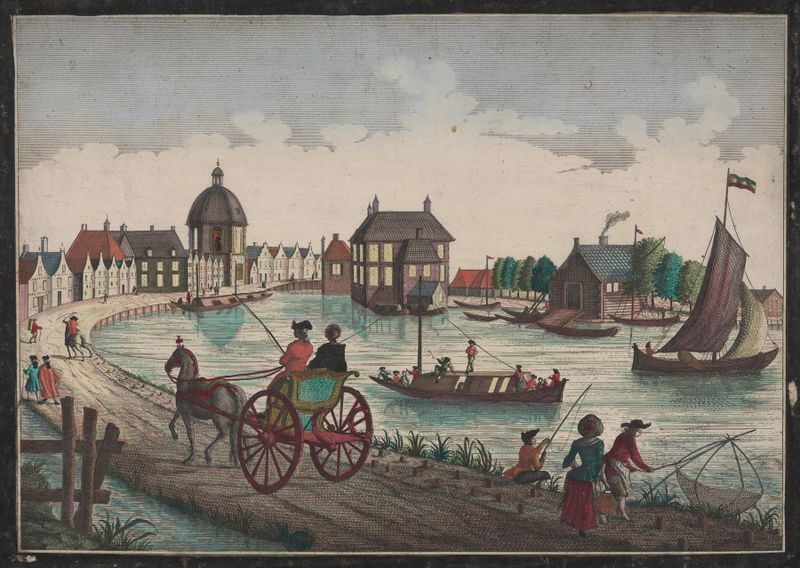
View of Amsterdam from the East side.
Georg Balthasar Probst
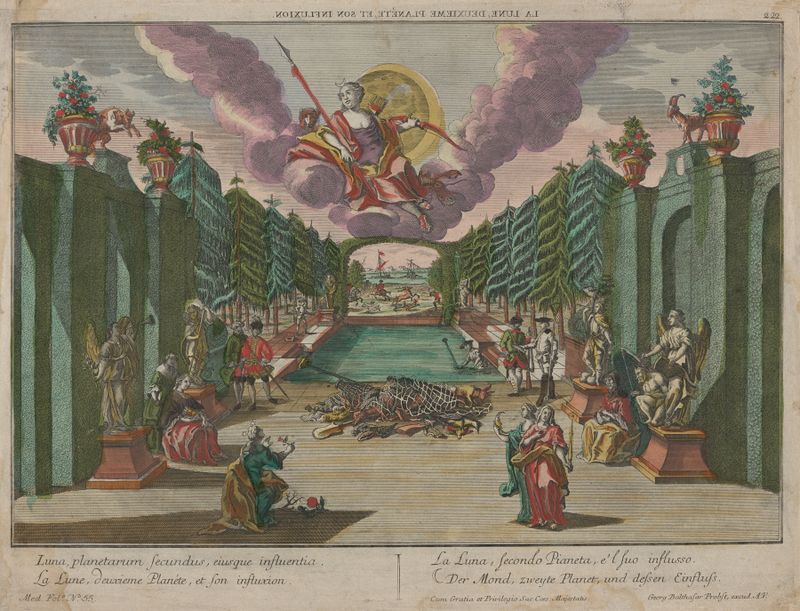
La Lune, deuxieme planete, et son influxion
Georg Balthasar Probst
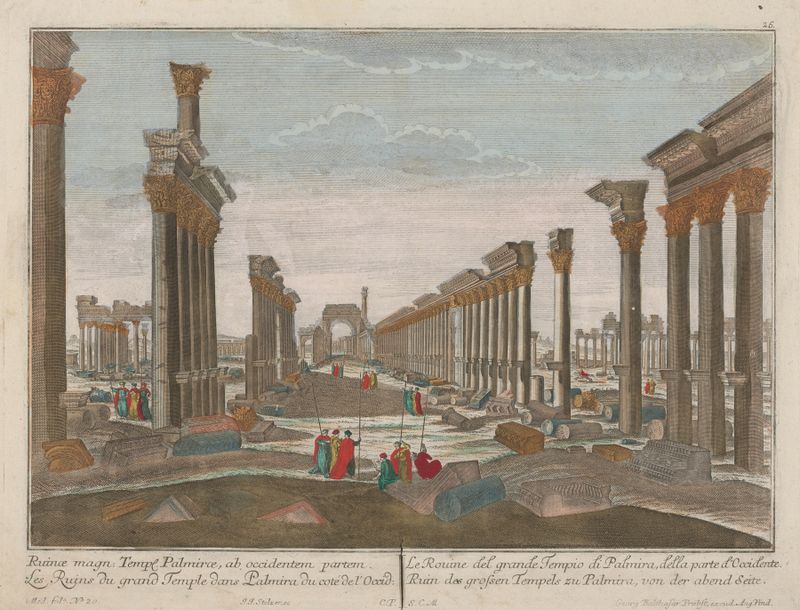
The Ruins of the great Temple at Palmira, from the West
Georg Balthasar Probst
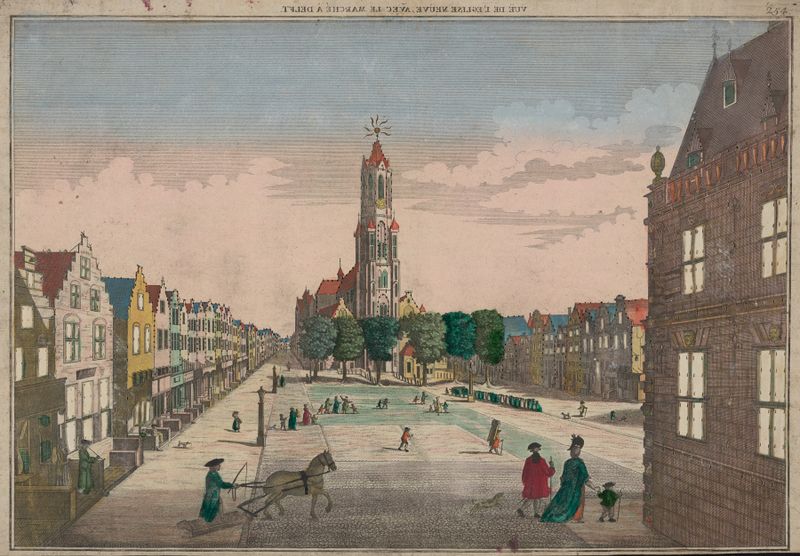
View of the new church and the market in Delft
Georg Balthasar Probst
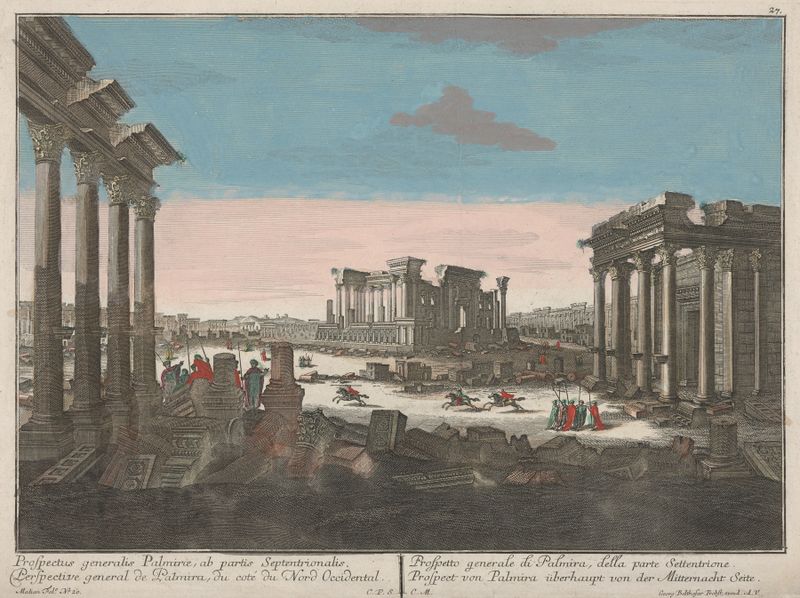
General Perspective of Palmira, as seen from the North-West
Georg Balthasar Probst

View of the Church of St. Martin in London
Georg Balthasar Probst

View of the Eastern entrance in Rotterdam
Georg Balthasar Probst
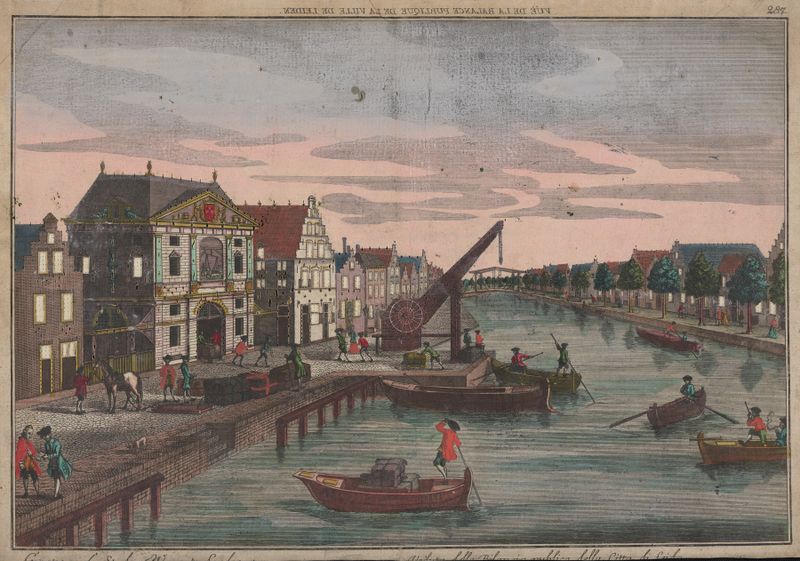
A view of the public scale in the City of Leiden
Georg Balthasar Probst

Le Mars, troisieme Planete, et son influxion
Georg Balthasar Probst
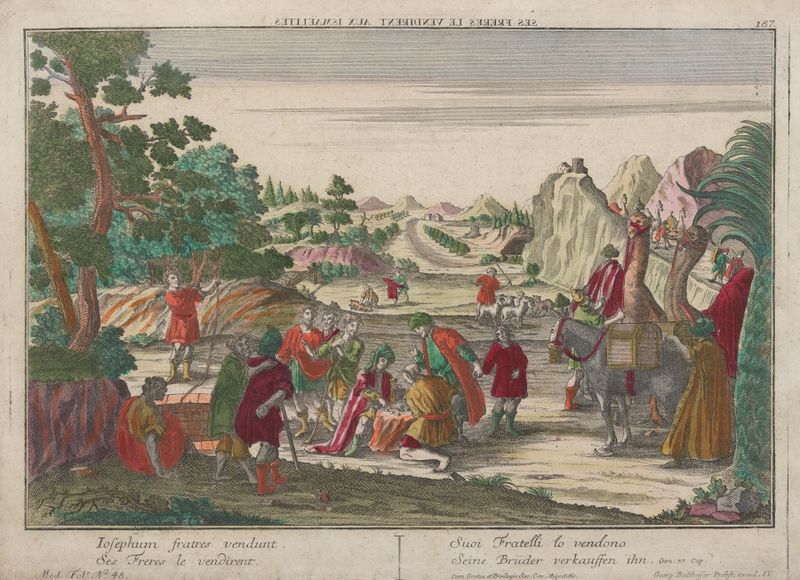
His Brothers sold him to the Ishmaelites
Georg Balthasar Probst
More Architecture Art
Browse all →
The statue of Liberty
Frédéric Auguste Bartholdi

View of Houses in Delft, Known as ‘The Little Street’
Johannes Vermeer

View of Houses in Delft, Known as ‘The Little Street’
Johannes Vermeer

The Cathedral in Rouen. The portal, Grey Weather
Claude Monet

The yellow house
Vincent van Gogh

The Church in Auvers-sur-Oise, View from the Chevet
Vincent van Gogh