
The Eiffel Tower — History & Facts
In a bustling city, the Eiffel Tower stands as a testament to human creativity, its silhouette a bridge between dreams and reality. Here, the steel structure rises toward the sky, inviting the imagination to soar amidst its intricate design. This painting embodies the spirit of invention, a creation born from ambition and hope. Focus on the tower, rising majestically from the canvas, its wrought iron lattice captured in warm, earthy tones that evoke both solidity and fragility.
Look closely at the contrasts within the colors: the deep greens surrounding the base of the tower and the soft blues of the sky above. The brushstrokes, though seemingly simple, convey a sense of movement, as if the city breathes around this monumental creation. Each detail adds depth, inviting viewers to explore the relationship between nature and human ingenuity. Within this composition lies a profound tension between the organic and the mechanical.
The tower, a symbol of progress, stands tall against the backdrop of nature, suggesting a dialogue between what is manmade and the world that exists alongside it. The gentle curves of the surrounding trees seem to embrace the structure, hinting at a harmony that respects both humanity and the earth. Rousseau captures this dynamic, making us ponder our own creations in the face of nature’s timelessness. Henri Rousseau painted this piece in 1898, during a period of great change in France and the world of art.
Living in Paris, he was part of a vibrant scene that included emerging avant-garde movements. His unique style, often classified as naïve, challenged conventional artistic norms, reflecting a vision that celebrated imagination against the backdrop of modernity and industrialization.
More Artworks by Henri Rousseau
Browse all →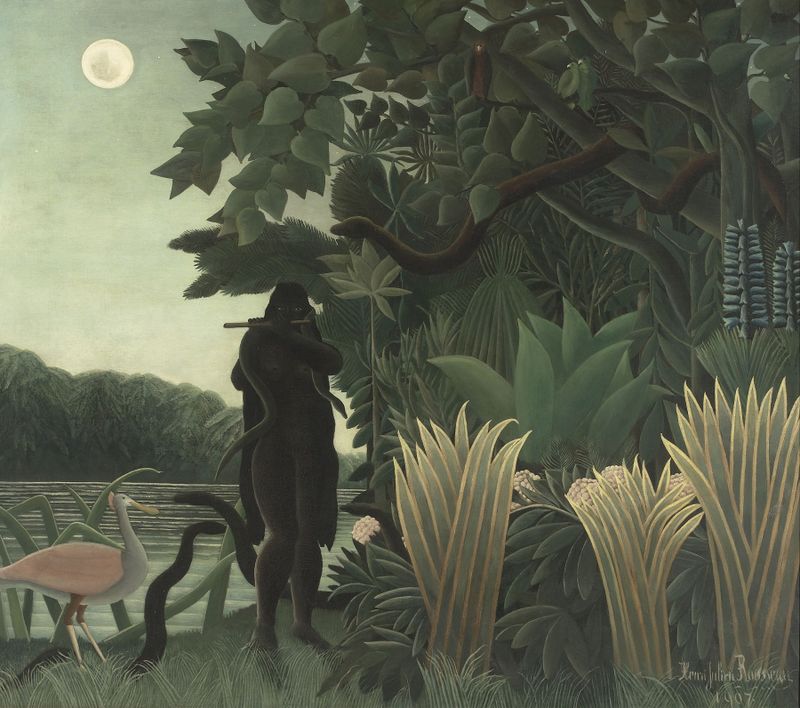
The Snake Charmer
Henri Rousseau
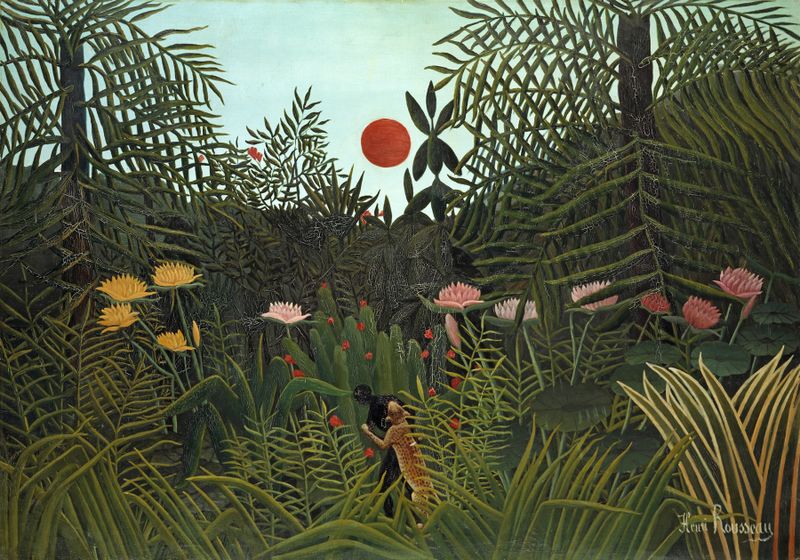
Jungle with Setting Sun
Henri Rousseau
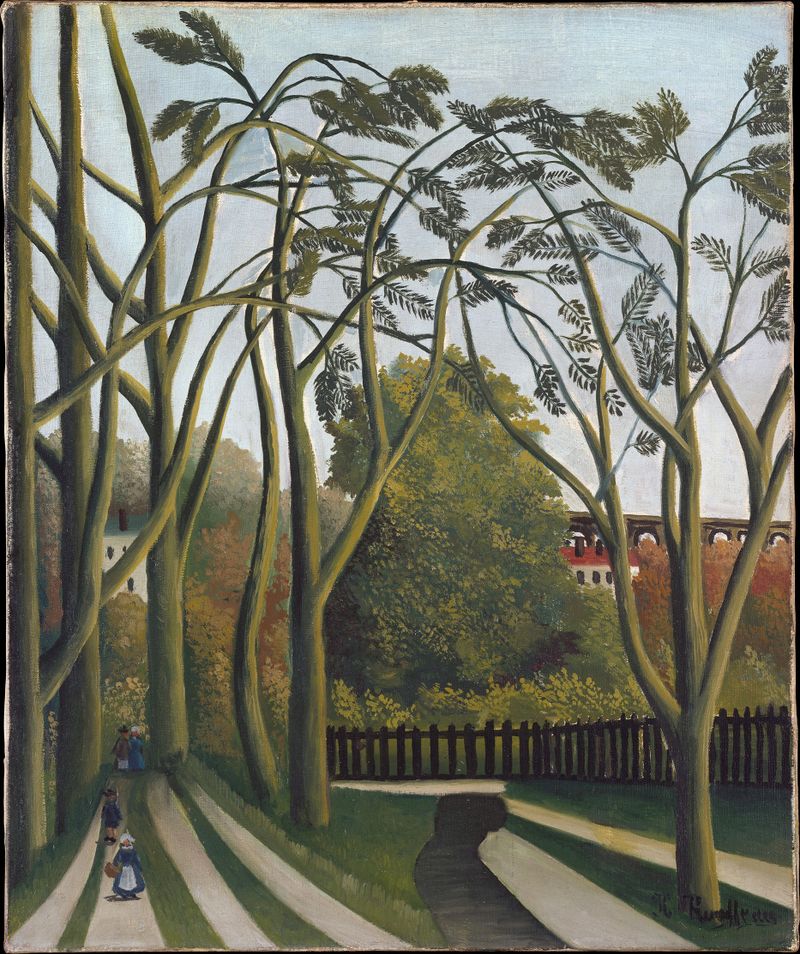
The Banks of the Bièvre near Bicêtre
Henri Rousseau
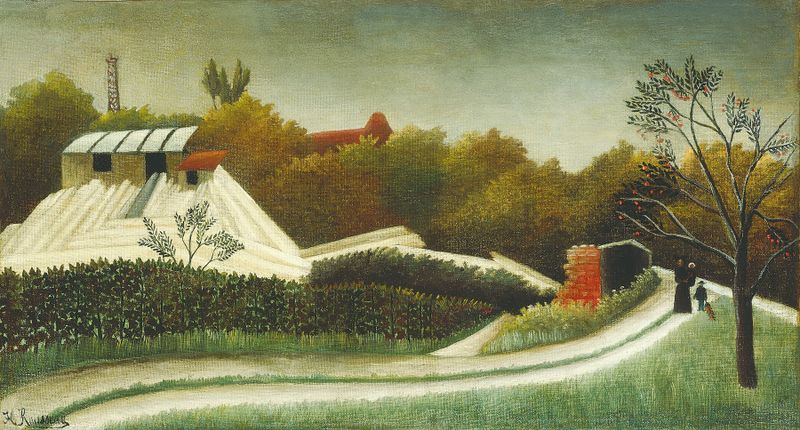
Sawmill, Outskirts of Paris
Henri Rousseau
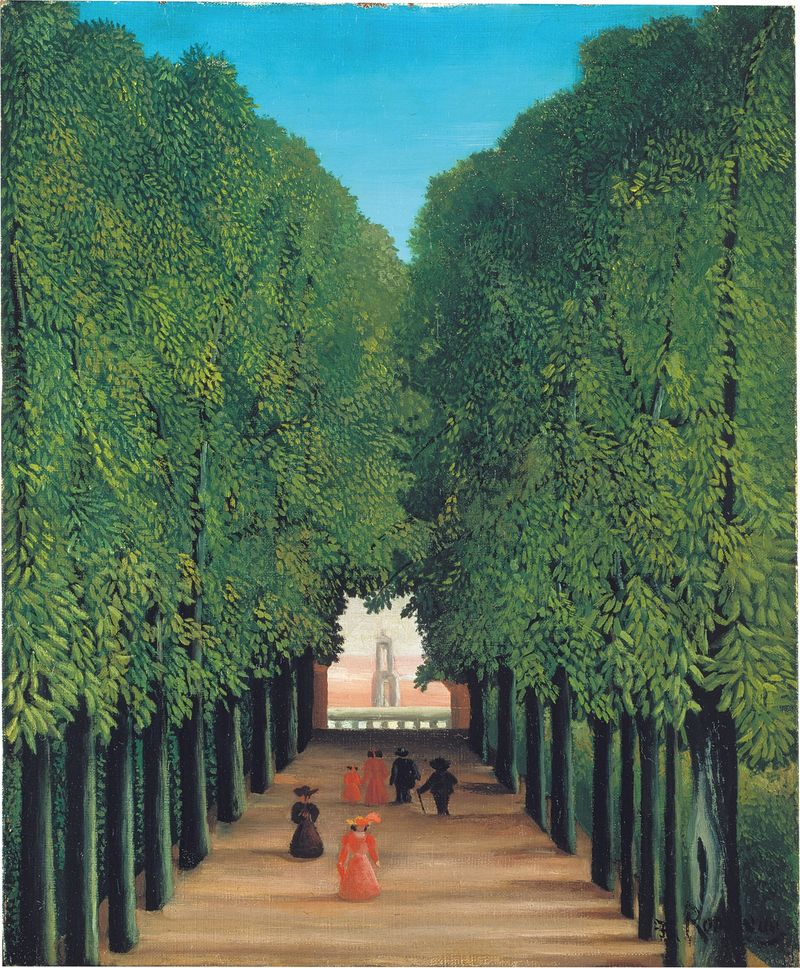
The Avenue in Saint-Cloud Park
Henri Rousseau

Sawmill, Outskirts of Paris
Henri Rousseau
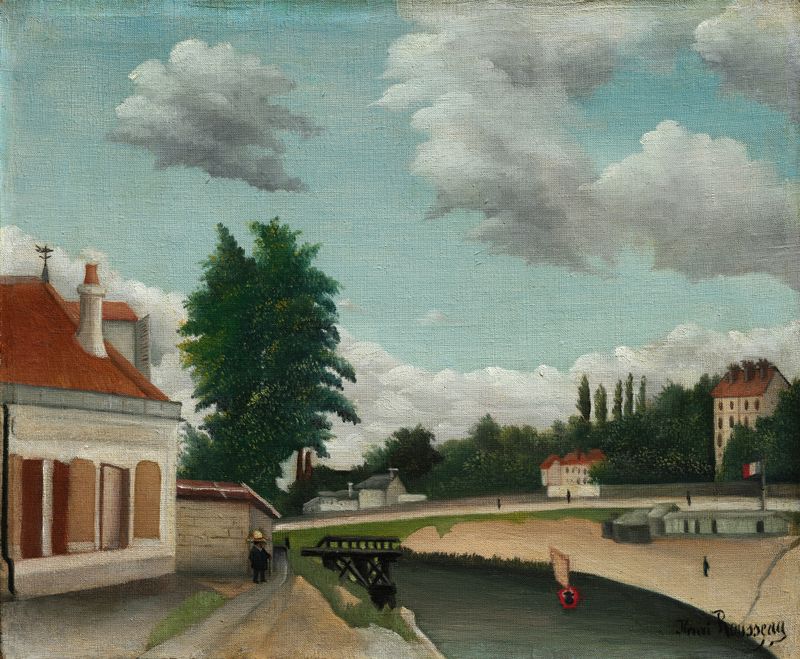
Outskirts of Paris
Henri Rousseau
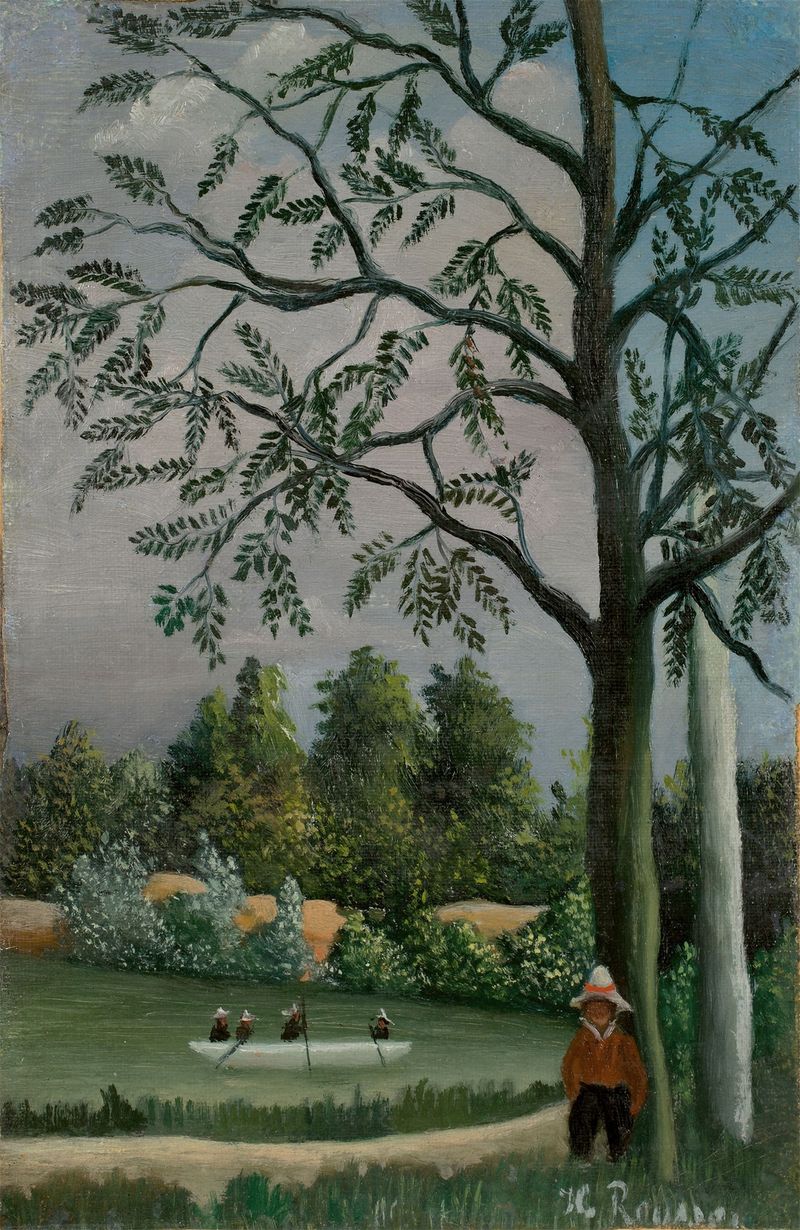
Paysage avec des pêcheurs
Henri Rousseau
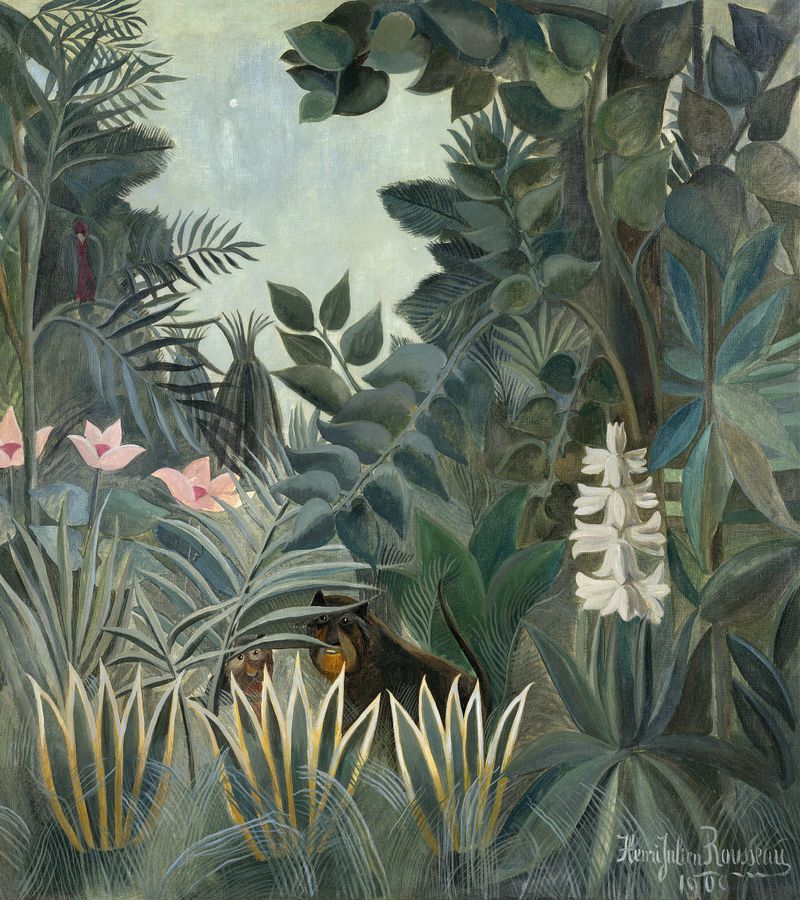
The Equatorial Jungle
Henri Rousseau
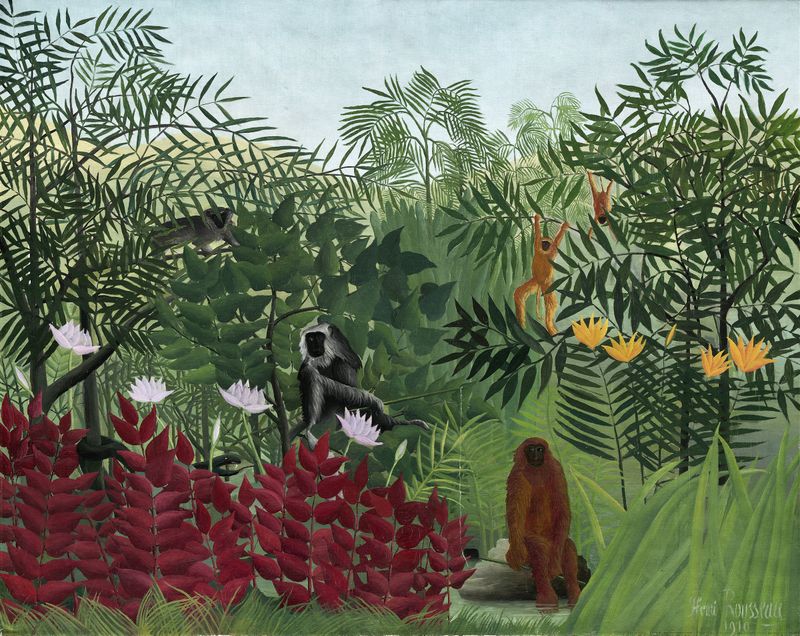
Tropical Forest with Monkeys
Henri Rousseau
More Architecture Art
Browse all →
The statue of Liberty
Frédéric Auguste Bartholdi

View of Houses in Delft, Known as ‘The Little Street’
Johannes Vermeer

View of Houses in Delft, Known as ‘The Little Street’
Johannes Vermeer

The Cathedral in Rouen. The portal, Grey Weather
Claude Monet

The yellow house
Vincent van Gogh

The Church in Auvers-sur-Oise, View from the Chevet
Vincent van Gogh