
The evening Star — History & Facts
A single figure, half-silhouetted, raises an arm toward the pale glow of evening, pausing by a slender tree at the water’s edge. The sky, streaked with the last light of day, stretches wide and restless above, drawing the eye upward and outward. The figure’s gesture—part greeting, part farewell—anchors the scene in a quiet moment of transition, as if catching the world in the act of changing from day to night.
To the right, a shepherd leads his flock along a shadowed path, the animals clustered close, their journey almost hidden in the deepening gloom. The low horizon gives the sky the leading role, while the gentle colors—soft blues, ochres, and greens—set a mood of calm expectancy, inviting the viewer to linger in the hush between worlds. Painted in the mid-nineteenth century, this work belongs to a period when artists like Jean-Baptiste-Camille Corot were reshaping the possibilities of landscape painting. Rather than serving merely as records of place or property, such images were increasingly prized for their ability to capture atmosphere and feeling—qualities that appealed to collectors and critics alike in a rapidly modernizing Europe.
Little is recorded about the specific journey of this canvas, now documented in a private collection as of 2018, but its quiet poetry speaks to the enduring fascination with twilight and solitude that marked the era. Let your gaze follow the last light on the water, and consider what it meant to pause, to look, and to wait for the evening star.
More Artworks by Jean-Baptiste-Camille Corot
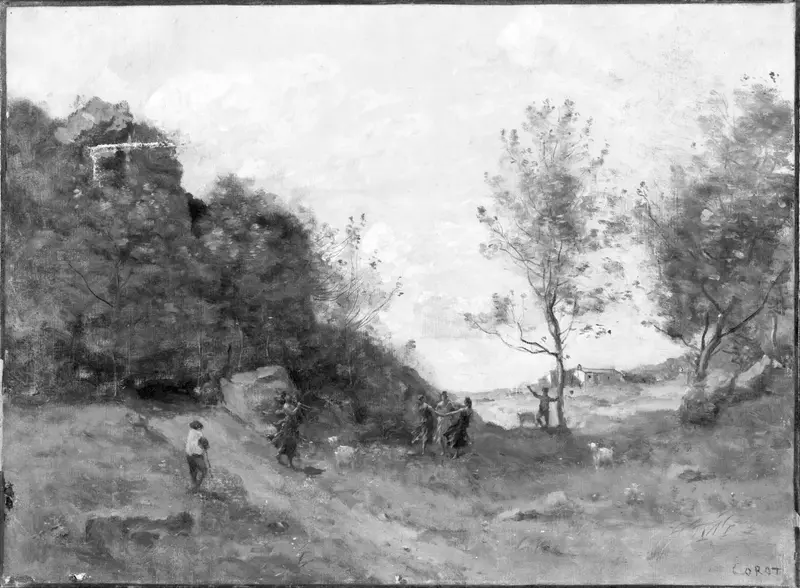
Goatherd in a Landscape
Jean-Baptiste-Camille Corot
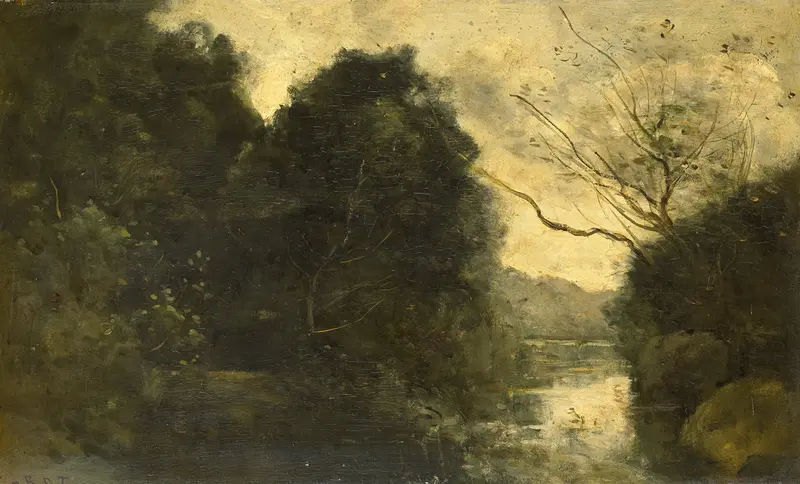
Pond in the Woods
Jean-Baptiste-Camille Corot
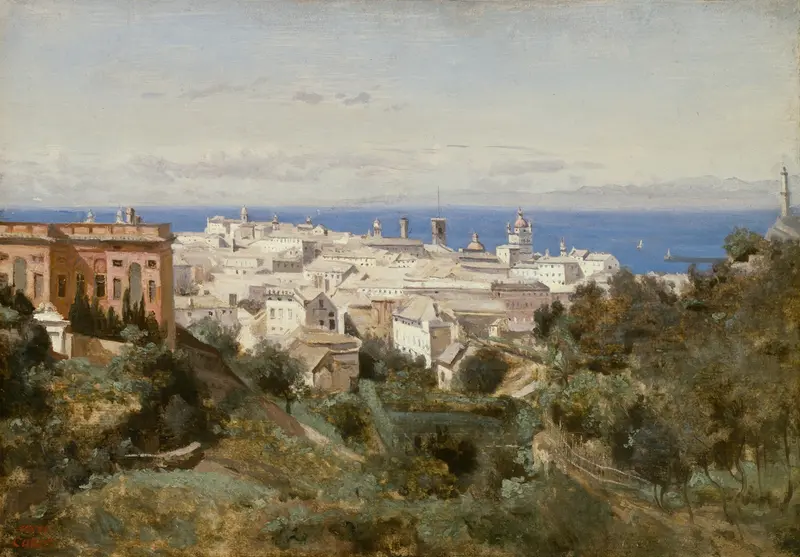
View of Genoa
Jean-Baptiste-Camille Corot

La solitude. Souvenir de Vigen (Limousin)
Jean-Baptiste-Camille Corot

Landscape with Pollard Willows
Jean-Baptiste-Camille Corot
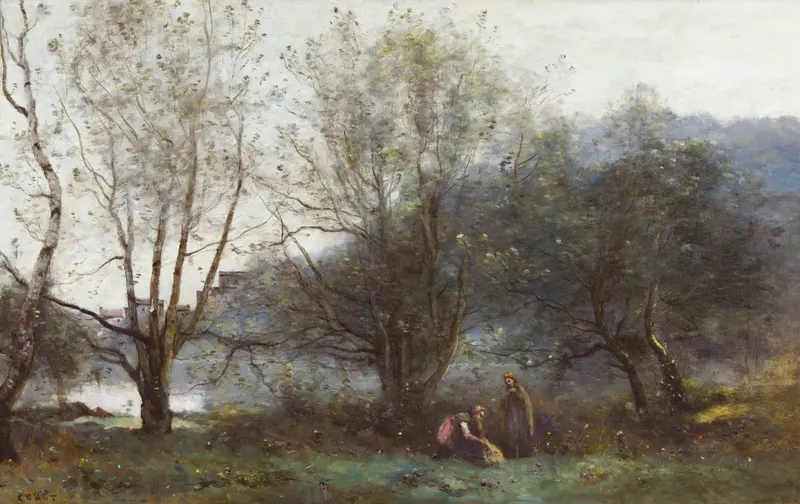
Les Étangs De Ville D’avray
Jean-Baptiste-Camille Corot
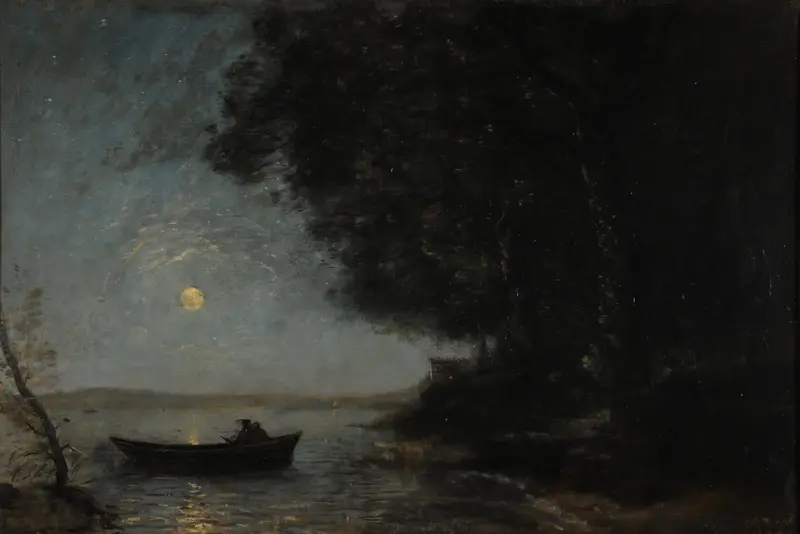
Le lac ; effet de nuit
Jean-Baptiste-Camille Corot
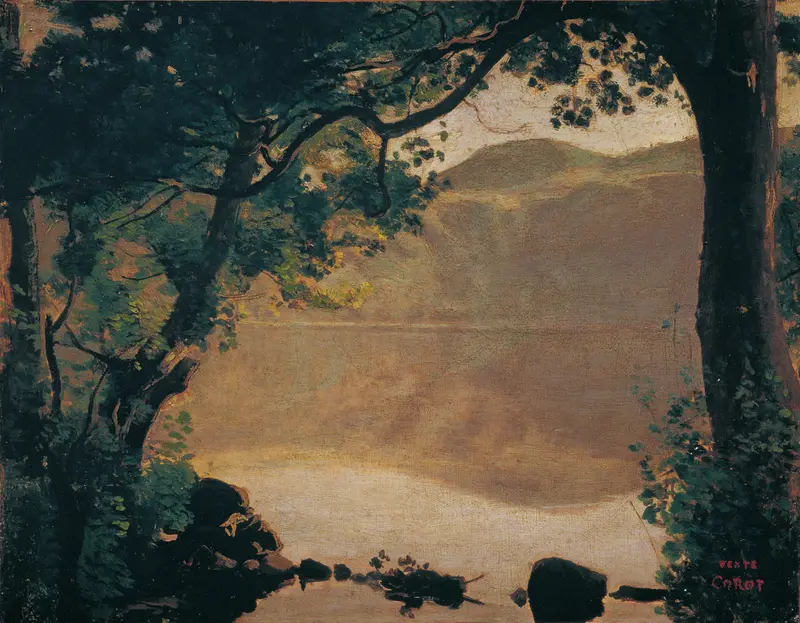
Der Nemisee
Jean-Baptiste-Camille Corot

Les Maisons Cabassud À Ville D’avray
Jean-Baptiste-Camille Corot
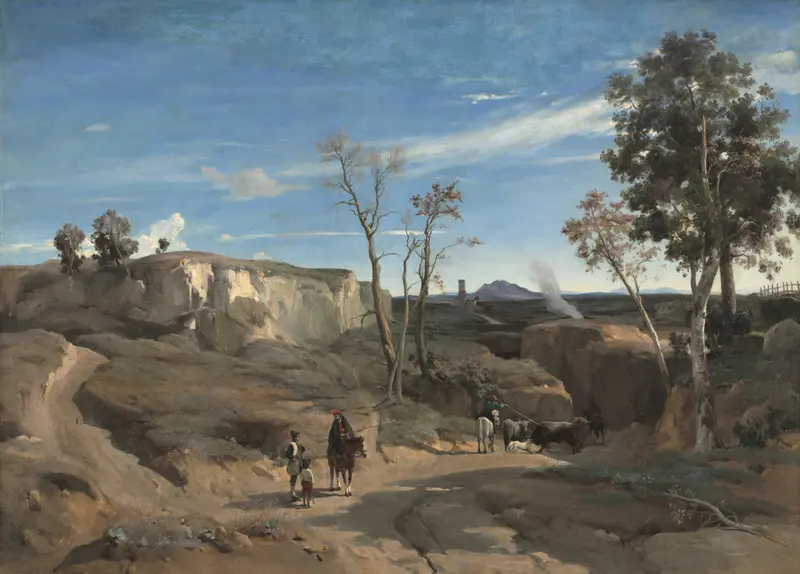
La Cervara, the Roman Campagna
Jean-Baptiste-Camille Corot
More Landscape Art

The Starry Night
Vincent van Gogh

View of Delft
Johannes Vermeer

Water Lilies
Claude Monet

The Grand Canal, Venice, looking north-west from the Ca' Corner to the Ca' Contarini degli Scrigni, with the campanile of Santa Maria della Carità
Canaletto

Windsor Castle
Canaletto

The Grand Canal looking North-East from the Palazzo Dolfin-Manin to the Rialto Bridge
Canaletto