
The Falls Of The Clyde After A Flood — History & Facts
Art reveals the soul when the world turns away. In the midst of nature's fury, chaos finds its voice, and the madness of the flood becomes a haunting reflection of human vulnerability and resilience. Look to the center of the canvas, where turbulent waters cascade with ferocious energy. The intricate detailing of the rushing currents captivates, drawing your gaze into the whirlpool of movement and color.
Notice how the hues of dark blues and greens contrast sharply with the frothy whites, illuminating the sheer power of the torrent against the stillness of the surrounding landscape. Upon closer inspection, the interplay of light and shadow speaks volumes. The floodwaters, imbued with a destructive force, carry remnants of the past — fallen branches and debris tell silent stories of what once stood tall. In the background, the stark silhouettes of trees, partially submerged and defiant, evoke a sense of struggle against an uncontrollable force, a reminder of nature's duality: both breathtakingly beautiful and utterly terrifying. James Ward painted this scene during a period of dramatic change in the art world, likely in the early 19th century.
Living in the tumultuous aftermath of the Industrial Revolution, he sought to capture the raw, untamed beauty of the natural landscape, often reflecting on humanity's place within it. This work emerges from a time when the sublime was celebrated, challenging viewers to confront the awe-inspiring, often mad, realities of nature.
More Artworks by James Ward
Browse all →
View near Swansea, South Wales
James Ward
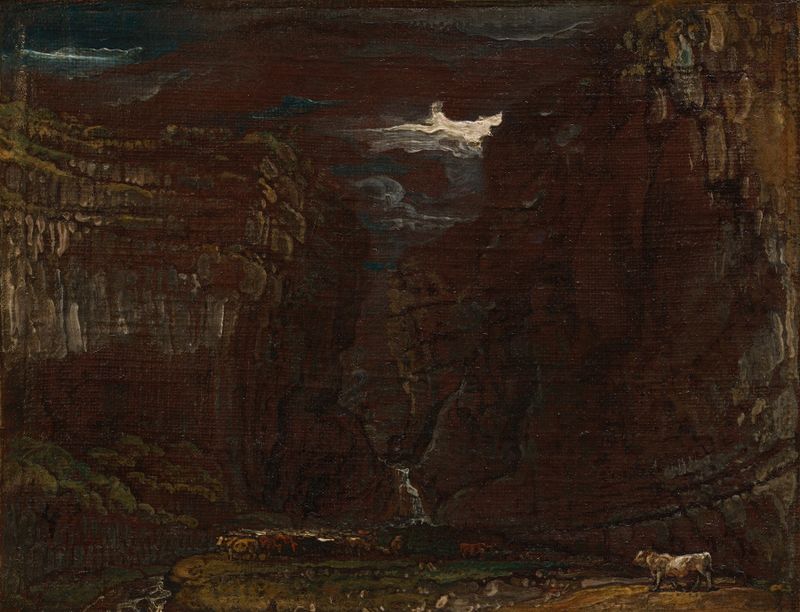
Sketch for ‘Gordale Scar’
James Ward
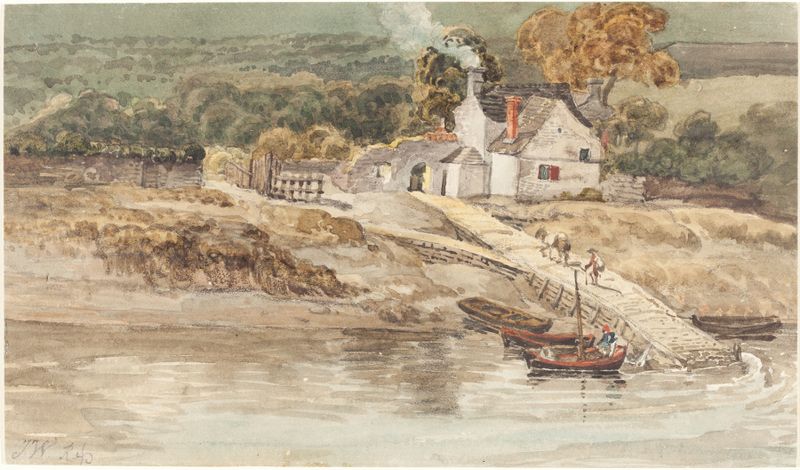
Landing Place near Tintern Abbey
James Ward

Landscape with Cottages
James Ward
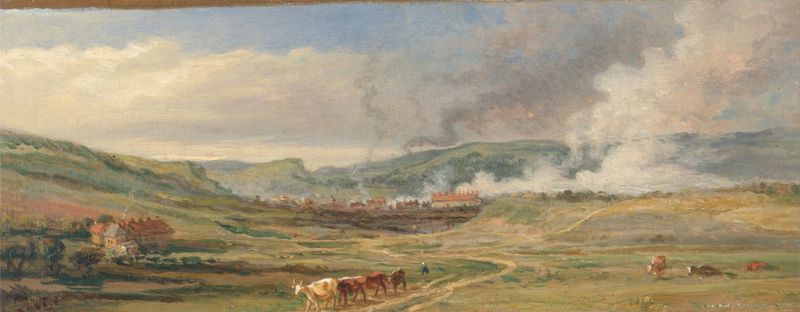
Landscape near Swansea, South Wales
James Ward

Fitzhead in Somerset, with an ox-cart near a lime kiln, and Glastonbury Tor in the distance
James Ward
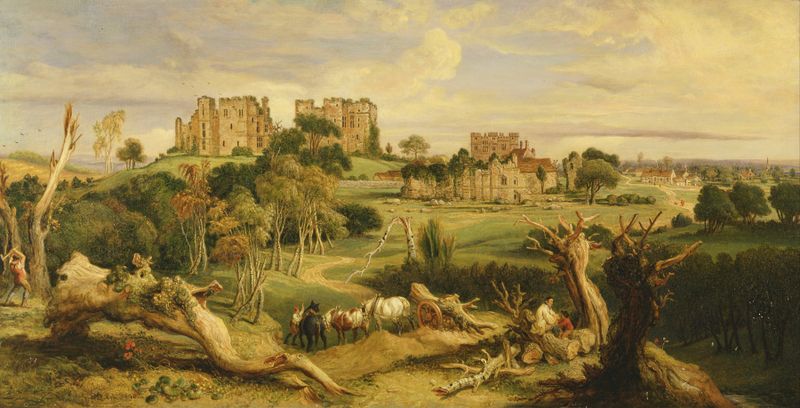
Kenilworth Castle, Warwickshire
James Ward

An Overshot Mill
James Ward
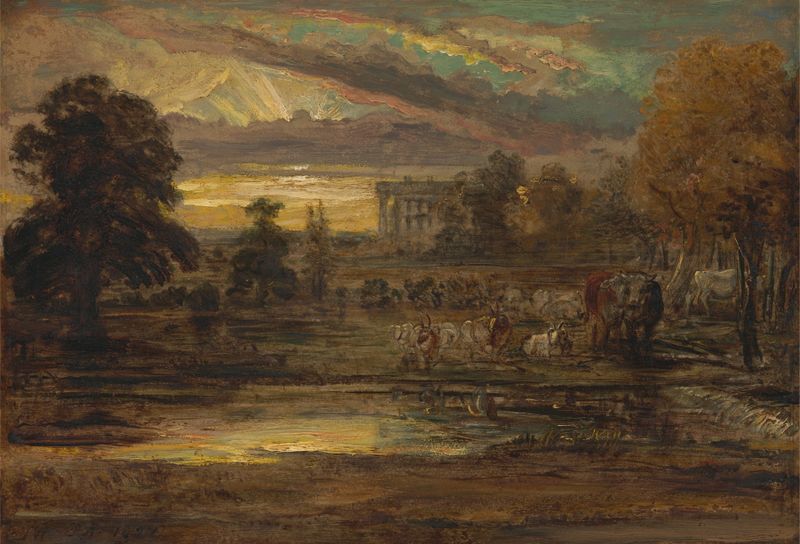
Cattle at a Pool at Sunrise
James Ward

An oak tree in Richmond Park with a herd of fallow deer beside it
James Ward





