
The Fire of Rome — History & Facts
What secret hides in the quiet of the canvas? Beneath the serene façade of a picturesque landscape lies the unsettling echo of destruction and violence, rendering a sublime tension that compels us to look closer. Focus on the upper left corner, where the tumultuous flames dance against the azure sky, casting a harrowing glow that contrasts with the tranquil ruins below. Notice how the artist balances light and shadow, guiding your eye towards the chaos that disrupts the idyllic setting. The vibrant reds and oranges of the fire seamlessly blend with the cooler tones of the stone structures, illustrating the violent intertwining of nature and human folly.
Each brushstroke captures both beauty and despair, transforming the scene into a powerful commentary on the fragility of civilization. As you delve deeper, consider the juxtaposition of the serene figures observing the conflagration, seemingly unaffected by the chaos unfurling before them. Their stillness against the backdrop of destruction suggests a resignation to fate, evoking themes of loss and the transience of existence. The carefully composed ruins symbolize the remnants of history, while the flames represent a violent rebirth, reflecting the duality of destruction and creation that permeates human experience. In 1785, Hubert Robert painted this striking work amidst a changing European landscape, where tensions simmered as revolutions loomed on the horizon.
The artist, known for his depictions of classical ruins, was exploring new narratives of decay and rebirth in the face of a rapidly evolving world. At this moment, the foundation for Romanticism was being laid, challenging traditional perspectives on beauty and chaos, making his exploration of violence and tranquility all the more poignant.
More Artworks by Hubert Robert
Browse all →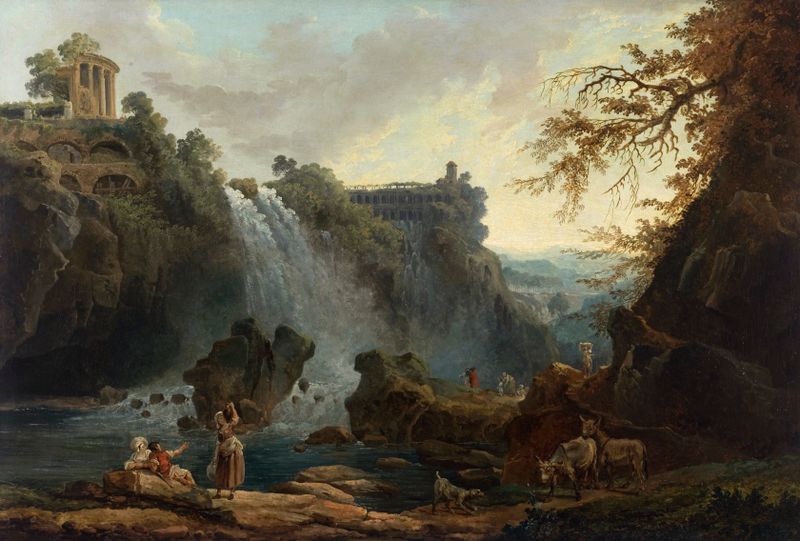
Les Cascatelles de Tivoli
Hubert Robert
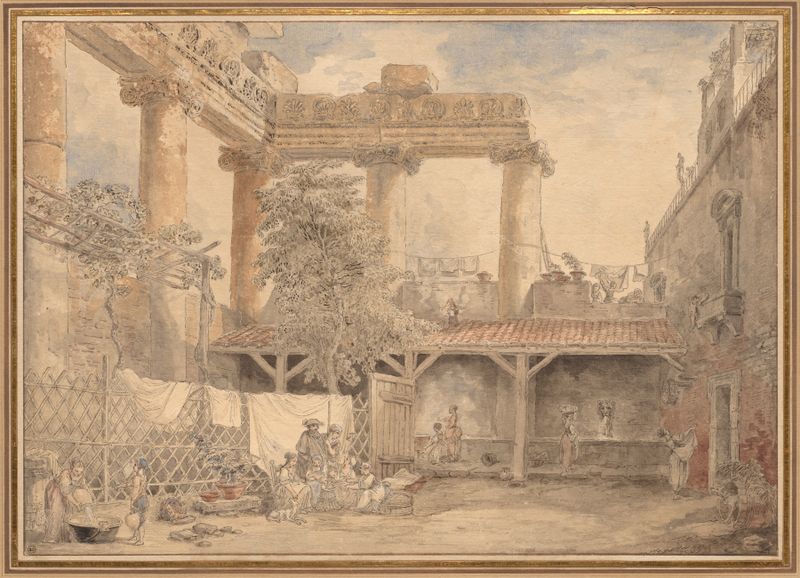
Roman Ruins, Villa Pamfili
Hubert Robert

The Rustic Bridge, Château de Méréville, France
Hubert Robert

The Portico of a Country Mansion
Hubert Robert

Architectural Capriccio
Hubert Robert

The Obelisk
Hubert Robert
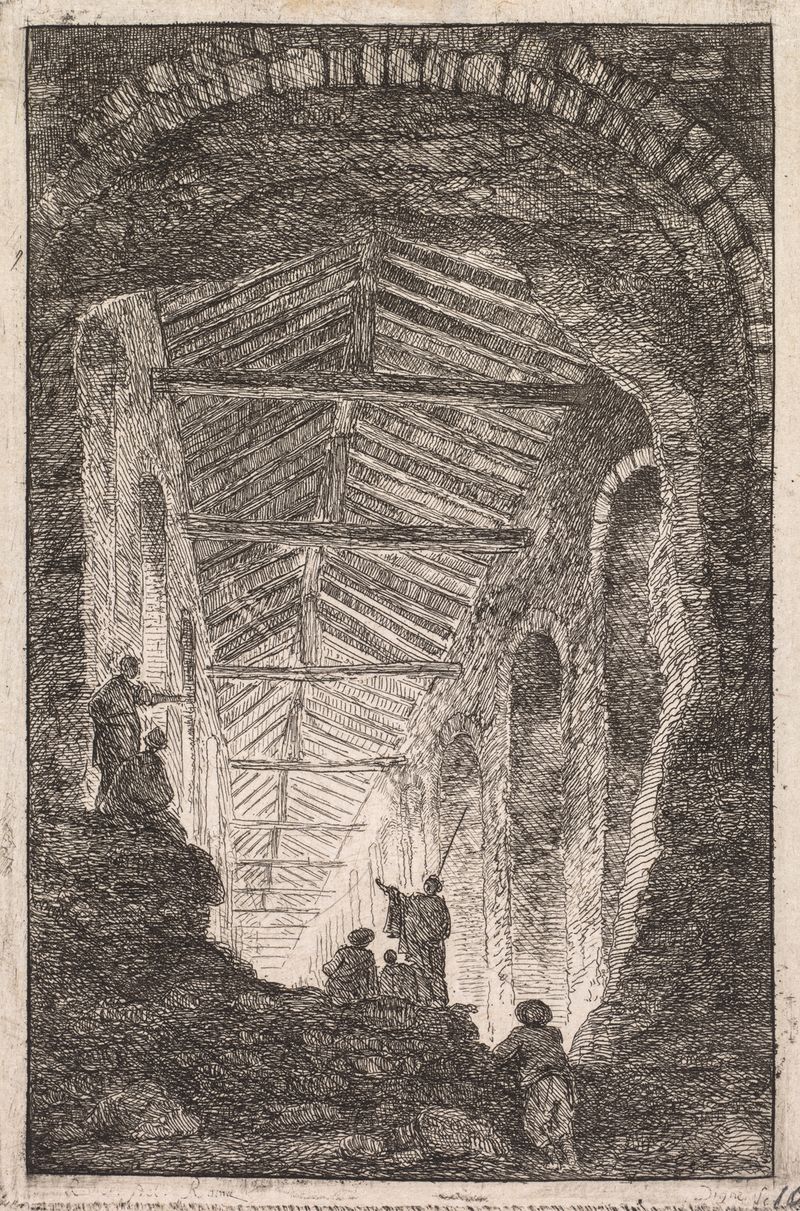
The Antique Gallery
Hubert Robert

L’incendie de l’Opéra, vu des jardins du Palais-Royal, le 8 juin 1781
Hubert Robert
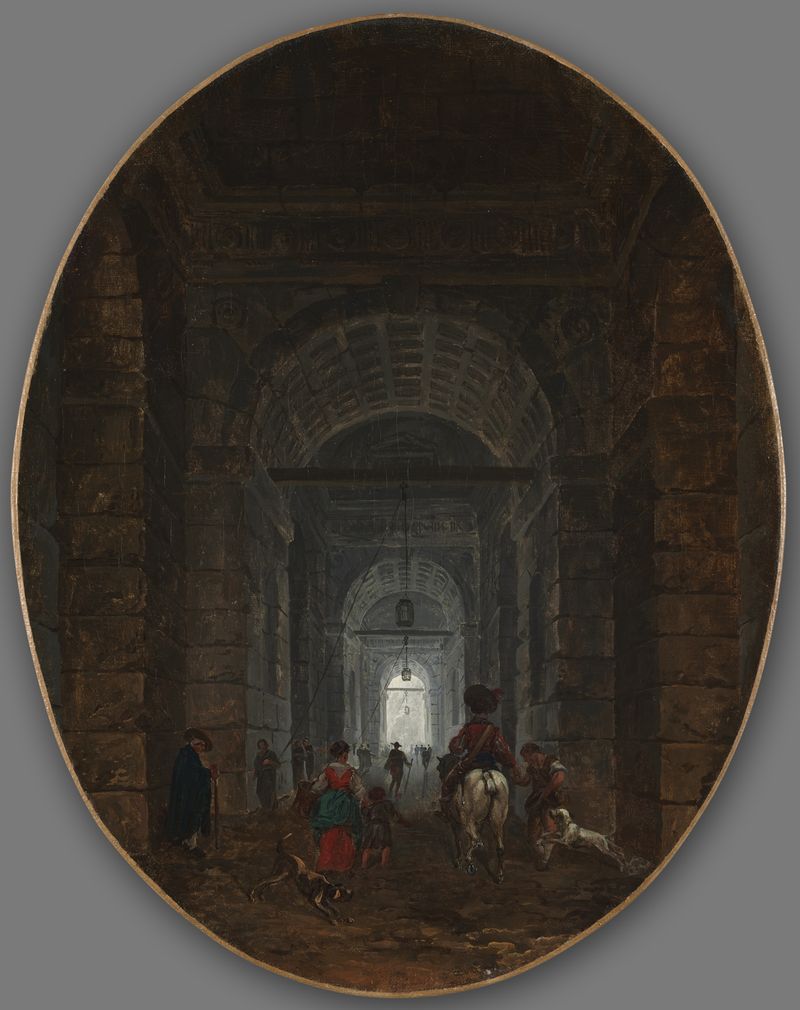
The Grotto of Posillipo
Hubert Robert

Architectural Capriccio with ruins of the Temple of Saturn and the Colosseum in the background
Hubert Robert
More Historical Art
Browse all →
The Night Watch Militia Company of District II under the Command of Captain Frans Banninck Cocq
Rembrandt van Rijn

Lincoln Memorial
Henry Bacon

The Third of May 1808
Francisco de Goya

Isaac and Rebecca, Known as ‘The Jewish Bride’
Rembrandt van Rijn

The Charge of the Mamelukes (1814)
Francisco de Goya

De vier ruiters van de apocalyps
Albrecht Dürer