The Firmament Above the Temple — History & Facts
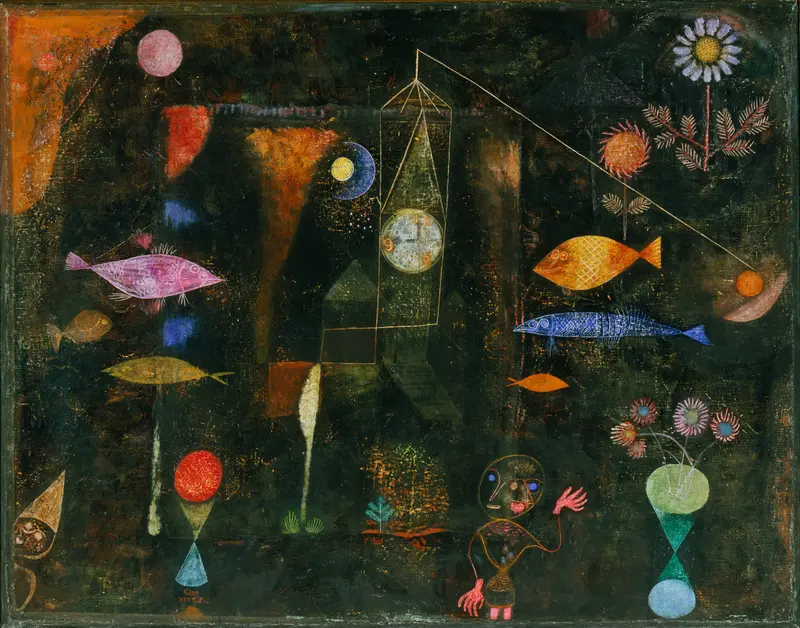
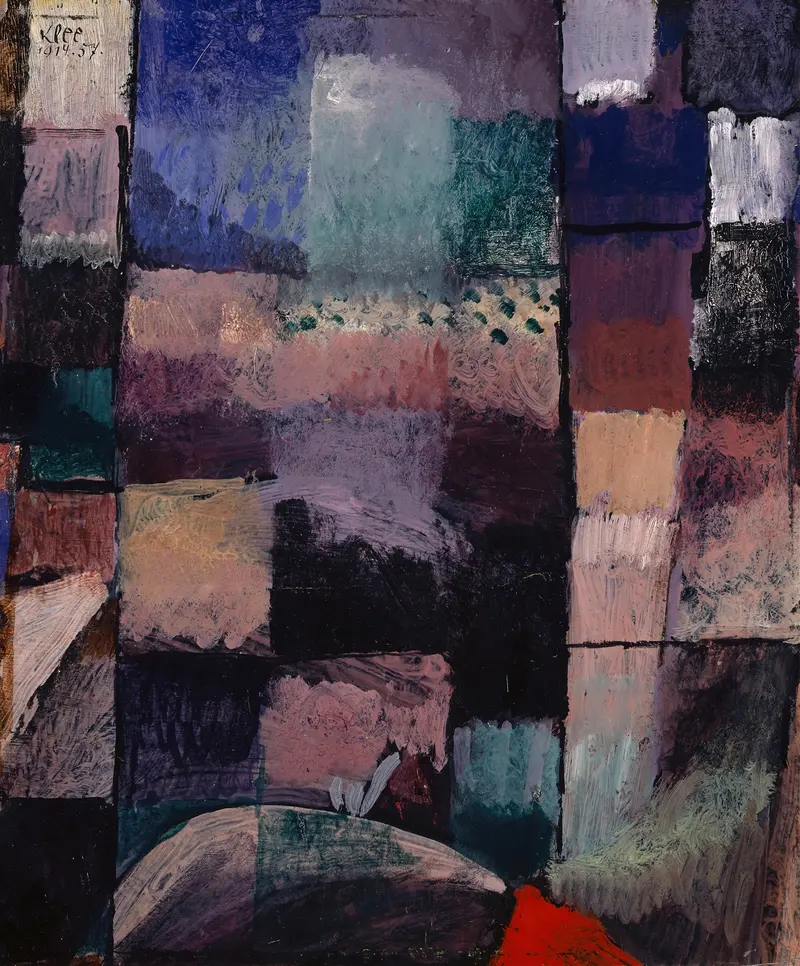
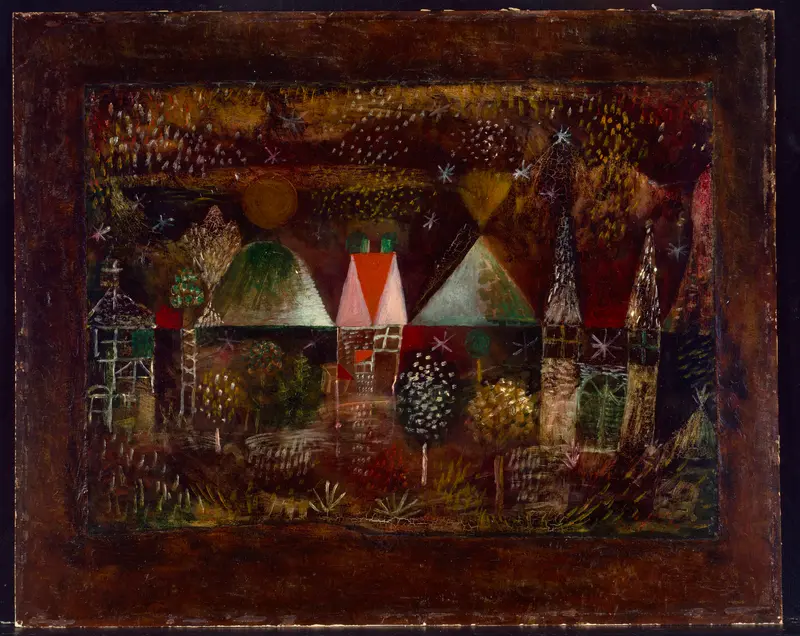
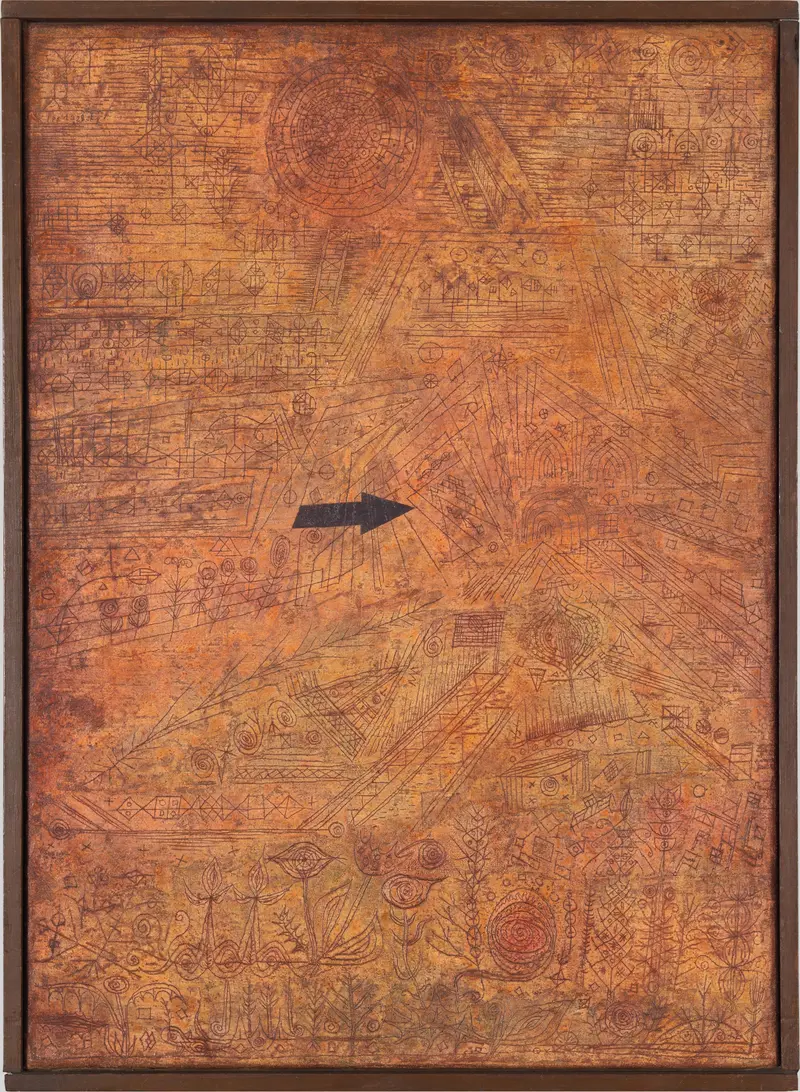
In The Firmament Above the Temple, vibrant colors dominate the canvas, with swirling forms that suggest both sky and structure. The use of blues, yellows, and reds creates a dynamic interplay of light and shadow. Abstract shapes seem to float above a temple-like structure, evoking a sense of spirituality.
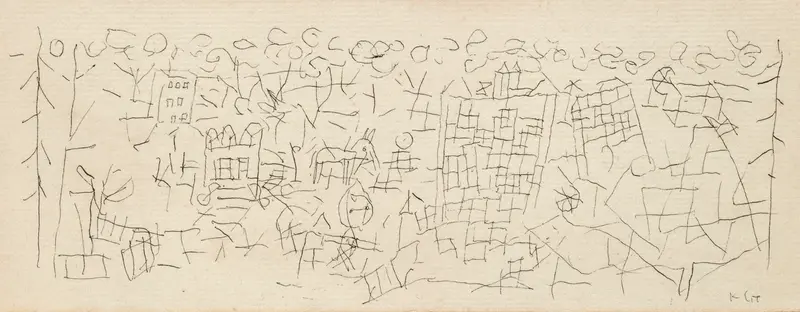
The overall composition is both playful and contemplative, inviting viewers to explore its depths. The painting is characterized by Klee's signature use of line and color, which creates a rhythmic flow across the canvas. The brushwork is expressive, with visible strokes that add texture and movement. Klee often employed a variety of techniques, blending abstraction with figuration.
This piece exemplifies his ability to convey complex ideas through simple forms. Paul Klee was a key figure in the development of modern art, known for his unique style that combined elements of expressionism and abstraction. The Firmament Above the Temple reflects his interest in spirituality and the natural world. An interesting fact about this work is that it was created during a period when Klee was deeply influenced by his travels to Tunisia, which inspired his vibrant color palette.
This painting is a testament to his innovative approach to art.