
The Fishwife — History & Facts
Can paint confess what words never could? In The Fishwife, serenity unfolds through a simple yet profound narrative, capturing a moment that speaks beyond the confines of dialogue. Look to the right at the figure of the fishwife, her posture relaxed and grounded as she gently cradles a basket brimming with her catch. The soft light filtering through the scene embraces her, illuminating the cool hues of the fish contrasting against the warm earthy tones of her clothing. Notice how van Ostade uses light and shadow to create depth, drawing the viewer's eye toward the delicate expression on her face, rich with the wisdom and resilience of everyday life. Delve deeper into the small details, where the fishwife’s calloused hands reflect years of labor, hinting at a life woven with both hardship and tranquility.
The subtle interplay between the fish and the woven basket speaks to the cycle of nature, the balance between sustenance and survival. Here, a gentle smile lingers, suggesting contentment despite the labor that defines her existence—a poignant reminder of the beauty found in simplicity. In 1672, van Ostade painted this piece during a time when Dutch genre painting flourished, capturing intimate glimpses of everyday life. Living in Haarlem, he was influenced by the burgeoning interest in realism and the domestic sphere, focusing on the lives of humble folk.
His work during this period reflects a shift toward portraying the human experience with compassion and nuance, celebrating the dignity found in ordinary moments.
More Artworks by Adriaen van Ostade
Browse all →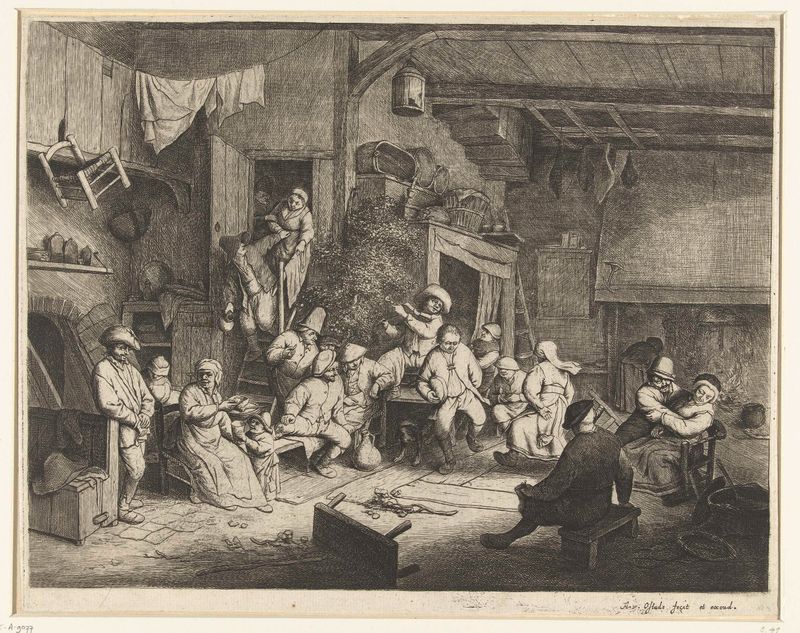
Dans in de herberg
Adriaen van Ostade
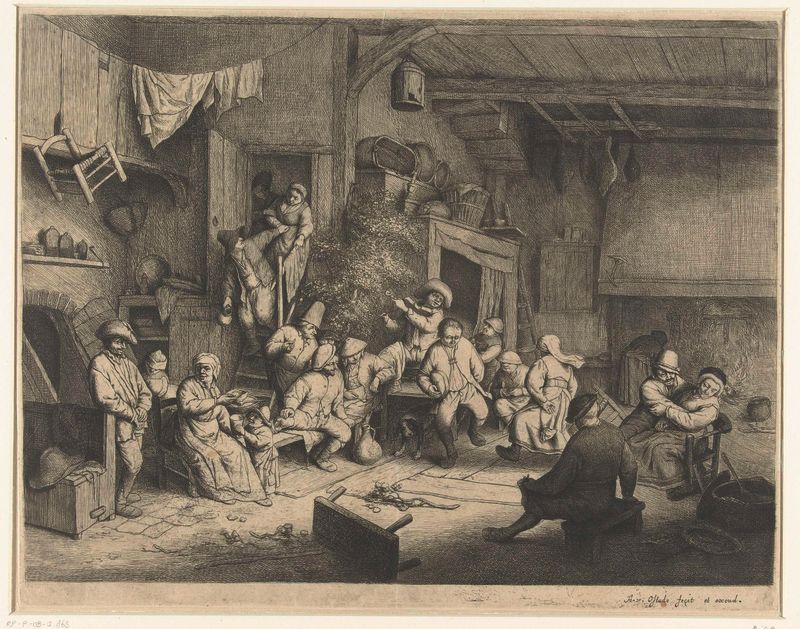
Dance at the Inn
Adriaen van Ostade

Travellers Halted At A Country Inn
Adriaen van Ostade
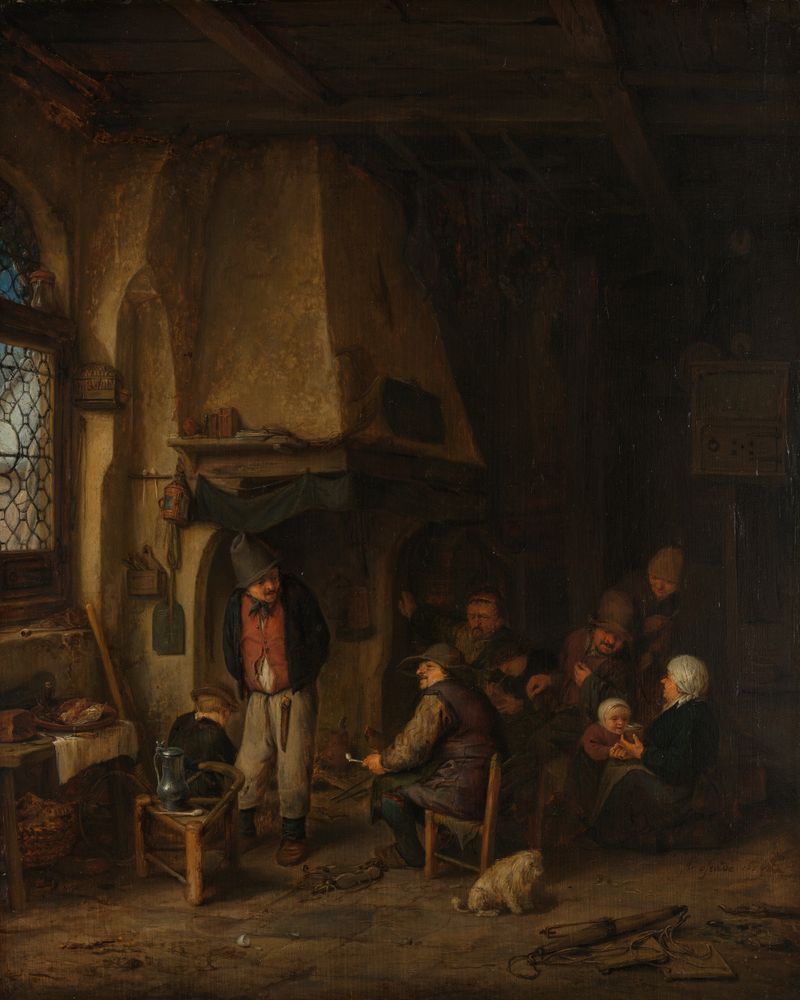
‘The Skaters’: Peasants in an Interior
Adriaen van Ostade

Dans in de herberg
Adriaen van Ostade

Merrymakers in an Inn
Adriaen van Ostade
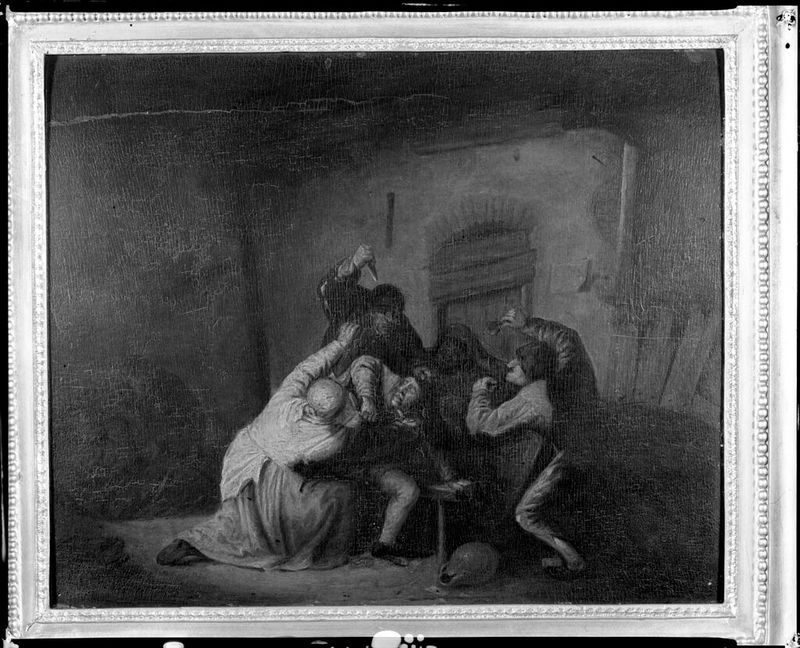
Peasants Brawling in a Tavern
Adriaen van Ostade
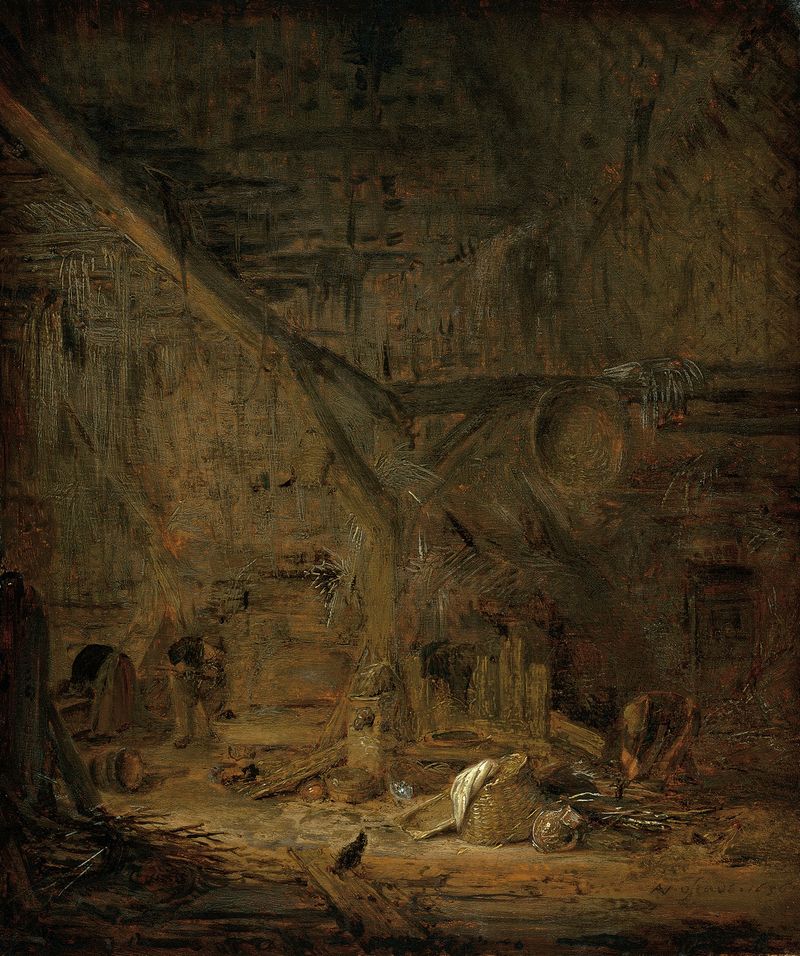
Interior of a Barn
Adriaen van Ostade

Man with a Tankard at a Window
Adriaen van Ostade
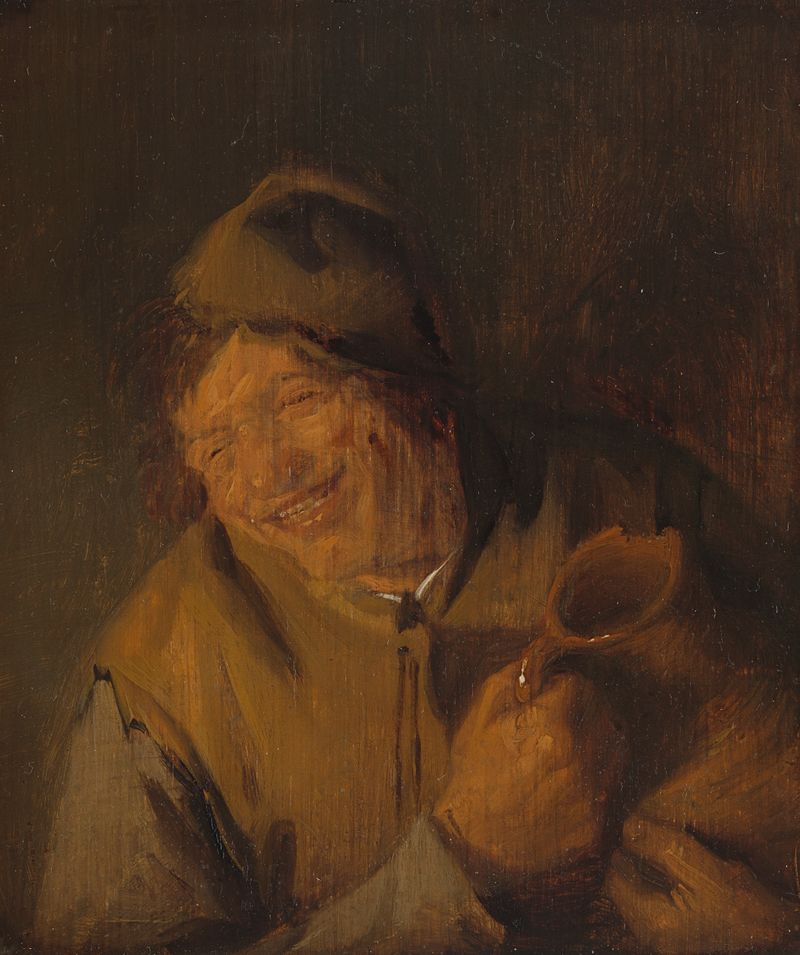
The Merry Peasant
Adriaen van Ostade





