
The ford — History & Facts
As you gaze upon this work, a sense of serenity envelops you, inviting contemplation and quiet reflection. Look to the left at the gentle curve of the river, its waters muted and calm, guiding your eye toward the distant horizon. The artist's deft brushwork captures the lush greens of the foliage, blending them harmoniously with soft earthy tones, creating a natural dialogue between land and water. Notice how the sunlight filters through the trees, casting delicate shadows that dance across the scene, evoking a feeling of peace and timelessness. Amidst the tranquility, the small figures crossing the ford hint at a deeper narrative—one of passage, both literal and metaphorical.
Their modest presence contrasts with the expansive landscape, suggesting that while the world is vast, each journey is personal and intimate. The stillness of the scene invites reflection on the weight of time, the fleeting nature of human endeavor amidst the permanence of nature. Jacob van Ruisdael painted this work in the mid-17th century, during a period when the Dutch Golden Age was flourishing. As he explored the nuances of light and shadow, he sought to capture not just landscapes, but the very essence of human experience within them.
This era was marked by a burgeoning interest in the natural world, and Ruisdael's ability to evoke emotion through serene vistas solidified his place among the notable painters of his time.
More Artworks by Jacob van Ruisdael
Browse all →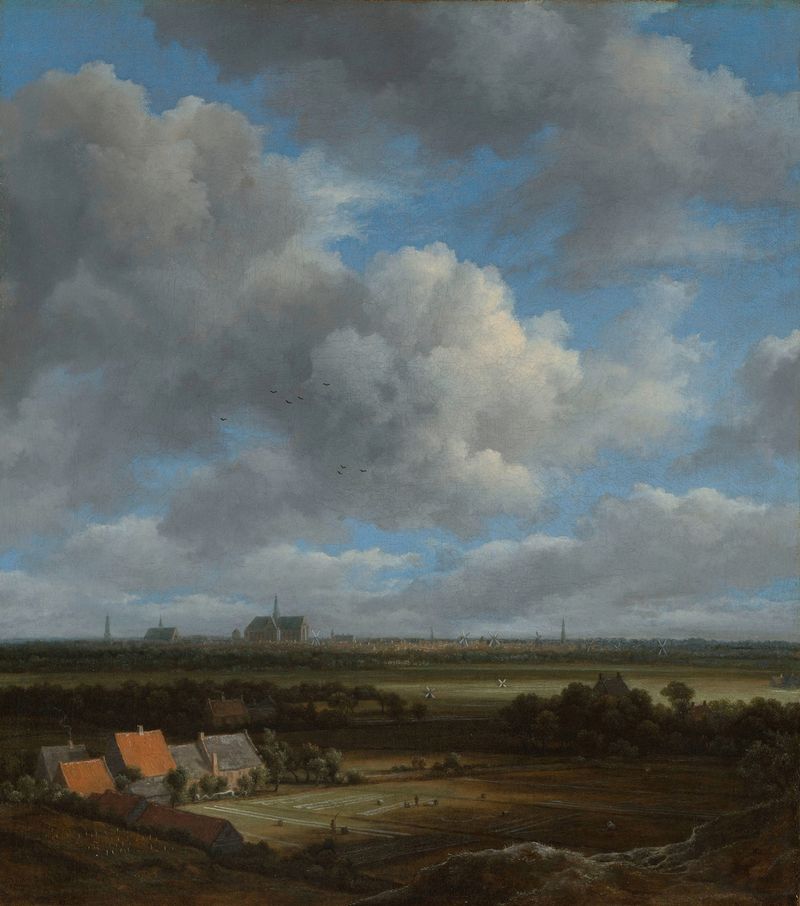
View of Haarlem from the Northwest, with the Bleaching Fields in the Foreground
Jacob van Ruisdael
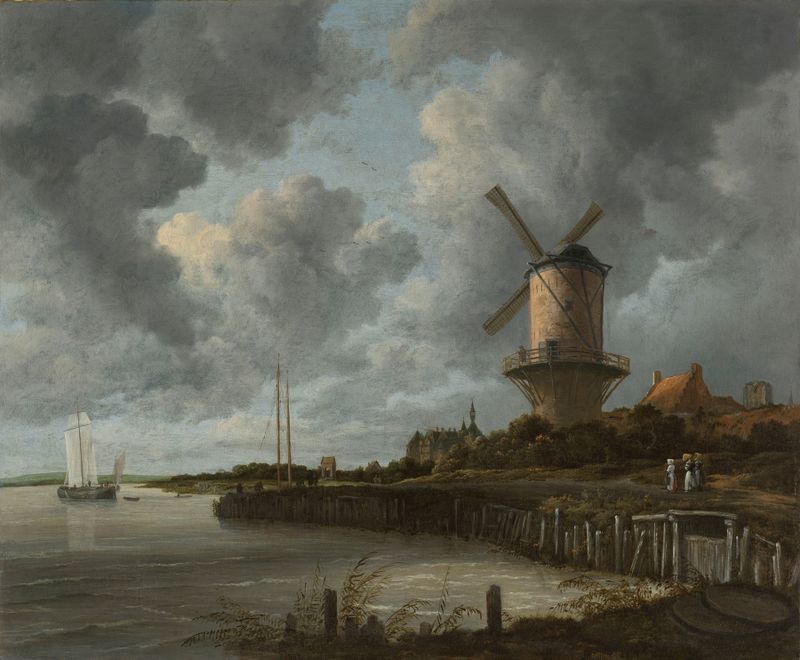
The Windmill at Wijk bij Duurstede
Jacob van Ruisdael
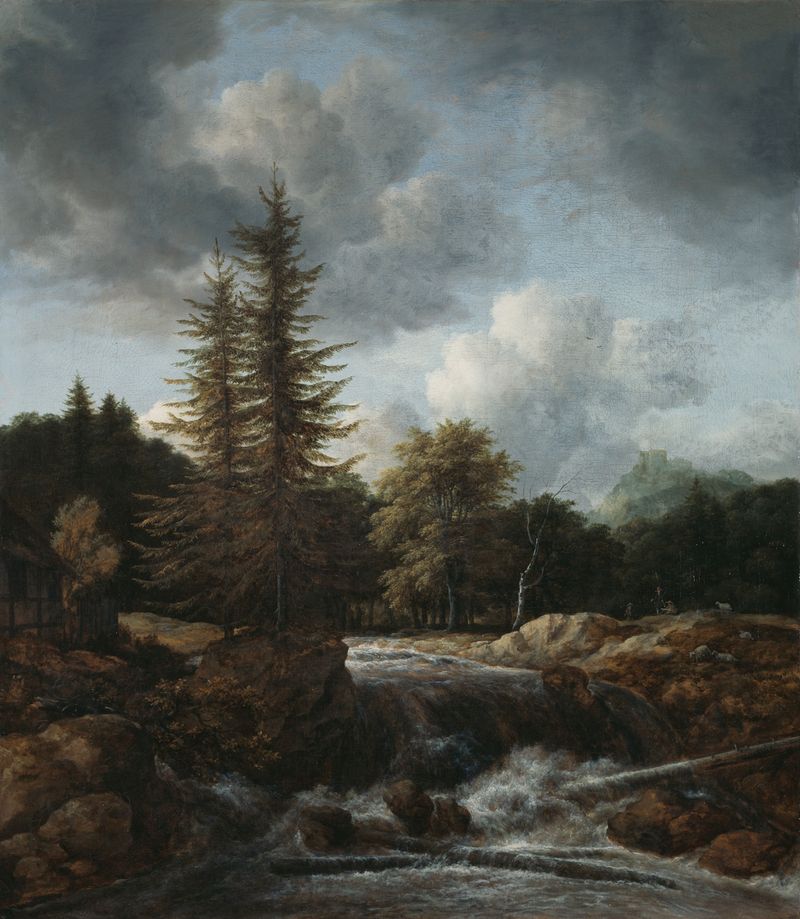
Landscape with Waterfall
Jacob van Ruisdael
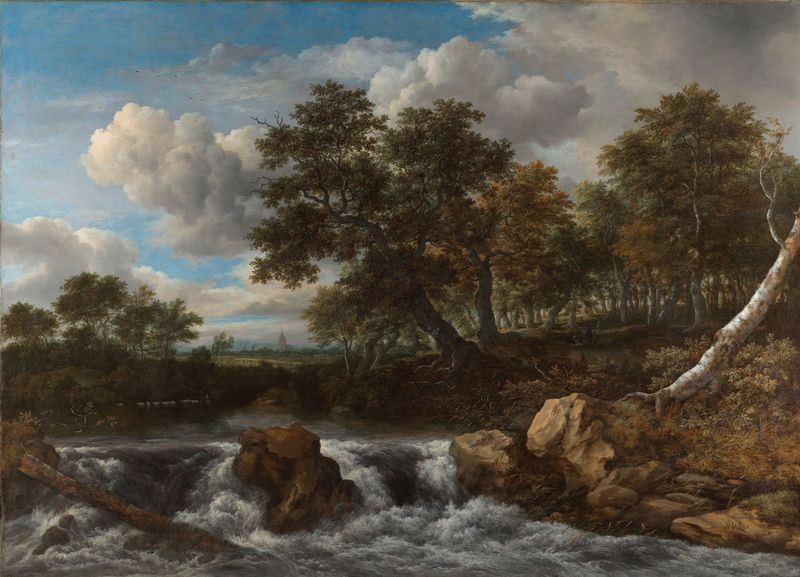
Landscape with Waterfall
Jacob van Ruisdael
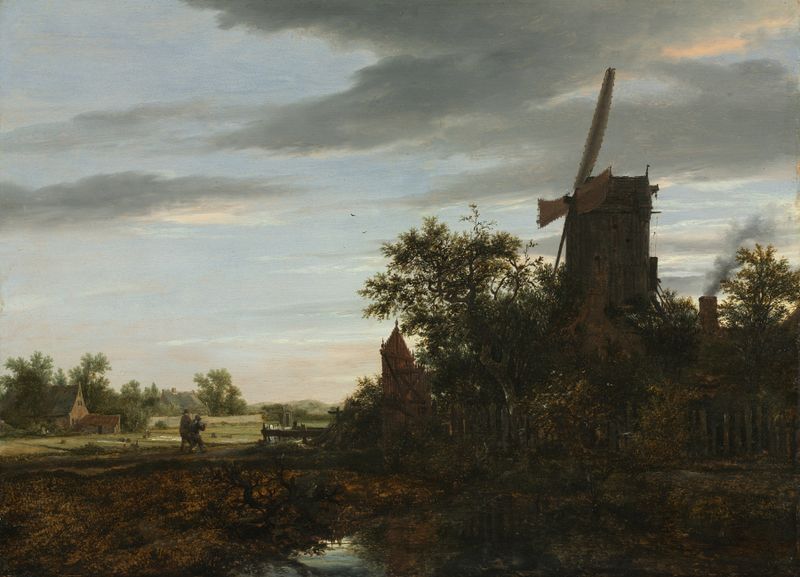
Landscape with a Windmill
Jacob van Ruisdael

Wooded hillside with a view of Bentheim Castle
Jacob van Ruisdael
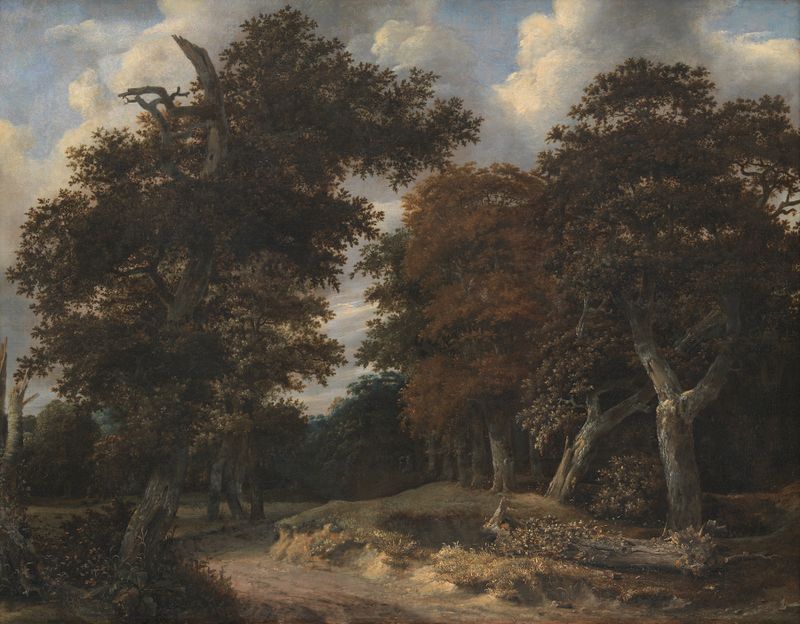
Road through an Oak Forest
Jacob van Ruisdael

Landscape with a Church
Jacob van Ruisdael

The Forest Stream
Jacob van Ruisdael

The Jewish Cemetery
Jacob van Ruisdael





