
The Furious Dragon — History & Facts
It is the dragon’s wild, almost comic ferocity that first seizes the eye, its gaping mouth and flaring whiskers caught in a circle of swirling clouds. The two children, dressed in matching yellow tunics edged with black, seem undaunted by the beast’s display, each holding one of its claws as if leading a dance rather than a battle. The dragon’s scales and whiskers are rendered with a playful energy, while the children’s rounded faces and poised feet suggest movement and mischief.
The composition is tightly contained within a decorative border of curling clouds, giving the scene a sense of both confinement and theatricality—like a moment from a puppet show or a folktale frozen in mid-action. Created in 1914, The Furious Dragon by Helen Hyde belongs to a world where Western artists were increasingly fascinated by East Asian motifs and printmaking techniques. Hyde herself was known for her travels in Japan and her sensitive adoption of Japanese woodblock methods, though here she turns to a more whimsical, almost storybook style. Works like this, produced in the early twentieth century, often found their way into children’s books, greeting cards, or as collectible prints, catering to a growing Western appetite for the exotic and the decorative.
Now held in the Smithsonian American Art Museum, this image invites viewers to look again at the playful collision of cultures and the enduring charm of imagination on paper.
More Artworks by Helen Hyde

Moonlight on the Viga Canal) - HH (monogram) LCCN0065
Helen Hyde
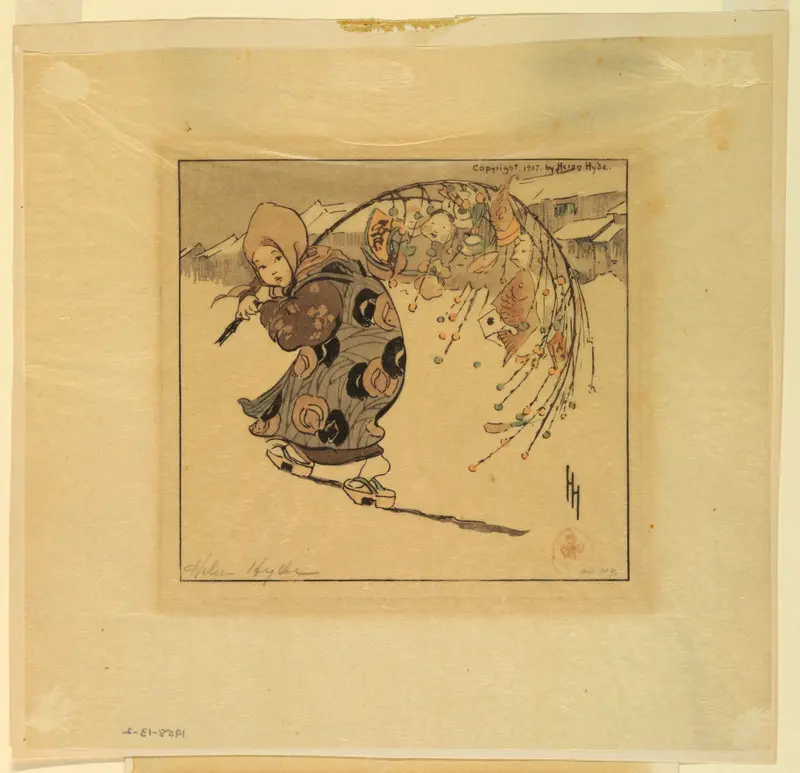
Print, The Good Luck Branch
Helen Hyde
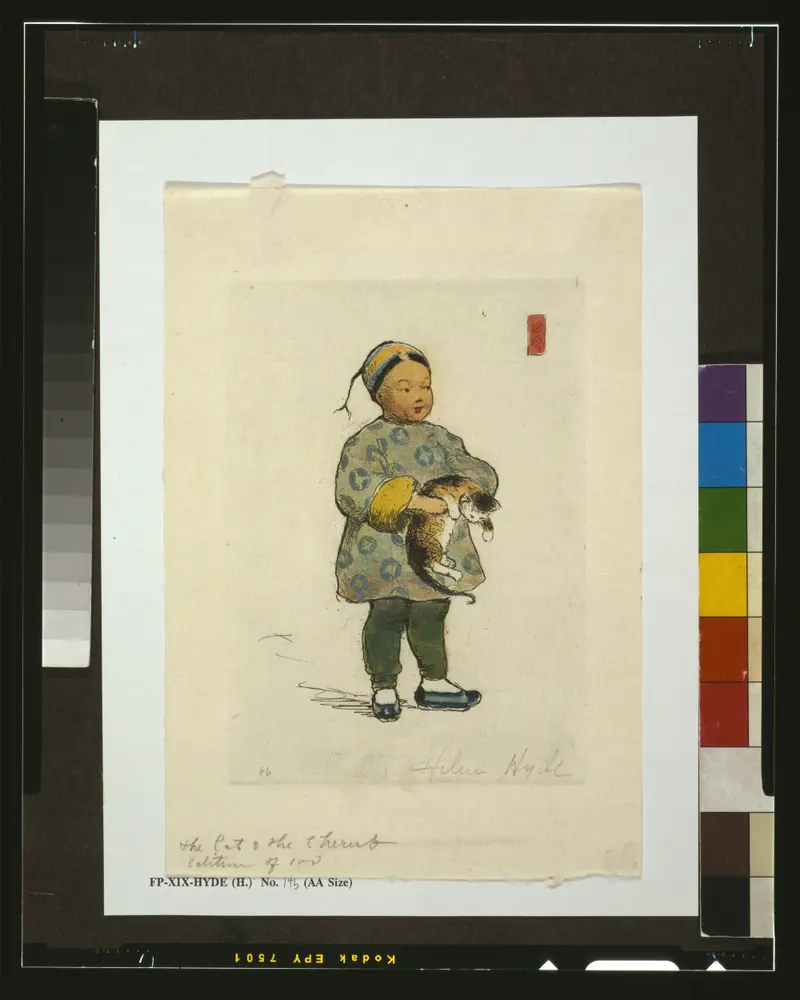
The cat and the cherub LCCN200367
Helen Hyde

Hon(orable Mr) cat - HH (monogram). LCCN200367
Helen Hyde
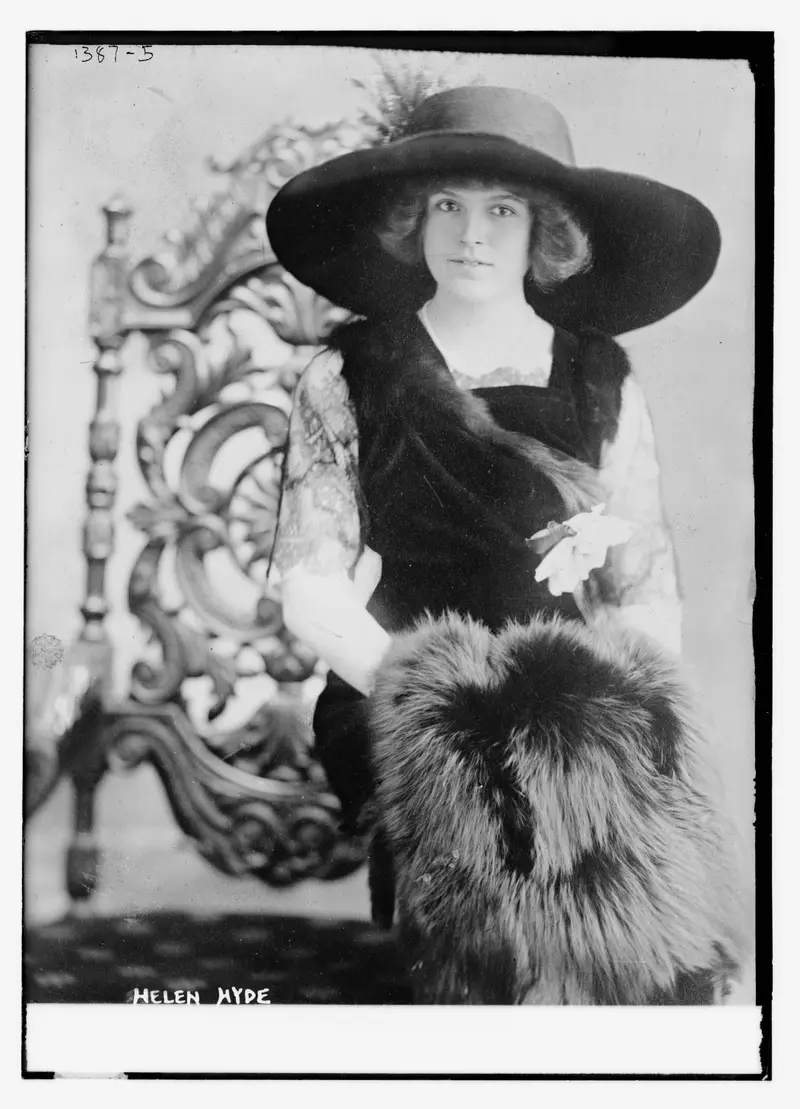
Helen Hyde LCCN201468
Helen Hyde
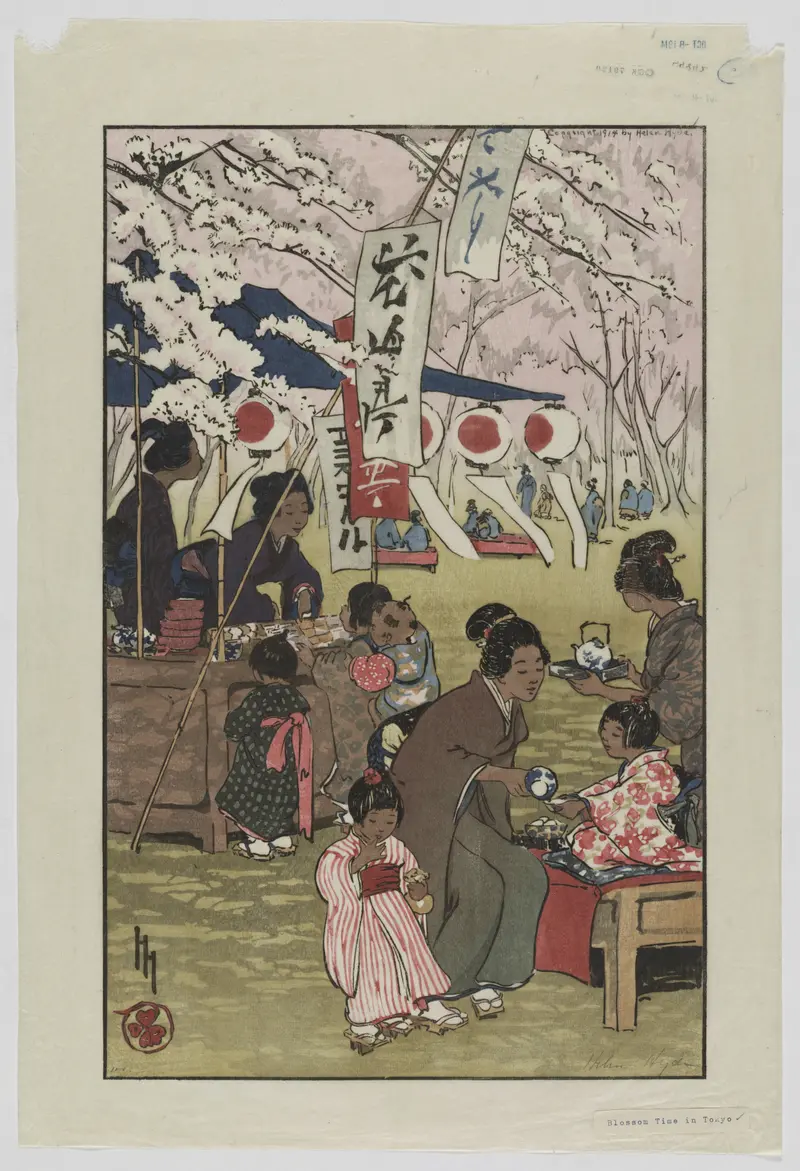
Blossom time in Tokyo) - HH (monogram) LCCN0065
Helen Hyde
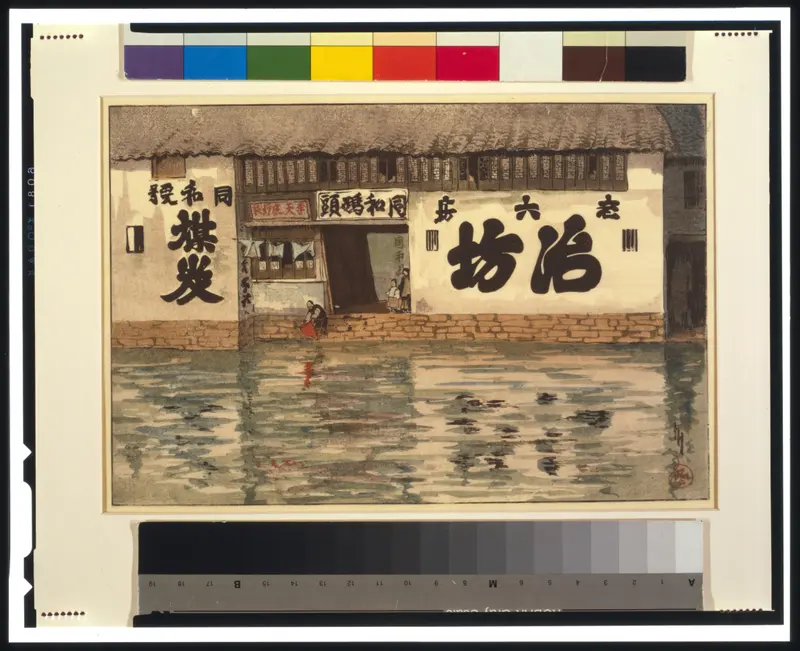
The sauce-pan shop) - HH (monogram) LCCN0065
Helen Hyde

New Year's Day in Tokyo
Helen Hyde
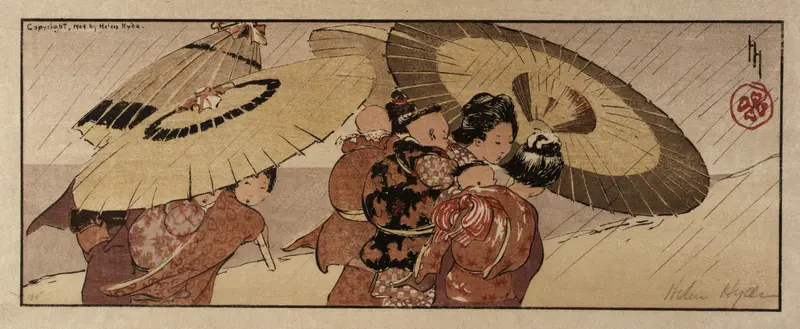
A Summer Shower
Helen Hyde
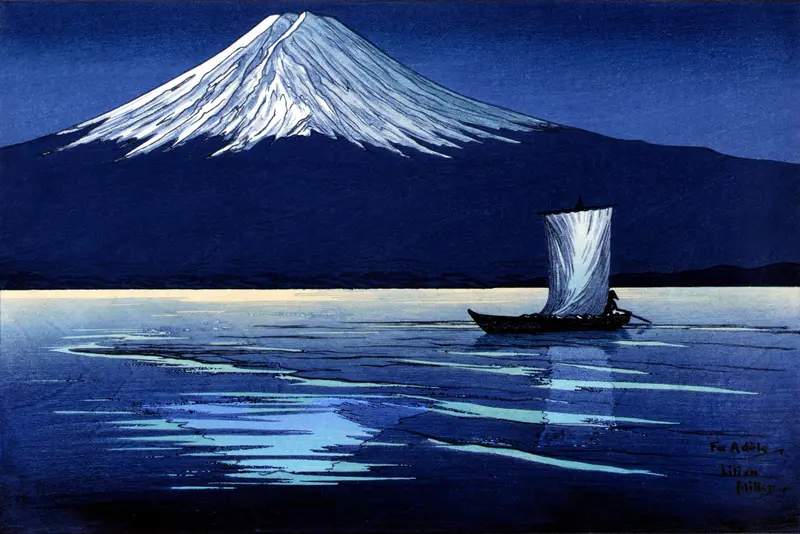
Moonlight on Mt. Fuji
Helen Hyde



