
The Girl of the Wall-Almirah — History & Facts
What first draws the eye in The Girl of the Wall-Almirah is the poised, almost theatrical moment of emergence: a young woman in vivid red, caught mid-step as she slips from the shadowed shelter of a latticed window. Her gesture is both cautious and curious, one hand braced on the intricately carved shutter, the other steadying herself as she steps barefoot onto the patterned rug below. The composition leads you from the twisting trunk of the tree, whose branches arch protectively overhead, to the delicate poppies blooming at her feet, and finally to the quiet details of daily life—a hookah, a water vessel, a woven basket—arrayed in the courtyard.
The palette is gentle, suffused with the golden warmth of early morning or late afternoon, lending the scene a sense of quiet anticipation. Created by Warwick Goble as an illustration for Folk-tales of Bengal in 1912, this work belongs to a moment when British illustrators were captivated by the colors and stories of South Asia, often for publications aimed at Western readers hungry for tales from distant lands. Goble’s style, with its fine lines and jewel-like washes, reflects the influence of both Art Nouveau and the orientalist tradition, yet here he lingers over the textures of architecture and textiles, inviting the viewer to imagine the world beyond the frame. History has kept few traces of the specific commission or journey of this illustration, but its presence in a collection of Bengali folktales speaks to the era’s fascination with storytelling as a bridge between cultures.
The image asks us to linger at the threshold with its heroine, wondering what she hears, and what tale might unfold next.
More Artworks by Warwick Goble
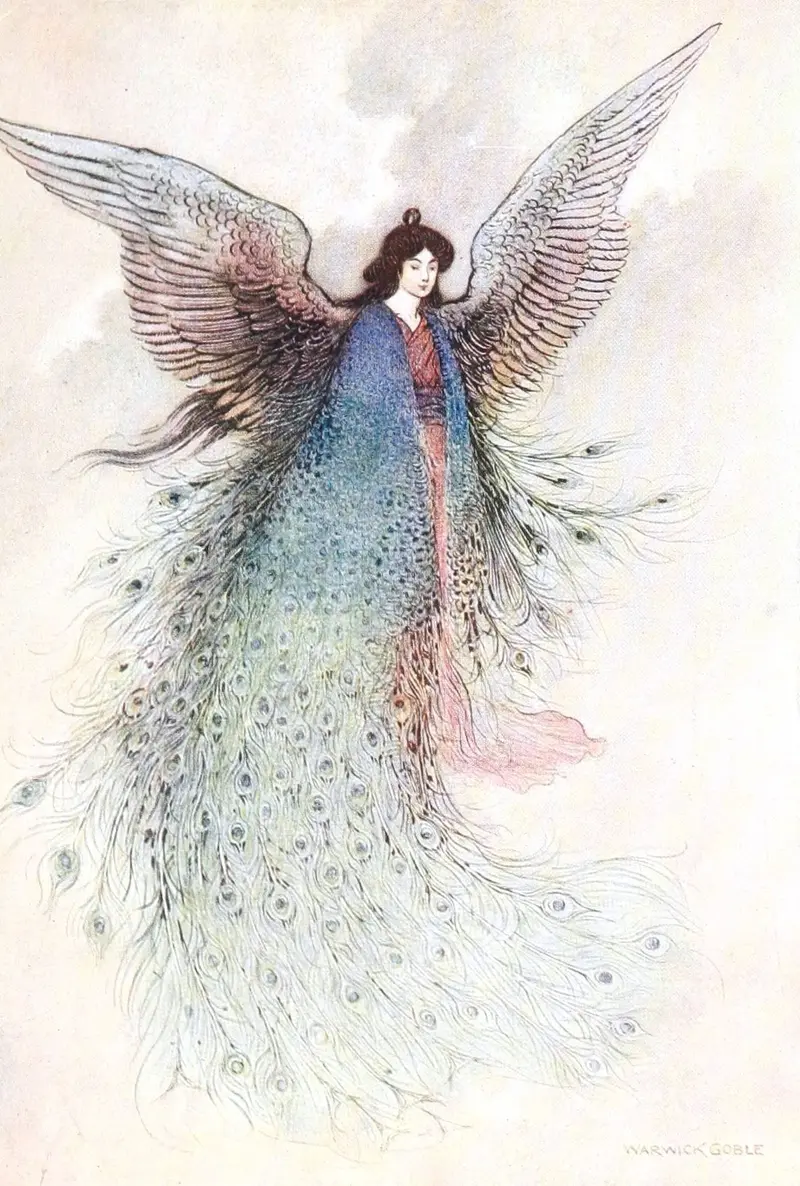
The Moon Maiden (Green Willow)
Warwick Goble
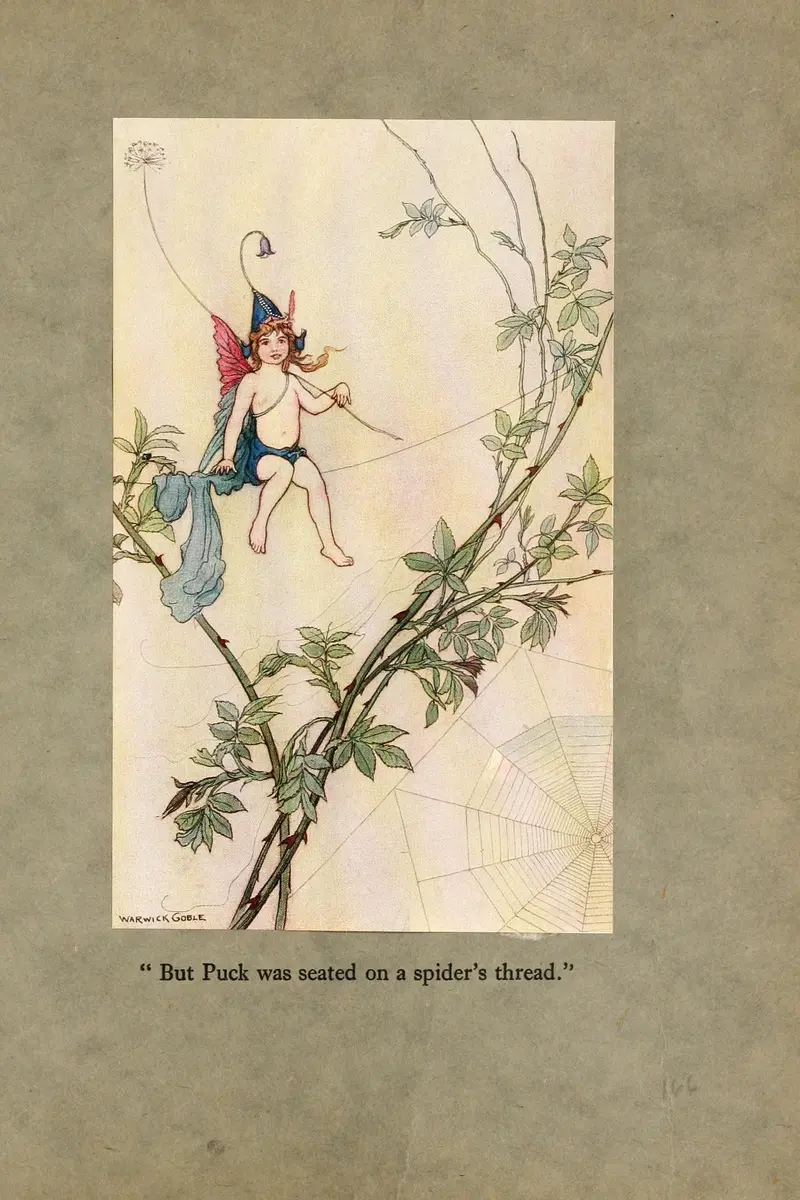
Puck
Warwick Goble

The Ordeal of Queen Draupadi
Warwick Goble

Momotaro
Warwick Goble
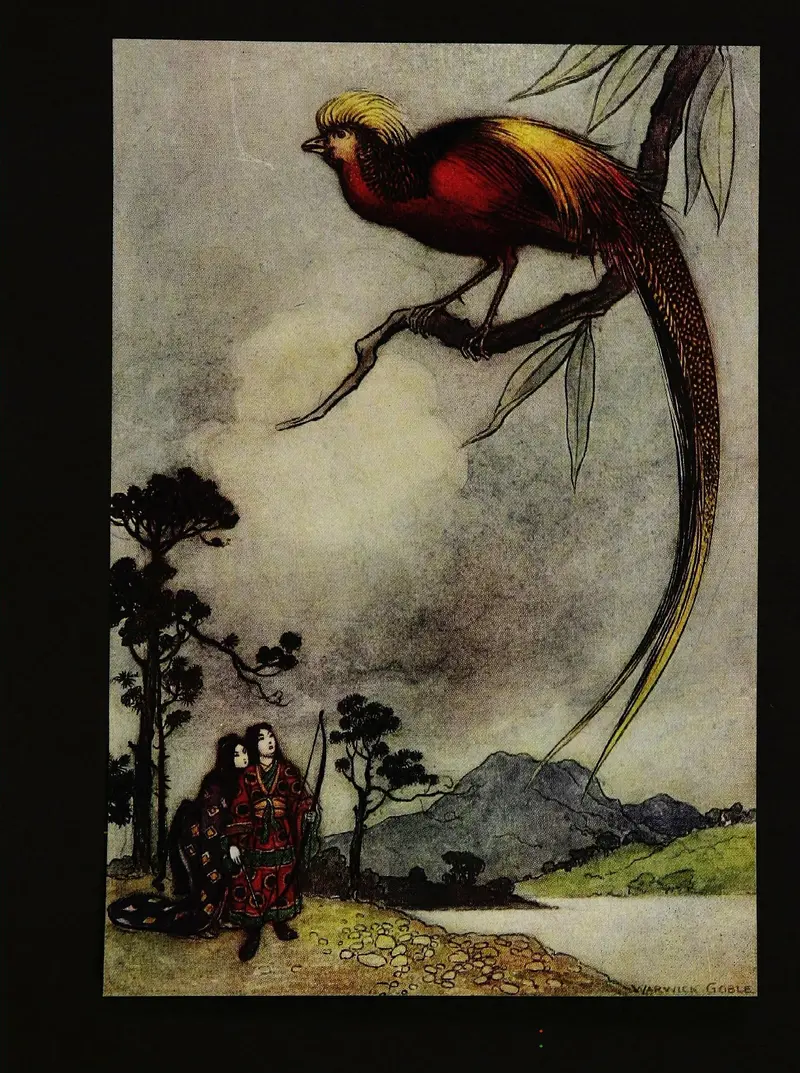
The Singing Bird of Heaven
Warwick Goble
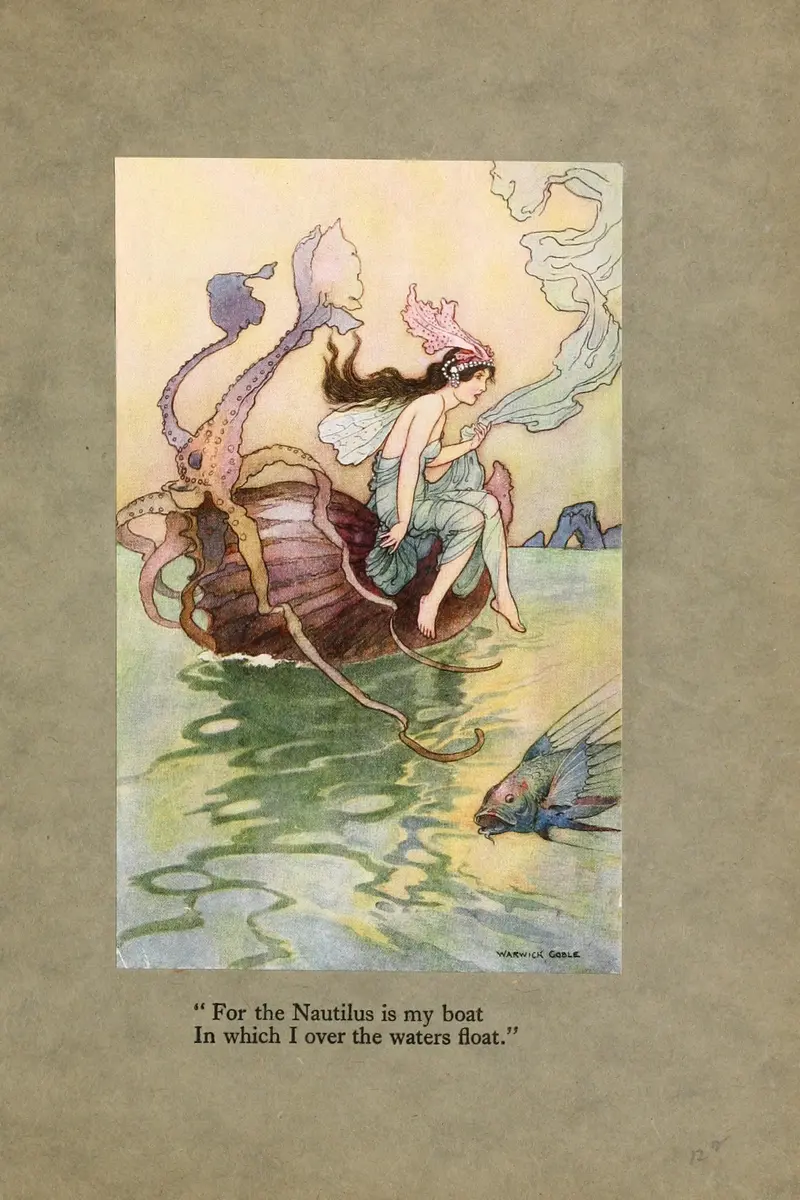
Fairies on the Seashore
Warwick Goble
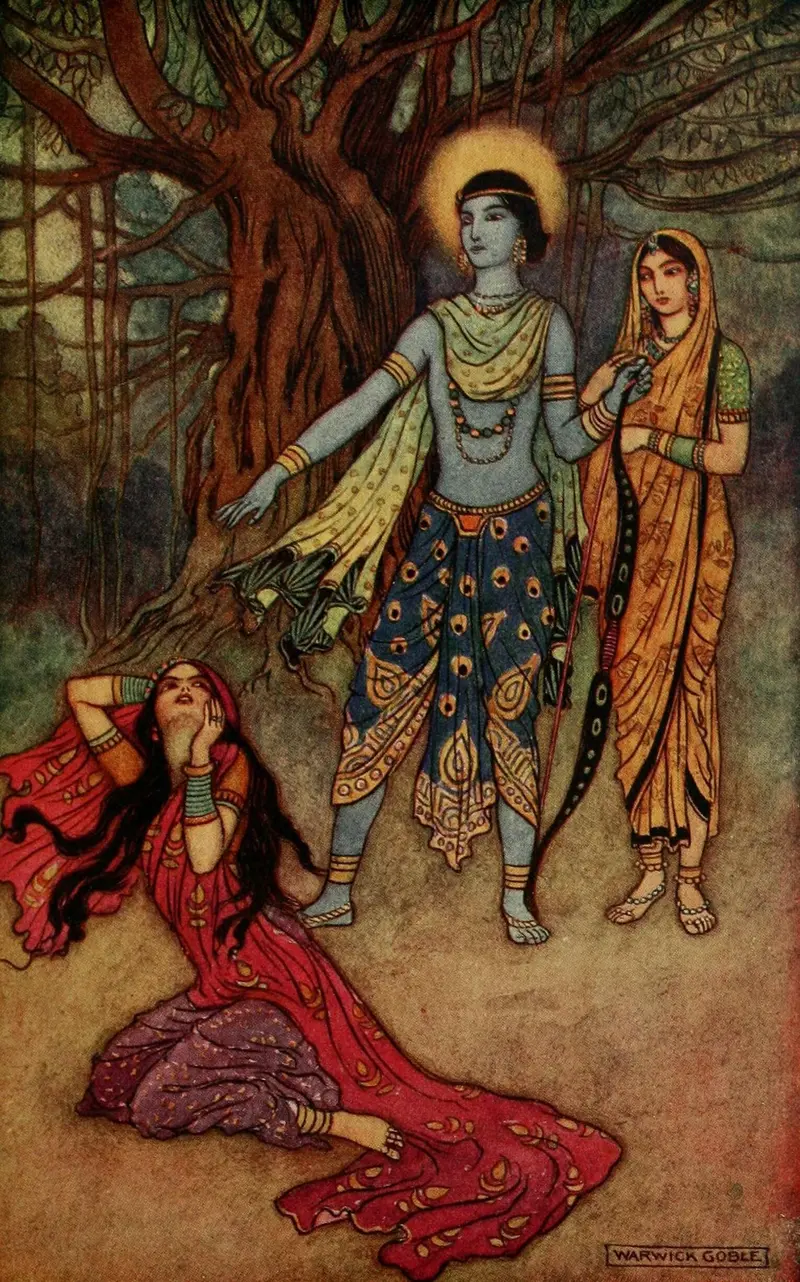
Rama Spurns the Demon Lover
Warwick Goble
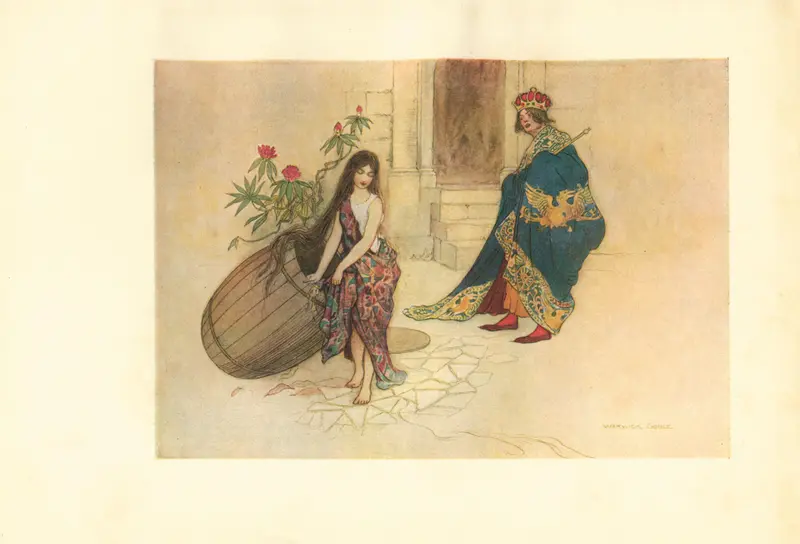
Cannetella Released from the Cask
Warwick Goble
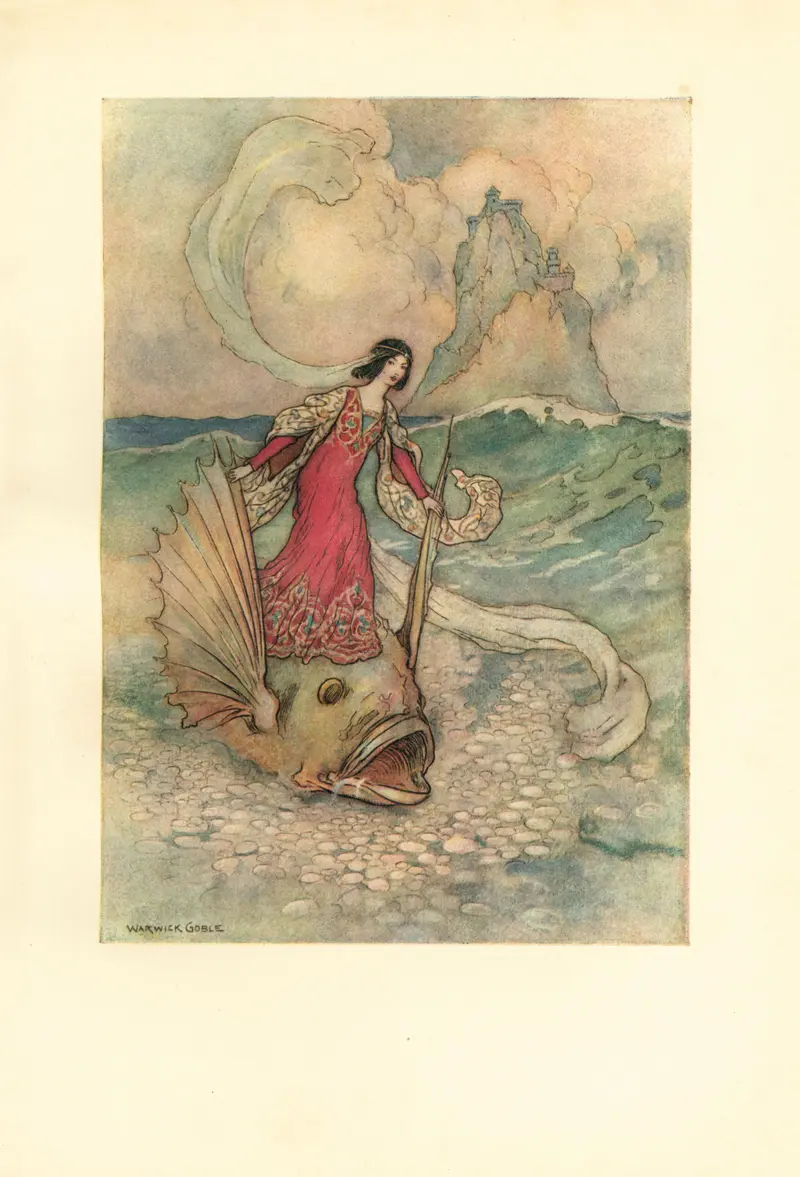
Rita Riding on the Dolphin
Warwick Goble
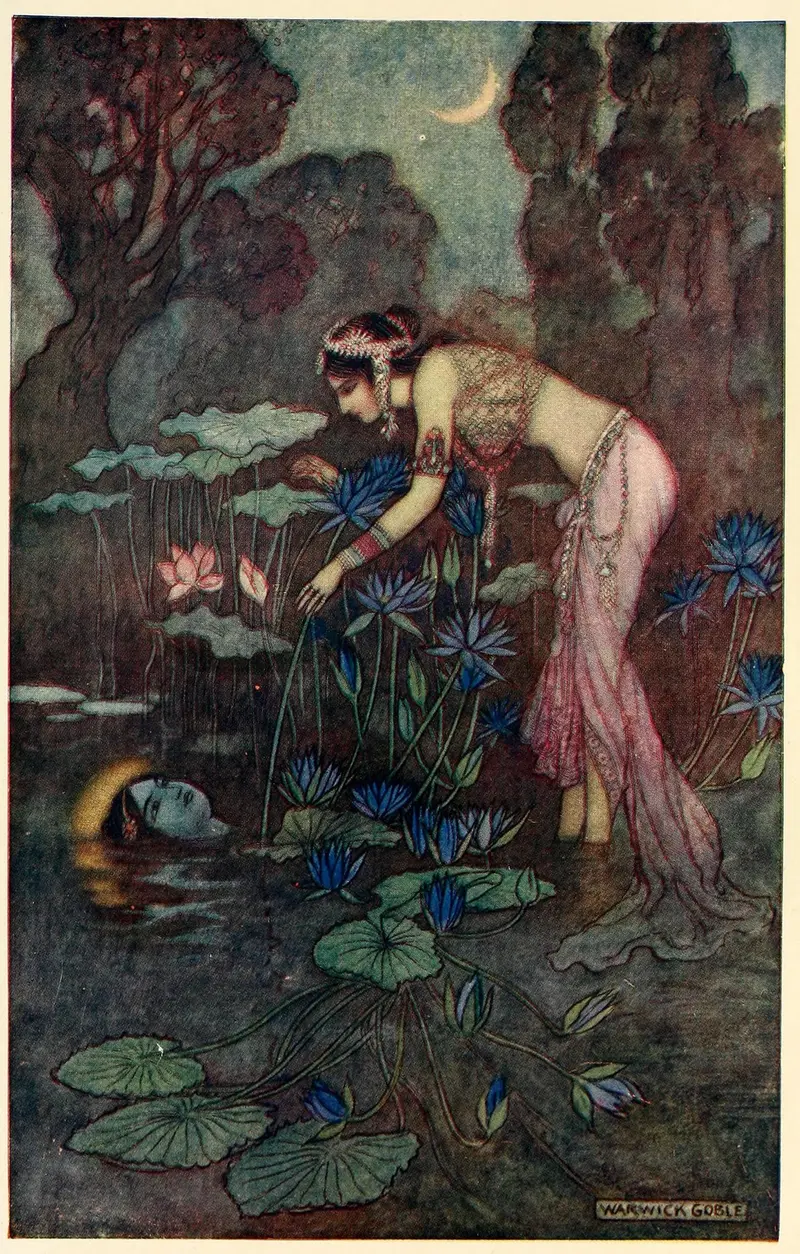
Sita Finds Rama Among Lotus Blooms
Warwick Goble





