
The great Bartholdi statue — History & Facts
In a world where vibrant hues clash with muted tones, the viewer is invited to unravel the tension that vibrates beneath the surface of an artwork that speaks of hope and betrayal alike. Look to the foreground where the grand statue rises — a symbol of liberty, poised with a torch that flickers with promise. Notice how the gentle wash of blues and greens creates an ethereal atmosphere, while the stark contrasts of white and ochre illuminate the intricate details of the statue’s robe. Every brushstroke adds texture, imbuing the piece with an almost tangible dynamism, pulling the viewer’s gaze upward, as if the statue itself beckons them to ponder its significance. Yet, amidst the celebration of freedom, a deeper narrative unfolds.
The juxtaposition of the statue's brightness against a shadowy backdrop hints at the fragility of ideals, suggesting a betrayal of the very principles it represents. The delicate interplay of light and darkness alludes to hidden complexities—what does freedom mean when it is shrouded in silence? The statue stands not only as a beacon but also as a reminder of aspirations unfulfilled, a silent witness to the struggles that continue to shadow liberty. In 1884, Currier & Ives, known for their lithographs, ventured into painting with The great Bartholdi statue during a time of burgeoning national identity in America. As the nation grappled with its post-Civil War realities, the statue symbolized hope, yet the artists faced the challenge of capturing both its grandeur and the societal betrayals that lingered in the air.
This piece serves as a reflection of that complex moment—an emblem of promise intertwined with the weight of expectation.
More Artworks by Currier & Ives.
Browse all →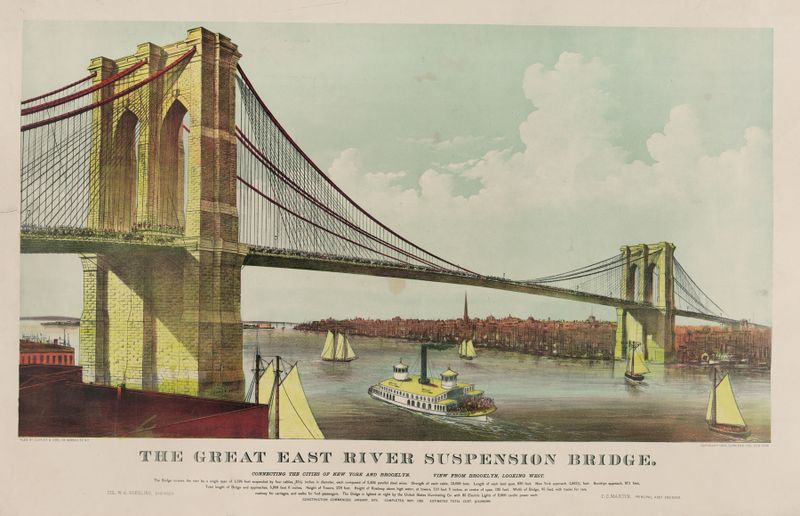
The great East River suspension bridge; connecting the cities of New York and Brooklyn View from Brooklyn, looking west.
Currier & Ives.
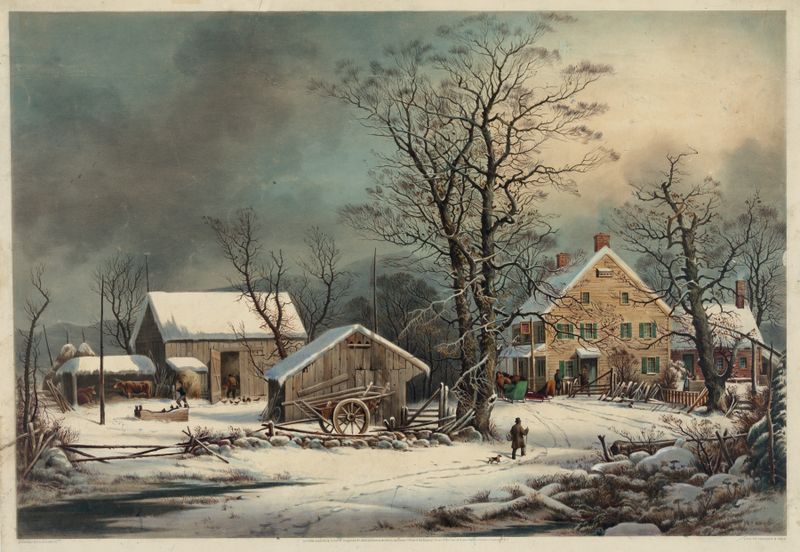
Winter in the country; a cold morning
Currier & Ives.
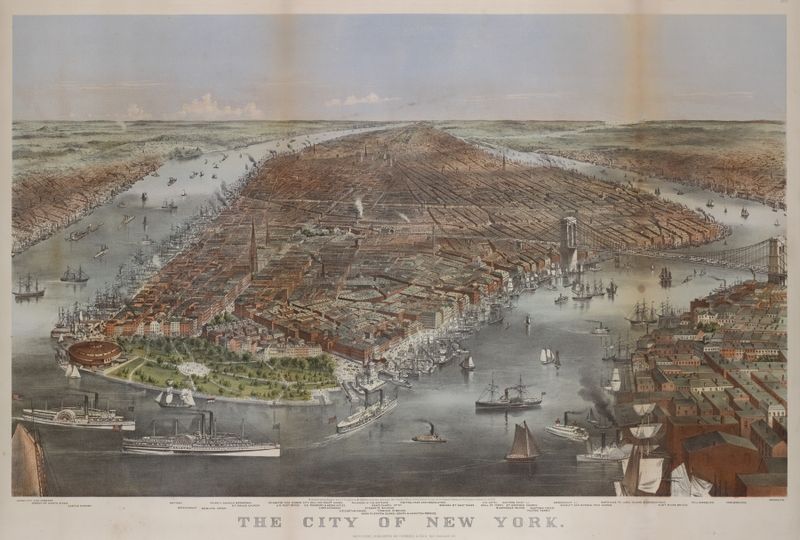
The City of New York
Currier & Ives.
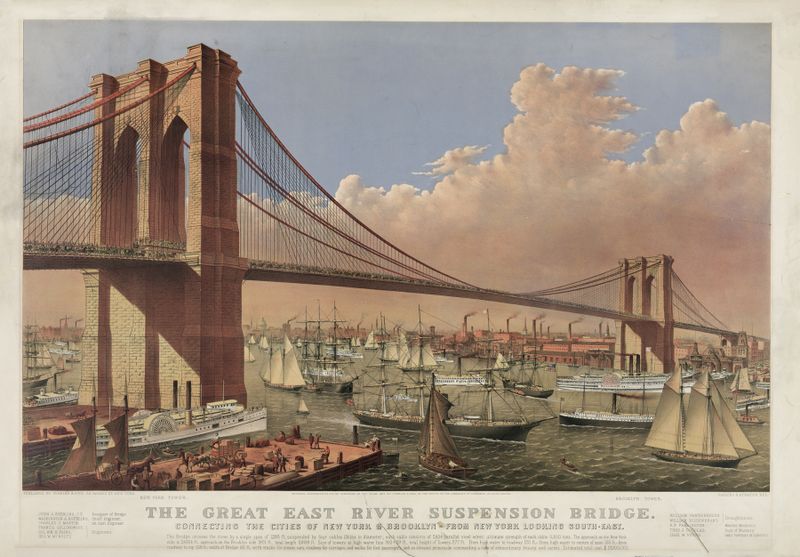
The great East River suspension bridge; connecting the cities of New York & Brooklyn From New York looking south-east.
Currier & Ives.
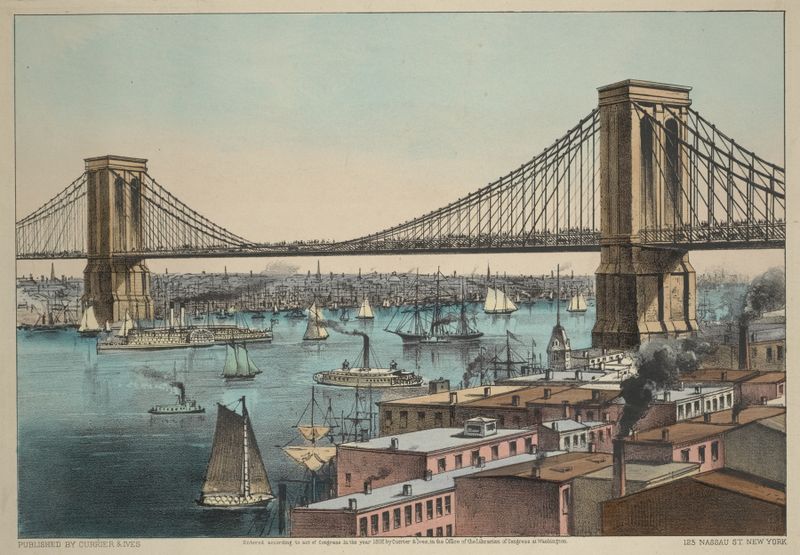
The Great East River Bridge. To connect the cities of New York & Brooklyn
Currier & Ives.
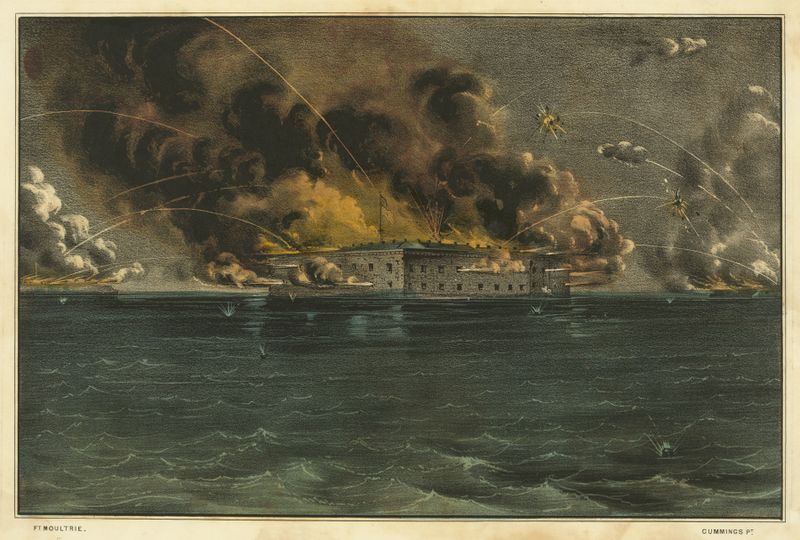
Bombardment of Fort Sumter, Charleston Harbor; 12th & 13th of April, 1861
Currier & Ives.
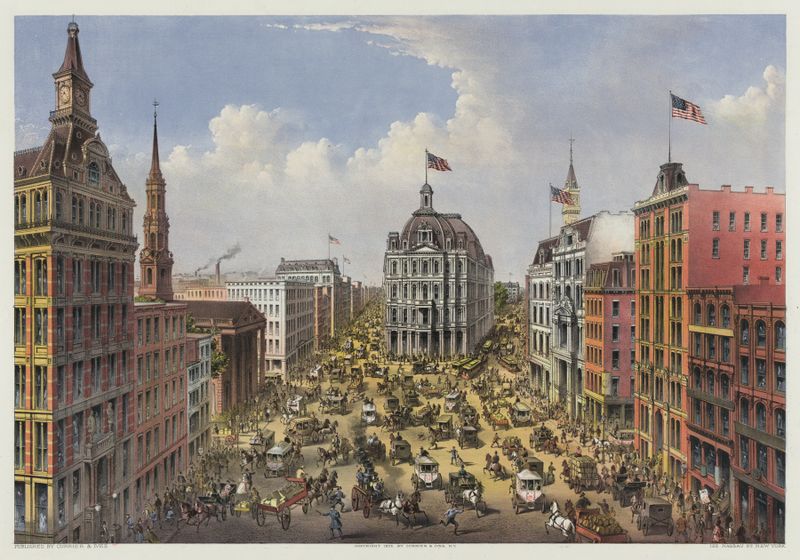
Broadway, New York; From the western union telegraph building looking north
Currier & Ives.
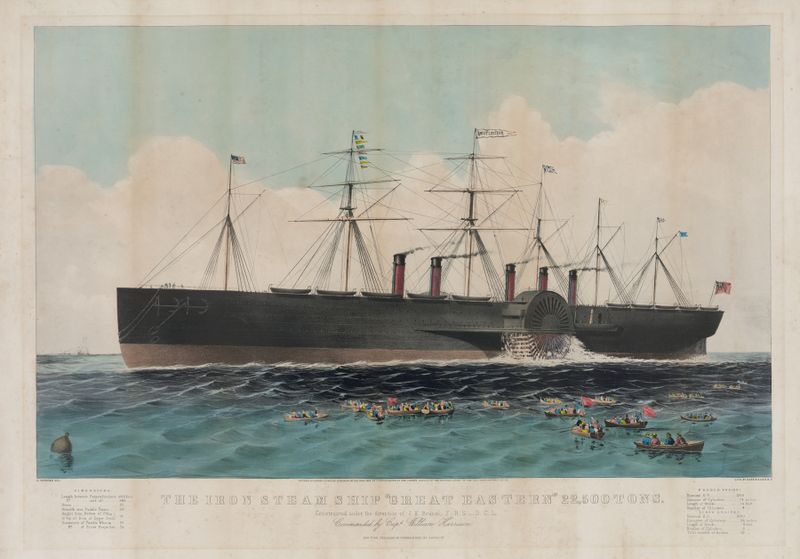
The iron steam ship ‘Great Eastern’ 22,500 tons; constructed under the direction of I.K. Brunel, F.R.S. — D.C.L. commanded by Capt. William Harrison
Currier & Ives.
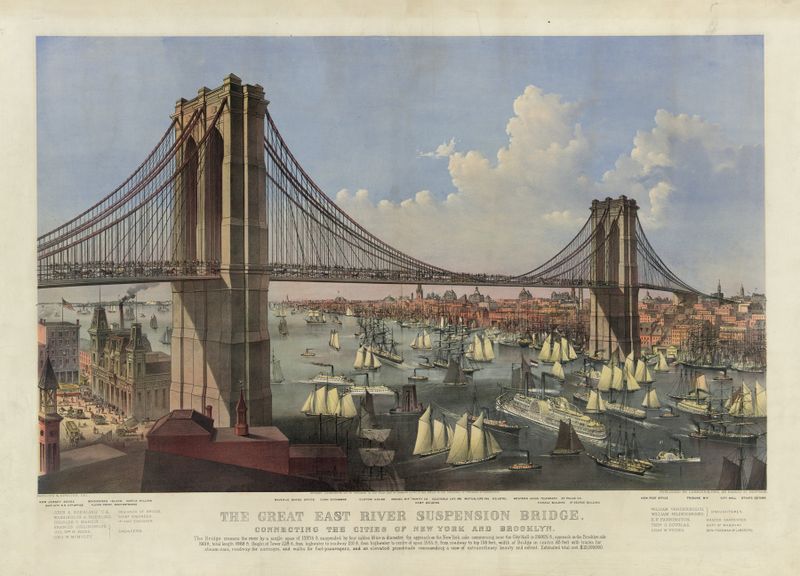
The great East River suspension bridge–Connecting the cities of New York and Brooklyn
Currier & Ives.
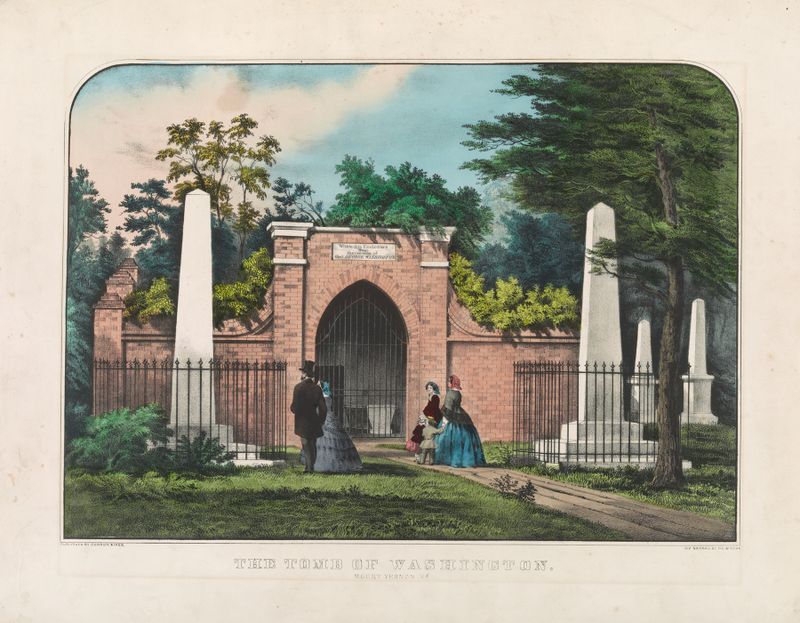
The tomb of Washington; Mount Vernon, Va.
Currier & Ives.
More Historical Art
Browse all →
The Night Watch Militia Company of District II under the Command of Captain Frans Banninck Cocq
Rembrandt van Rijn

Lincoln Memorial
Henry Bacon

The Third of May 1808
Francisco de Goya

Isaac and Rebecca, Known as ‘The Jewish Bride’
Rembrandt van Rijn

The Charge of the Mamelukes (1814)
Francisco de Goya

De vier ruiters van de apocalyps
Albrecht Dürer