
The Holy Family with St. John — History & Facts
In 1629, Nicolas Poussin was still a newcomer in Rome, but already his work was attracting the attention of collectors eager for the new French painter’s clear, classical vision. The Holy Family with St. John is one of several treatments of this subject by Poussin, and its composition has sparked debate: some scholars believe it was painted for a private patron, while others suggest it may have been intended for quiet devotion in a chapel.
What sets this version apart is the remarkable intimacy between the figures, a departure from the more formal arrangements typical of earlier Italian models. This sense of closeness, both physical and emotional, would become a hallmark of Poussin’s mature religious works. The scene captures a moment of gentle interaction: the infant Christ, seated on his mother’s lap, leans eagerly toward his cousin, the young John the Baptist, who offers him a reed cross—a symbol of Christ’s future sacrifice. Mary’s gaze is tender but tinged with foreknowledge, while Joseph, often a background figure, here watches attentively, his hand resting protectively on Mary’s shoulder.
The lush landscape behind them, rendered in soft, golden light, situates the holy group in an idealized, timeless countryside. Poussin’s careful arrangement of hands and glances forms a subtle triangle, drawing the viewer’s eye into the emotional core of the composition. Compared to Raphael’s serene Madonna del Prato, Poussin’s figures are more grounded, their gestures more deliberate, hinting at the gravity of the story to come. The precise early history of this painting is uncertain, as records from Poussin’s Roman period are incomplete.
However, works of this type were highly sought after by both Italian and French patrons, and The Holy Family with St. John reflects the artist’s growing reputation among sophisticated collectors. Over the centuries, the painting has passed through private hands and collections, its attribution to Poussin remaining secure thanks to its distinctive compositional clarity and the subtle psychological interplay of its figures.
Today, it stands as a testament to the artist’s early mastery of religious narrative and his ability to infuse familiar themes with new humanity.
More Artworks by Nicolas Poussin

Spring
Nicolas Poussin
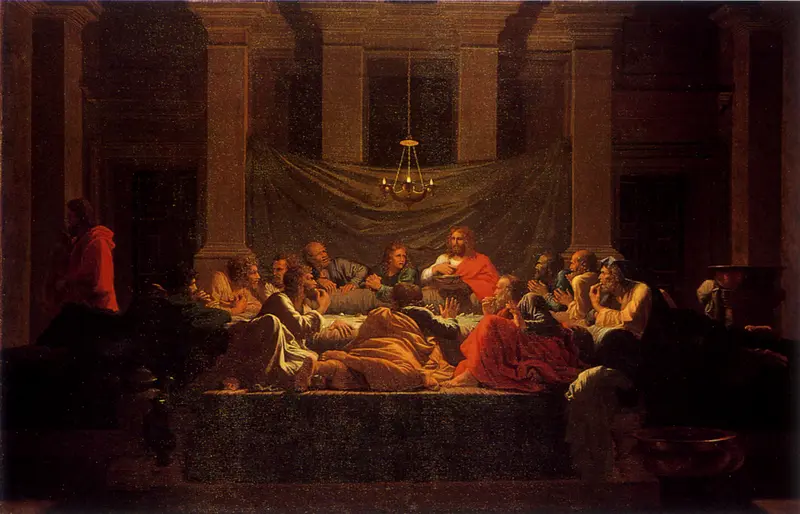
The Sacrament of the Holy Eucharist
Nicolas Poussin
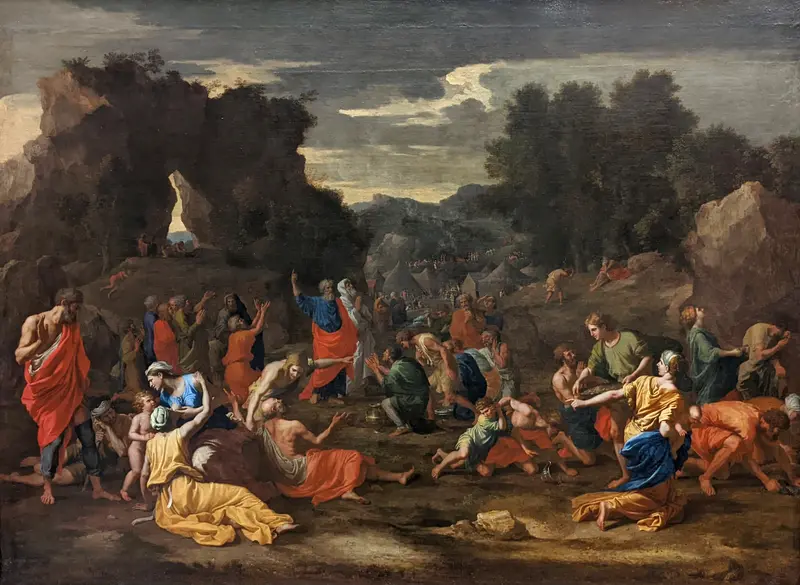
The Israelites gathering Manna in the Desert
Nicolas Poussin
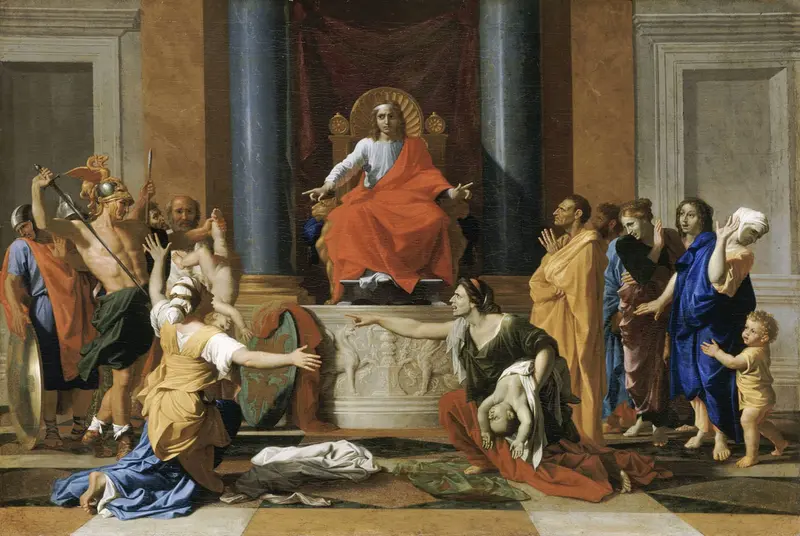
The Judgment of Solomon
Nicolas Poussin
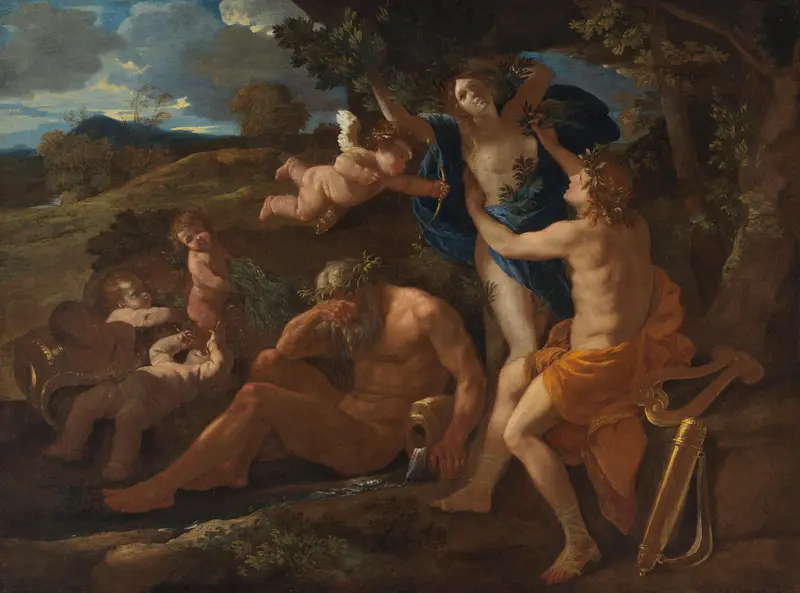
Apollo and Daphne
Nicolas Poussin

The Nurture of Jupiter
Nicolas Poussin

Ordination
Nicolas Poussin
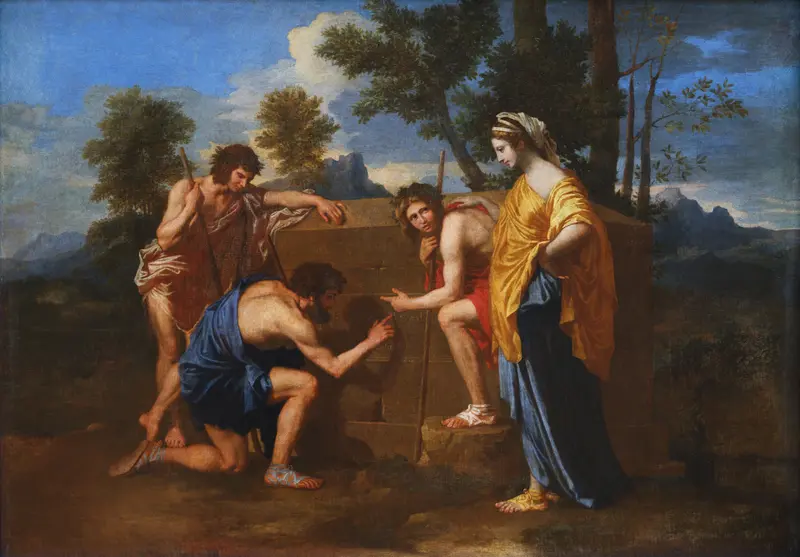
Et in Arcadia ego
Nicolas Poussin
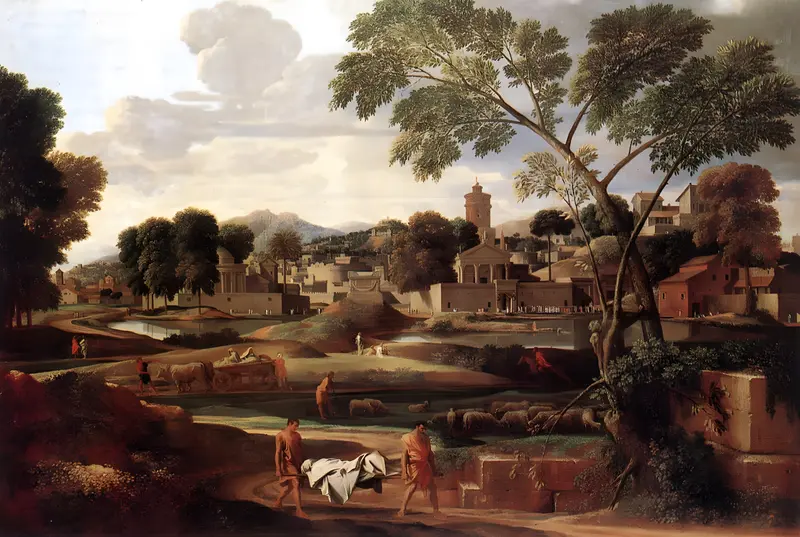
The Funeral of Phocion
Nicolas Poussin
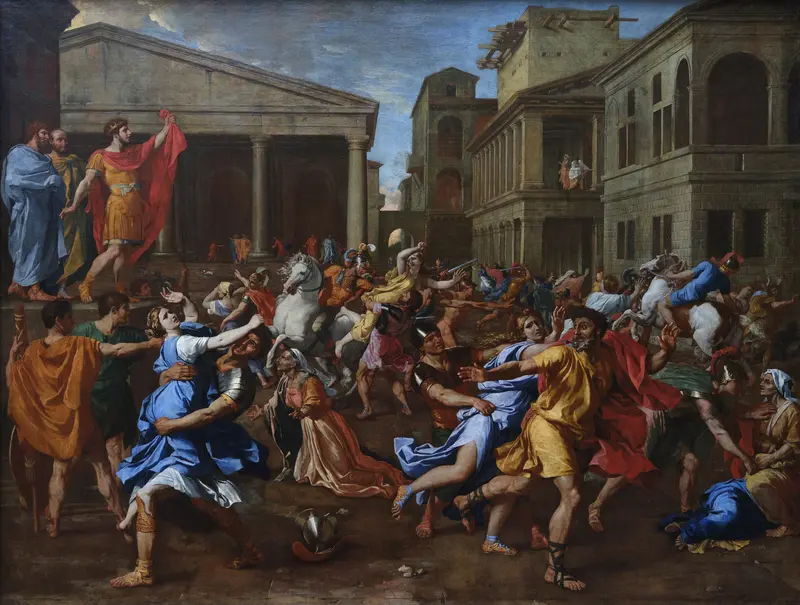
The Rape of the Sabine Women
Nicolas Poussin





