
The Sacrament of the Holy Eucharist — History & Facts
When Nicolas Poussin received the commission for The Sacrament of the Holy Eucharist in 1647, he was already deep into his ambitious cycle of seven paintings devoted to the sacraments, created for his Roman patron Cassiano dal Pozzo. This series became a landmark in the history of religious painting, not only for its intellectual rigor but also for the way it shaped the French artist’s reputation as the “philosopher painter.” The cycle was so admired that it inspired collectors across Europe to seek their own versions, and several copies and variants were made, though the originals are now scattered. The fate of the series has been dramatic: some panels were lost or destroyed, others changed hands in turbulent times, and a few—like this one—remain as touchstones of Poussin’s vision. At the heart of The Sacrament of the Holy Eucharist is the moment of the Last Supper, when Christ, surrounded by the apostles, breaks bread and offers the cup, instituting the central rite of Christian worship.
Poussin chooses the instant of blessing: Christ’s calm, commanding gesture hovers over the bread, while the apostles lean in, some in awe, others in confusion, their hands and faces tracing a circle of emotion around the table. The painter’s classical order is unmistakable—draperies fall in measured folds, the architecture is severe and Roman, and the table is set with symbolic objects: bread, wine, and a single shining chalice. Unlike Leonardo’s bustling drama in The Last Supper, Poussin’s scene is hushed and meditative, the light falling evenly to create a sense of ritual and permanence. The painting’s journey reflects both the prestige and the vulnerability of great art.
Originally created for Cassiano dal Pozzo’s private collection in Rome, The Sacrament of the Holy Eucharist was later acquired by the Dukes of Rutland in England, and its precise provenance has been the subject of scholarly debate. While the medium of this particular version remains uncertain, its place within Poussin’s career is clear: it marks the mature phase of his Roman years, when he combined French clarity with Italian grandeur. Today, the painting is prized not just as a religious image but as a testament to the intellectual ambitions of the Baroque—a period when art, faith, and philosophy met on the canvas.
More Artworks by Nicolas Poussin

Spring
Nicolas Poussin
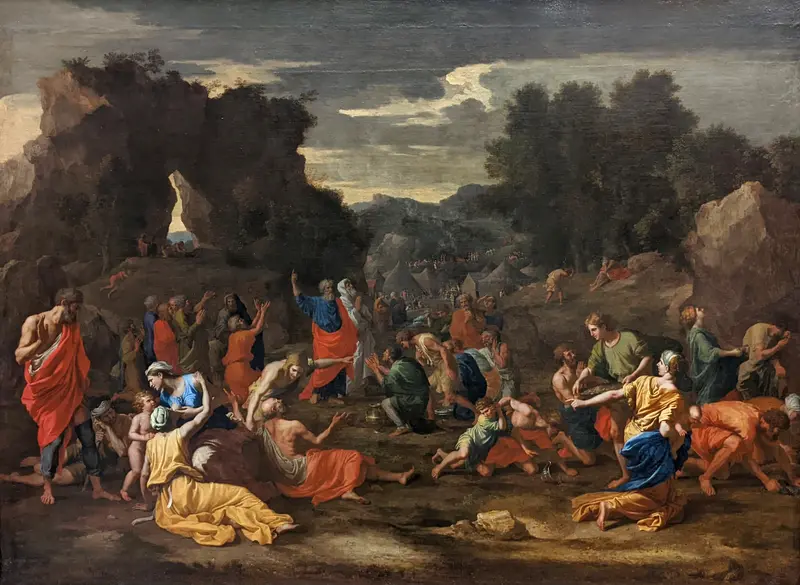
The Israelites gathering Manna in the Desert
Nicolas Poussin
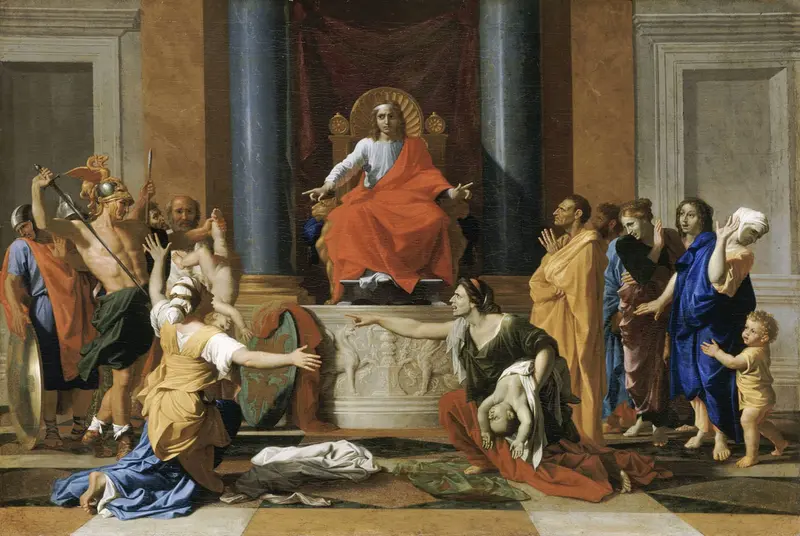
The Judgment of Solomon
Nicolas Poussin
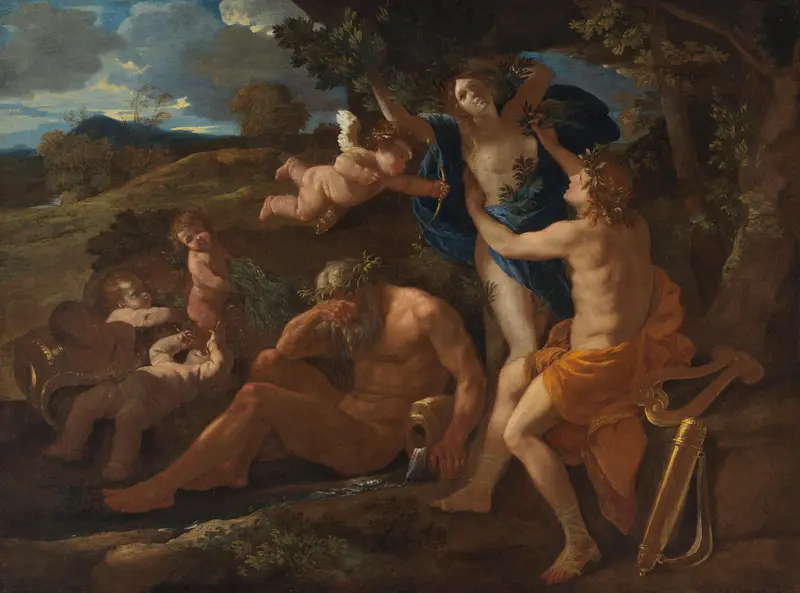
Apollo and Daphne
Nicolas Poussin

The Nurture of Jupiter
Nicolas Poussin

Ordination
Nicolas Poussin
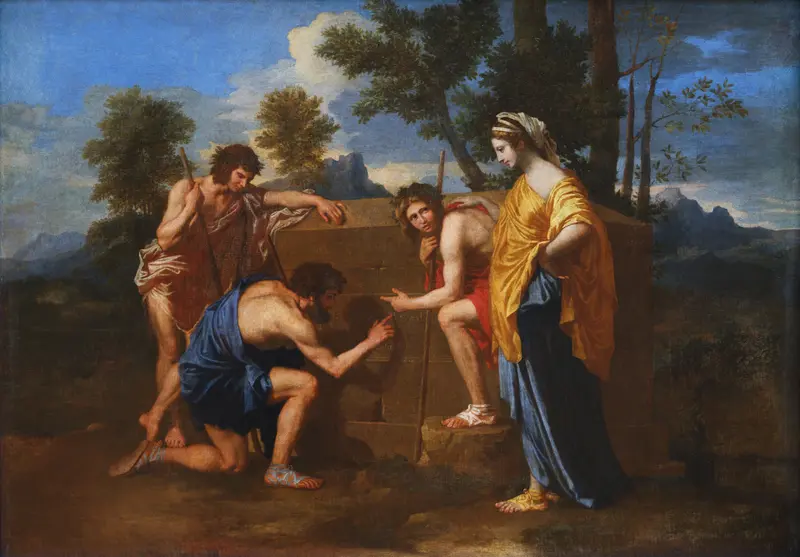
Et in Arcadia ego
Nicolas Poussin
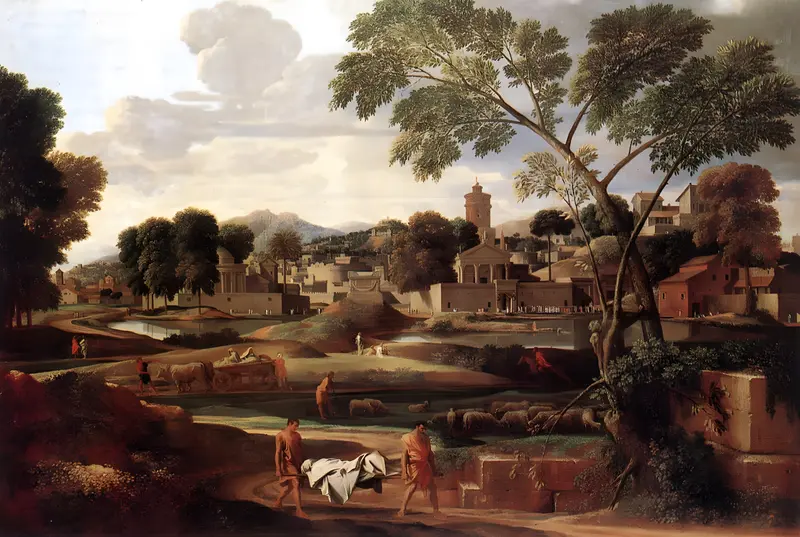
The Funeral of Phocion
Nicolas Poussin
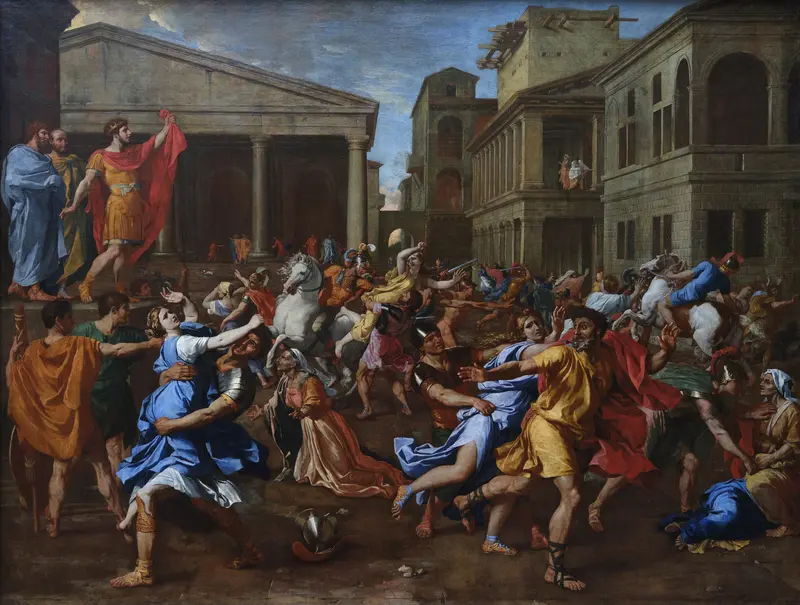
The Rape of the Sabine Women
Nicolas Poussin
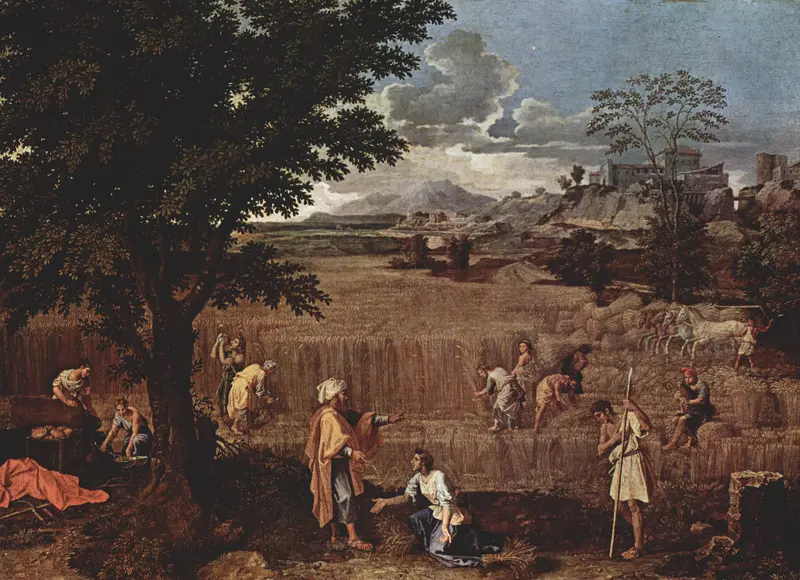
Summer
Nicolas Poussin





