
Et in Arcadia ego — History & Facts
Four figures gather around a stone tomb set in a sunlit landscape, with distant blue mountains and a broad-leaved tree rising behind them. To the left, a standing shepherd in a short, rose-colored drapery leans on his staff and gazes intently at the inscription, his arm resting on the monument's edge. In front of him, another shepherd kneels, his muscular back exposed beneath a blue garment, as he traces the carved letters with a careful finger.
A third shepherd, seated on the tomb's base and dressed in red, turns his head to look out at the viewer, while his hand gestures toward the inscription. To the right stands a woman in a golden-yellow robe and blue mantle, her head covered with a pale cloth, observing the scene with a composed, contemplative expression. The figures are arranged in a tight semicircle, their gestures and glances linking them in a silent exchange around the tomb.
Sunlight falls from the left, illuminating the shepherds’ skin and the woman’s drapery, while casting subtle shadows on the ground and the monument. The landscape is rendered in soft greens and blues, with trees framing the group and a luminous sky filled with drifting clouds above. Poussin models the figures with smooth, sculptural brushwork, emphasizing the contours of limbs and folds of fabric, while the stone of the tomb is described with broad, even strokes.
Small details, such as the sandals on the shepherds’ feet and the delicate folds of the woman’s robe, reveal the artist’s careful observation and control. The composition balances the vertical trunks and the horizontal tomb, guiding the viewer’s gaze across the group and into the landscape beyond. Et in Arcadia ego is painted by Nicolas Poussin in 1638. The subject brings together shepherds and a woman in a mythological scene, as noted in the records of the Department of Paintings of the Louvre.
This work is associated with the movement of Classicism, reflecting its calm order, clarity of form, and idealized figures. The painting’s theme and arrangement place it within the tradition of mythological painting, a genre to which Poussin often returns.
Sources: Wikidata Q1140358 · Image source (Wikimedia Commons)
More Artworks by Nicolas Poussin

Spring
Nicolas Poussin

The Sacrament of the Holy Eucharist
Nicolas Poussin

The Israelites gathering Manna in the Desert
Nicolas Poussin

The Judgment of Solomon
Nicolas Poussin

Apollo and Daphne
Nicolas Poussin

The Nurture of Jupiter
Nicolas Poussin

Ordination
Nicolas Poussin

The Funeral of Phocion
Nicolas Poussin

The Rape of the Sabine Women
Nicolas Poussin
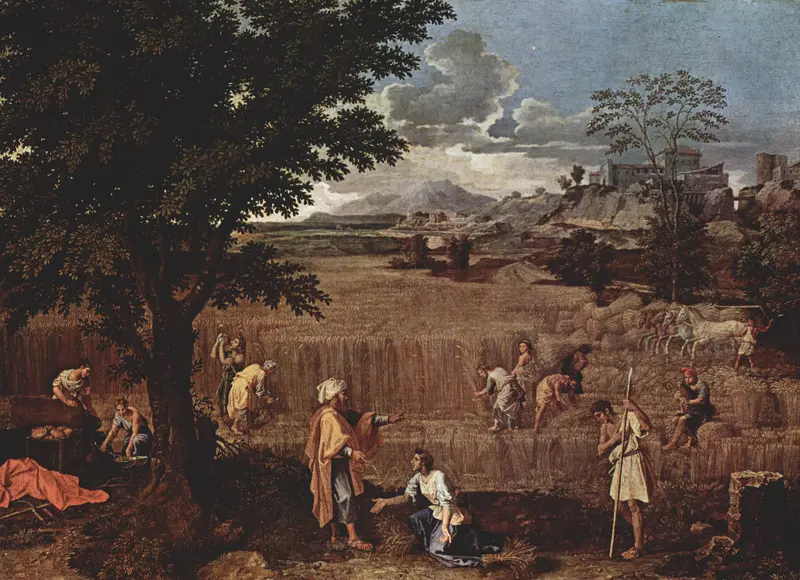
Summer
Nicolas Poussin




