
The House at Rueil — History & Facts
Can beauty exist without sorrow? In The House at Rueil, the answer lingers delicately in the air, woven between the lush foliage and the quiet residence. Look to the center of the canvas, where a serene house rests, partially veiled by the embrace of flourishing trees. The dappled light dances across the scene, drawing attention to the gentle contrast between the soft greens of the leaves and the warm tones of the structure. Notice how Manet's brushwork captures the texture of the foliage with a lively spontaneity, and how the interplay of light and shadow instills a sense of depth, inviting viewers to step into this tranquil moment. Yet, beneath the idyllic surface, emotional tensions simmer.
The house, though beautiful, stands solitary, hinting at the complexities of desire and isolation. The vibrant colors suggest warmth and life, yet the stillness evokes an underlying melancholy, as if the viewer is privy to a secret longing. Each element, from the tender sunlight to the encroaching shadows, subtly comments on the bittersweet nature of the scene, framing beauty within the context of solitude. Manet painted The House at Rueil in 1882 while living in Paris, during a period of artistic exploration and personal reflection.
At that time, he was navigating the complexities of modernity and its impact on traditional art forms. In this work, he beautifully encapsulated the tension between the external world and internal emotion, marking a significant chapter in his career as he sought to redefine the role of beauty in art.
More Artworks by Édouard Manet
Browse all →
Le Déjeuner sur l’herbe
Édouard Manet
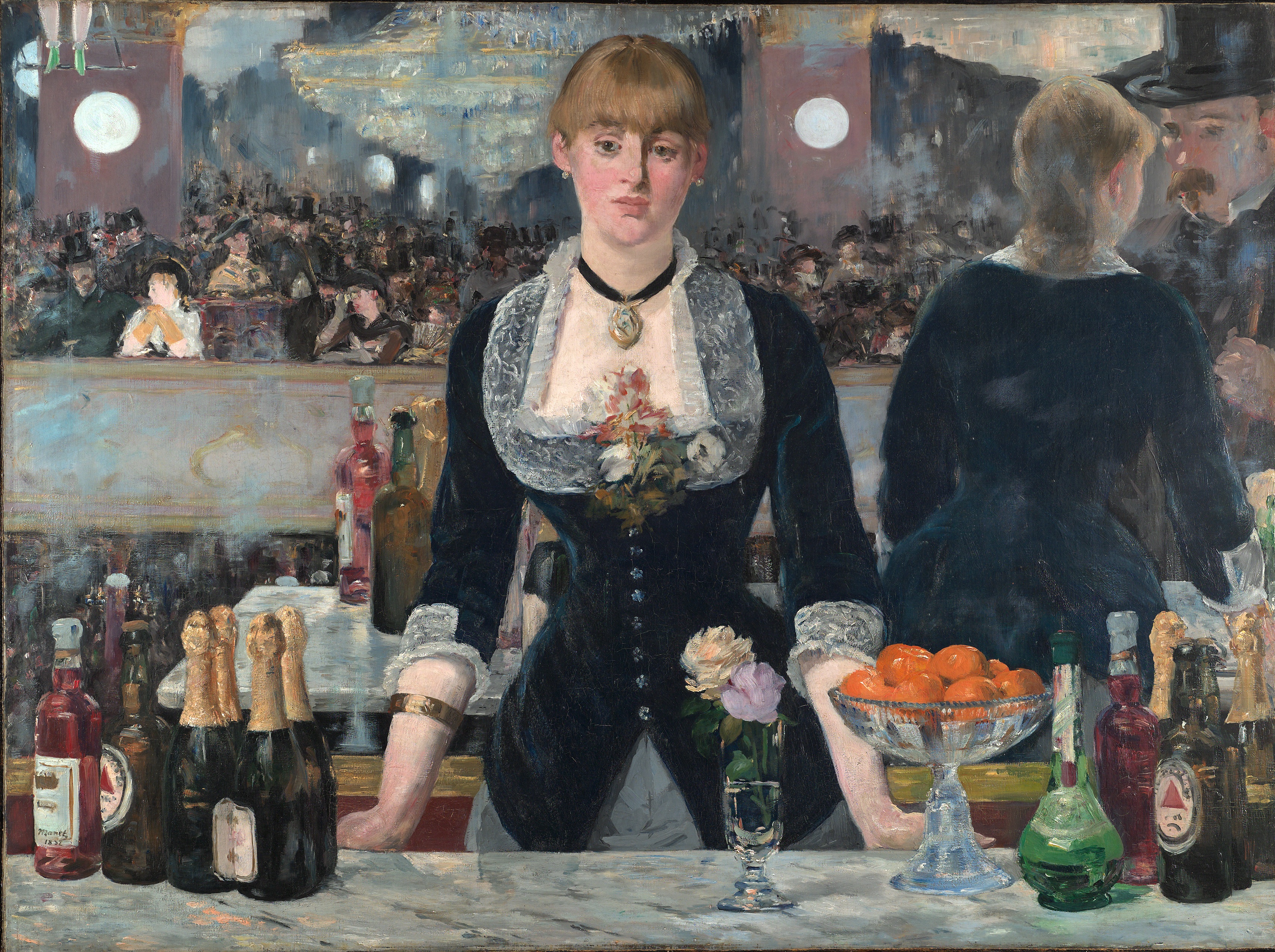
A Bar at the Folies-Bergère
Édouard Manet
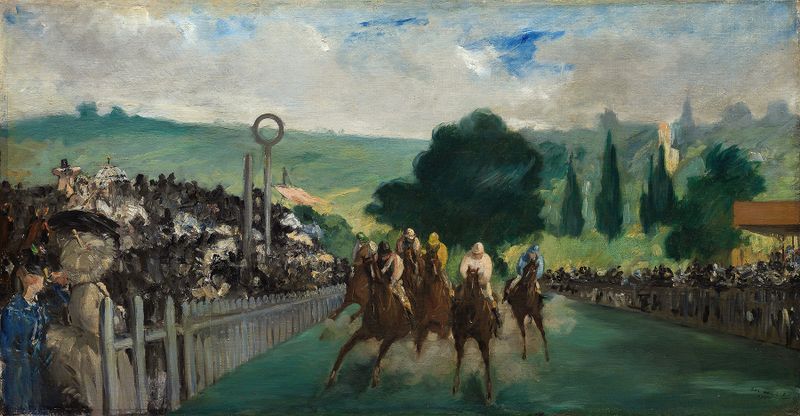
The Races at Longchamp
Édouard Manet
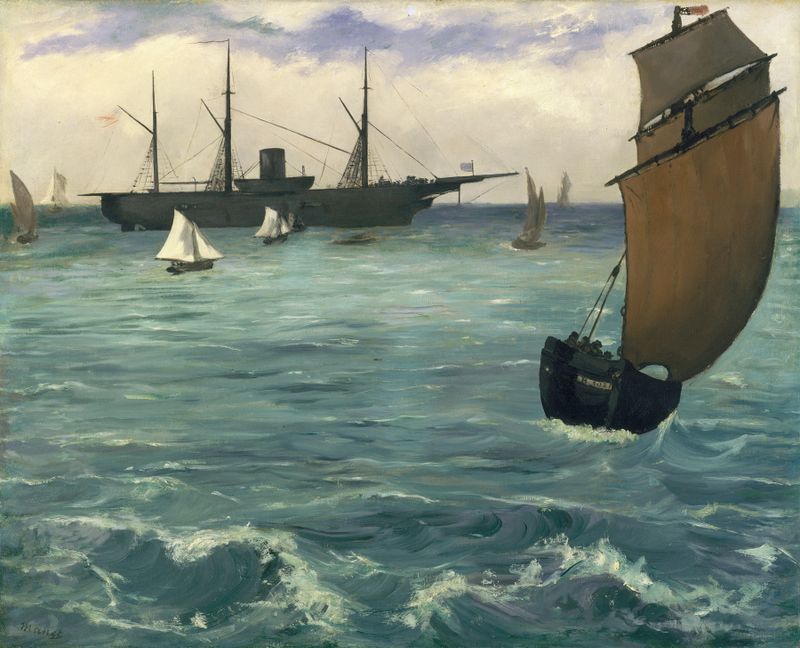
The ‘Kearsarge’ at Boulogne
Édouard Manet
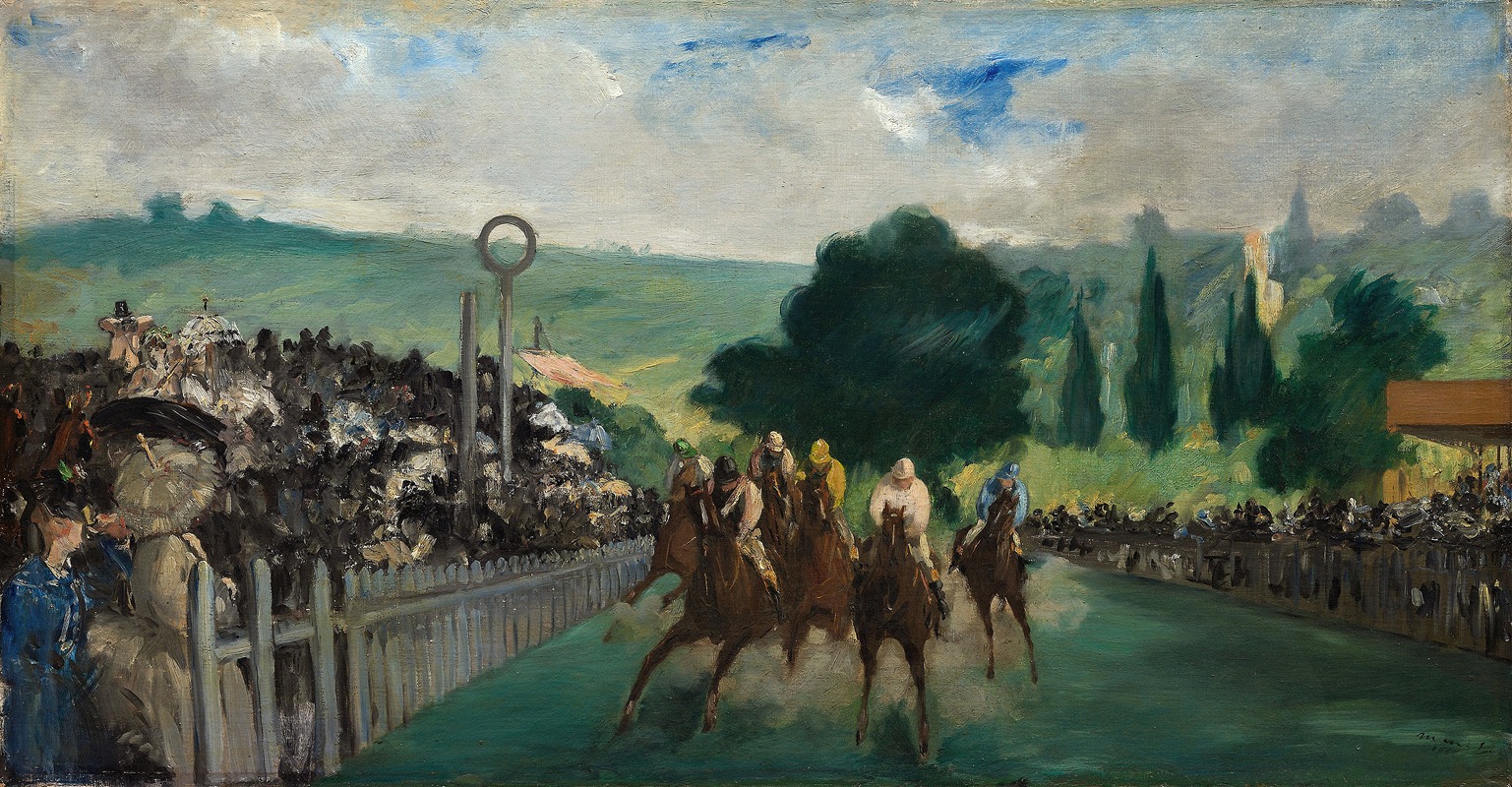
The Races at Longchamp
Édouard Manet
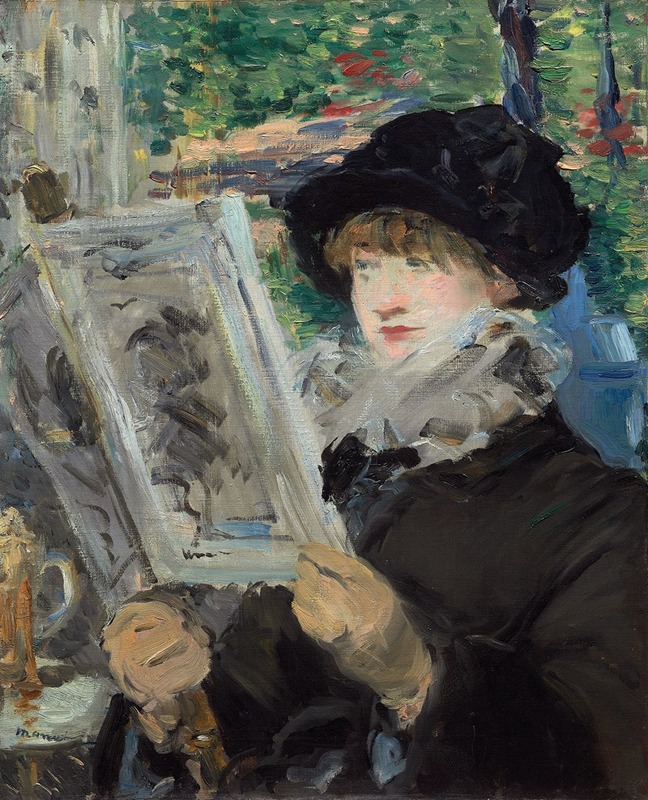
Woman Reading
Édouard Manet
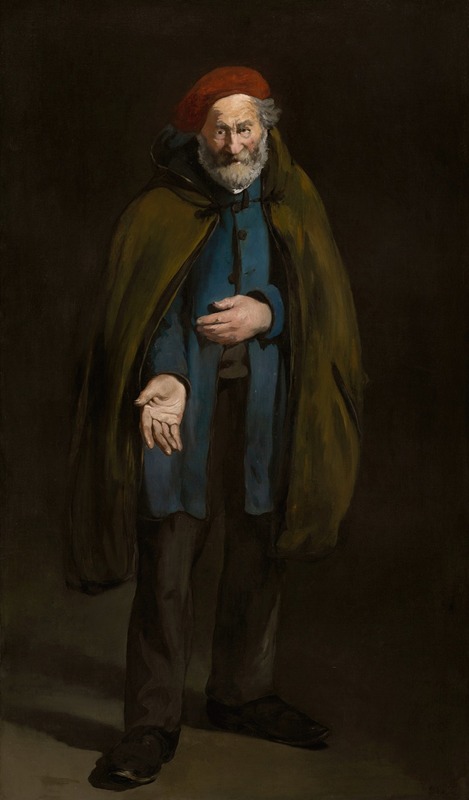
Beggar with a Duffle Coat (Philosopher)
Édouard Manet
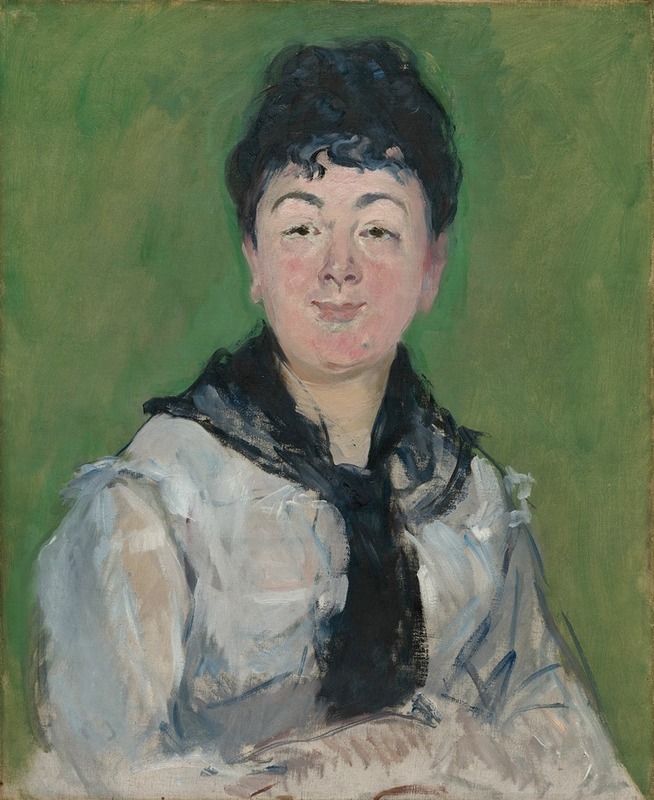
Portrait of a Woman with a Black Fichu
Édouard Manet
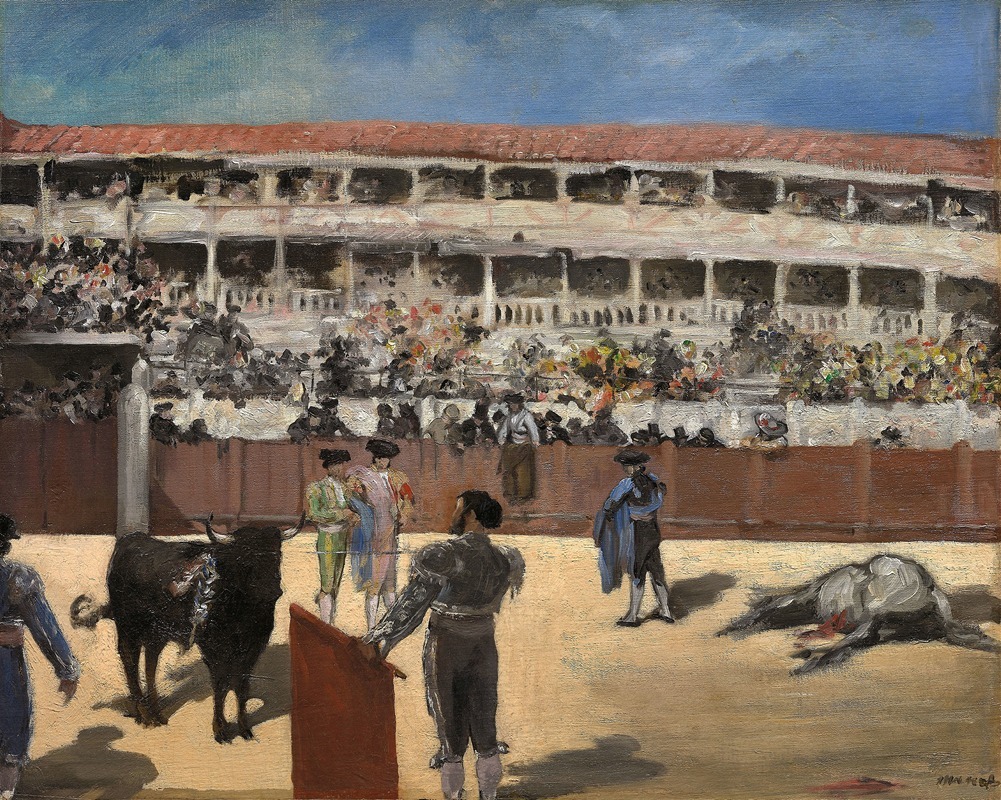
Bullfight
Édouard Manet
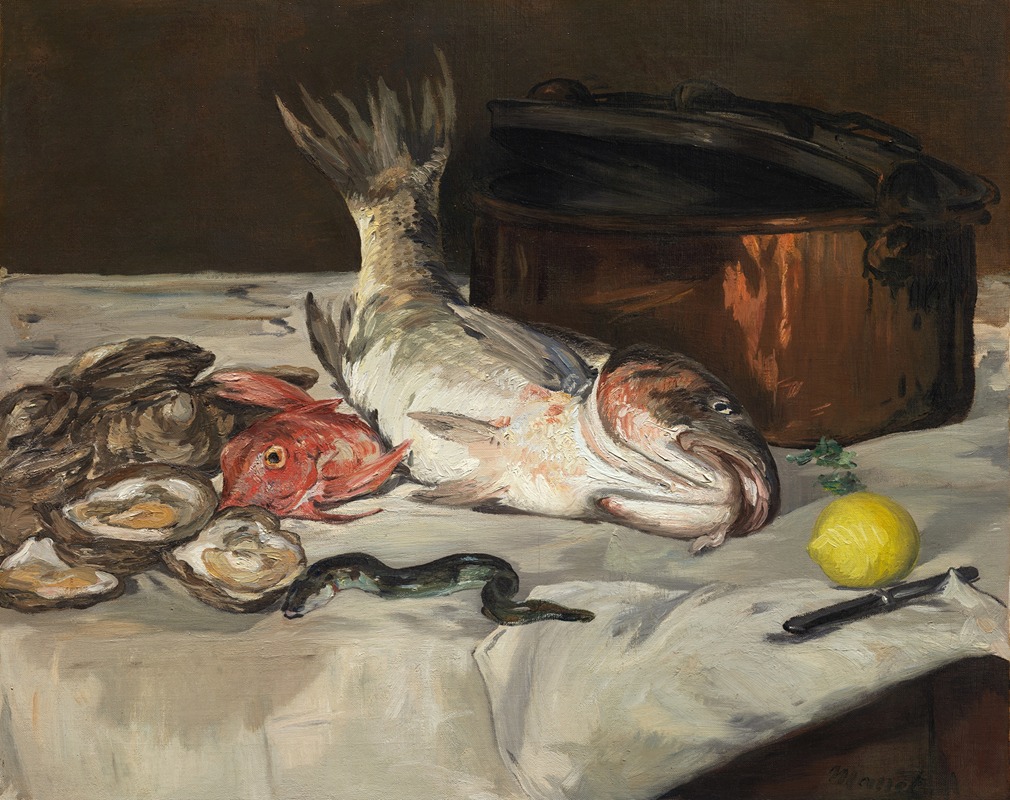
Fish (Still Life)
Édouard Manet





