The Håsten Hill at Varberg II — History & Facts
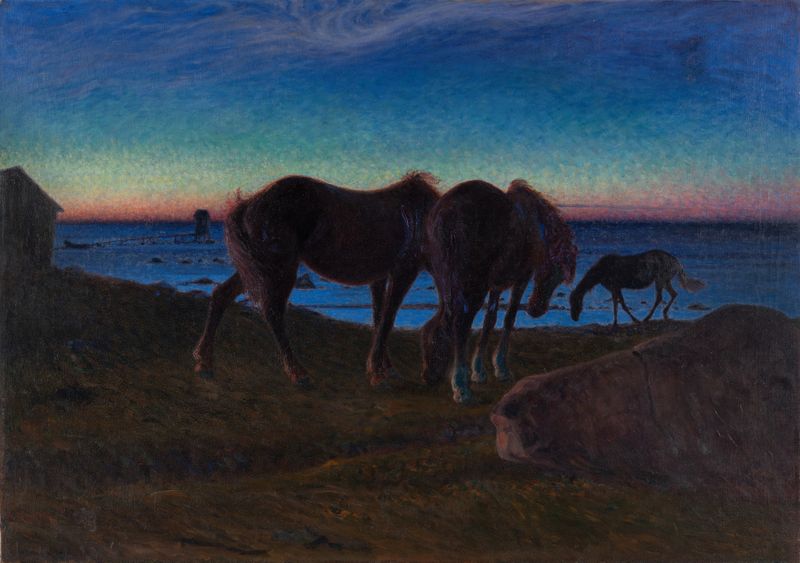
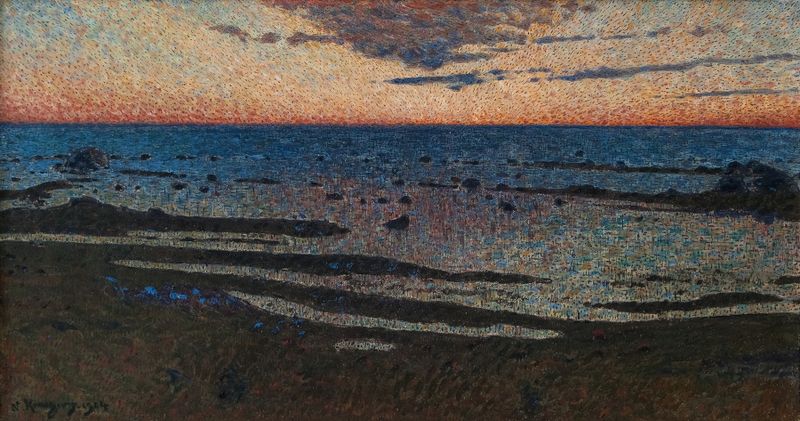
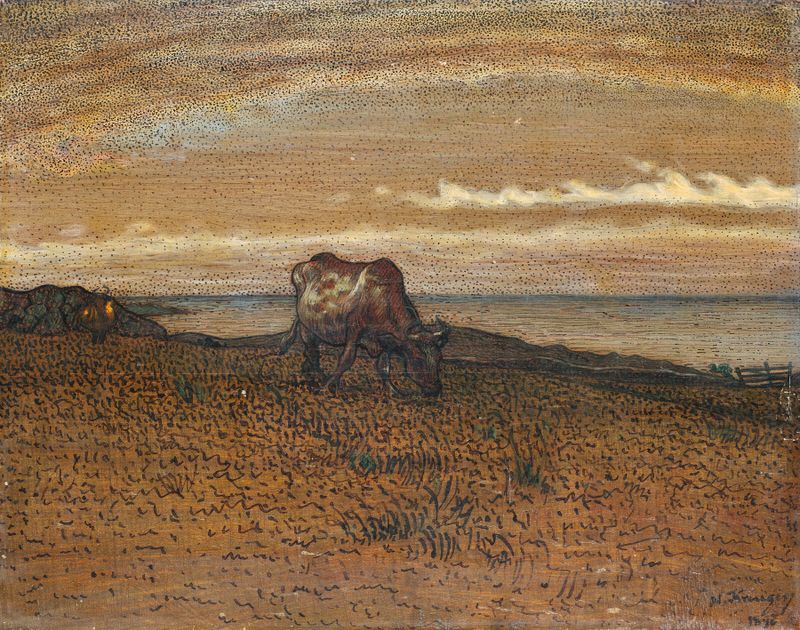
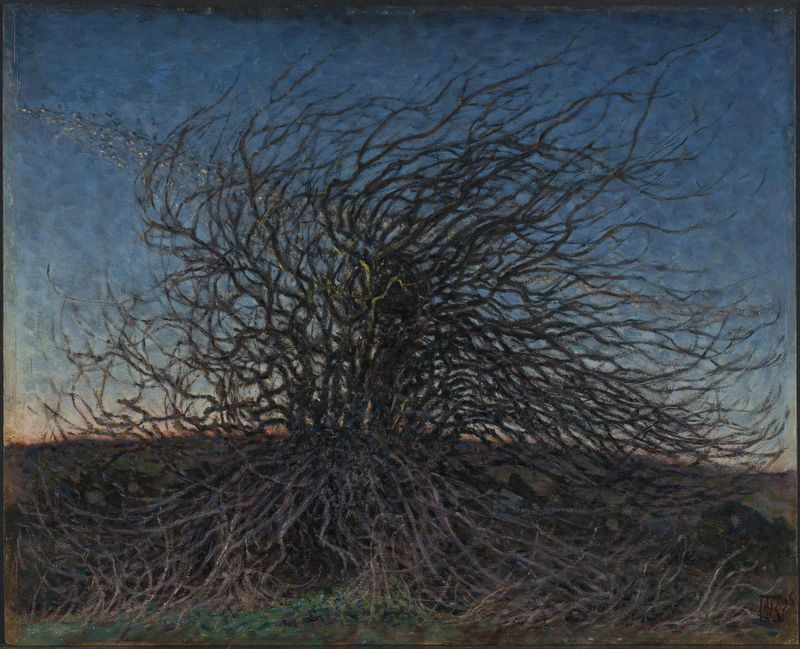
In a world where vibrant hues can drown out the essence of feeling, there lies the profound emptiness in Nils Kreuger’s work. The gentle gradient of the landscape invites contemplation, urging viewers to pause and reflect on the stillness of nature. Look to the foreground, where a muted palette of greens and browns melds into the light, hinting at the rolling terrain of Håsten Hill. The painter’s delicate brushstrokes capture the embrace of twilight, with soft shadows extending across the canvas.
Notice how the light grazes the edges of the hill, illuminating it in a way that suggests a moment frozen in time. The composition uses negative space effectively, allowing the viewer's gaze to wander, lost in the tranquility of the landscape. Beneath this serene veneer lies an exploration of solitude and introspection. The empty expanses evoke a sense of isolation, yet also offer solace, inviting one to confront their own stillness.
The gentle slopes, while inviting, seem to lead nowhere, reflecting the human experience of wandering without direction. Kreuger captures a tension between the beauty of the natural world and the emotional weight of emptiness, prompting reflection on life’s transient nature. In 1896, Kreuger painted this piece while residing in Varberg, a time marked by his deep connection to the Swedish landscape. The late 19th century was a period of artistic exploration in Sweden, as artists sought to express the subtleties of light and atmosphere.
This painting stands as a testament to Kreuger’s commitment to capturing the quiet beauty of his surroundings and the emotional resonance of simplicity.