The Idea of Firs — History & Facts
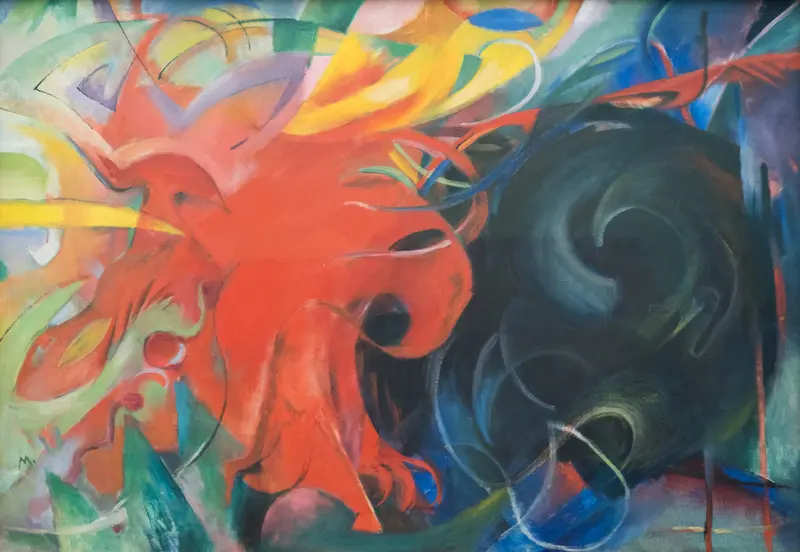
In The Idea of Firs, Paul Klee presents a vibrant array of colors that evoke the essence of trees. The painting features abstract representations of firs, characterized by geometric shapes and bold lines. The background is filled with a mix of warm and cool tones, creating a dynamic visual experience.
Klee's use of color and form invites the viewer to explore the idea of nature through an abstract lens. The painting is executed in oil on canvas, showcasing Klee's unique approach to color and form. The dimensions are approximately 60 x 80 cm, making it a medium-sized work that draws attention without overwhelming the viewer. Klee's technique involves layering colors and shapes, resulting in a rich texture that enhances the overall composition.
The abstract nature of the work allows for multiple interpretations, reflecting Klee's innovative style. Paul Klee was a key figure in the development of modern art, known for his playful and imaginative approach. The Idea of Firs reflects his interest in nature and abstraction, merging the two in a harmonious way. An interesting fact about this work is that it exemplifies Klee's belief that art should express the inner essence of objects rather than their outward appearance.
This painting is a testament to his exploration of the relationship between color, form, and emotion.