
The Island of San Giorgio Maggiore — History & Facts
In a world that rushes by, where moments slip through our fingers like grains of sand, the tranquility of stillness becomes a rare treasure. Look to the foreground of this serene landscape, where soft waves lap gently against the shore, bringing the viewer’s attention to the tranquil interplay between water and light. The muted pastels of the sky reflect off the smooth surface of the lagoon, creating a seamless blend that draws the eye toward the iconic silhouette of the island. Notice how the architectural details of the buildings emerge delicately from the horizon, their forms softened by the atmospheric haze, which envelops the scene in an embrace of calm. Within this picturesque composition lies a profound contrast between the permanence of architecture and the fleeting nature of the water surrounding it.
The stillness of the scene invites contemplation, evoking a sense of peace amidst the relentless passage of time. The subtle variations of light across the canvas suggest both the inevitability of change and the beauty of enduring moments, capturing the essence of a place that stands watch over the waters, timeless yet ephemeral. During the years 1804 to 1828, Guardi was immersed in capturing Venice’s ethereal beauty, a city facing the throes of modernity. He worked in the twilight of the Venetian Republic’s decadence, producing works that reflected both nostalgia for the past and an appreciation for the serene landscapes that defined his youth.
This period marked a shift in art as it moved towards Romanticism, yet Guardi’s focus remained on the delicate balance between nature and architecture, a testament to the serenity that can be found even in a changing world.
More Artworks by Giacomo Guardi
Browse all →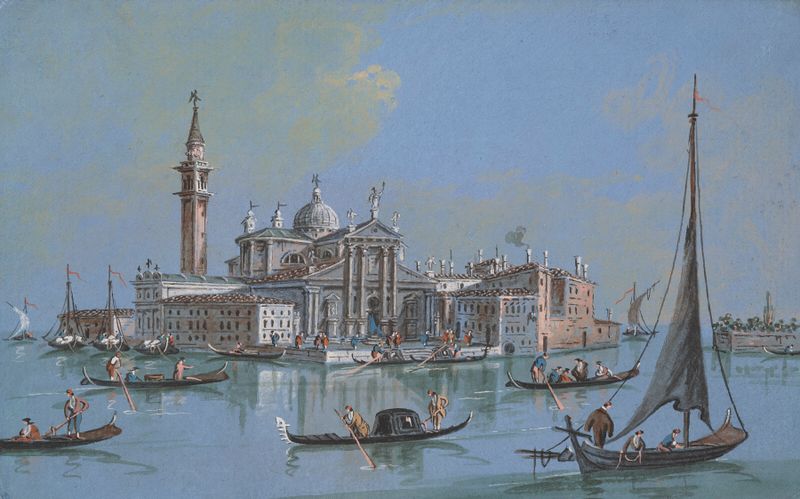
A view of San Giorgio Maggiore from the Bacino of San Marco, Venice
Giacomo Guardi
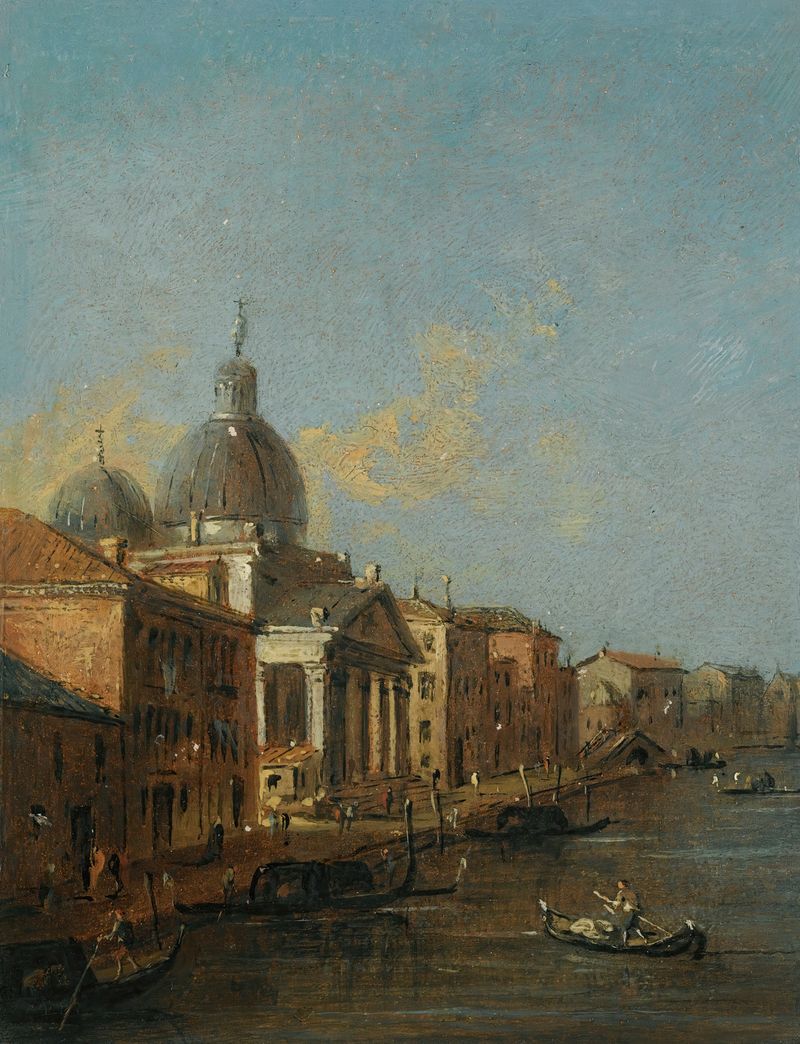
Venice, A View Of The Grand Canal With The Church Of San Simeone Piccolo
Giacomo Guardi
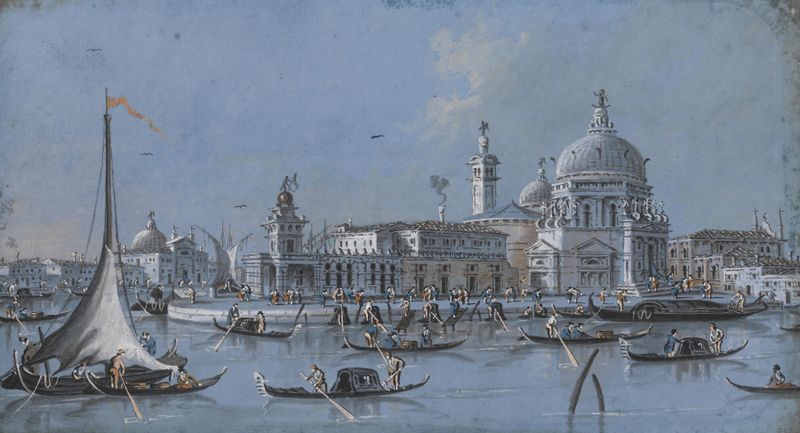
Santa Maria Della Salute, Venice And The Punta Della Dogana
Giacomo Guardi

Piazza San Marco, Looking toward the Basilica
Giacomo Guardi
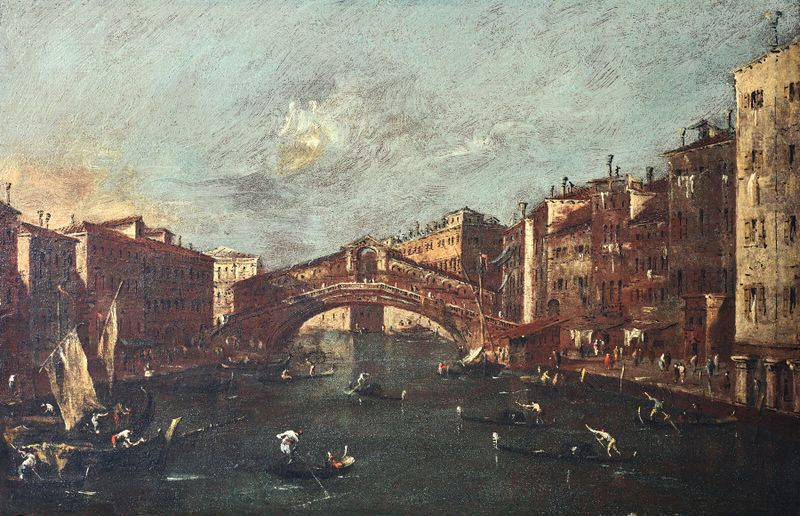
A view of the Rialto Bridge, Venice
Giacomo Guardi
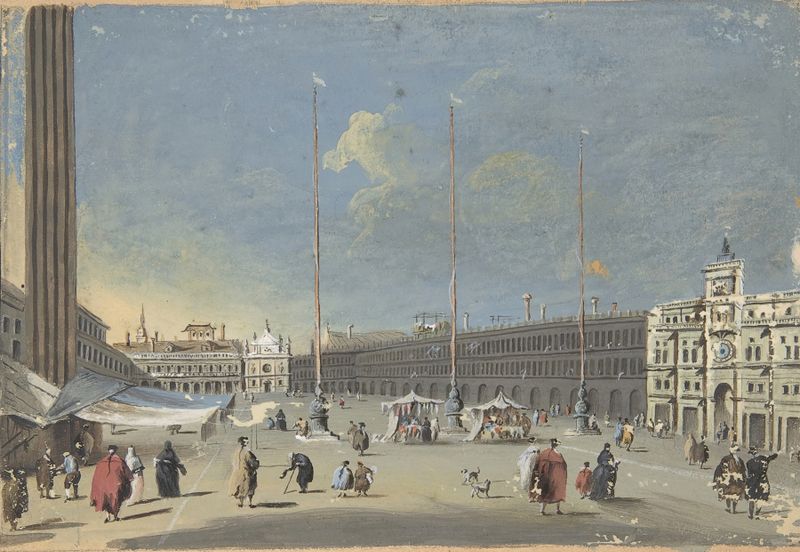
The Piazza San Marco towards San Giacomo
Giacomo Guardi
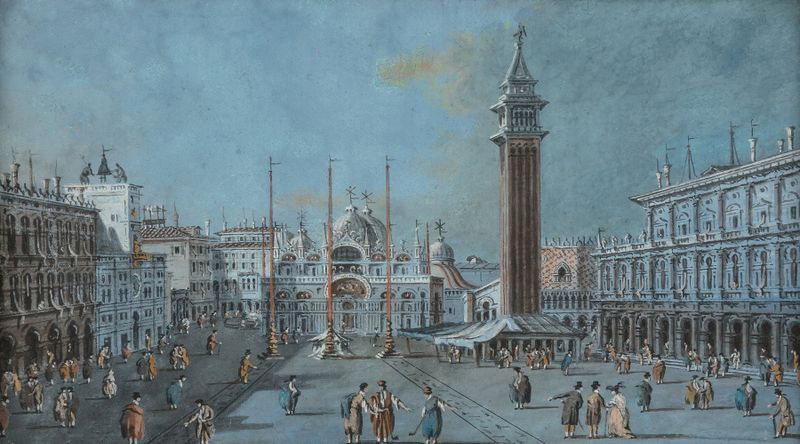
Veduta della Piazza di San Marco
Giacomo Guardi
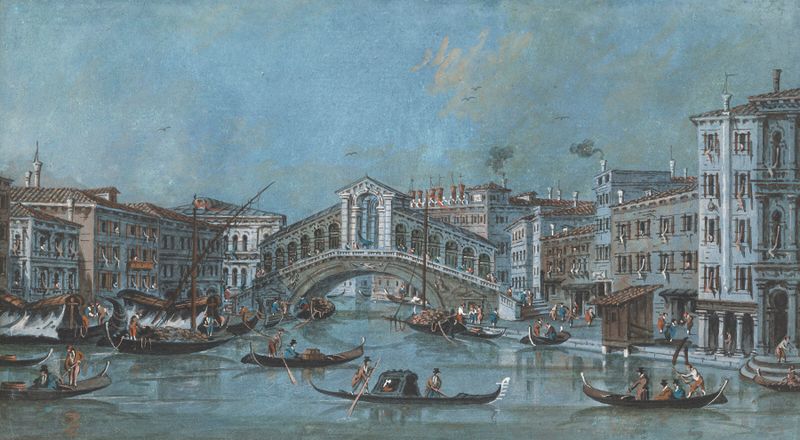
The Rialto Bridge, Venice
Giacomo Guardi
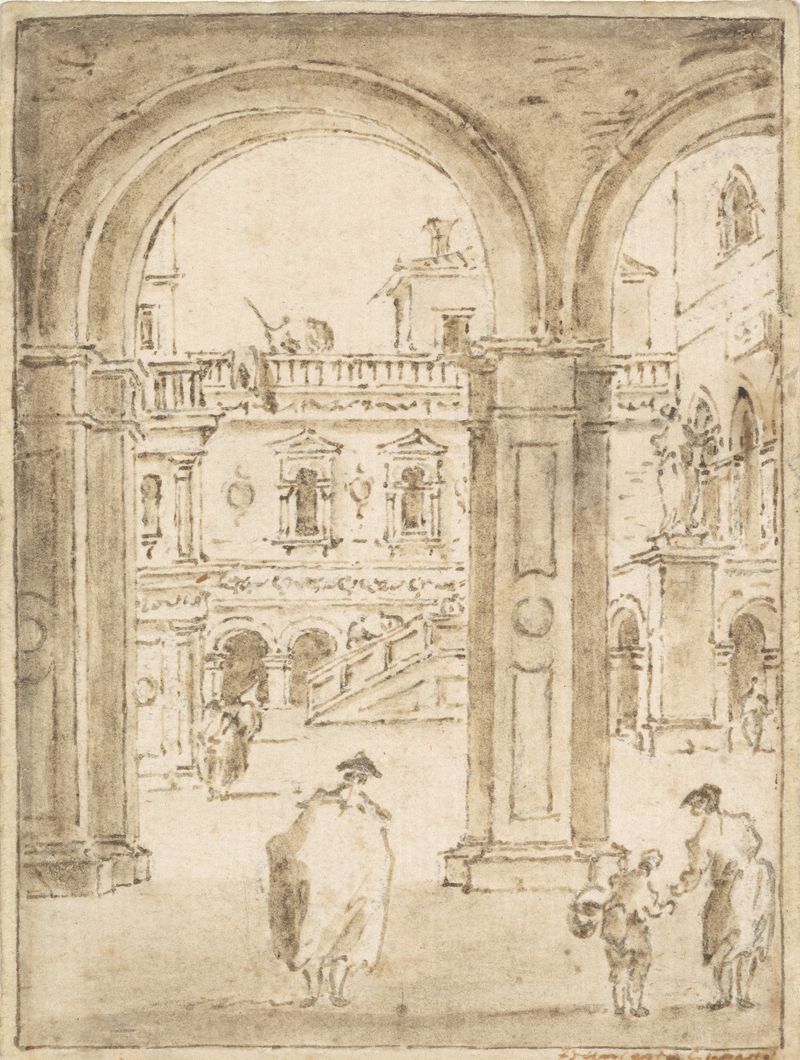
The Courtyard of the Doges’ Palace
Giacomo Guardi
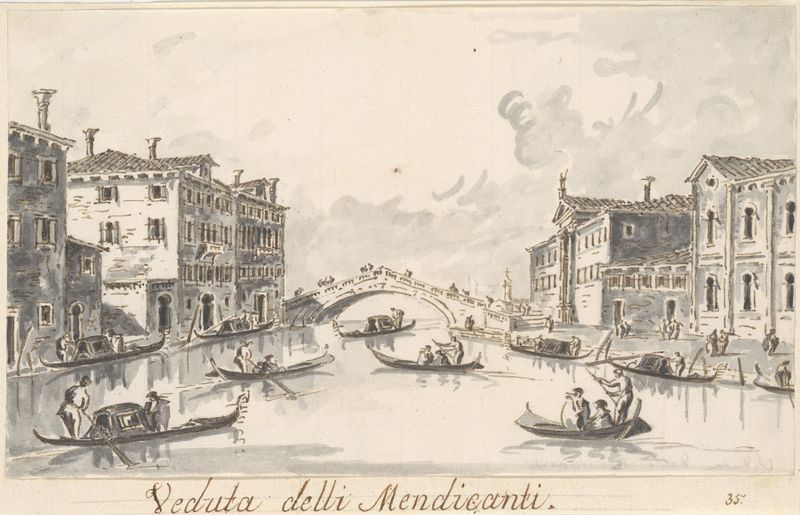
The Rio dei Mendicanti
Giacomo Guardi





