
The Junction of the Thames and the Medway — History & Facts
In the tumultuous backdrop of early 19th-century England, where industrial upheaval and societal change wrought a violent transformation, The Junction of the Thames and the Medway stands as a testament to the power of nature amidst human unrest. Look to the swirling currents of the river as they dominate the canvas, where Turner uses a vibrant palette of blues and grays, evoking both the forcefulness of the water and the tumult of emotion. The horizon is punctuated by dark, billowing clouds that seem to threaten a storm, drawing the viewer's eye upward and implying a foreboding atmosphere. Notice how the light flickers through the clouds, illuminating the water's surface, making it shimmer with reflective energy and urgency, contrasting with the shadows that loom in the corners of the scene. In this work, there’s an underlying tension between chaos and tranquility.
The turbulent waters symbolize the violent forces of nature, while the distant ships, mere silhouettes against the horizon, suggest mankind's insignificance in the face of such vast power. This juxtaposition compels the viewer to ponder humanity’s relation to nature and the often-violent transformations that accompany progress. The painting captures the volatility of the time, reflecting not only the physical landscape but also the emotional landscape of a society on the brink. Turner created this piece in 1807, at a time when he was establishing his reputation as a leading figure in British Romanticism.
Painting in London, he was influenced by the tumult of the Industrial Revolution, a period marked by both innovation and strife. As he experimented with color and light, he sought to convey deeper emotional truths, forever changing the course of landscape painting.
More Artworks by Joseph Mallord William Turner
Browse all →
Dort or Dordrecht- The Dort Packet-Boat from Rotterdam Becalmed
Joseph Mallord William Turner
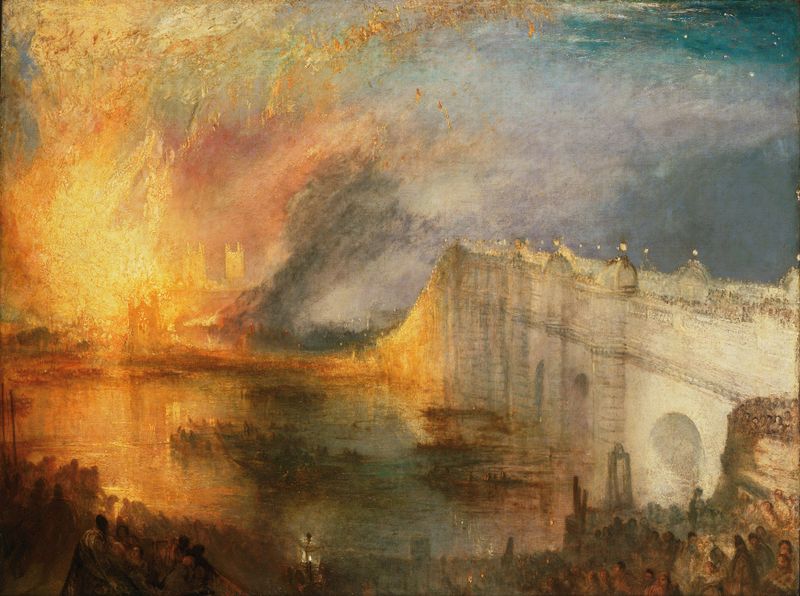
The Burning of the Houses of Lords and Commons, October 16, 1834
Joseph Mallord William Turner
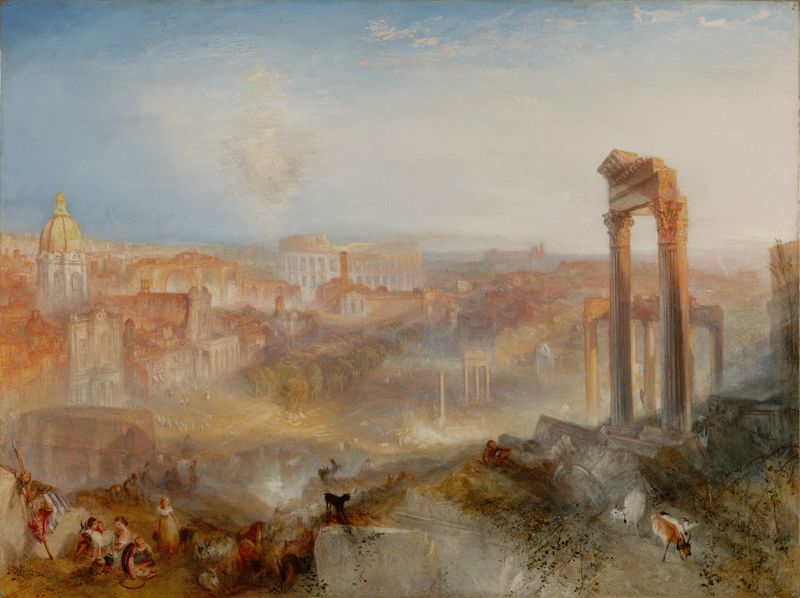
Modern Rome – Campo Vaccino
Joseph Mallord William Turner
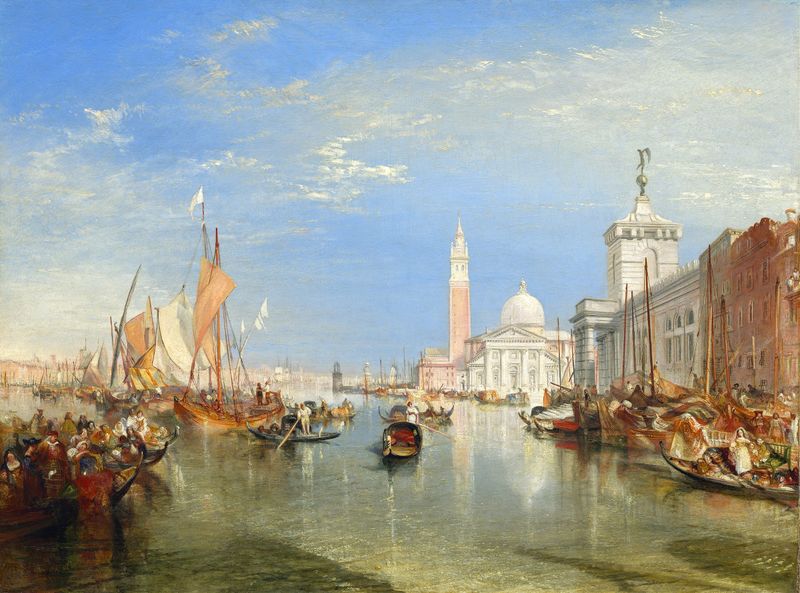
Venice – The Dogana and San Giorgio Maggiore
Joseph Mallord William Turner

The Burning of the Houses of Lords and Commons, 16 October 1834
Joseph Mallord William Turner
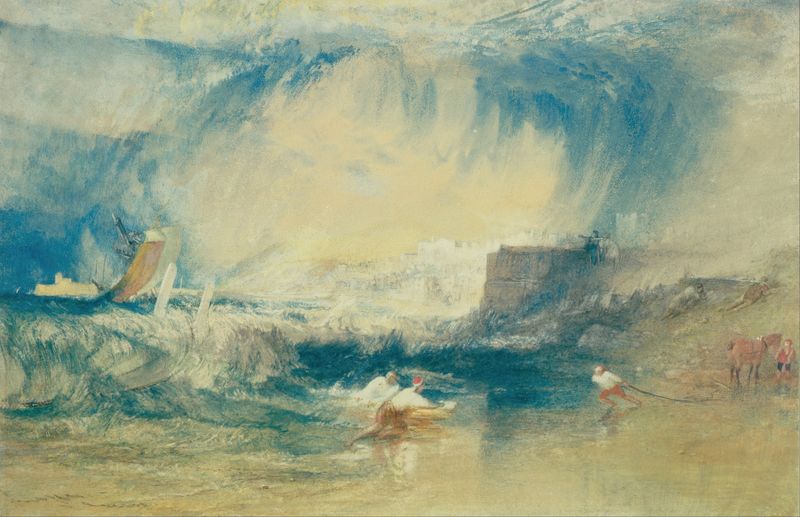
Lyme Regis, Dorsetshire, England
Joseph Mallord William Turner
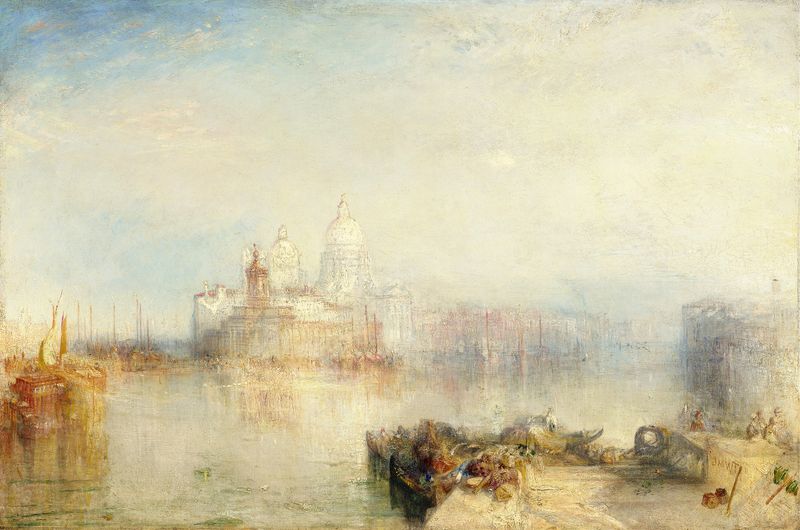
The Dogana and Santa Maria della Salute, Venice
Joseph Mallord William Turner
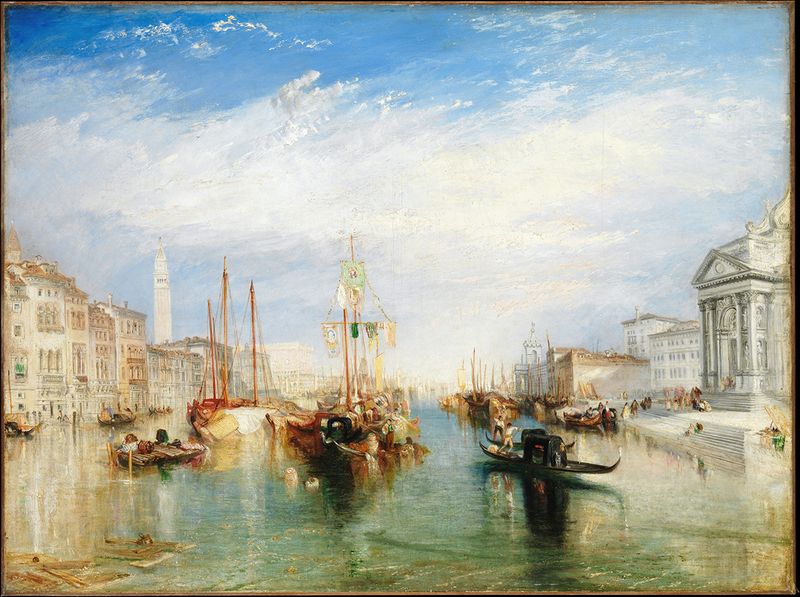
Venice, from the Porch of Madonna della Salute
Joseph Mallord William Turner
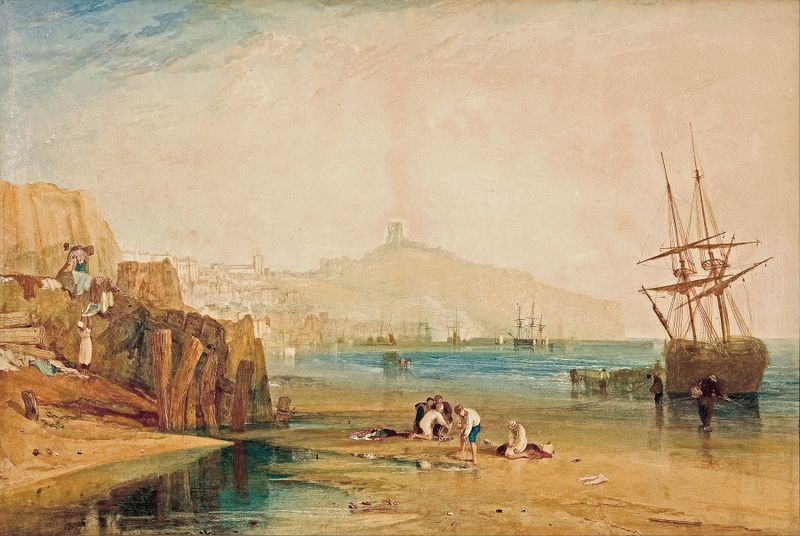
Scarborough town and castle; morning; boys catching crabs
Joseph Mallord William Turner
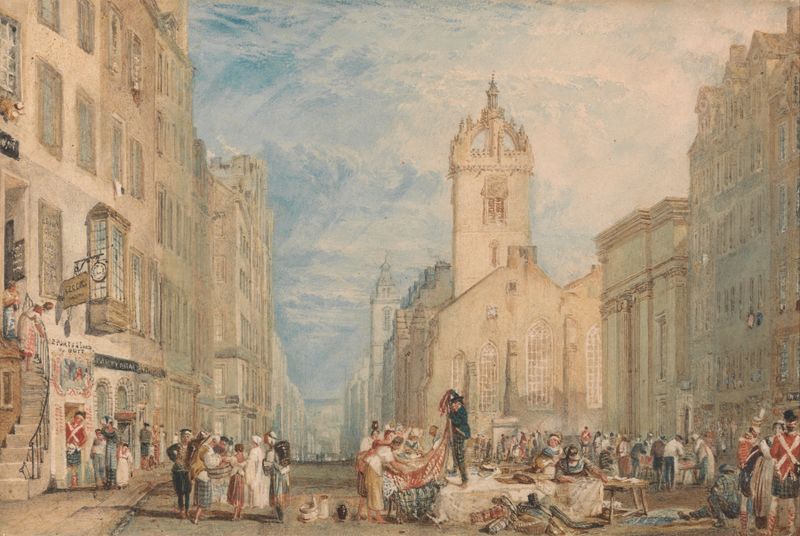
High Street, Edinburgh
Joseph Mallord William Turner




