The Jurist — History & Facts
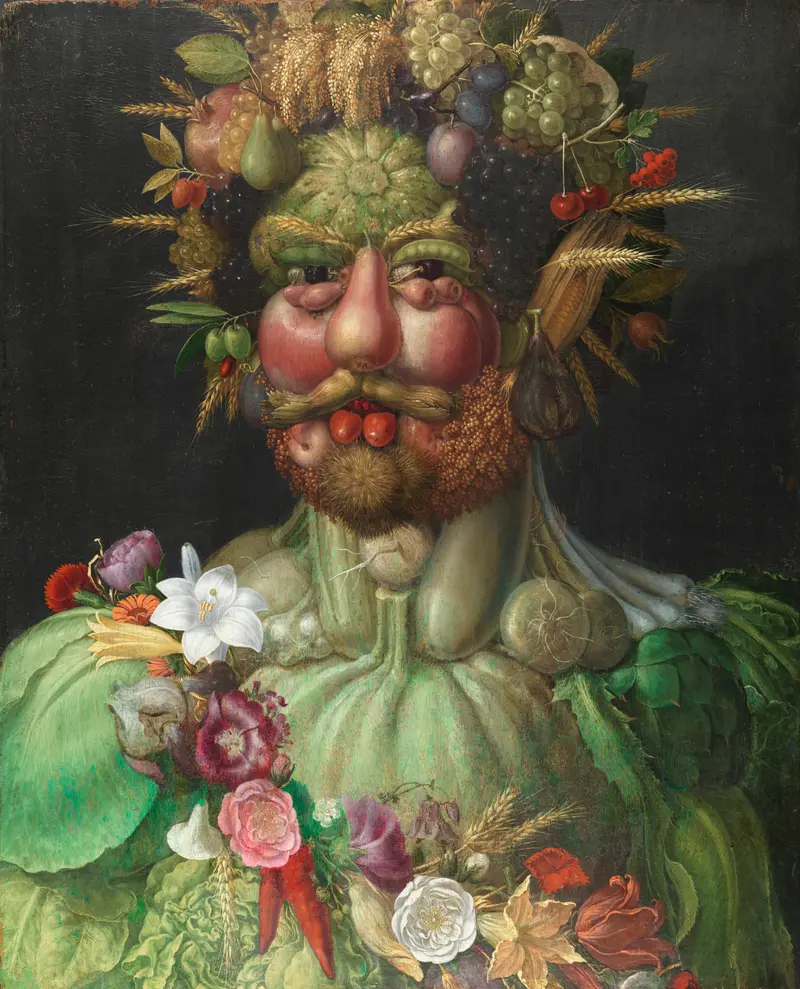
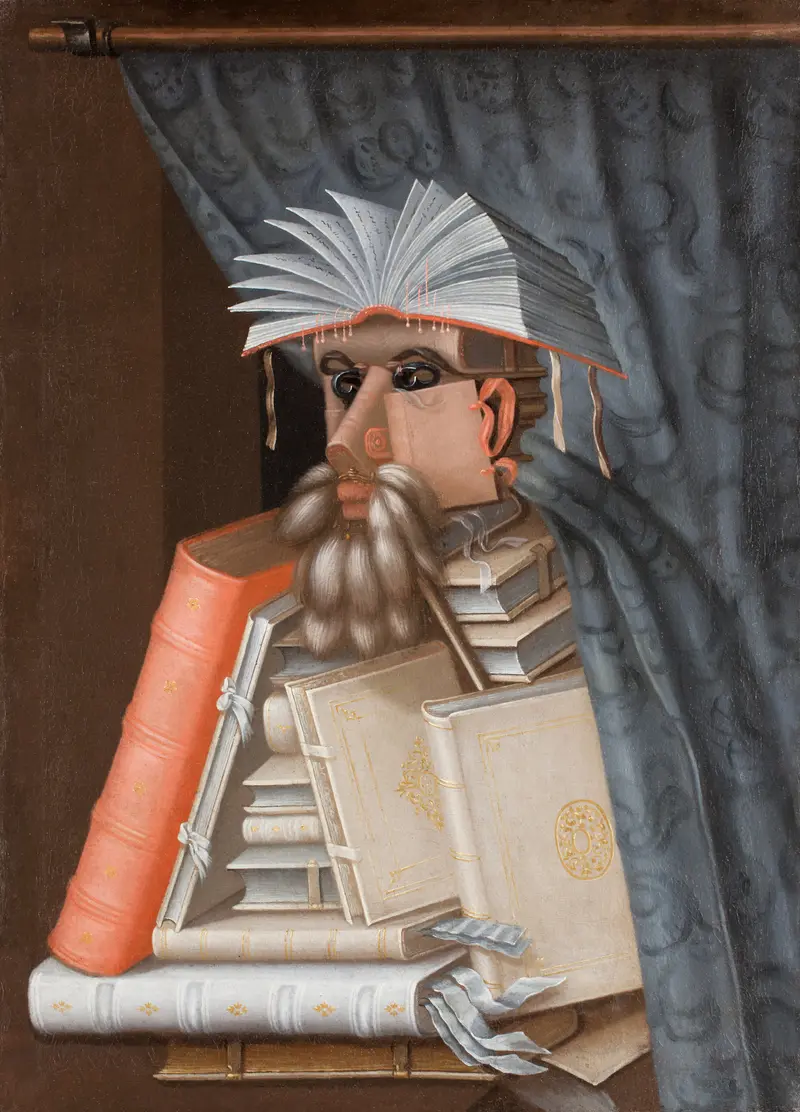
The Jurist is a 1566 oil on canvas by Giuseppe Arcimboldo, created during his tenure as a court painter for the Habsburg emperors in Vienna and Prague. The painting is a satirical portrait, widely believed to represent a legal scholar or official, and has been associated with the lawyer Ulrich Zasius, though this identification remains uncertain. Arcimboldo was renowned for his composite portraits, assembling human likenesses from objects related to the sitter's profession or character, a hallmark of his inventive style in the late Renaissance. The composition features a bust-length figure dressed in a fur-trimmed robe, with the head and face formed from a grotesque assemblage of marine animals and birds.
The jaw and chin are constructed from fish, while the nose and cheeks are shaped from poultry, and the neck is made up of stacked legal documents. The figure’s torso is rendered as a pile of thick books, further emphasizing the legal theme. The palette is dominated by earthy browns, greys, and ochres, set against a plain green background, with careful attention to the textures of fur, leather, and parchment. The Jurist was held in high regard at the Habsburg court, where Arcimboldo’s allegorical paintings were admired by both Maximilian II and Rudolf II.
The painting was part of the imperial collections in Prague and was taken to Sweden as war booty in 1648, at the end of the Thirty Years’ War. Today, it is housed in the Nationalmuseum in Stockholm, where it remains a notable example of Arcimboldo’s imaginative portraiture and the taste for intellectual wit in late sixteenth-century court culture.