
The light-house at Cape Chersonese – looking south — History & Facts
What if silence could speak through light? In the delicate interplay between illumination and shadow, a yearning emerges, echoing the desire for connection and understanding found in even the most solitary of places. Look to the center of the canvas, where the lighthouse stands resolute against the horizon. Its towering structure draws the eye, painted in hues of soft white and deep azure, embodying both strength and vulnerability. Notice how the light falls upon the waves, glistening like scattered diamonds, while the muted earth tones of the rocky shore provide a stark contrast, grounding the ethereal scene in reality.
Every brushstroke conveys a sense of serenity, inviting the viewer to step closer to the edge of land and sea. This work encapsulates the tension between isolation and hope. The lighthouse serves as both a guardian and a guide, its beam reaching out to the vastness beyond, symbolizing the longing for connection amid solitude. The sky, with its gentle gradient from pale blue to deepening twilight, hints at the passage of time, suggesting that while the lighthouse stands firm, the world around it is in constant flux.
Each wave crashing against the shore whispers stories of journeys taken and those yet to come, enriching the narrative of desire that permeates the scene. In 1855, while residing in London, the artist captured this view during a trip to the Crimean region. It was a time when the world was grappling with the complexities of conflict and exploration, influencing the thematic elements of his work. Amidst personal and global turmoil, the artist found solace in the depiction of this lighthouse—an emblem of hope amidst uncertainty, reflecting the intricate dance between aspiration and reality in both life and art.
More Artworks by William Simpson
Browse all →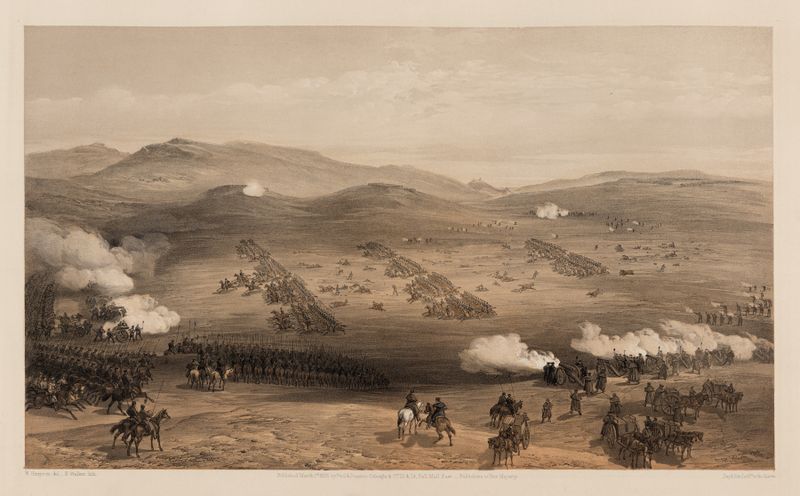
Charge of the light cavalry brigade, 25th Oct. 1854, under Major General the Earl of Cardigan
William Simpson

Charge of the heavy cavalry brigade, 25th Octr. 1854
William Simpson
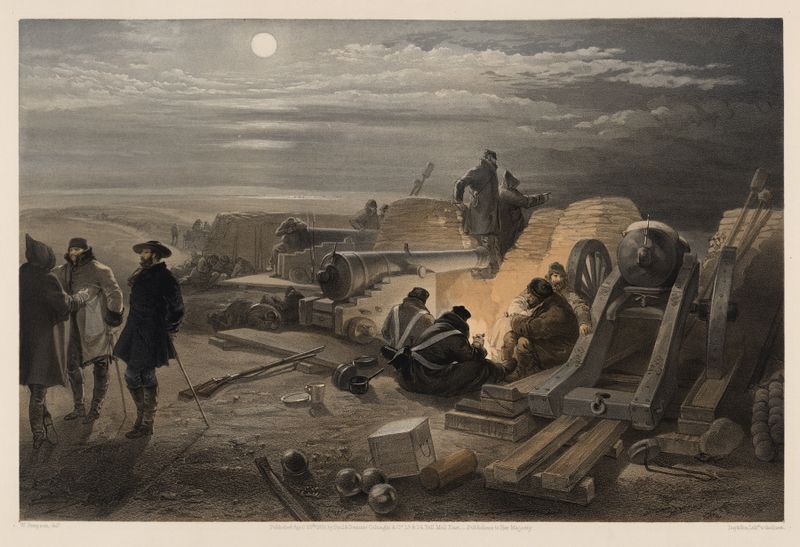
A quiet night in the batteries – a sketch in the Greenhill battery (Major Chapman’s), 29th Jany. 1855
William Simpson

The Great Wall of China
William Simpson
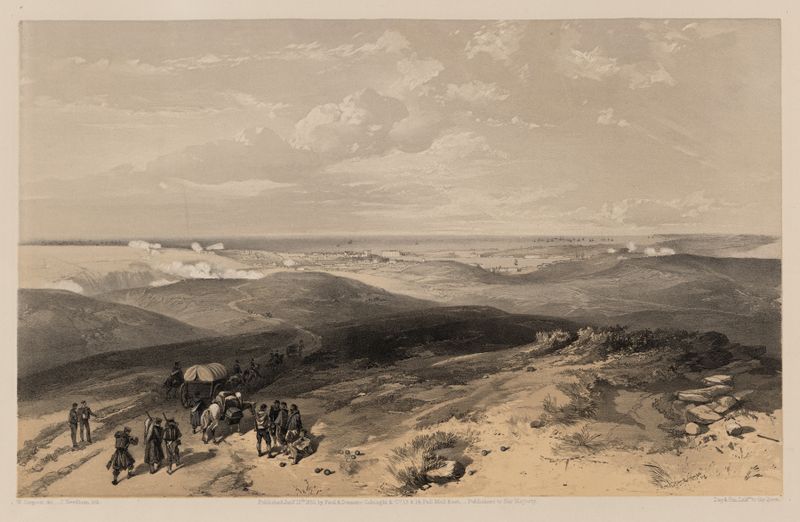
Sebastopol from the rear of the English batteries
William Simpson
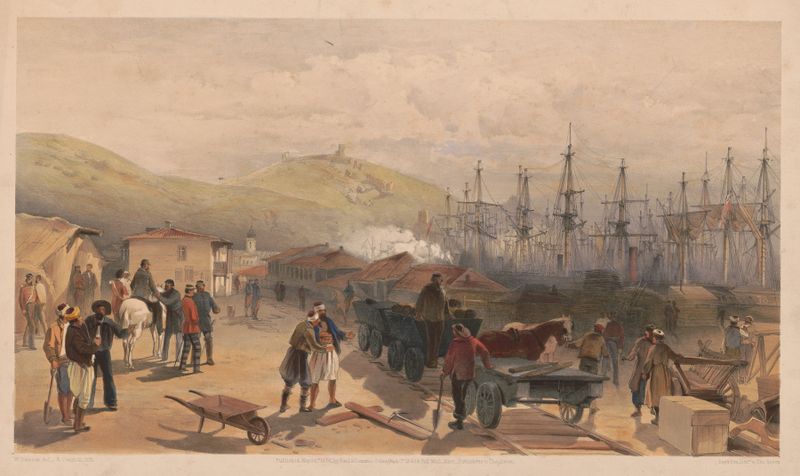
The railway at Balaklava, looking south
William Simpson

The Governor-General’s and Commander-in-Chief’s Camp at Jalandhar, 1 Febuary 1860
William Simpson
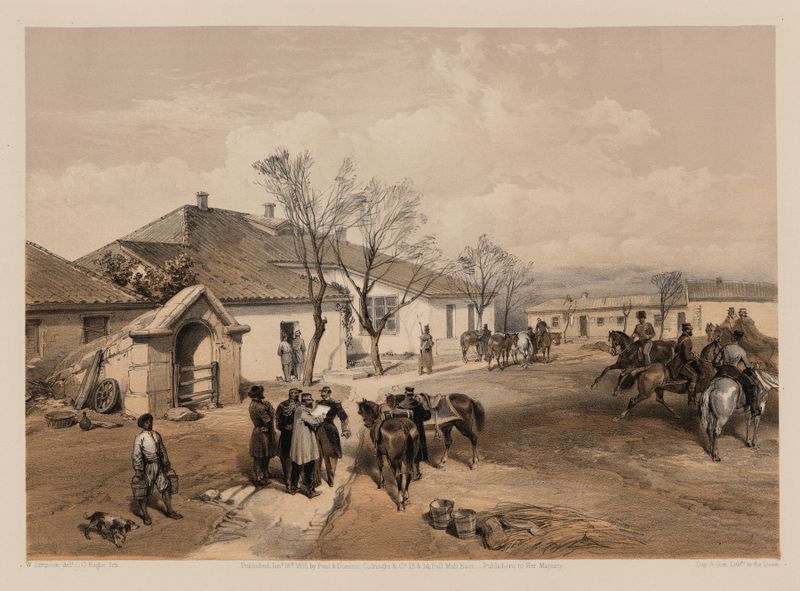
Lord Raglan’s head quarters at Khutor-Karagatch
William Simpson
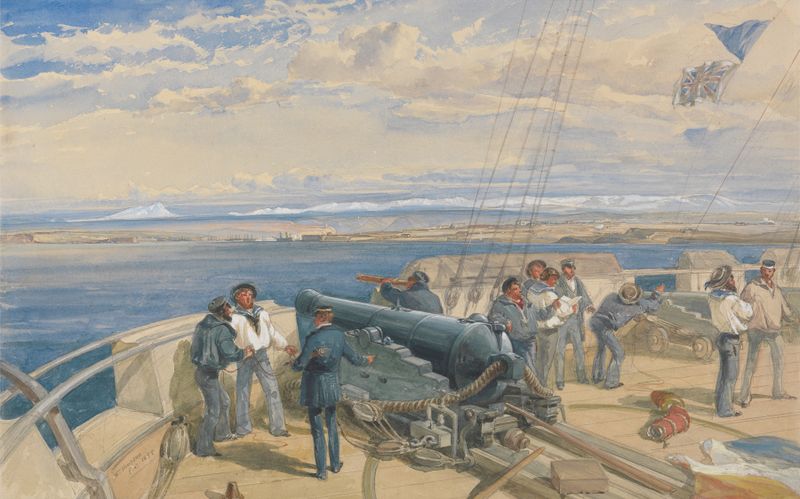
Sebastopol from the Sea, Sketched from the Deck of H. M. S. Sidon, Feb. 1855
William Simpson
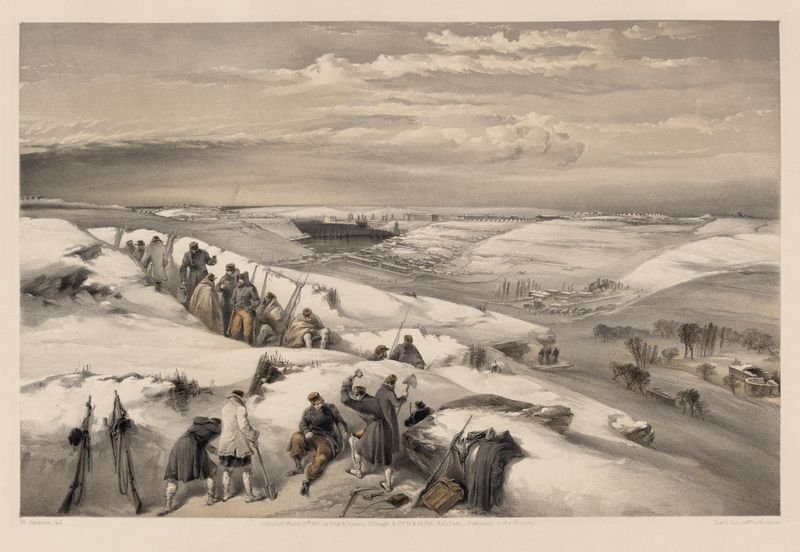
Sebastobol from the 26 gun battery on the extreme right of French attack
William Simpson





