
The Little Sailing Boat — History & Facts
A sun-kissed child stands knee-deep in vibrant blue water, holding a small white sailing boat just above the surface. The boy’s tanned body bends forward, his arms outstretched as he carefully steadies the boat, his gaze intent on the delicate craft. Ripples of water swirl around his legs, reflecting both the child’s form and the crisp white sails in bold, broken strokes of blue, violet, and coral.
The entire lower half of the composition is dominated by the play of light and color on the water, painted with energetic, sweeping brushwork that gives the surface a shimmering, almost abstract quality. Above, the horizon is only faintly suggested, with the focus remaining on the intimate interaction between the child and the sea. The child’s pose and the gentle touch on the boat evoke a moment of concentration and quiet joy, while the reflection in the water creates a sense of movement and fleeting summer light.
The color palette is dominated by deep blues and purples, punctuated by the warm, sunlit tones of the boy’s skin and the brilliant white of the sails. Short, visible brushstrokes build up the texture of the water, echoing the rapid movement of the waves and the flickering sunlight. The Little Sailing Boat was painted by Joaquín Sorolla in 1909. The museum describes the scene as a nude child attempting to float his white boat on the sea, with both the child and the boat reflected in the intensely colored water.
The subject belongs to the genres of social costumbrismo, childhood nude, and beach scenes, as noted by the museum. The Little Sailing Boat has featured in several major exhibitions, including shows in Madrid, Andorra la Vella, Curitiba, Valencia, Santa Cruz de Tenerife, and Barcelona, as well as at the Art Institute of Chicago in 1911. The painting is associated with the Post-impressionism movement, as indicated in the records.
Sources: Museo Sorolla, record 00838 · Wikidata Q59550260
More Artworks by Joaquín Sorolla

Sad Inheritance
Joaquín Sorolla
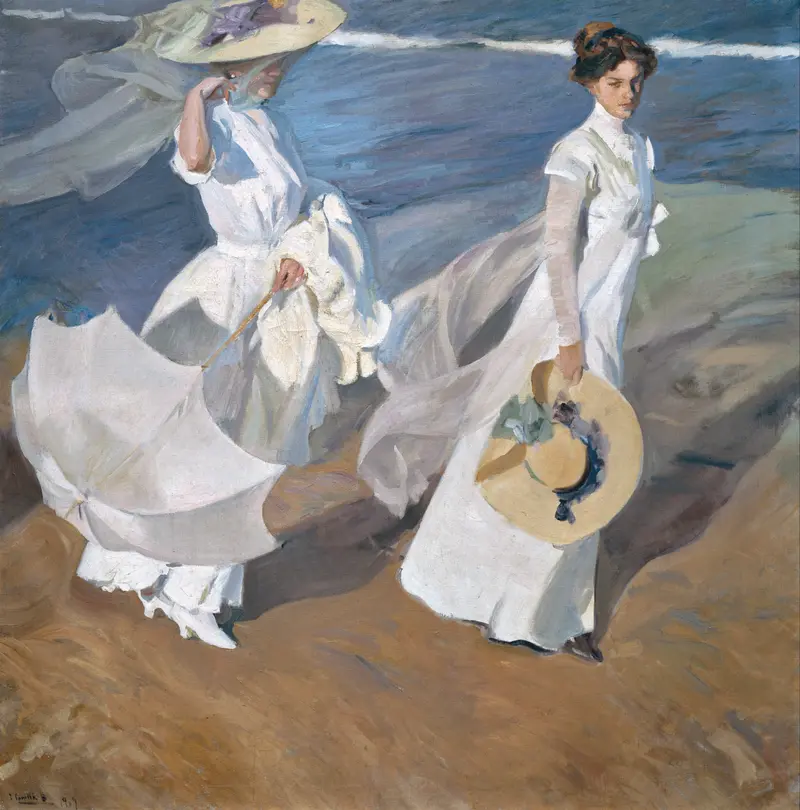
Walk on the Beach
Joaquín Sorolla

Mother
Joaquín Sorolla
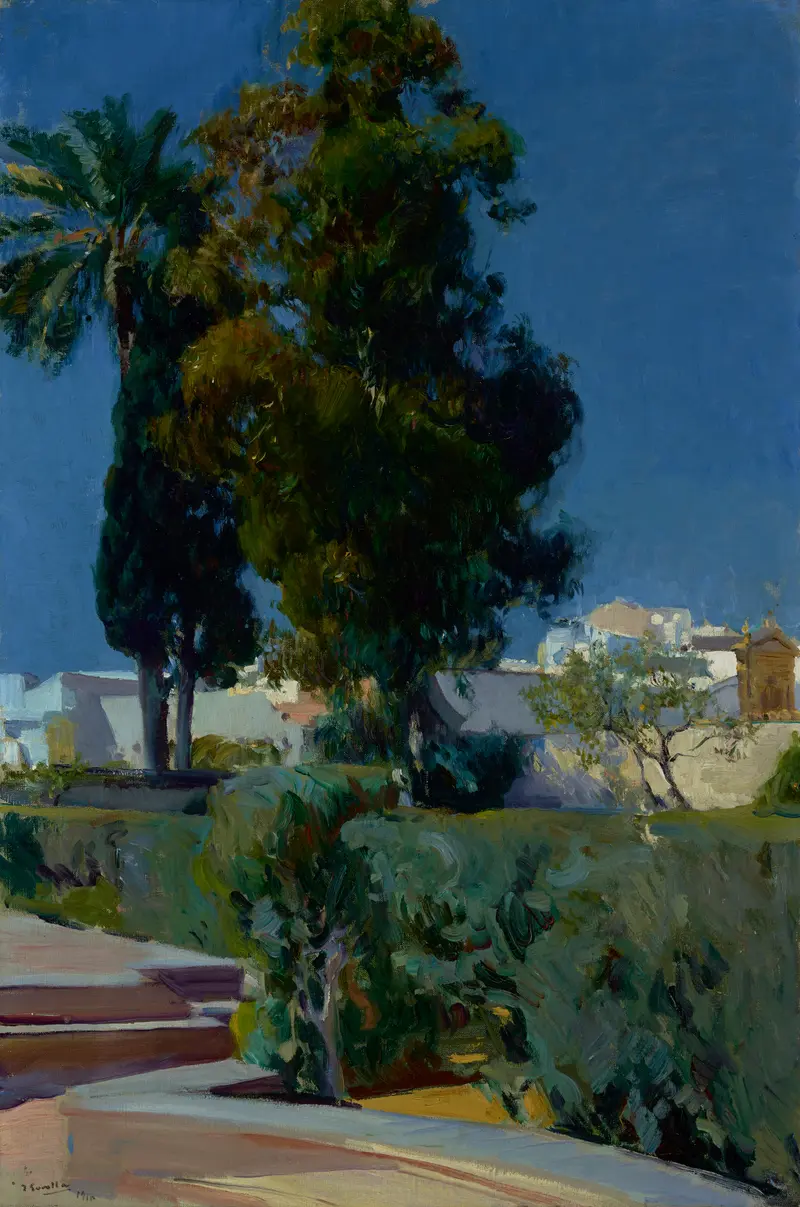
Corner of the Garden, Alcazar, Sevilla
Joaquín Sorolla

Fishing Boats On The Beach, Valencia
Joaquín Sorolla
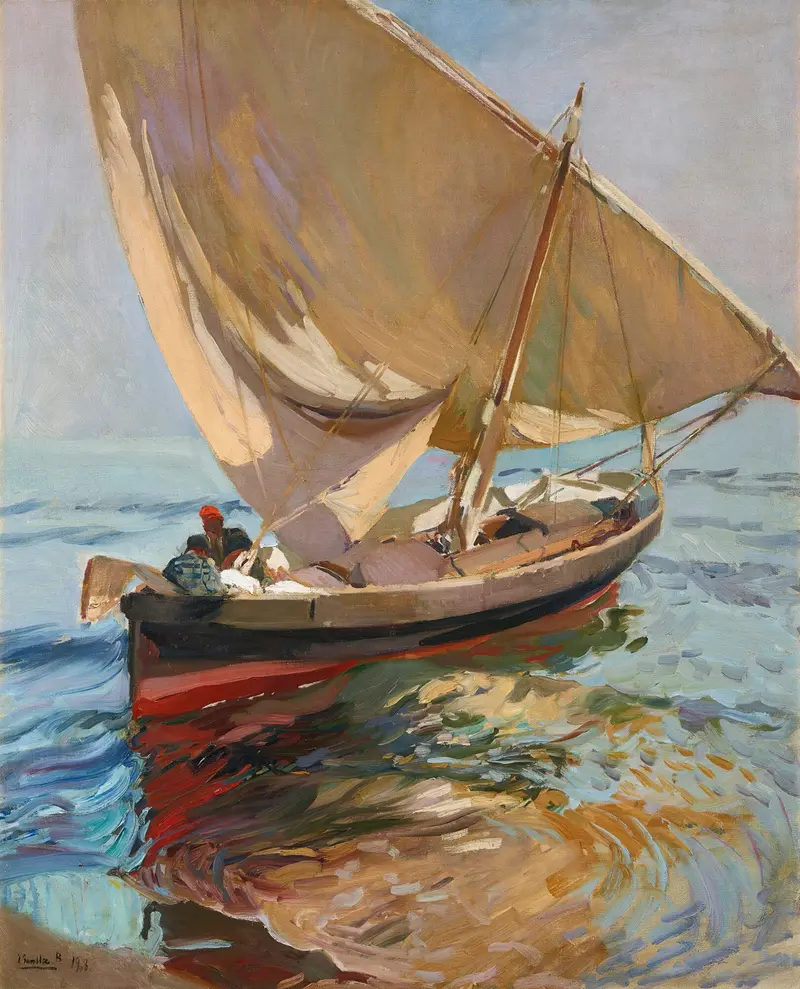
Camino De La Pesca. Valencia (Setting Out To Sea. Valencia)
Joaquín Sorolla
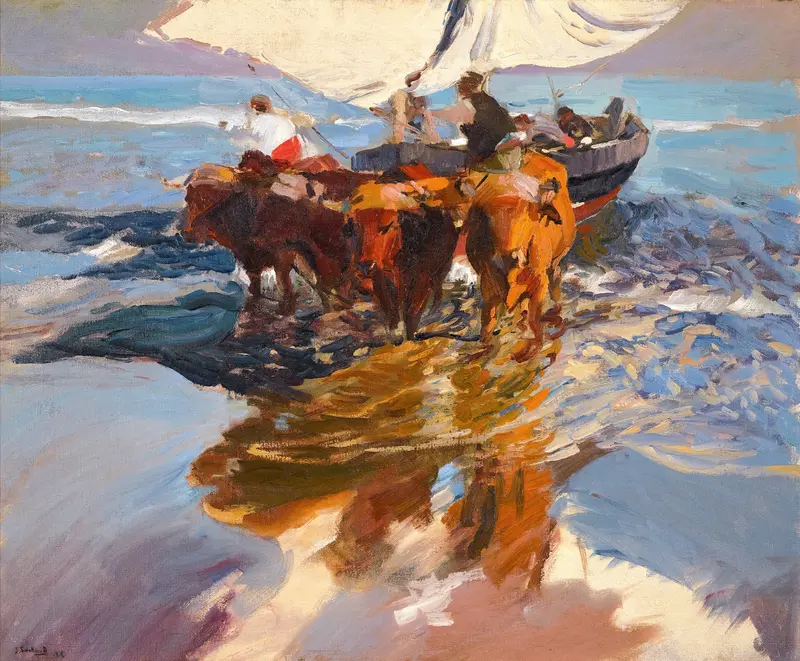
Vuelta De La Pesca. Playa De Valencia (The Return From Fishing, Valencia Beach)
Joaquín Sorolla
The Gardens at the Sorolla Family House
Joaquín Sorolla
Monte Ulía, San Sebastián
Joaquín Sorolla

Barcas En La Playa
Joaquín Sorolla
More Genre Scene Art

Banquet of the Officers of the St George Civic Guard
Frans Hals

Rembrandt and Saskia in the Scene of the Prodigal Son
Rembrandt van Rijn

Bal du moulin de la Galette
Pierre-Auguste Renoir

Quadrille at the Moulin Rouge
Henri de Toulouse-Lautrec

A Burial at Ornans
Gustave Courbet

When Will You Marry?
Paul Gauguin