
The Lost Sailor — History & Facts
When did color learn to lie? In The Lost Sailor, a haunting reminder of memory's fragility unfurls, raising questions about the reliability of our recollections. Focus on the solitary figure at the center, a sailor adrift in a sea of muted blues and grays. The soft brushstrokes blend seamlessly, mirroring his isolation. Notice how the horizon line blurs, creating an unsettling tension between the sailor and the distant shore, as if the waves themselves conspire to prevent his return.
The light, pale and waning, casts an ethereal glow over the scene, accentuating the weight of his solitude and the melancholy of a dream long lost. Beneath the surface, the artwork reflects themes of abandonment and the passage of time. The sailor’s posture conveys a profound sense of yearning; his gaze fixated on an unseen memory, lost between the realms of reality and imagination. The muted palette enhances the emotional depth — blues suggest longing, while hints of ochre evoke warmth, a fleeting connection to the life he once knew.
Each wave seems to whisper stories of the past, echoing the pain of forgotten moments. Sir Frank Short completed this piece in 1896 during a period of deep personal exploration and artistic evolution. Living in England, he was part of the late Victorian era, a time marked by a fascination for both the sea and the human condition. Short, known for his mastery in printmaking and painting, sought to convey emotional narratives through his work, reflecting the broader themes of nostalgia and loss that permeated the art world at that time.
More Artworks by Sir Frank Short
Browse all →
Morning Haze in Chichester Harbor
Sir Frank Short
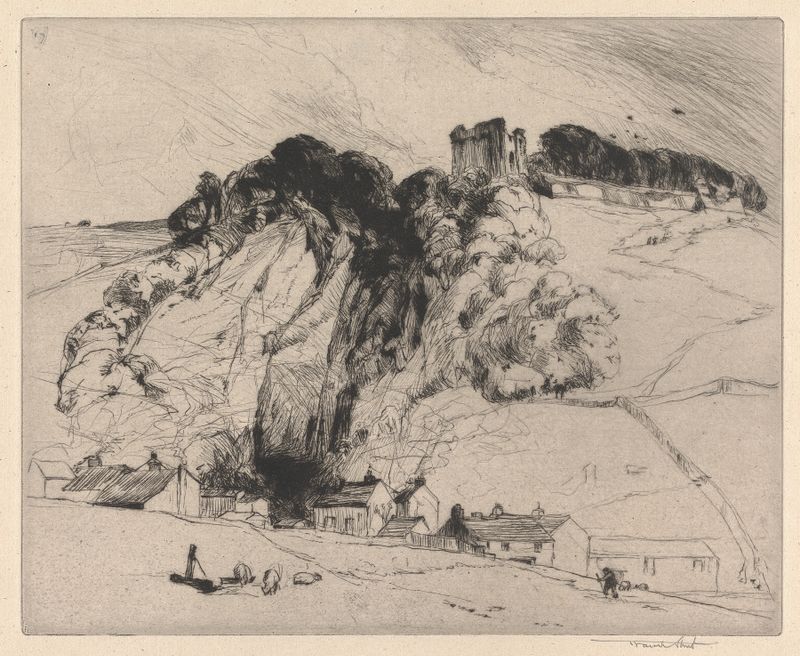
Peveril’s Castle, Derbyshire
Sir Frank Short
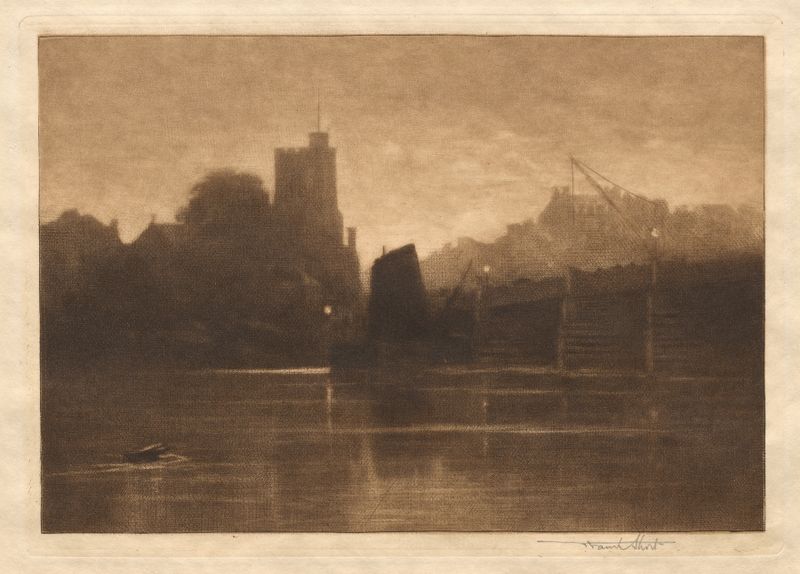
Ebb Tide, Putney Bridge
Sir Frank Short
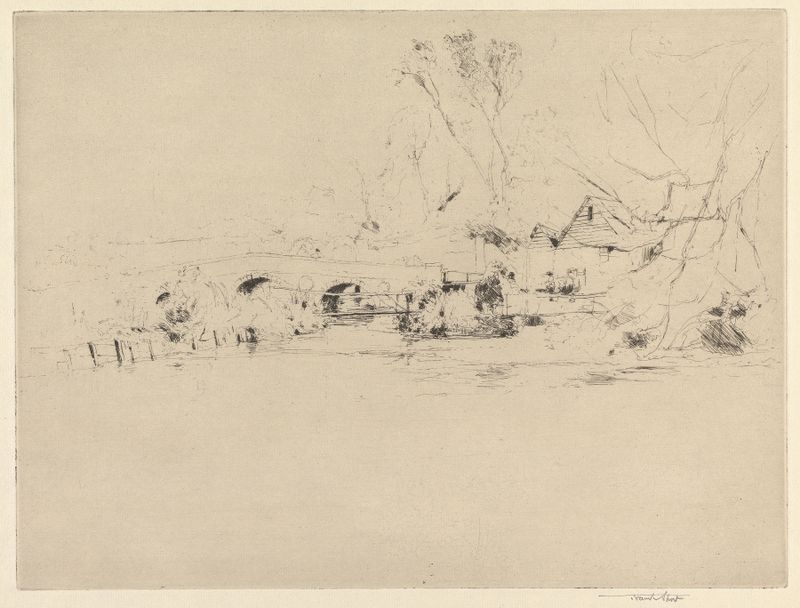
Old Mill on the Wandle, at Mitcham
Sir Frank Short

Moonlight on the Medway at Chatham
Sir Frank Short

Parkgate
Sir Frank Short
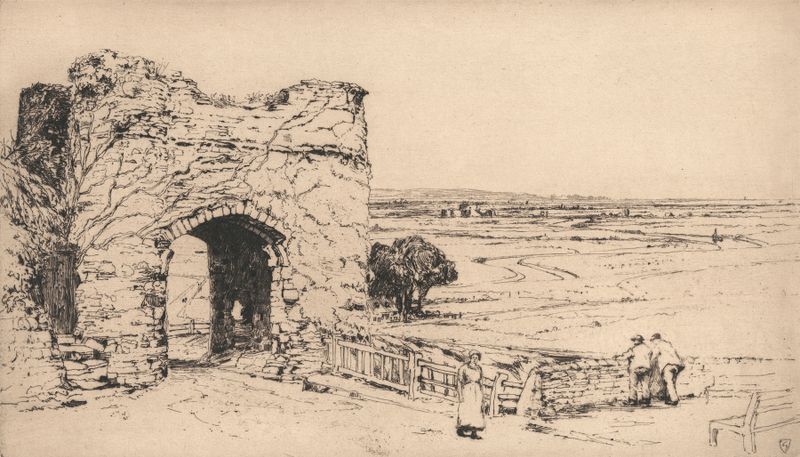
The Strand Gate, Winchelsea
Sir Frank Short

Bridgenorth
Sir Frank Short
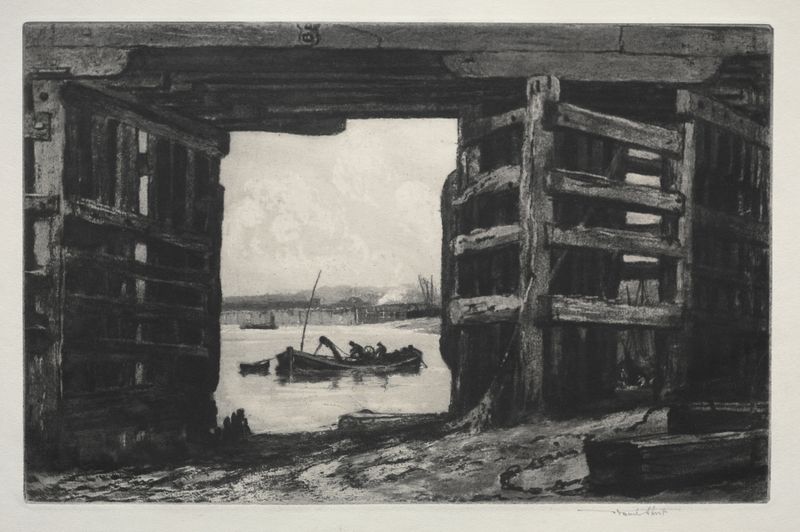
A Span of Old Battersea Bridge
Sir Frank Short

The Rope Walk, Spittal Bridge Whitby
Sir Frank Short





