
The ‘Lusitania’ Raft on Broadstairs Pier — History & Facts
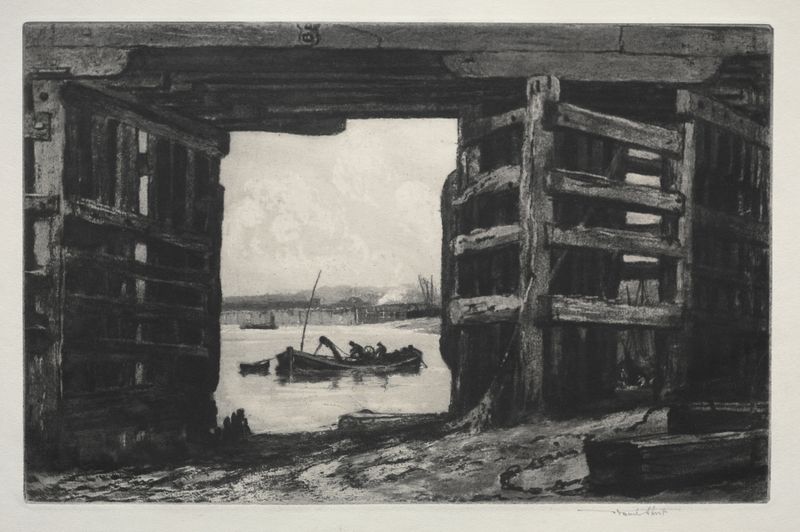
When did color learn to lie? In a world where vibrancy can mask chaos, the hues of reality often distort the truth beneath their surface. Look closely at the central figure, its somber silhouette juxtaposed against the vibrant backdrop of a dawning sky. Notice how the interplay of dark blues and lively oranges draws your eye first to the raft, where anxious souls cling to hope amid uncertainty. The artist’s meticulous technique captures the texture of the water, with rippling waves reflecting both light and despair, while shadows deepen the atmosphere of impending dread. The emotional tension in this work lies in its duality; here is a celebration of human resilience set against the backdrop of tragedy.
The bright colors surrounding the raft evoke a sense of false security, contrasting sharply with the haunting expressions of the figures, which resonate with fear and vulnerability. Each stroke of paint reveals a story of survival, yet simultaneously questions the solace found in such beauty—a reminder of the lurking dangers just out of sight. Sir Frank Short painted this piece in 1920, during a period marked by the aftermath of World War I. The art world was shifting, with movements like Expressionism emerging as reactions to the horrors of conflict.
Amidst this turbulent backdrop, Short sought to explore themes of human experience, capturing the fragility of life in a world still reeling from war’s devastation.
More Artworks by Sir Frank Short
Browse all →
Morning Haze in Chichester Harbor
Sir Frank Short
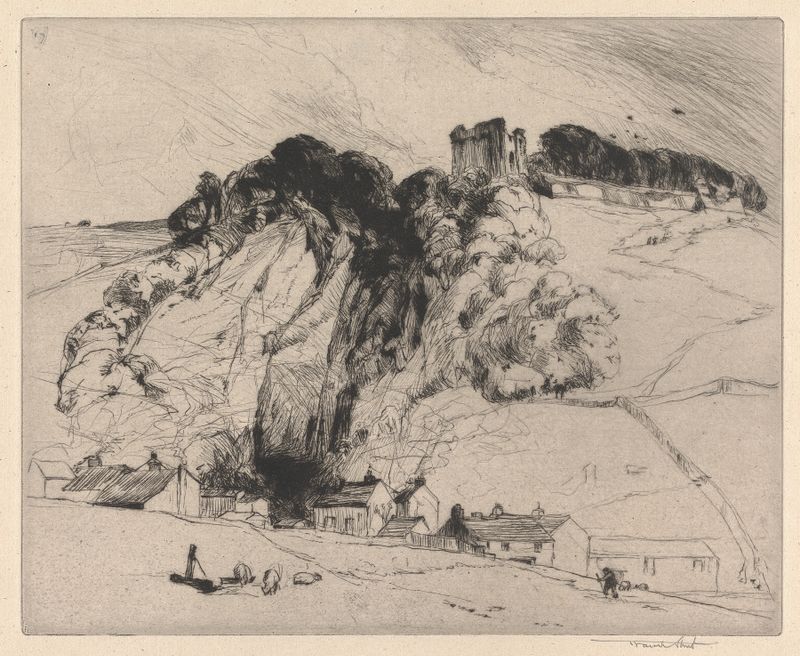
Peveril’s Castle, Derbyshire
Sir Frank Short
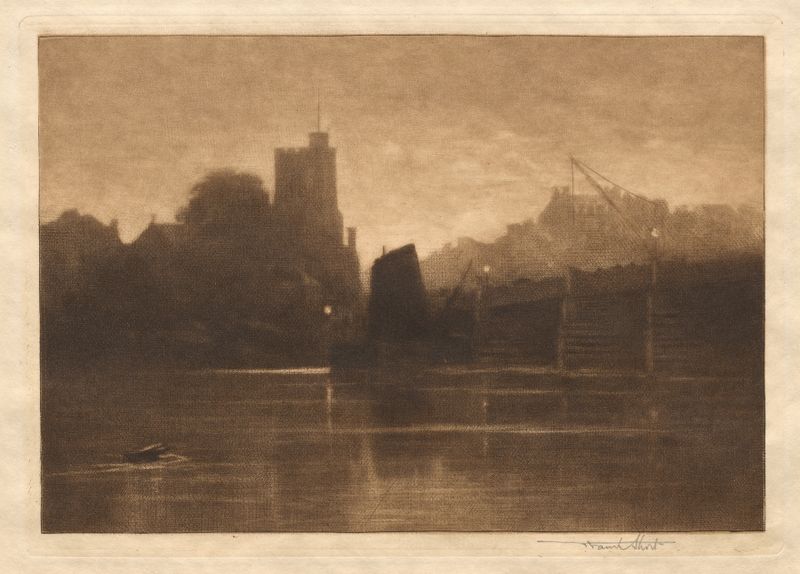
Ebb Tide, Putney Bridge
Sir Frank Short
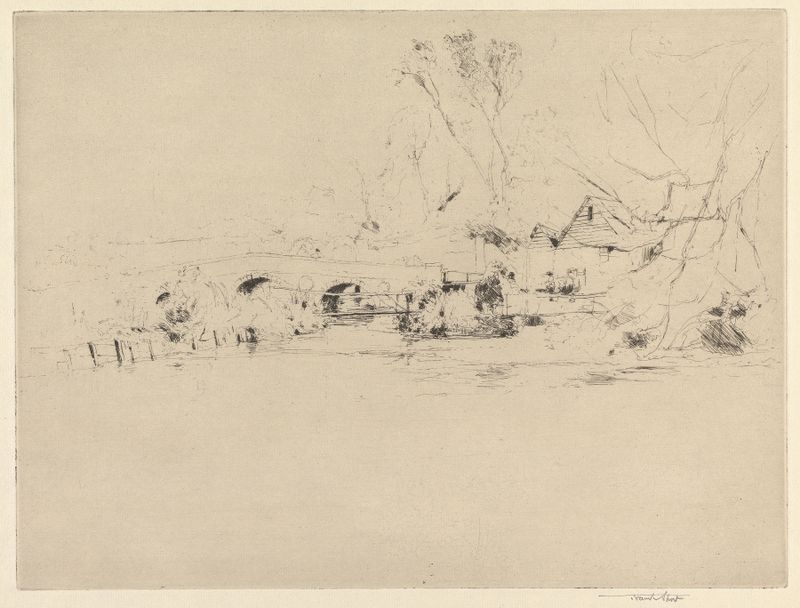
Old Mill on the Wandle, at Mitcham
Sir Frank Short

Moonlight on the Medway at Chatham
Sir Frank Short

Parkgate
Sir Frank Short
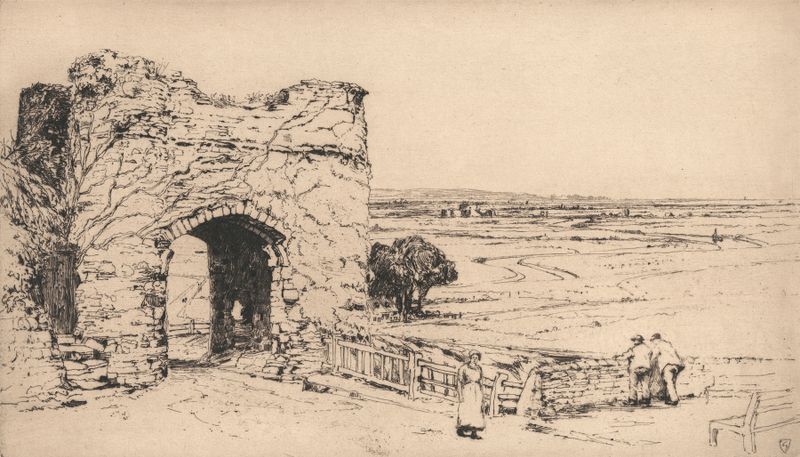
The Strand Gate, Winchelsea
Sir Frank Short

Bridgenorth
Sir Frank Short
A Span of Old Battersea Bridge
Sir Frank Short

The Rope Walk, Spittal Bridge Whitby
Sir Frank Short





