
The Marian altar in the church of Hallstatt — History & Facts
Could beauty survive in a century of chaos? In an era where the tumult of history presses against the fragile silences of faith, the Marian altar stands as a poignant reminder of the human spirit's resilience. Focus on the intricate details of the altar, where the rich hues of gold and deep blue command attention. Notice how the artist captures the delicate carvings, each figure painstakingly rendered, inviting you to explore the interplay of light and shadow. The soft glow illuminating the centerpiece draws the eye, while surrounding elements seem to fade into the background, emphasizing the sacredness of the moment.
The composition creates a sense of reverence, urging the viewer to pause and reflect. Delve deeper, and you’ll find layers of meaning that resonate with the theme of mortality. The figures depicted not only represent the divine but also reflect the transient nature of life, hinting at the fragility of human existence amidst the eternal. The juxtaposition of the ornate altar and the simplicity of the church’s architecture serves as a reminder of the enduring comfort that faith can provide, even as the world outside may be rife with strife.
Each detail weaves a narrative of hope and sorrow, inviting contemplation on what it means to cherish beauty in a fleeting world. Rudolf von Alt painted this work in 1847 while residing in Vienna, a time marked by significant political unrest across Europe. The artist was deeply influenced by his surroundings and the Romantic movement, which sought to capture both the sublime and the ordinary. This period shaped his approach, as he often depicted sacred spaces with a reverent eye, reflecting both the spiritual and the temporal in his art.
More Artworks by Rudolf von Alt
Browse all →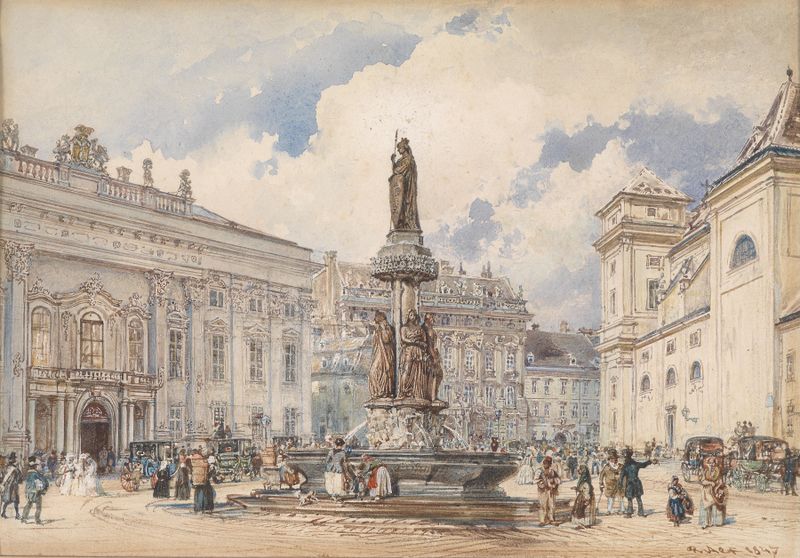
Freyung mit Austriabrunnen
Rudolf von Alt

The Interior of the Cathedral of Saint Stephen at Vienna
Rudolf von Alt
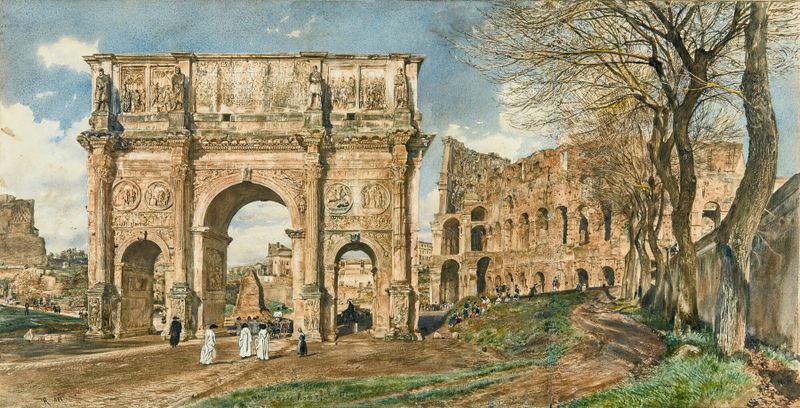
The Arch Of Constantine And The Colosseum, Rome
Rudolf von Alt

The Fleischmarkt in Vienna with the Greek-Orthodox Church of the Holy Trinity
Rudolf von Alt

Der Stephansdom in Wien
Rudolf von Alt
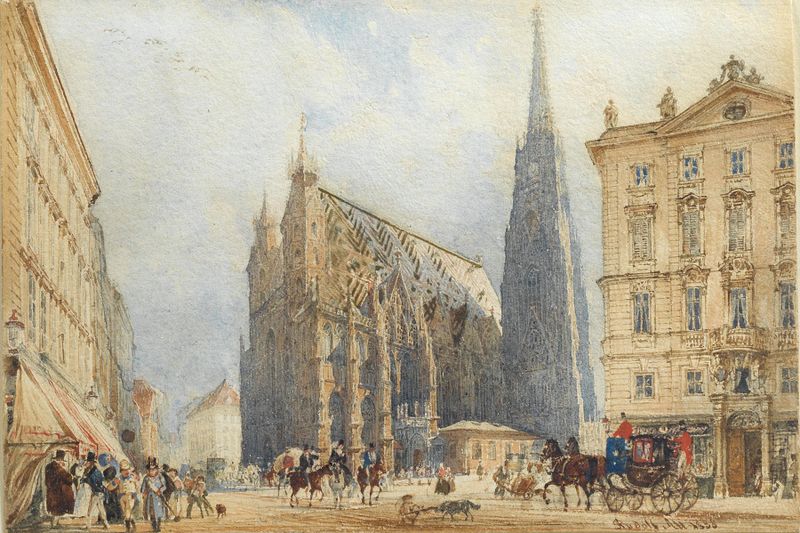
Stephansplatz
Rudolf von Alt
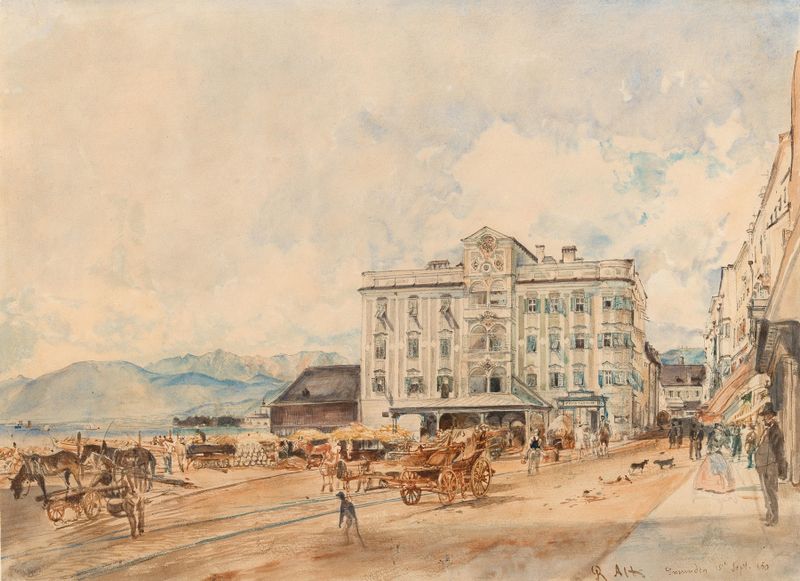
The Town Hall in Gmunden
Rudolf von Alt

View from Sant’Onofrio on Rome
Rudolf von Alt
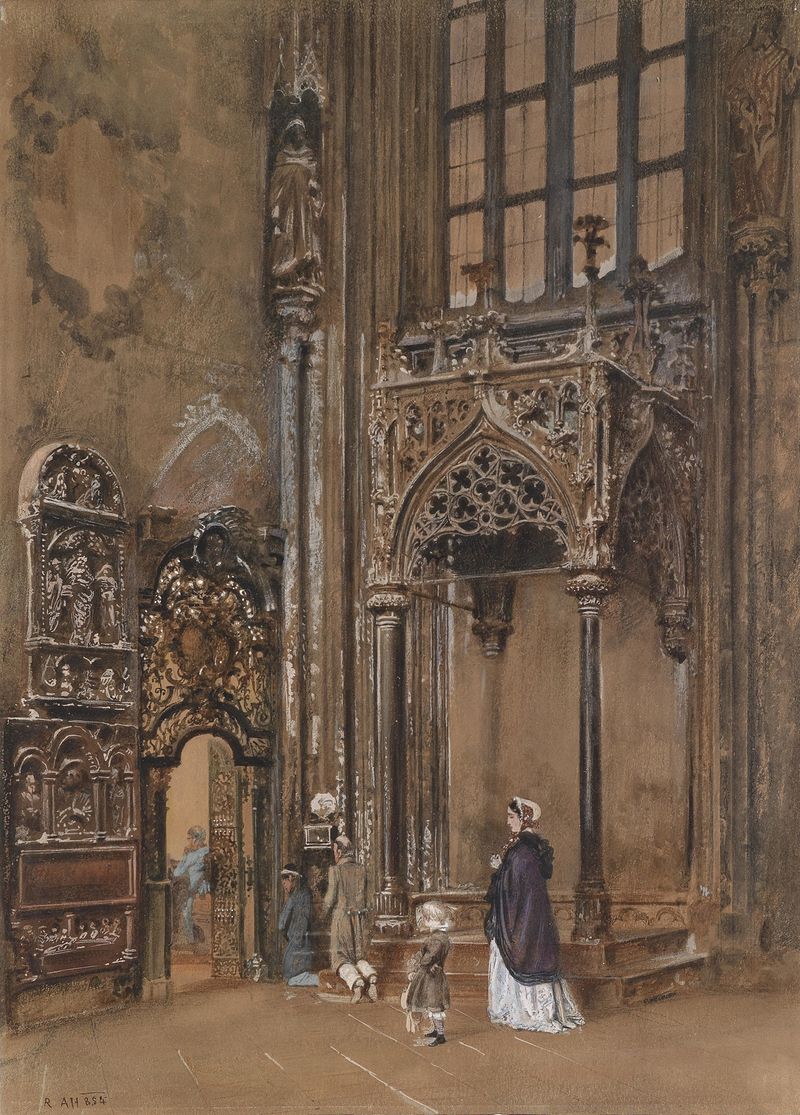
Kircheninneres
Rudolf von Alt
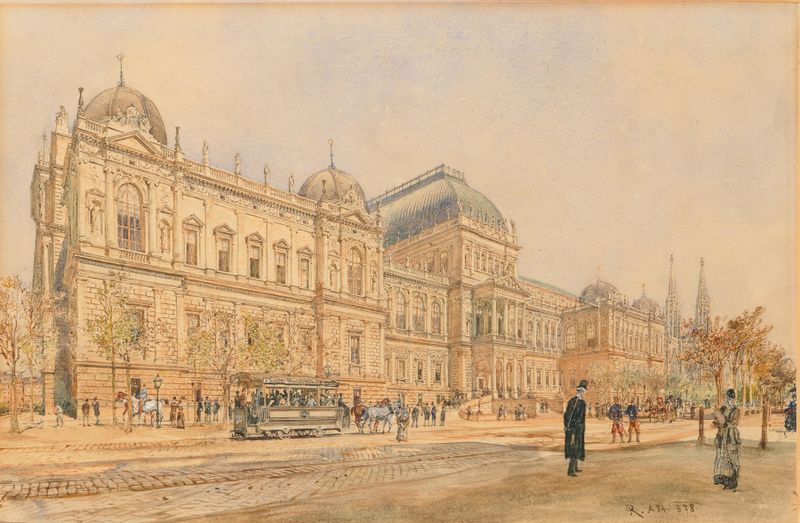
The University of Vienna on the Ringstrasse, with Horse-Drawn Tram and Figures, a view of the building still under construction in 1878 (erected by Heinrich von Ferstel 1873-1884)
Rudolf von Alt
More Religious Art
Browse all →
The Return of the Prodigal Son
Rembrandt van Rijn

The Garden of Earthly Delights
El Bosco

Count Orgaz’ funeral
El Greco

The Hundred Guilder Print: the central piece with Christ preaching, the plate arched
Rembrandt van Rijn

The Descent from the Cross
Rogier van der Weyden

The return of the prodigal son
Rembrandt van Rijn