
The market with the Waag in Deventer — History & Facts
A single building commands the square, its ornate gables and clock tower rising above the bustle below, drawing the eye upward through a lattice of cloud and light. The viewer is pulled into the daily rhythm of a Dutch city, where a woman in a bright apron leans over a well in the foreground, and the market square unfolds around her with figures scattered in small dramas: a horseman, children at play, merchants and townsfolk crossing paths. The play of sunlight animates the scene, casting long shadows and warming the ochres and reds of the facades, while the sky—vast and alive with rolling clouds—gives the architecture a sense of grandeur and the day a feeling of possibility. Painted in 1665, The market with the Waag in Deventer by Abraham Beerstraaten belongs to a world in which cityscapes became a source of civic pride and artistic innovation.
In the Dutch Republic, such works were often commissioned by wealthy burghers or city councils eager to celebrate their prosperity and urban identity. The Waag, or weighing house, stands as both a literal and symbolic center of commerce, justice, and community life—a motif that recurs in the period’s city views. This painting now resides in Museum De Waag, a fitting home for a scene so rooted in the rhythms and ambitions of seventeenth-century Dutch society.
The next time you look, let your gaze linger on the tiny gestures and exchanges that animate the square; history, here, is written in sunlight and shadow.
More Artworks by Abraham Beerstraaten
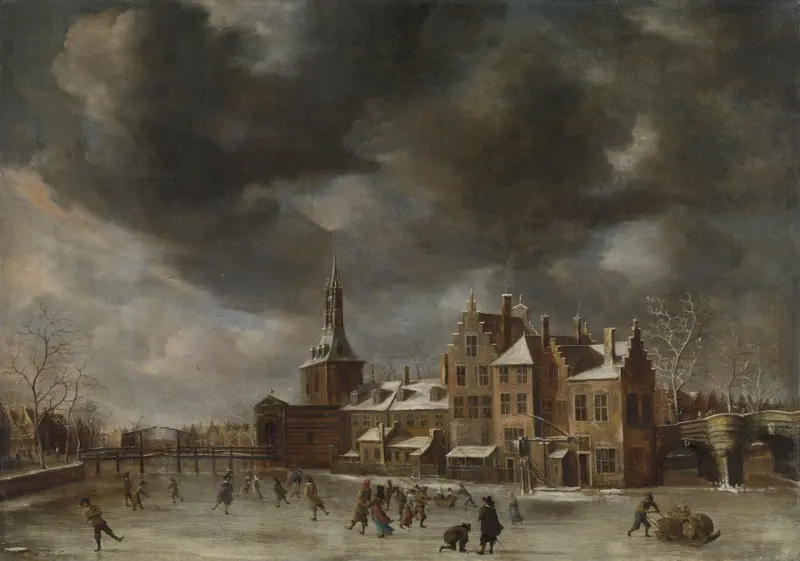
The Blauwpoort in Leiden in the Winter
Abraham Beerstraaten
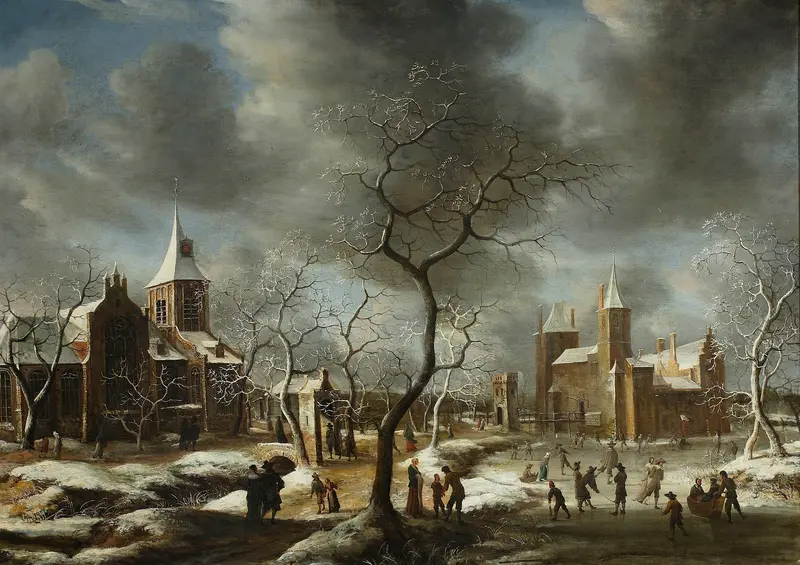
Landscape with ice-skaters
Abraham Beerstraaten
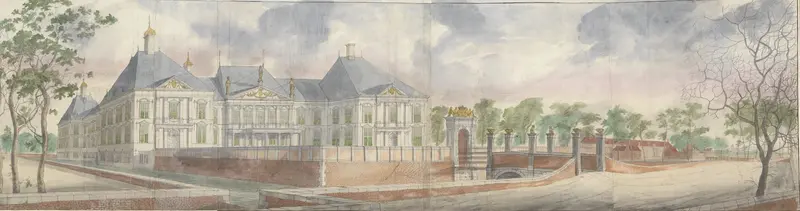
Het Huis te Honselaersdijk en omgeving, over het voorplein te zien
Abraham Beerstraaten
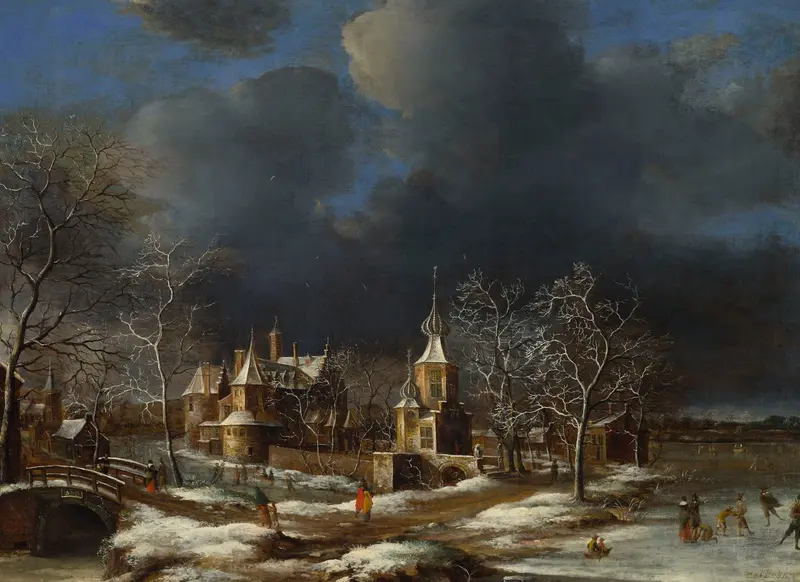
Poelgeest Castle at Koudekerk
Abraham Beerstraaten
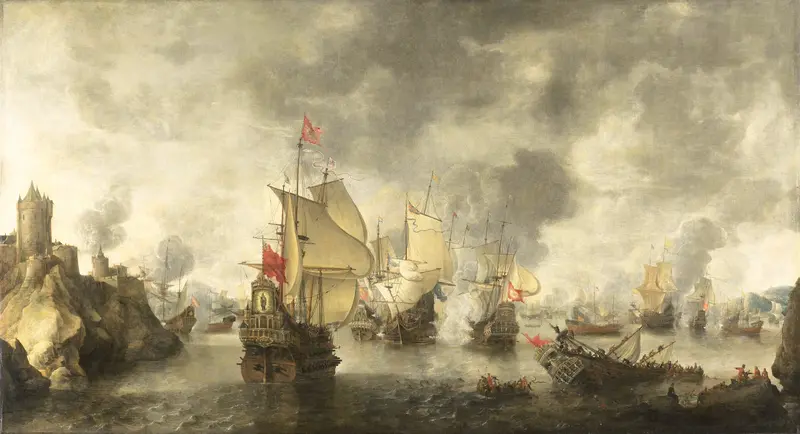
Battle of the Combined Venetian and Dutch Fleets against the Turks in the Bay of Foya, 1649
Abraham Beerstraaten
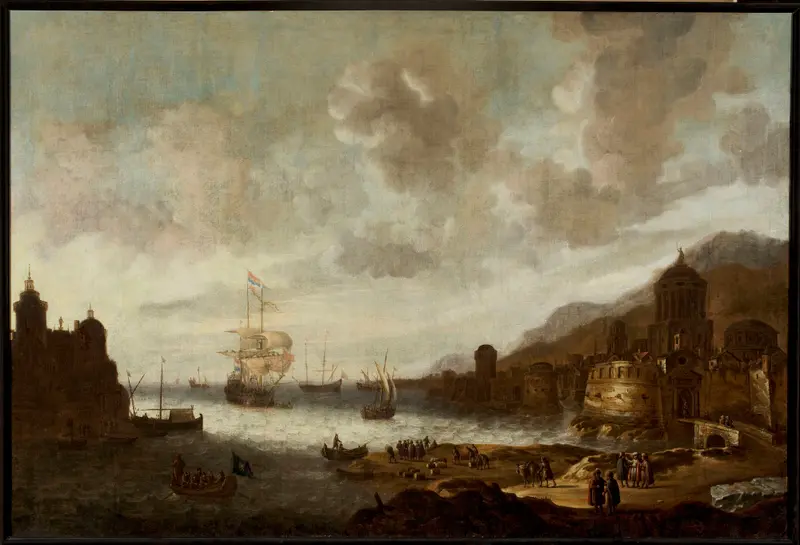
Dutch ship in an exotic port
Abraham Beerstraaten
Battle of the combined Venetian and Dutch fleets against the Turks in the Bay of Foya
Abraham Beerstraaten
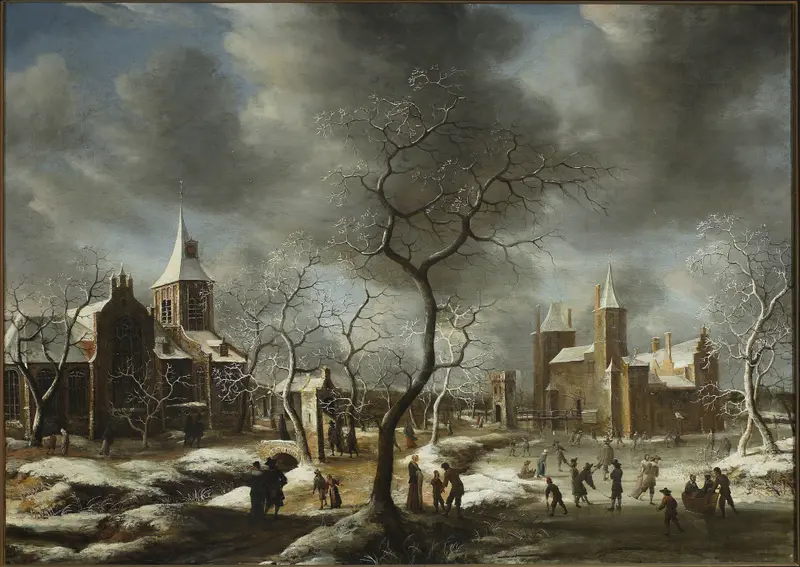
Winter landscape with skaters.
Abraham Beerstraaten
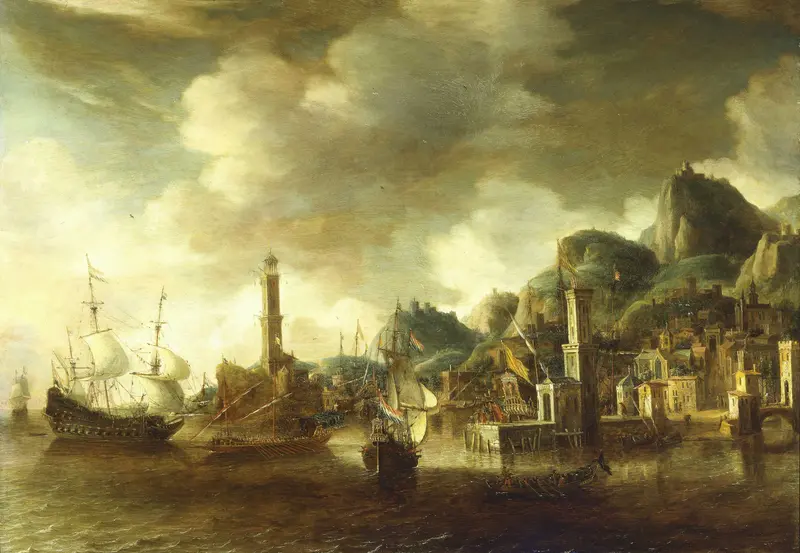
A Dutch Flagship and a Fluyt Running into a Mediterranean Harbour
Abraham Beerstraaten
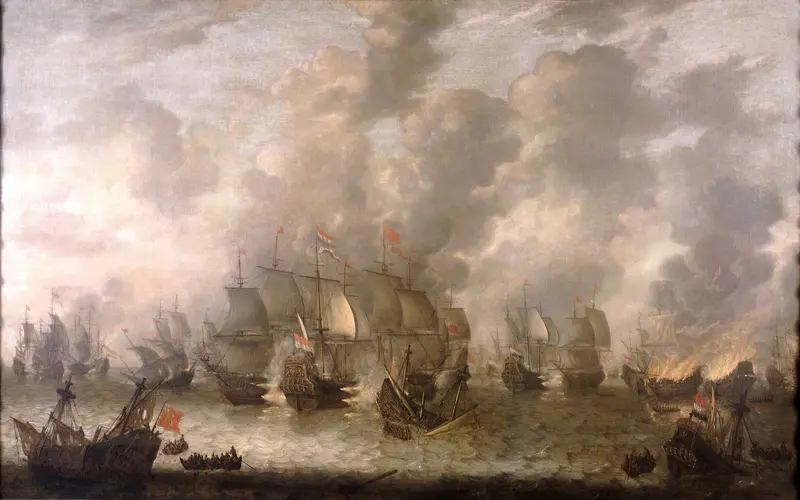
The Battle of Scheveningen, 31 July
Abraham Beerstraaten
More Genre Scene Art

Banquet of the Officers of the St George Civic Guard
Frans Hals

Rembrandt and Saskia in the Scene of the Prodigal Son
Rembrandt van Rijn

Bal du moulin de la Galette
Pierre-Auguste Renoir

Quadrille at the Moulin Rouge
Henri de Toulouse-Lautrec

A Burial at Ornans
Gustave Courbet

When Will You Marry?
Paul Gauguin