
The Matsuyama Mirror — History & Facts
What draws the eye first in The Matsuyama Mirror is the quiet intimacy between two figures, their world contained within the soft geometry of screens and tatami. The woman reclines in a sea of patterned silk, her posture languid yet attentive, while the girl beside her sits upright, a hand mirror poised delicately in her lap. Here, every detail is a clue: the careful arrangement of the tea set, the gentle curve of an arm, the subtle echo of floral motifs across kimono and screen.
Light pools softly on the floor, guiding the gaze from the tangled folds of fabric to the faces, where a private moment of reflection—or perhaps revelation—seems to unfold. The palette, all muted greens and rose, hushes the scene and invites the viewer to linger, as if eavesdropping on a secret. Created in 1910 for a collection of Japanese fairy tales, this illustration by Warwick Goble belongs to a moment when Western artists were captivated by Japanese art and storytelling. Such works were often commissioned for deluxe editions, their purpose both decorative and didactic, offering British readers a window onto distant traditions.
Goble’s delicate line and restrained color reflect the Japonisme that swept through Edwardian illustration, yet his approach is respectful, emphasizing atmosphere over caricature. History has kept few traces of the journey of this particular image, but its survival in a digitized library hints at the enduring fascination with cross-cultural tales. Look again at the mirror: it is both an object and an invitation, drawing us deeper into the layered worlds of story and image.
More Artworks by Warwick Goble
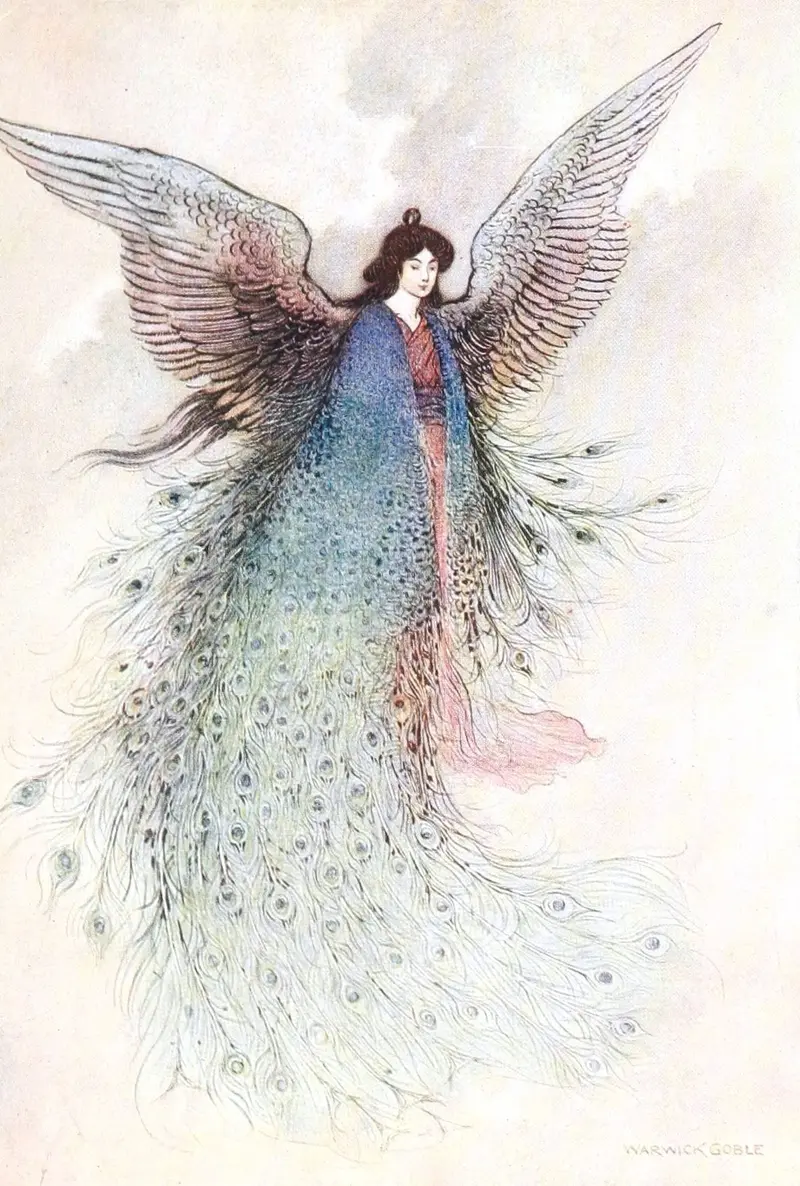
The Moon Maiden (Green Willow)
Warwick Goble
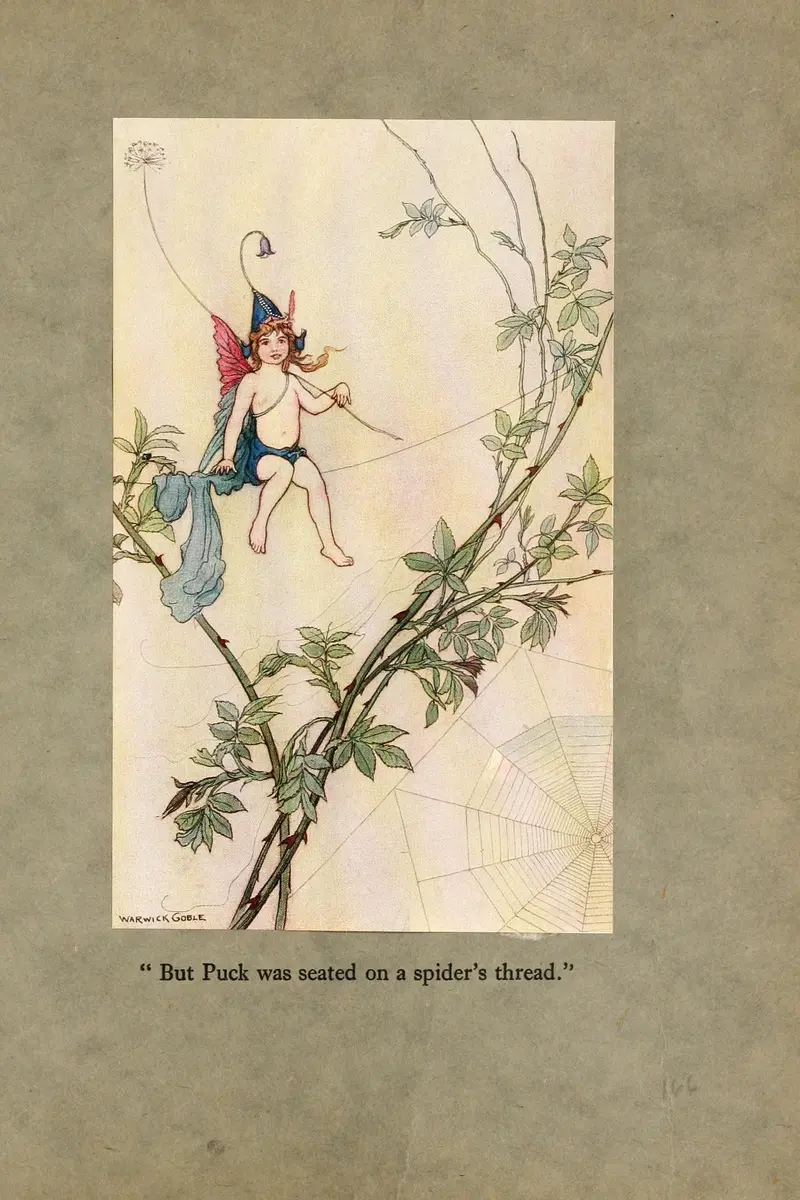
Puck
Warwick Goble

The Ordeal of Queen Draupadi
Warwick Goble

Momotaro
Warwick Goble
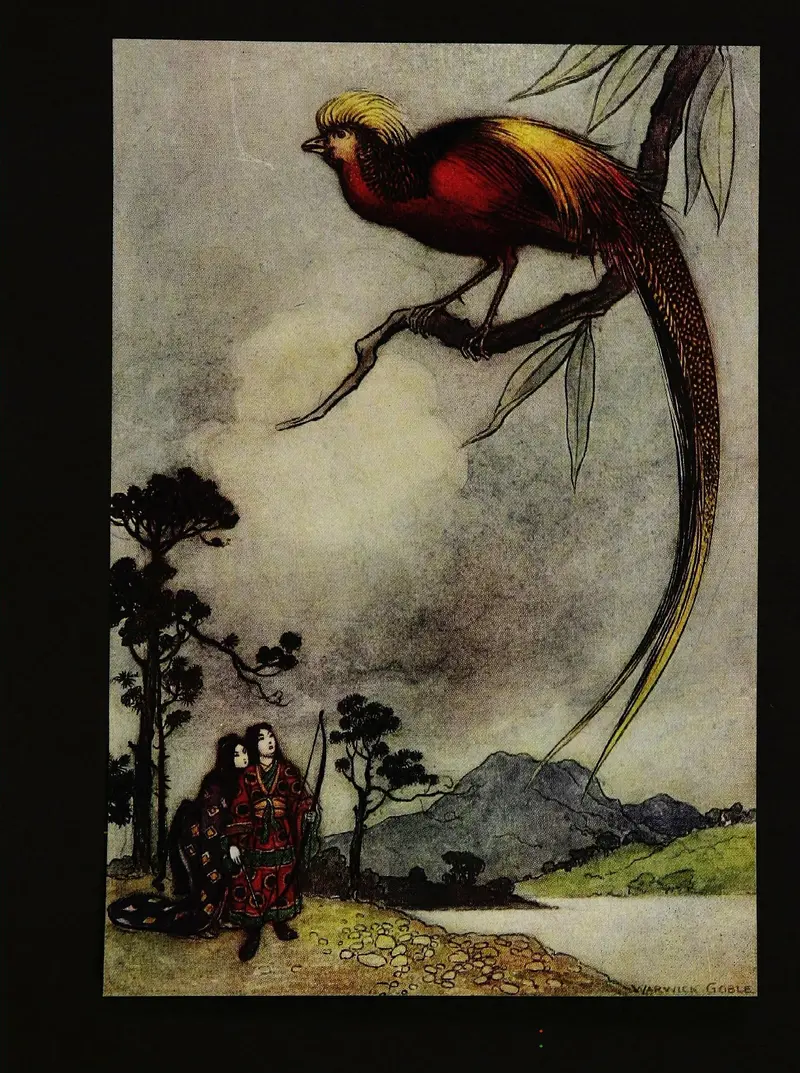
The Singing Bird of Heaven
Warwick Goble
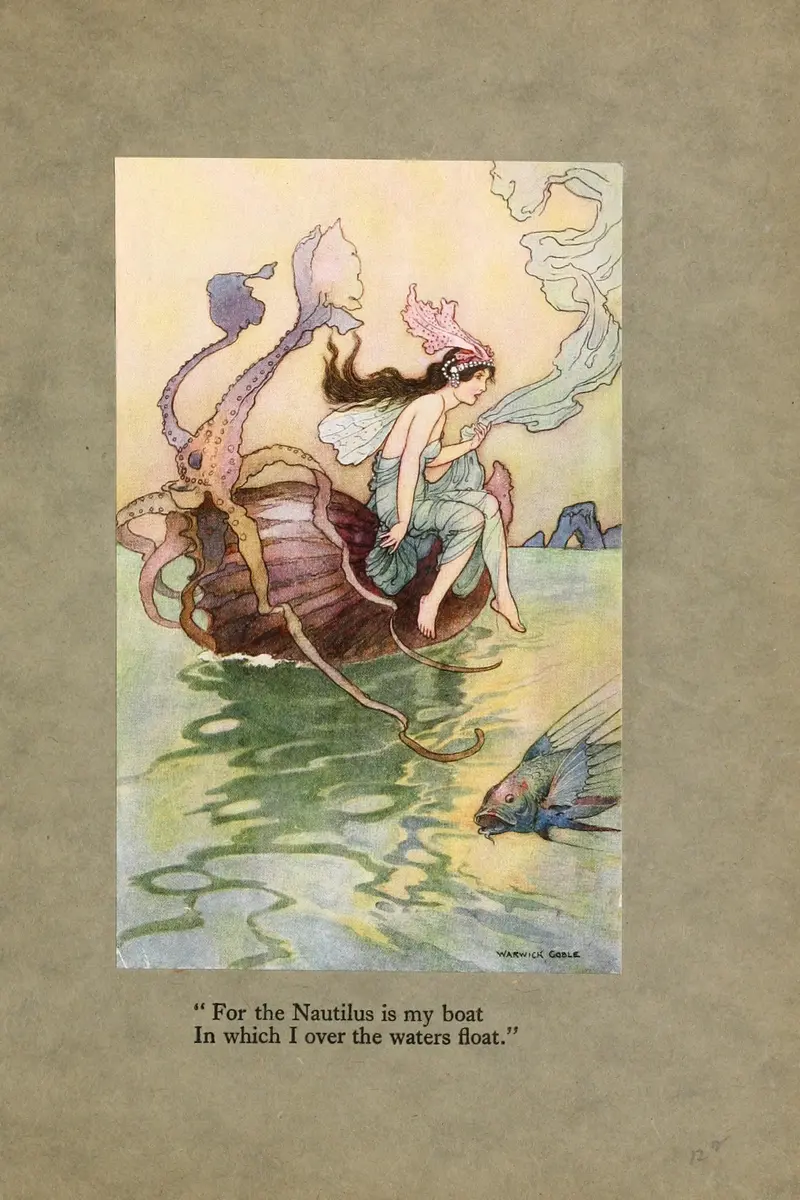
Fairies on the Seashore
Warwick Goble
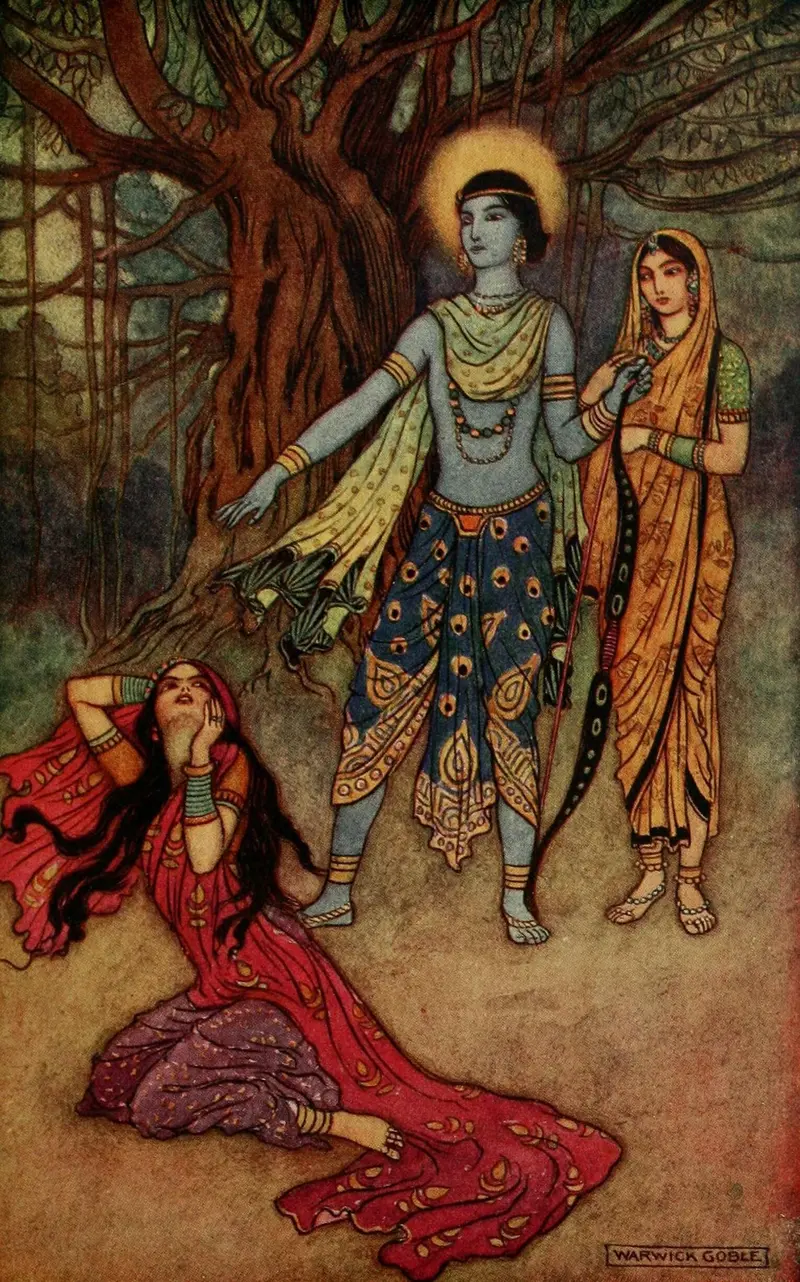
Rama Spurns the Demon Lover
Warwick Goble
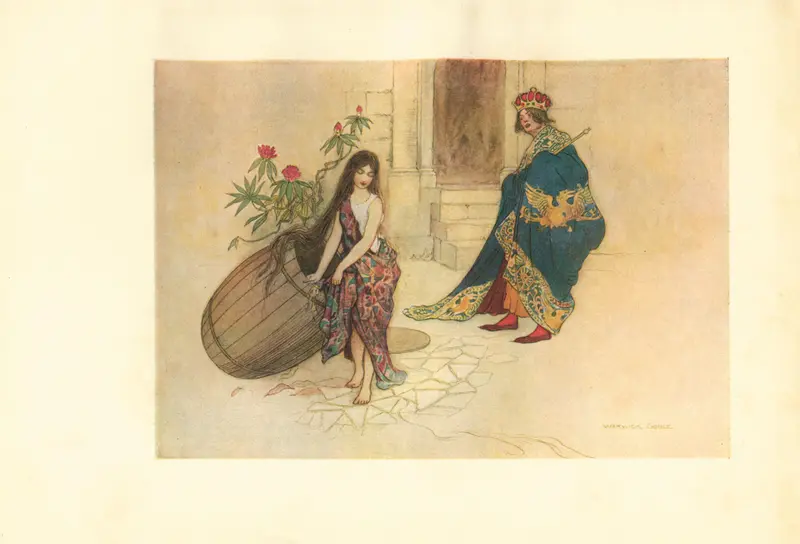
Cannetella Released from the Cask
Warwick Goble
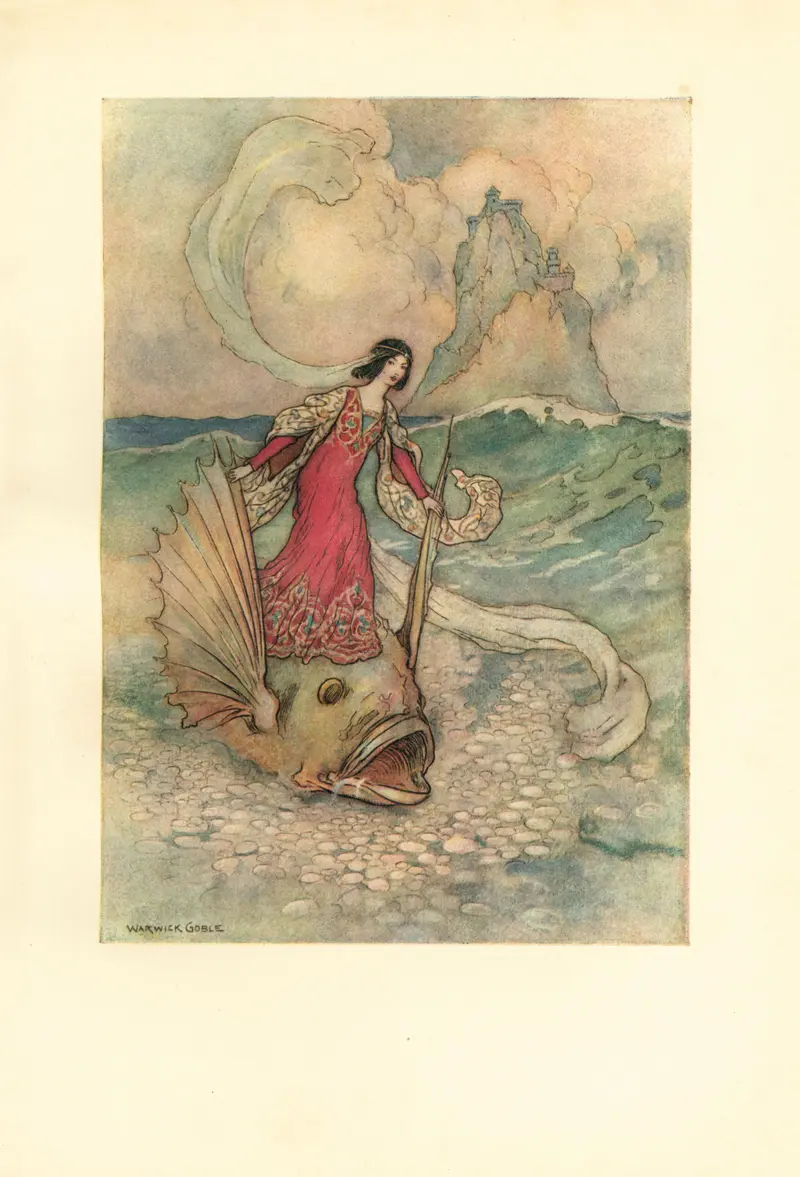
Rita Riding on the Dolphin
Warwick Goble
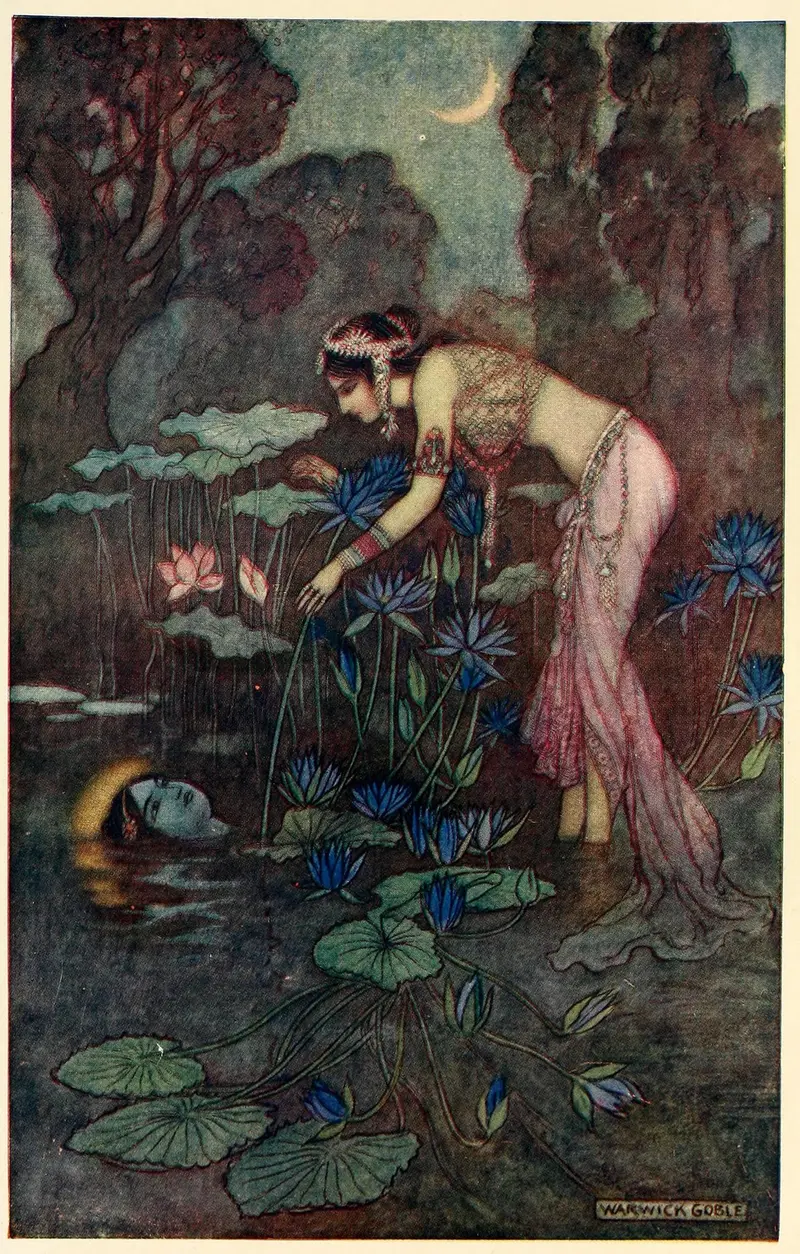
Sita Finds Rama Among Lotus Blooms
Warwick Goble





