
Village girl feeding hens — History & Facts
A shaft of morning light falls across the path, guiding the eye to the quiet authority of the village girl at its center. Her bare feet anchor her to the earth, skirt hitched and hand outstretched, scattering feed to a flurry of hens and chicks. The thatched cottage behind her is both backdrop and witness—its rough walls, the figure seated in shadow, and the lilac bush in bloom all speak of a world where the rhythms of care and labor shape each day.
The girl's absorbed expression and the orderly chaos of the birds create a sense of practiced routine, while the lush greens and soft sky suggest a season of promise. Painted in 1888, Village girl feeding hens by Aleksander Mroczkowski belongs to a moment when artists across Europe turned their gaze to rural life, seeking dignity and poetry in the everyday. Works like this, now in the National Museum in Warsaw, were rarely grand commissions but rather quiet celebrations of a vanishing peasant world, painted for a growing urban public eager for images of “authentic” country existence. The late nineteenth century saw rapid social change—industrialization, migration, and new national identities—and paintings of village scenes became both nostalgic keepsakes and subtle records of transformation.
As you look, notice how every detail—the cottage, the path, the gesture—holds the memory of a world on the edge of change.
More Artworks by Aleksander Mroczkowski

W żniwa
Aleksander Mroczkowski
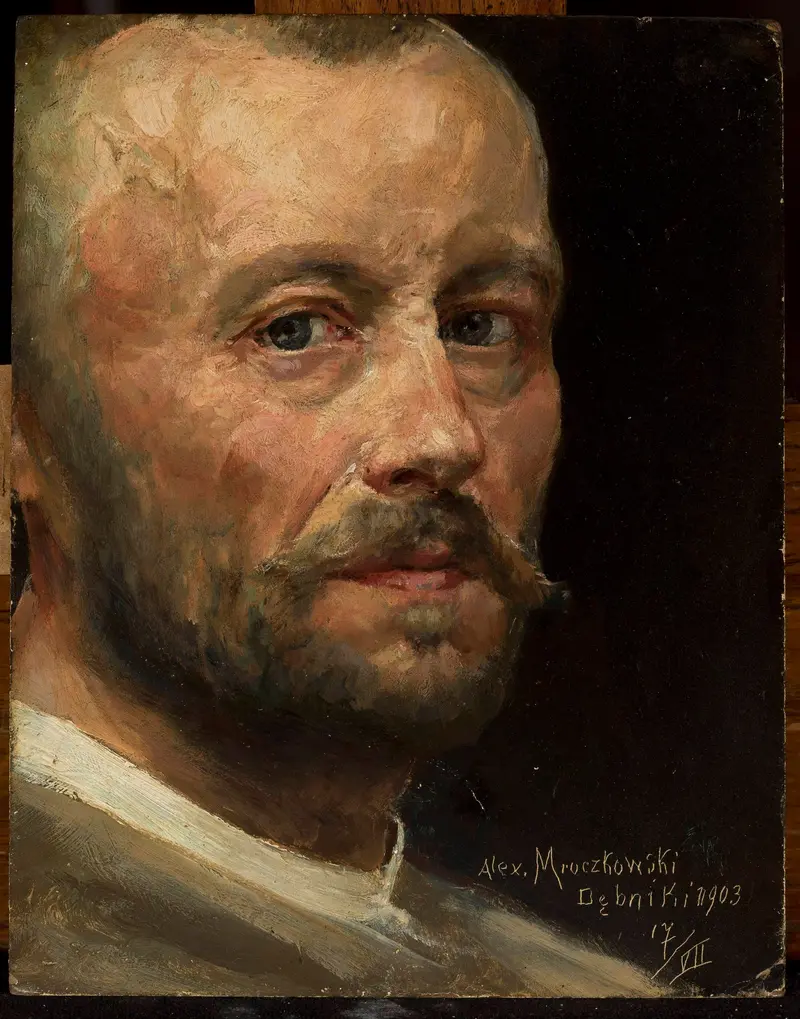
Self-portrait
Aleksander Mroczkowski
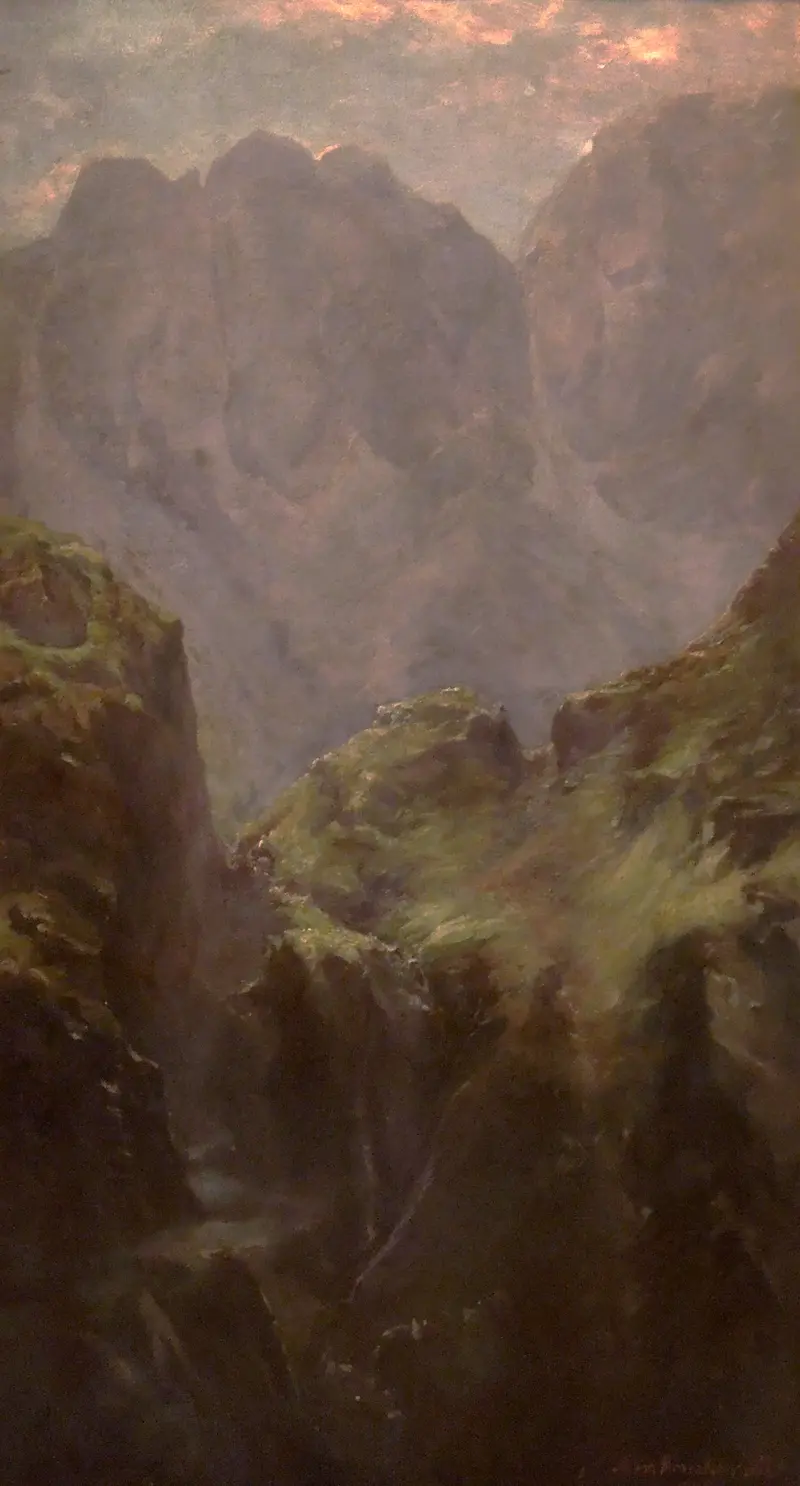
Biała Woda Valley and Gerlach
Aleksander Mroczkowski
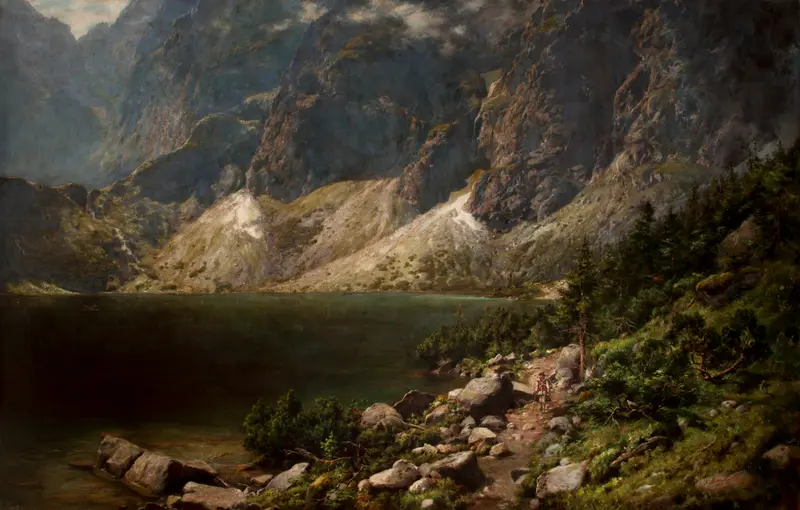
The Morskie Oko Lake in the Tatras
Aleksander Mroczkowski
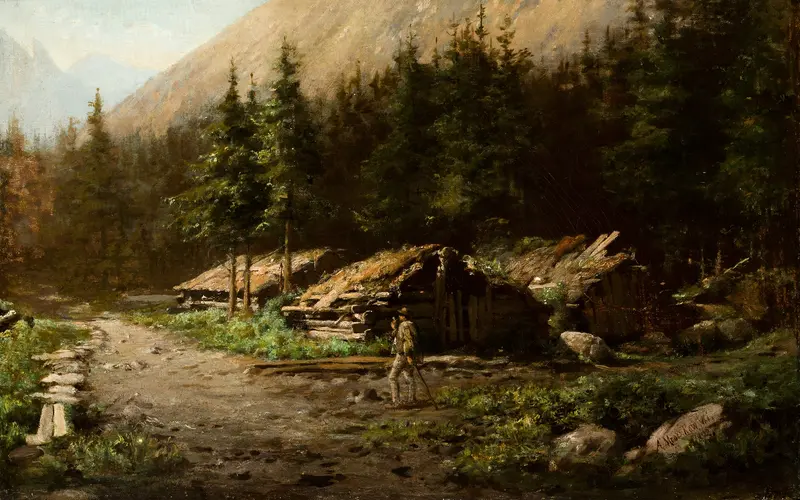
The Mała Łąka Valley
Aleksander Mroczkowski
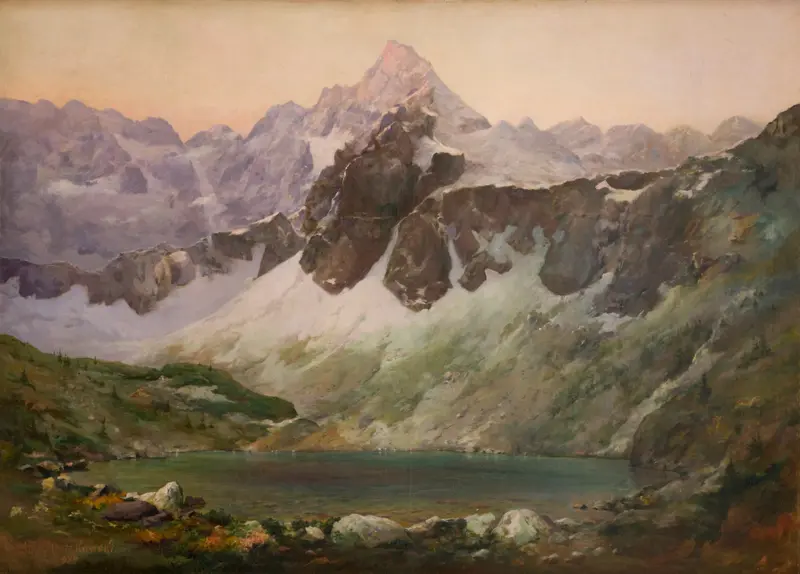
The Morskie Oko Lake
Aleksander Mroczkowski
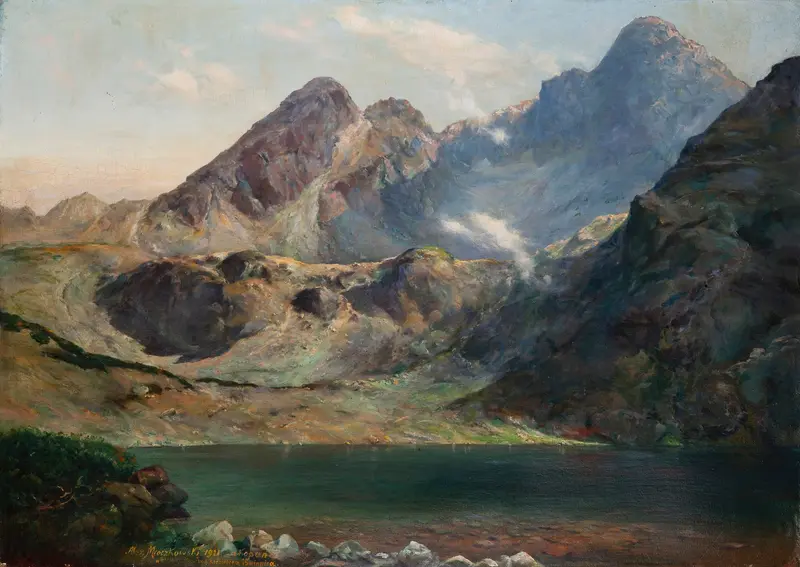
Zielony Staw (Green Lake) at the Foot of Mounts Kościelec i Świnica
Aleksander Mroczkowski
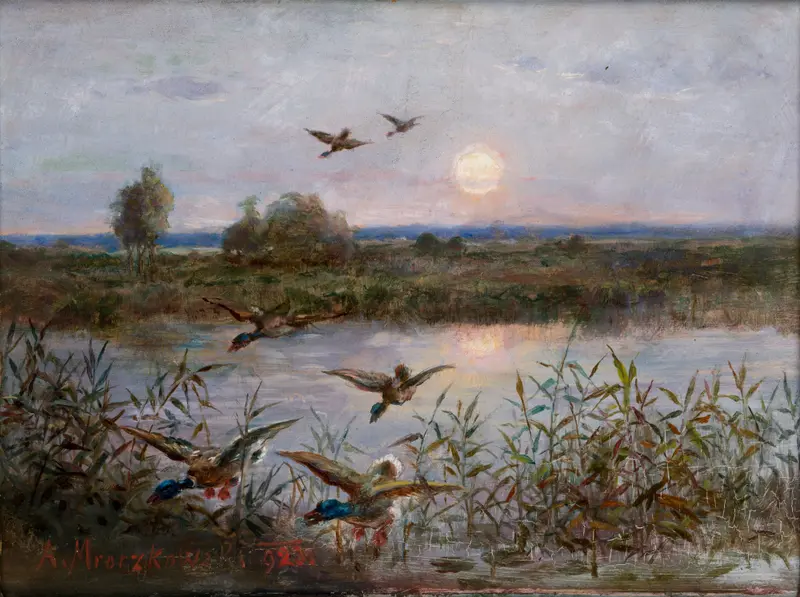
Ducks over Marshes
Aleksander Mroczkowski
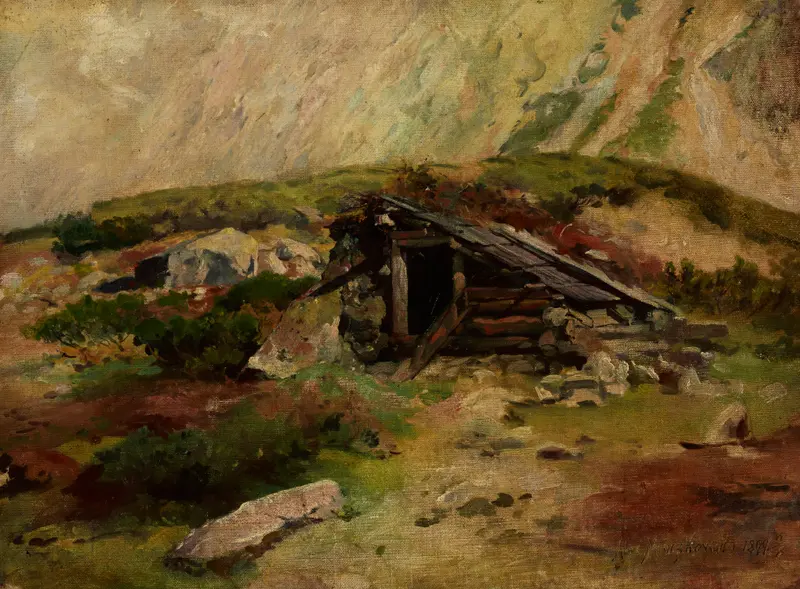
Hut in the Tatra Mountains
Aleksander Mroczkowski
More Genre Scene Art

Banquet of the Officers of the St George Civic Guard
Frans Hals

Rembrandt and Saskia in the Scene of the Prodigal Son
Rembrandt van Rijn

Bal du moulin de la Galette
Pierre-Auguste Renoir

Quadrille at the Moulin Rouge
Henri de Toulouse-Lautrec

A Burial at Ornans
Gustave Courbet

When Will You Marry?
Paul Gauguin