
The Murder of Banquo — History & Facts
What secret hides in the quiet of the canvas? In this moment captured by the artist, a palpable yearning permeates the air, inviting the viewer to reflect on the untold stories concealed within the shadows. Look to the foreground, where the shimmering moonlight bathes the figures in an ethereal glow. The tension is evident in the stark contrast between the illuminated faces of the assailants and the darkening figure of Banquo, who appears both resolute and vulnerable. Notice how the swirling brushstrokes and deep hues enhance the drama of the impending violence, while the meticulous details of the characters’ expressions speak volumes about their inner turmoil. Beneath the surface of the scene lies a rich tapestry of hidden meanings.
The juxtaposition of light and dark reflects a moral battle between ambition and betrayal, hinting at the corrupting power of unchecked desire. The open landscape surrounding the figures evokes a sense of isolation, emphasizing Banquo's tragic fate, while the watchful eyes of trees loom overhead, as if nature itself bears witness to the treachery unfolding below. In 1830, during a period when Romanticism was flourishing, the artist created this work in England amidst a growing fascination with Shakespearean themes. The era was marked by a shift towards exploring human emotions and conflicts, and this painting mirrors that spirit, embodying the dramatic intensity and psychological depth characteristic of both the time and the artist’s style.
More Artworks by George Fennell Robson
Browse all →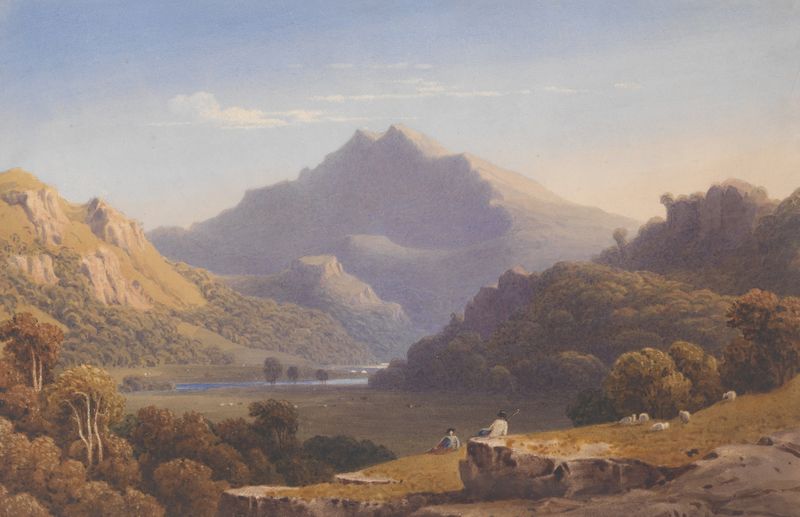
Snowdon from Llyn Nantlle, North Wales
George Fennell Robson
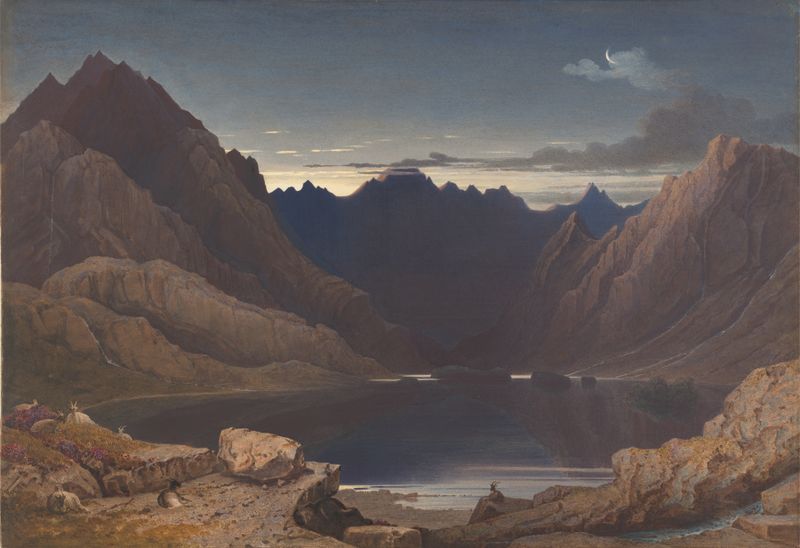
Loch Coruisk, Isle of Skye, Dawn
George Fennell Robson
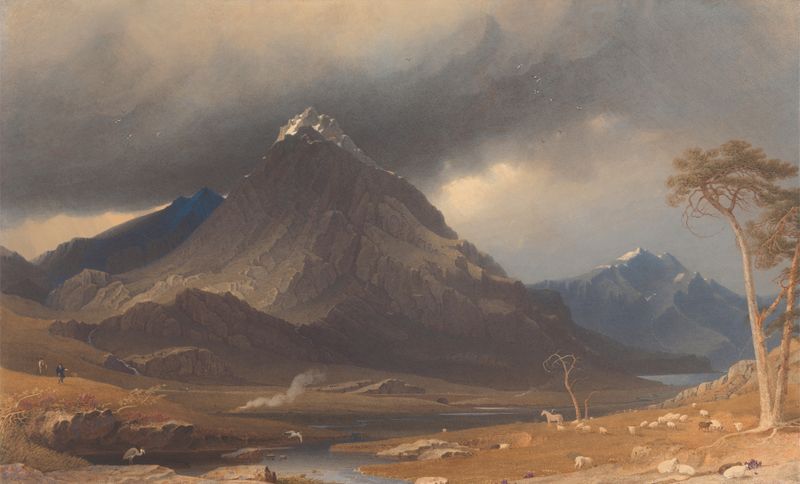
Tryfan, Carnarvonshire
George Fennell Robson
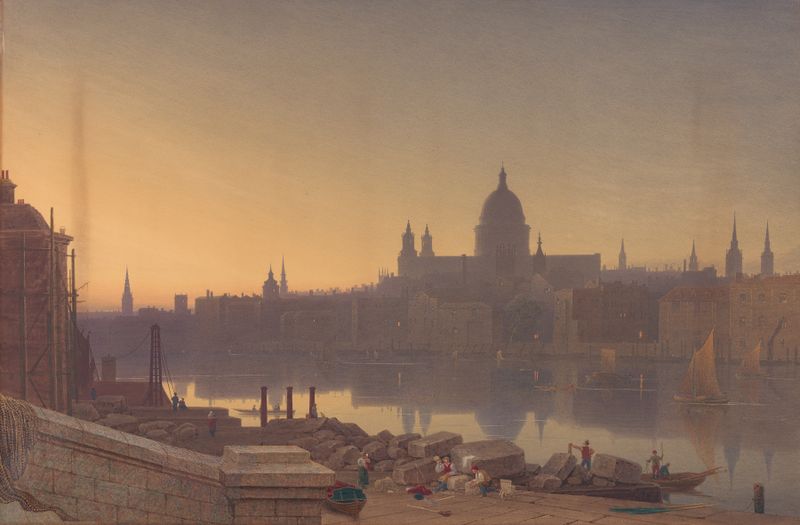
St. Paul’s from Southwark by Sunset
George Fennell Robson
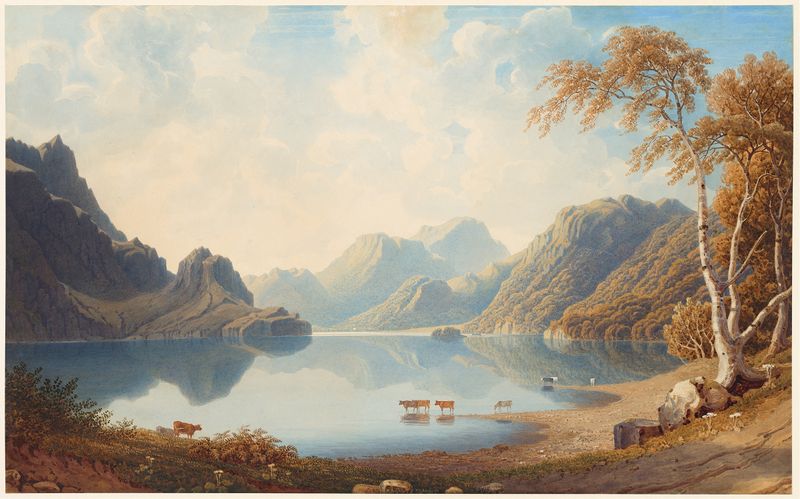
A Loch in Scotland
George Fennell Robson
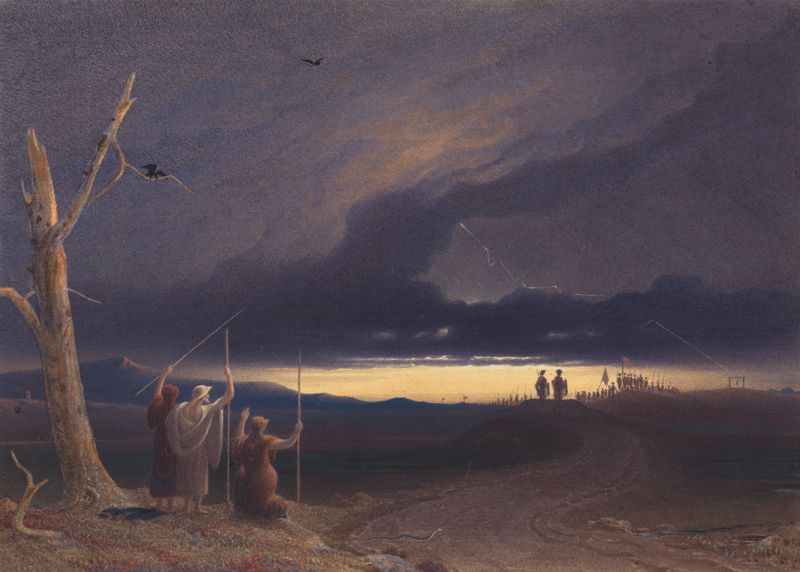
Macbeth and Banquo on the Heath
George Fennell Robson
More Historical Art
Browse all →
The Night Watch Militia Company of District II under the Command of Captain Frans Banninck Cocq
Rembrandt van Rijn

Lincoln Memorial
Henry Bacon

The Third of May 1808
Francisco de Goya

Isaac and Rebecca, Known as ‘The Jewish Bride’
Rembrandt van Rijn

The Charge of the Mamelukes (1814)
Francisco de Goya

De vier ruiters van de apocalyps
Albrecht Dürer