
The old city hall of Amsterdam during winter — History & Facts
A winter’s hush settles over the heart of Amsterdam, yet the square before the old city hall thrums with quiet life. What first draws the eye is not the architecture but the choreography of daily business: bundled figures crossing the snow, a dog nosing for scraps, children spinning a hoop, and merchants conferring near baskets and barrels. The massive, shadowed façade of the city hall anchors the scene, its arches and clock tower looming over the bustle, while the low winter sun glances off icy rooftops and casts long, blue-tinged shadows across the square.
Beerstraaten’s careful play of light and cloud, the subtle pinks and golds at the horizon, and the clustering of townsfolk all serve to draw the viewer into the layered rhythms of city life—at once ordinary and monumental. Works like this, painted in the mid-seventeenth century, were prized by Amsterdam’s burghers for their celebration of civic pride and urban order. Cityscapes became a genre unto themselves as the Dutch Republic flourished, and scenes of public squares and landmarks often found their way into the homes of prosperous merchants and officials. Painted sometime between 1639 and 1652, The old city hall of Amsterdam during winter by Abraham Beerstraaten belongs to this tradition, capturing not just a building but a way of life at a moment when Amsterdam was the beating heart of a global trading empire.
The painting now resides in the Boijmans collection, a quiet witness to centuries of change, inviting us to step closer and imagine ourselves among the figures crossing the frozen square.
More Artworks by Abraham Beerstraaten
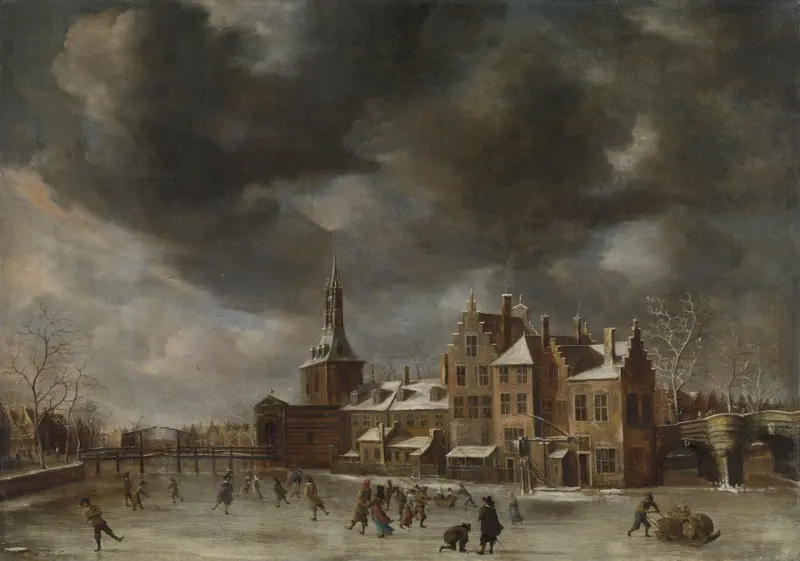
The Blauwpoort in Leiden in the Winter
Abraham Beerstraaten
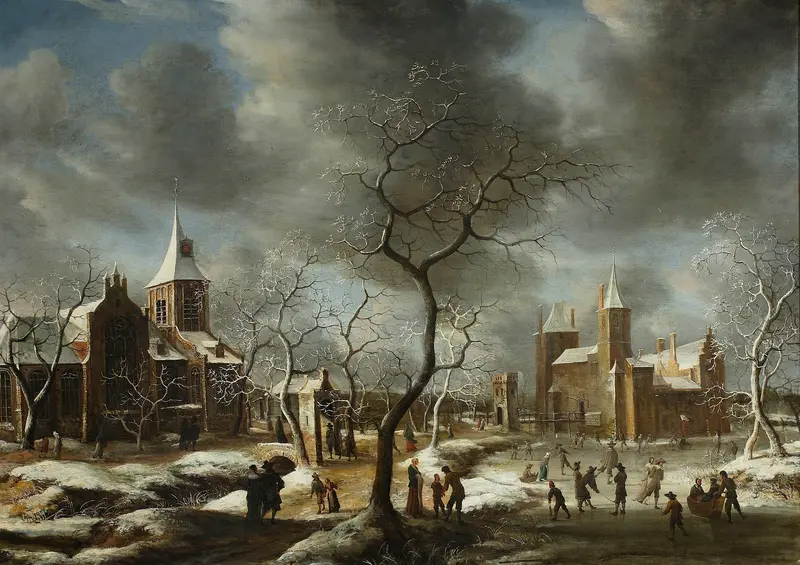
Landscape with ice-skaters
Abraham Beerstraaten
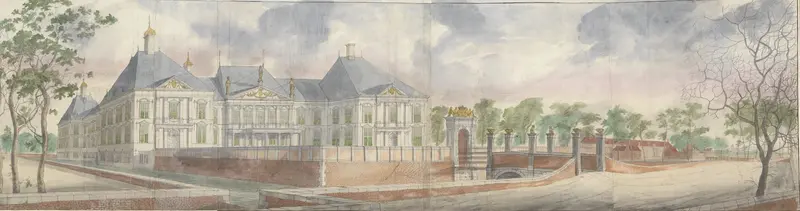
Het Huis te Honselaersdijk en omgeving, over het voorplein te zien
Abraham Beerstraaten
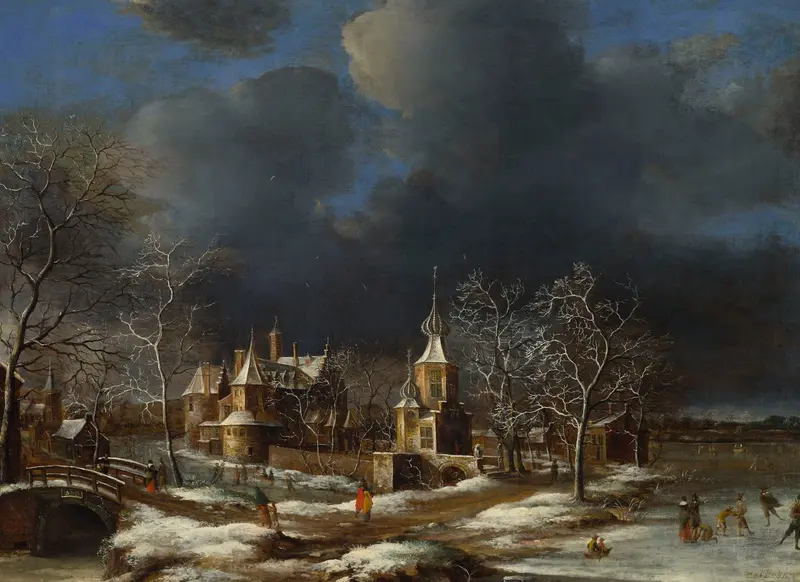
Poelgeest Castle at Koudekerk
Abraham Beerstraaten
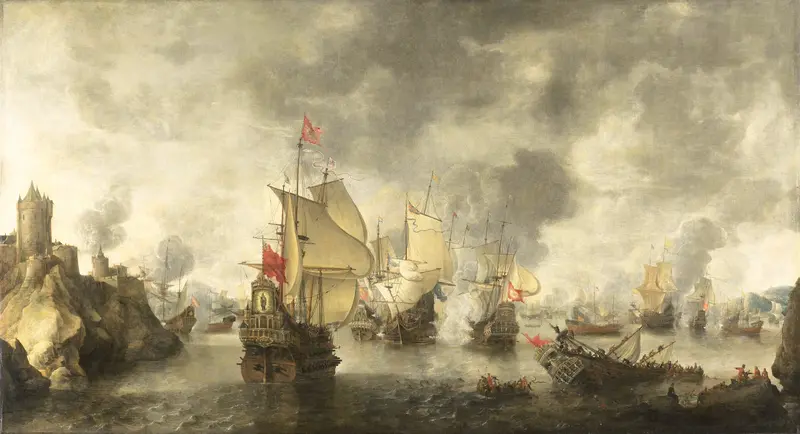
Battle of the Combined Venetian and Dutch Fleets against the Turks in the Bay of Foya, 1649
Abraham Beerstraaten
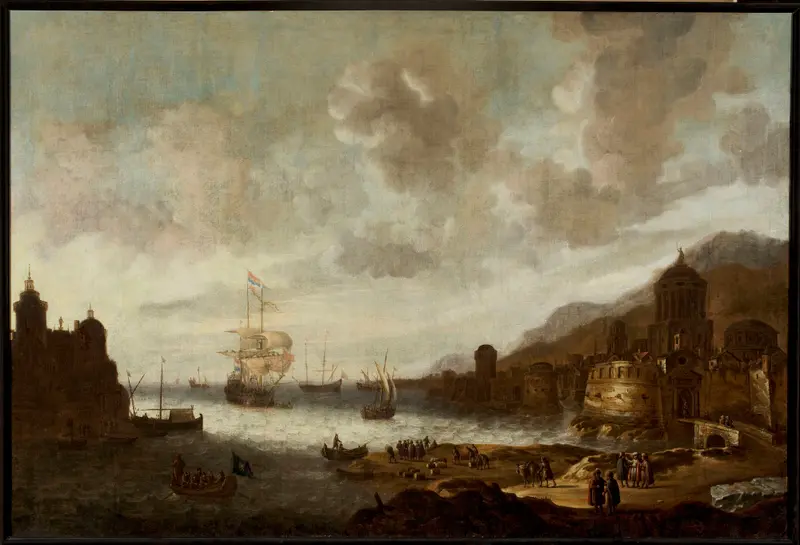
Dutch ship in an exotic port
Abraham Beerstraaten
Battle of the combined Venetian and Dutch fleets against the Turks in the Bay of Foya
Abraham Beerstraaten
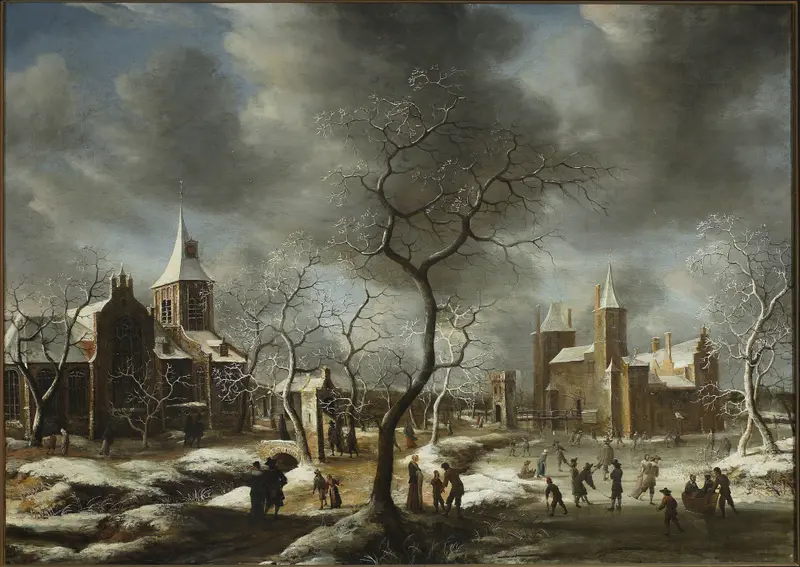
Winter landscape with skaters.
Abraham Beerstraaten
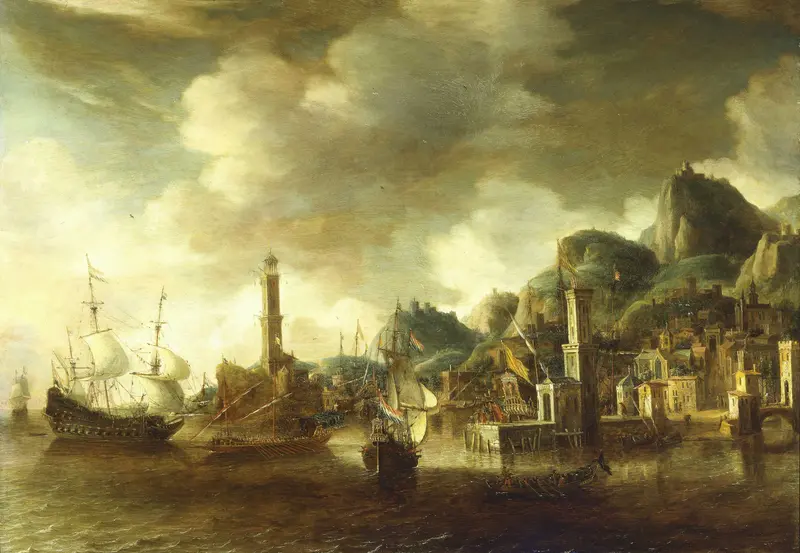
A Dutch Flagship and a Fluyt Running into a Mediterranean Harbour
Abraham Beerstraaten
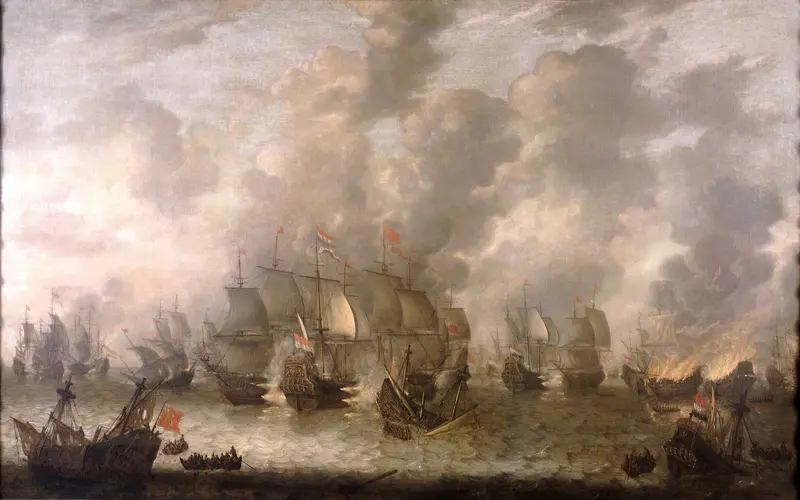
The Battle of Scheveningen, 31 July
Abraham Beerstraaten
More Genre Scene Art

Banquet of the Officers of the St George Civic Guard
Frans Hals

Rembrandt and Saskia in the Scene of the Prodigal Son
Rembrandt van Rijn

Bal du moulin de la Galette
Pierre-Auguste Renoir

Quadrille at the Moulin Rouge
Henri de Toulouse-Lautrec

A Burial at Ornans
Gustave Courbet

When Will You Marry?
Paul Gauguin