
The old mill — History & Facts
Could a single brushstroke hold eternity? In the quiet embrace of The Old Mill, a world of melancholy unfolds, revealing layers of time and memory. Look to the right at the gentle curl of the river, where the water dances around the worn stones, reflecting shades of gray and soft greens. Notice how the light falls upon the weathered mill, casting deep shadows that hint at stories long forgotten. Müller’s meticulous brushwork captures the texture of the crumbling walls and the lichen-covered roof, inviting the viewer to ponder the passage of time. Amidst the serene landscape, a tension brews.
The stillness of the scene contrasts sharply with the erasure that time enacts upon the mill, symbolizing both decay and persistent beauty. The muted palette evokes a sense of nostalgia, while the vibrant strokes suggest life still lingers in the air, creating an emotional dichotomy that resonates deeply within the observer. Each detail—the fading wood, the overgrown weeds—whispers of histories intertwined with the present. Müller painted The Old Mill during a period when he was deeply influenced by the Romantic movement, likely in the mid-19th century.
Through his work, he sought to evoke emotion and reflect on the transient nature of life. At this time, the art world was shifting towards capturing the sublime, and Müller embraced this ethos, creating pieces that resonated with both the beauty and the sorrow of existence.
More Artworks by William James Müller
Browse all →
Cleeve, Somerset, with Bridgewater Bay in the Distance
William James Müller

The Bridge at Llangollen
William James Müller

Cairo Bazaar
William James Müller
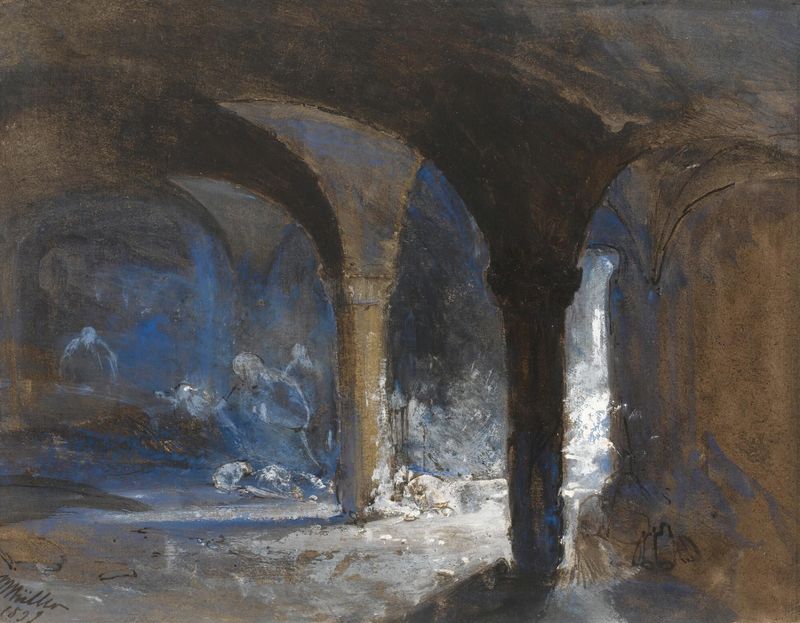
Crypt of the bishop’s palace during the Bristol riots
William James Müller

Near the Caravan Bridge, Smyrna
William James Müller
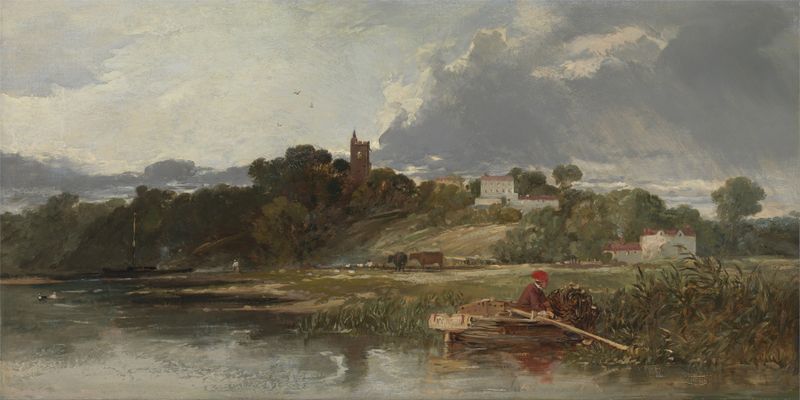
Gillingham on the Medway
William James Müller

The Church of the Holy Sepulchre
William James Müller

A View of Eton and the Fellows Eyot
William James Müller

Tripoli
William James Müller

A Mountain Torrent
William James Müller





