
The Old Water Mill — History & Facts
In The Old Water Mill, the essence of bygone days seeps into the canvas, urging us to pause and reflect on the fleeting moments that define our existence. Look to the center of the painting, where the mill stands sturdy against a backdrop of lush greenery and a tranquil stream. The deft strokes create a sense of movement in the water, reflecting dappled sunlight that dances over its surface. Notice the warm, earthy palette — rich browns and greens — lending an air of nostalgia, while the mill itself, with its weathered stones and wooden wheel, tells a story of resilience amidst nature’s embrace. Yet on closer inspection, hidden tensions emerge.
The water, while seemingly peaceful, carries a weight of memory and the passage of time, suggesting both vitality and decay. The vibrant foliage frames the mill, contrasting the life it nurtures with the stillness of the structure, inviting contemplation on the relationship between nature and human endeavor. In this delicate balance lies a revelation about the impermanence of life and the beauty found in its transience. George Morland painted The Old Water Mill in 1790, during a period when Britain was teetering between the artistic revolutions of Romanticism and Neoclassicism.
Living in London, he found inspiration in rural scenes that reflected not just the surrounding countryside but also the deeper societal shifts of his time. Amidst changing landscapes, his work captured both the charm of pastoral life and an underlying commentary on the human condition, making this piece a significant reflection of his artistic journey.
More Artworks by George Morland
Browse all →
The Bell Inn
George Morland
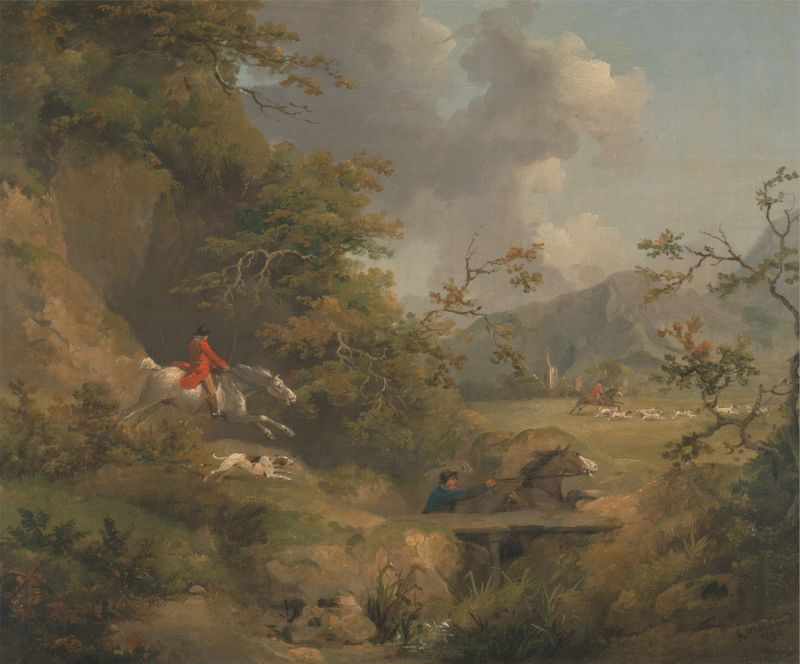
Foxhunting in Hilly Country
George Morland

View at Enderby, Leicestershire
George Morland

Pheasant Shooting
George Morland

The Mail Coach
George Morland

Rocky Landscape with Two Men on a Horse
George Morland
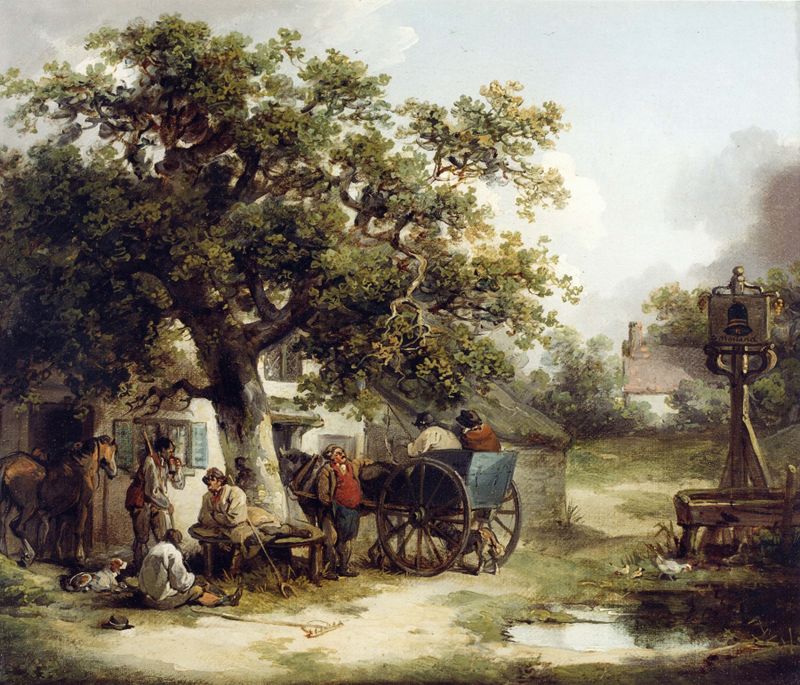
The Bell Inn, Kilburn
George Morland

Landscape
George Morland

Trepanning a Recruit
George Morland

A Country Inn
George Morland





