
Landscape — History & Facts
In this quiet expanse, where solitude reigns and the horizon stretches infinitely, one can almost hear the whispers of the wind carrying secrets of isolation. The painting evokes an aching sense of loneliness—a poignant reminder that even in nature’s vast beauty, one can feel profoundly alone. Focus first on the foreground, where the verdant grass meets the gentle brook. The play of light and shadow creates a rhythmic dance across the landscape, guiding your gaze along the meandering waterway.
The soft, muted palette of greens and browns lends a sense of tranquility, inviting viewers to linger, yet it also hints at the melancholy inherent in the scene. Notice how the clouds drift lazily above, almost indifferent to the stillness below, establishing a stark contrast between the vibrancy of life and the weight of solitude. Dig deeper into the details—the lone tree standing resolute against the skyline, its gnarled branches stretching outward in a plea for connection. The way the sunlight filters through the leaves seems to illuminate not just the landscape, but the very essence of loneliness itself.
Each brushstroke reveals a longing for companionship, underscoring the delicate balance between nature's beauty and the human experience of isolation. In an undetermined period, George Morland immersed himself in the nuances of landscape painting, capturing the English countryside's essence. During this time, he faced personal struggles amid shifting artistic trends, grappling with the theme of solitude that resonates through his work. The painting reflects not only his artistic vision but also a deeply personal exploration of the human condition, intertwined with the broader context of 18th-century art.
More Artworks by George Morland
Browse all →
The Bell Inn
George Morland
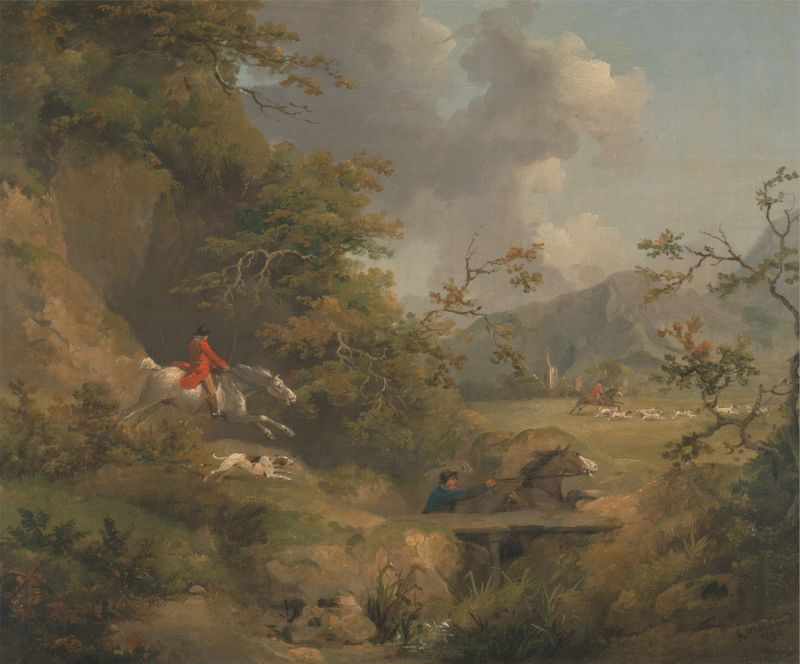
Foxhunting in Hilly Country
George Morland

View at Enderby, Leicestershire
George Morland

Pheasant Shooting
George Morland

The Mail Coach
George Morland

Rocky Landscape with Two Men on a Horse
George Morland
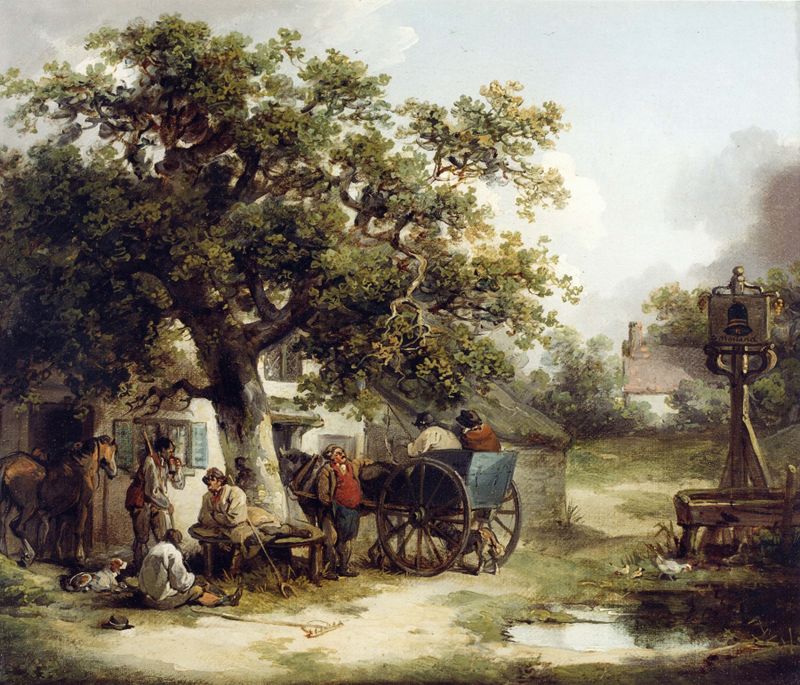
The Bell Inn, Kilburn
George Morland

Trepanning a Recruit
George Morland

A Country Inn
George Morland

Boats
George Morland





