
A Country Inn — History & Facts
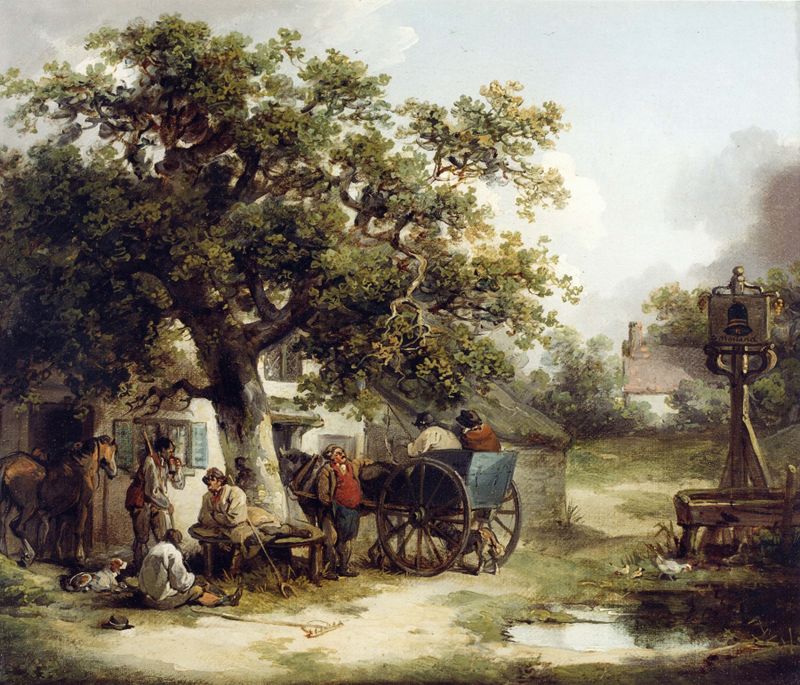
Can beauty exist without sorrow? George Morland's A Country Inn suggests that the heart of pastoral life is often laced with an unsettling emptiness. Look to the foreground, where rustic details invite you in: a weathered wooden sign creaks softly in the breeze, its paint dulled by time. The inn itself, nestled among gentle hills, exudes a charm that contrasts sharply with the somber tones of the skies above. Notice how the light falls upon the thatched roof, illuminating its texture while shadows loom ominously in the corners.
This interplay of light and shadow creates a sense of both comfort and isolation, compelling the viewer to wonder about the stories held within those walls. The emotional tension in this piece lies in its juxtaposition of beauty and absence. The inviting landscape suggests a haven, yet the vacant windows hint at lives unfulfilled, perhaps even forgotten. The serene setting belies an underlying melancholy, as if the inn is a relic of joyful gatherings that have long since faded away.
This duality invites contemplation on the nature of hospitality and solitude, making the viewer question what truly resides within those idyllic scenes. Painted during an uncertain time in the late 18th century, Morland found himself navigating the complexities of England’s shifting artistic landscape. As a prominent figure in the genre of landscape and genre painting, he was both influenced by and contributing to the burgeoning Romantic movement, which emphasized emotion and individualism. His works, including this one, reflect a deep awareness of the societal changes surrounding him, interweaving themes of nostalgia and loss within the canvas.
More Artworks by George Morland
Browse all →
The Bell Inn
George Morland
Foxhunting in Hilly Country
George Morland

View at Enderby, Leicestershire
George Morland

Pheasant Shooting
George Morland

The Mail Coach
George Morland

Rocky Landscape with Two Men on a Horse
George Morland
The Bell Inn, Kilburn
George Morland

Landscape
George Morland

Trepanning a Recruit
George Morland

Boats
George Morland





