The Bell Inn — History & Facts
Who listens when art speaks of silence? In the hushed corners of The Bell Inn, a world unfolds, whispering stories of movement and stillness. Look to the left at the sturdy oak beams that frame the scene, their dark richness contrasting with the flickering light of the fireplace. The warm glow spills onto the patrons, animating their figures with a lifelike quality. As your gaze travels across the canvas, notice the way the artist captures the interplay of shadow and light, lending an air of intimacy to an otherwise ordinary moment in the inn, where laughter and conversation float like echoes in the air. Yet beneath the surface, tensions brew.
The slight tilt of a figure suggests an unspoken story, while the stillness of others hints at moments of reflection or conflict. The movement conveyed through posture and gesture speaks of lives intertwined, each character revealing a fragment of their own narrative. The colors, rich yet muted, evoke a sense of nostalgia, inviting the viewer to ponder the passage of time and the fleeting nature of connection. In the late 1780s, George Morland painted this piece during a vibrant period in British art, marked by the emergence of Romanticism and the influence of the rural scene.
At this time, he was establishing his reputation for depicting rustic life, drawing inspiration from his surroundings. The sociopolitical landscape was shifting, underscoring the contrast between urban and rural existence, themes that resonate deeply within the atmosphere of this inn.
More Artworks by George Morland
Browse all →
Foxhunting in Hilly Country
George Morland

View at Enderby, Leicestershire
George Morland

Pheasant Shooting
George Morland

The Mail Coach
George Morland

Rocky Landscape with Two Men on a Horse
George Morland
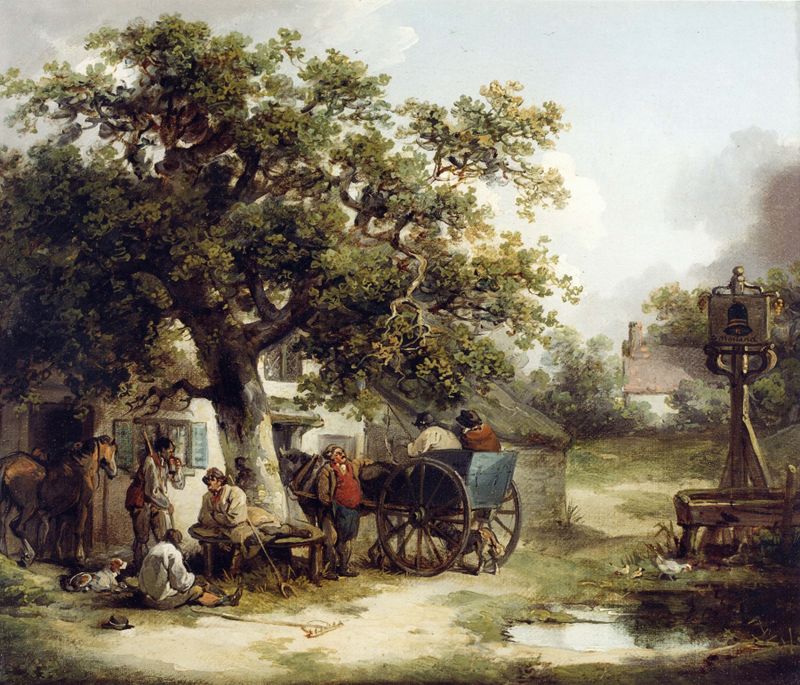
The Bell Inn, Kilburn
George Morland

Landscape
George Morland

Trepanning a Recruit
George Morland

A Country Inn
George Morland

Boats
George Morland