
The Mail Coach — History & Facts
In the quiet realm of art, desire lingers like the scent of rain in the air, palpable yet elusive. It reflects the longing for connection and the urgency of stories waiting to be told. Focus first on the exuberant scene at the heart of the composition, where horses gallop with unbridled energy. Notice how Morland captures their powerful forms; the taut muscles beneath their glistening coats convey a sense of motion and life.
The mail coach, laden with letters and dreams, is painted with a vibrancy that invites the viewer into the world of travel and communication, while the lush greenery around it creates a contrast that highlights both the harmony and chaos of the journey. Tension pulses through the painting's contrasts—the bright sunlight dapples the scene, illuminating the coach while leaving the surrounding landscape in shadow. This interplay reflects the dichotomy of hope and anxiety inherent in the act of sending messages, as if every letter carried a piece of the sender's heart. The expressions of the passengers, some anxious while others appear excited, evoke the anticipation that accompanies departure and the uncertainty of arrival. In 1801, while living in London, Morland created The Mail Coach amidst a burgeoning interest in the romanticization of travel and communication.
The artist was navigating his own turbulent life, marked by financial struggles and fame's fleeting nature. As the world embraced faster modes of transportation and the profound impact of the postal system, his work echoed the collective yearning for connection, capturing a moment that resonates through time.
More Artworks by George Morland
Browse all →
The Bell Inn
George Morland
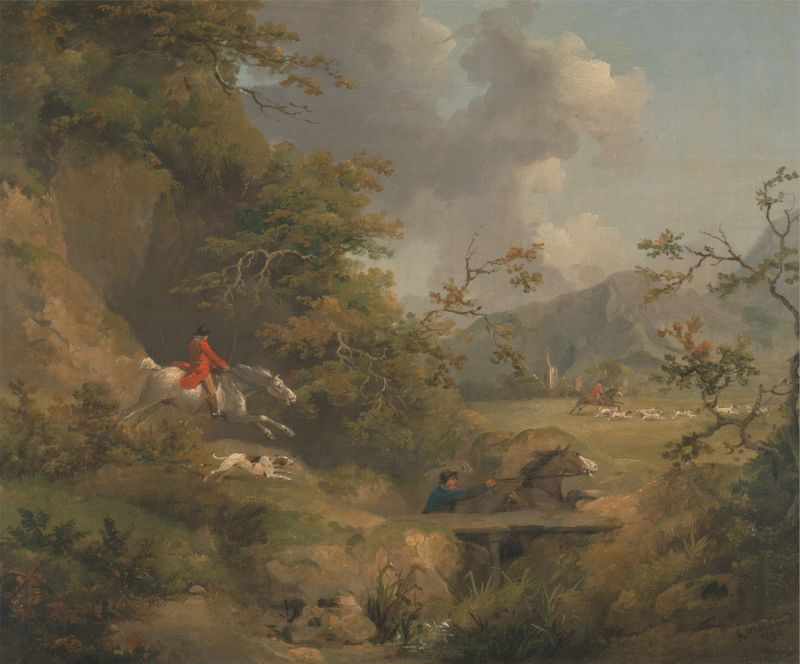
Foxhunting in Hilly Country
George Morland

View at Enderby, Leicestershire
George Morland

Pheasant Shooting
George Morland

Rocky Landscape with Two Men on a Horse
George Morland
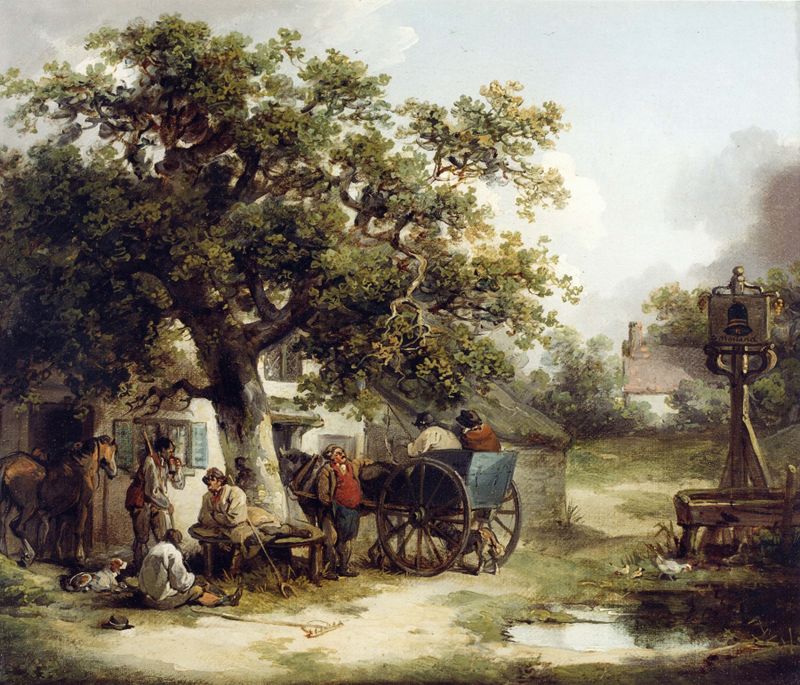
The Bell Inn, Kilburn
George Morland

Landscape
George Morland

Trepanning a Recruit
George Morland

A Country Inn
George Morland

Boats
George Morland





