
The Palace Garden of Prince Albert — History & Facts
What first seizes the eye in The Palace Garden of Prince Albert is the dense, living wall of trees—tall poplars and leafy canopies—that rises up like a green curtain before the golden façade of a palace. The painter, Adolph von Menzel, leads us not with grand gestures but through the quiet drama of sunlight and shadow. Glimpses of the yellow building peek through the foliage, its windows half-shuttered, suggesting a world just out of reach.
Below, the garden floor is scattered with the evidence of labor—tools, earth, perhaps a gardener’s coat—hinting at the ongoing work that sustains such cultivated beauty. The path that winds through the greenery invites the viewer to wander, to lose themselves in the cool shade before emerging into the light. Painted between 1846 and 1876, this work belongs to a period when European artists increasingly turned their gaze to the everyday and the intimate, rather than the mythic or monumental. In the mid-nineteenth century, such garden scenes were often commissioned by the rising bourgeoisie or the nobility, eager to showcase their cultivated taste and private retreats.
Menzel was known for his precise observation and his ability to capture the changing face of modern life, and here he records not just a place, but a moment of transition—nature shaped by human hands, yet still unruly at the edges. The painting’s presence in a private collection today reminds us how history has kept few traces of its journey, but the sense of quiet anticipation remains, urging us to look again at the interplay of light, leaf, and stone.
More Artworks by Adolph von Menzel
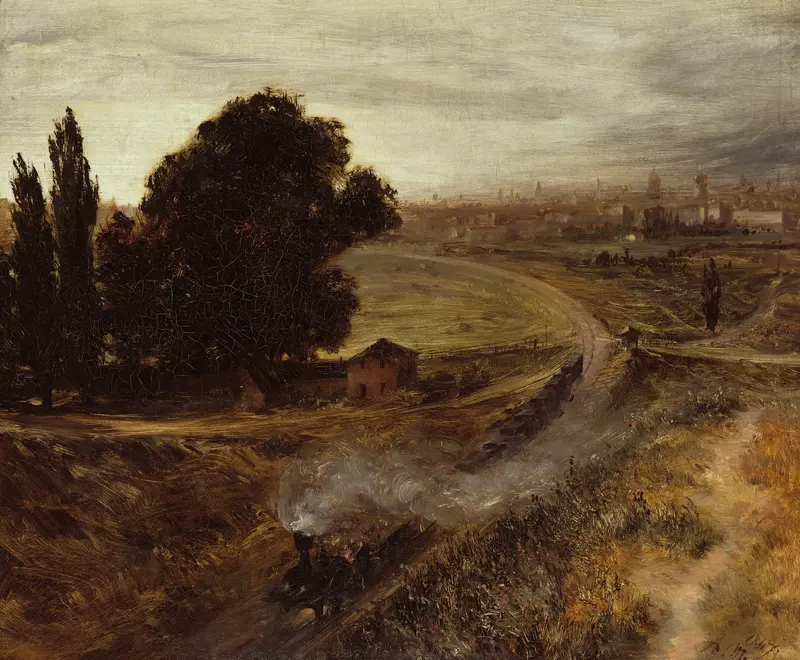
The Berlin-Potsdam Railway
Adolph von Menzel
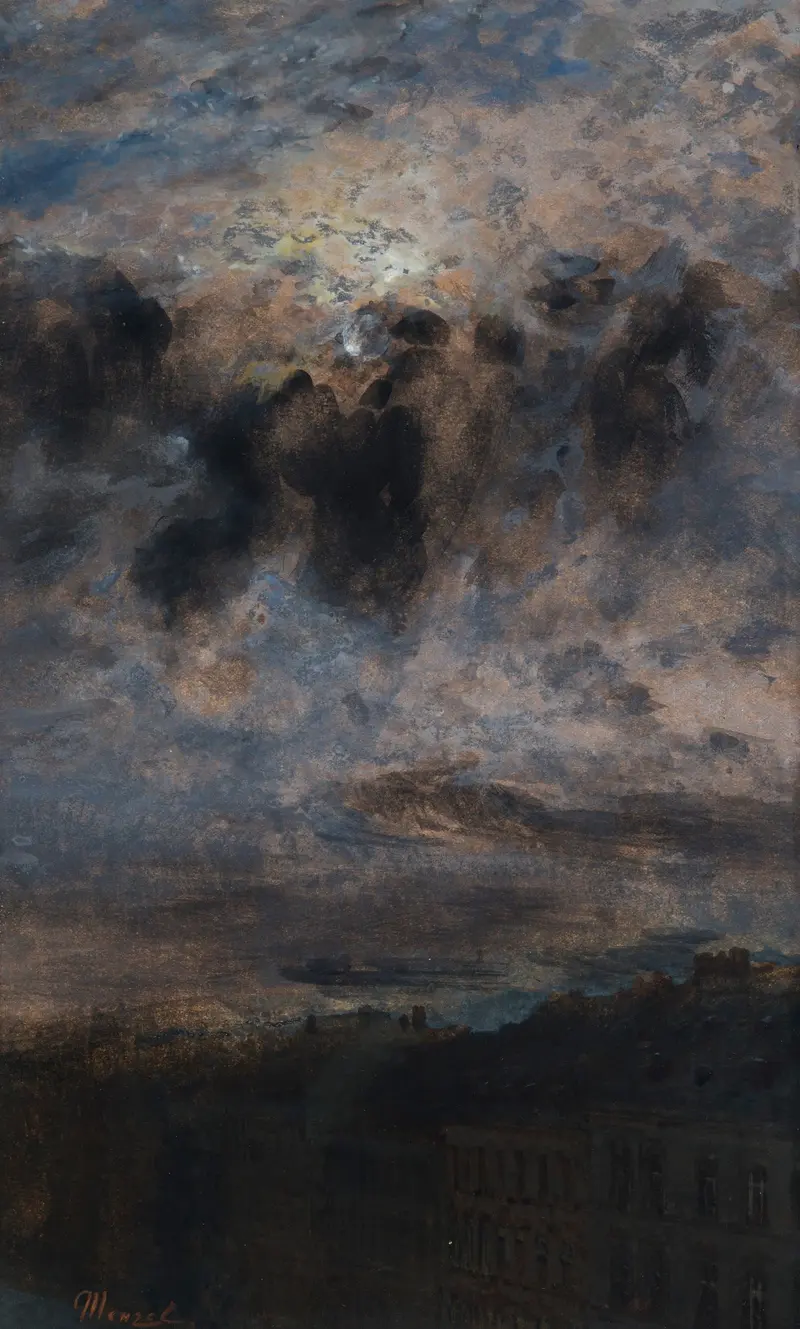
Mondschein über den Dächern von Berlin
Adolph von Menzel
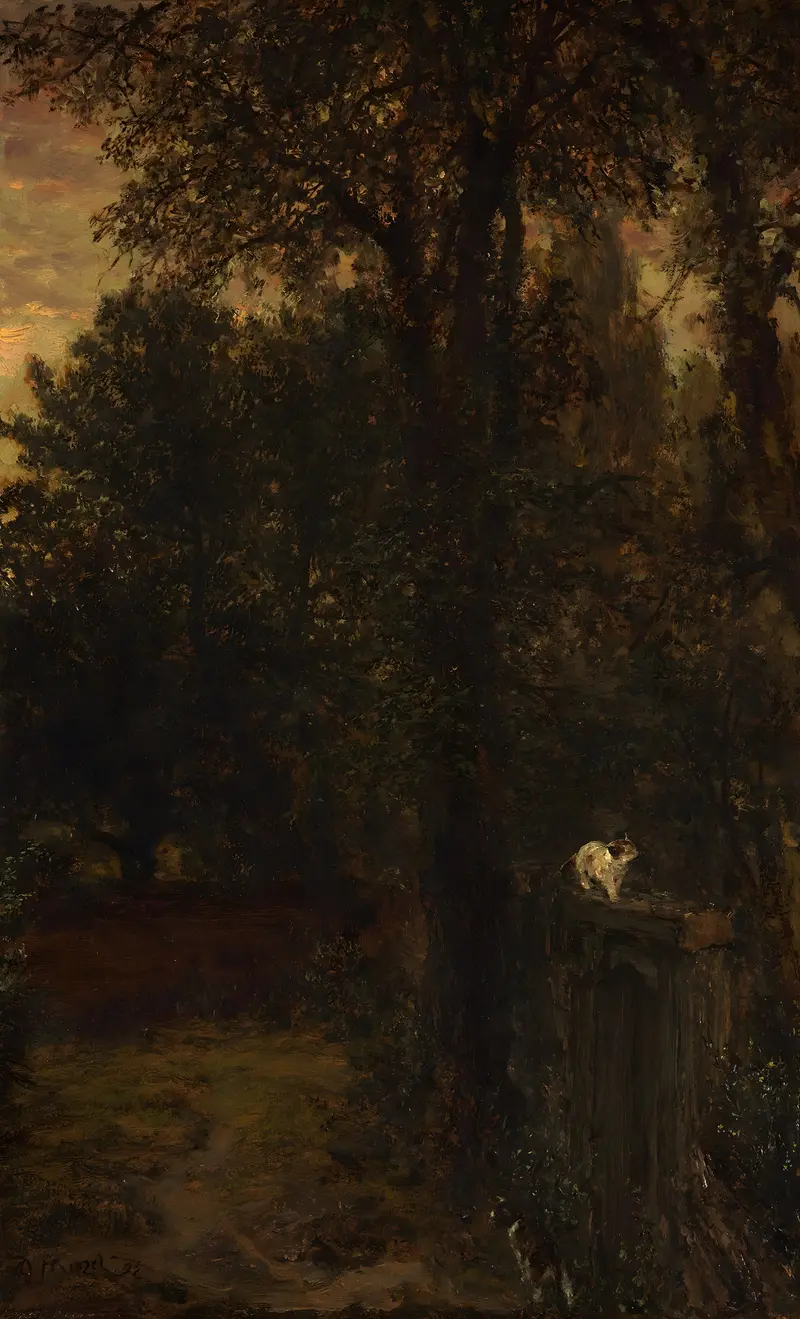
Landscape
Adolph von Menzel
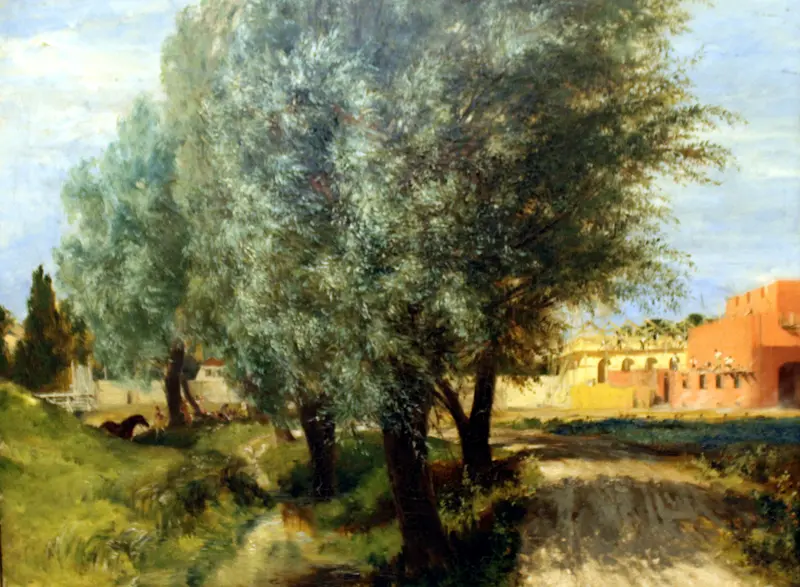
Building Site with Willows
Adolph von Menzel
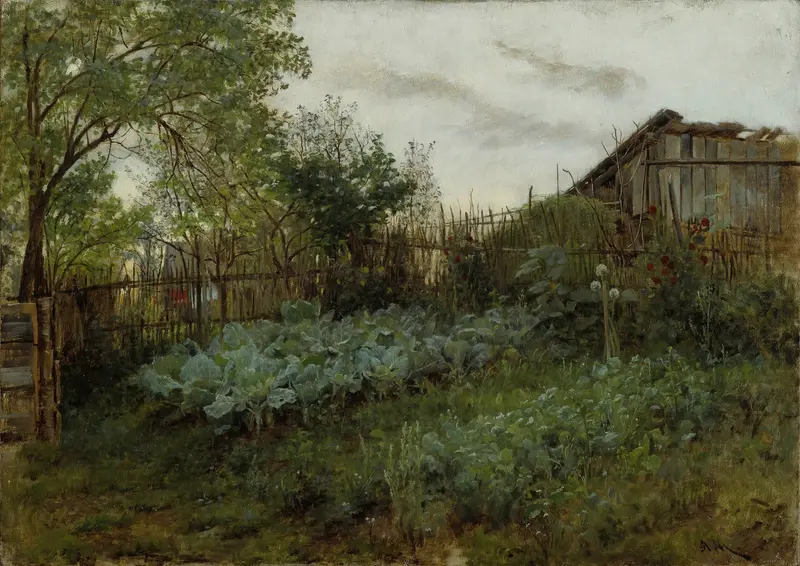
The Back Garden
Adolph von Menzel
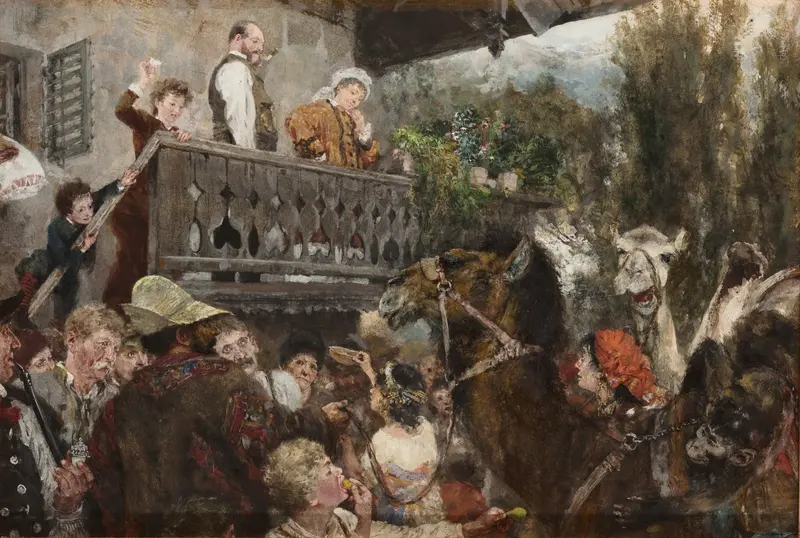
The wandering circus (Camel drivers in Partenkirchen)
Adolph von Menzel
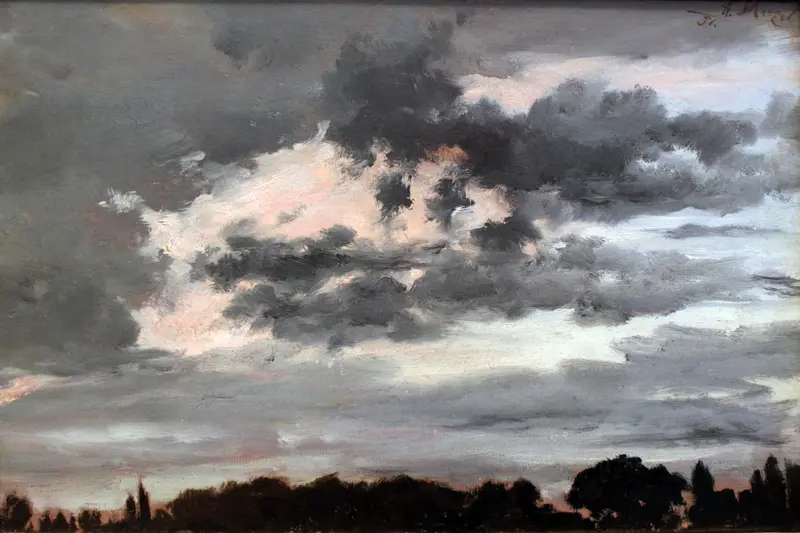
Cloud Study
Adolph von Menzel
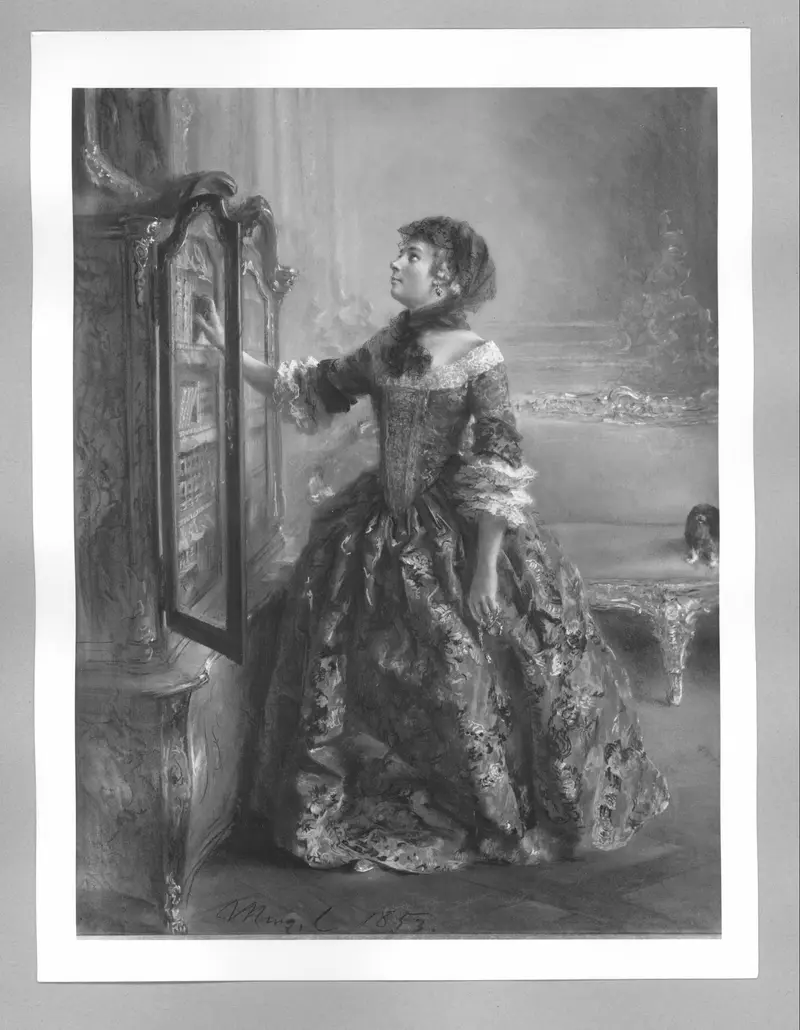
Adolf Friedrich Erdmann Menzel Dame in Rokoko Kostüm vor einem Bücherschrank (Prinzessin Amalie von Hohenzollern) 2320 Führermuseum
Adolph von Menzel
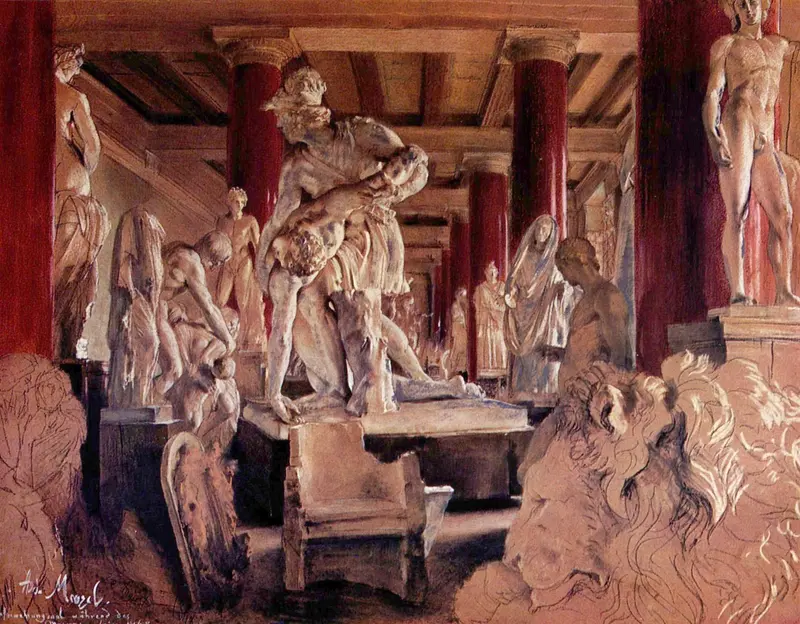
Aufbewahrungssaal während des Museumsumbaus Adolf Friedrich Erdmann von Menzel (Alte Nationalgalerie, Berlin)
Adolph von Menzel

Chodowiecki on the Jannowitz Bridge
Adolph von Menzel
More Landscape Art

The Starry Night
Vincent van Gogh

View of Delft
Johannes Vermeer

Water Lilies
Claude Monet

The Grand Canal, Venice, looking north-west from the Ca' Corner to the Ca' Contarini degli Scrigni, with the campanile of Santa Maria della Carità
Canaletto

Windsor Castle
Canaletto

The Grand Canal looking North-East from the Palazzo Dolfin-Manin to the Rialto Bridge
Canaletto