The Path through the Irises — History & Facts
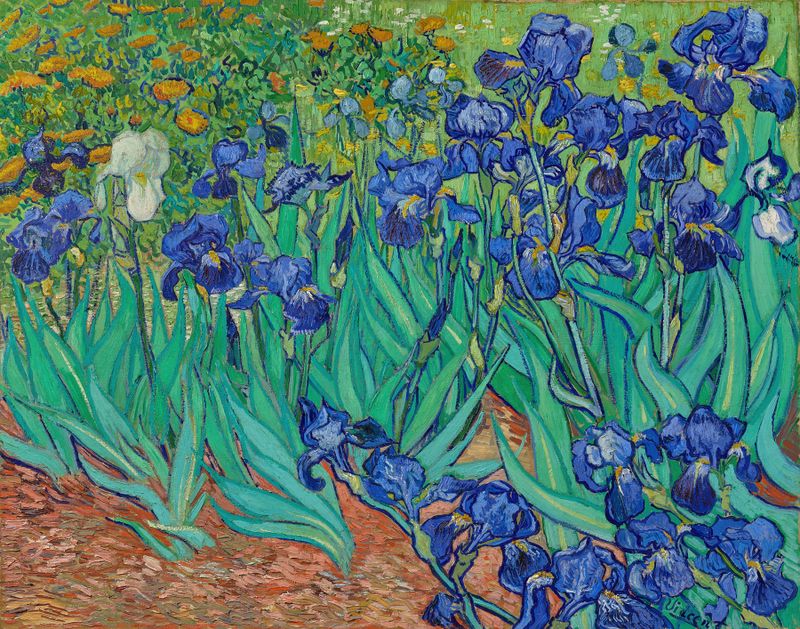
Could beauty survive in a century of chaos? The question lingers as we gaze upon a serene yet vibrant portrayal of nature's splendor, where the delicate dance of irises seems almost a dream amidst the tumult of the world. Look to the left at the cascade of irises, their petals unfurling in shades of deep violet and lavender that blend seamlessly into the lush greens surrounding them. Notice how the light falls gently upon each bloom, crafting an enchanting illusion of movement as if a soft breeze might bring them to life. The composition invites the eye to meander along the path, leading us deeper into this tranquil scene, where the brushstrokes create an almost ethereal depth, merging reality with a dreamlike quality. Within this peaceful vista lies a tension between the vibrancy of the flowers and the ambiguous, shadowy background.
The interplay of light and dark suggests that while beauty persists, it remains fragile within a world rife with uncertainty. Every stroke seems to capture a fleeting moment, hinting that the very act of observation is an ephemeral experience, forever on the brink of fading into memory. The path winding through the irises symbolizes a journey, perhaps towards solace or a deeper understanding of existence amid chaos. During the years 1914 to 1917, the artist worked on this piece while the world was engulfed in the turmoil of World War I.
Although the external environment was filled with conflict and upheaval, the painter sought solace in his garden in Giverny, where he would immerse himself in the beauty of nature. His later works, including this piece, reflect a longing for tranquility and a desire to capture the fleeting beauty of life, serving as a poignant contrast to the chaos surrounding him.