
The Pilgrim of the Cross at the End of His Journey (study for series, The Cross and the World) — History & Facts
Is this a mirror — or a memory? In The Pilgrim of the Cross at the End of His Journey, the weight of solitude hangs in the air, evoking a profound sense of emptiness that resonates deeply within. The painting serves as a poignant reminder of the pilgrim's arduous journey, capturing the intersection of faith and despair. Look to the center of the canvas where the solitary figure stands, a weary traveler cloaked in tattered garments, his gaze fixed upon a distant horizon. Surrounding him, the landscape is composed of muted earth tones and deep shadows, invoking a sense of desolation.
Notice how the light, filtered through heavy clouds, gilds the cross, symbolizing hope amid the oppressive darkness that envelops the scene. The sharp contrast between the brightness of the emblematic cross and the somber undertones of the setting reveals Cole's mastery of light to convey emotional states. Within this quiet turmoil lies a complex interplay of hope and despair. The cross, while a beacon of faith, also stands as a reminder of sacrifice and the weight of burdens carried.
The barren landscape echoes the loneliness of the pilgrim’s journey, suggesting that the path to redemption is fraught with trials. Each brushstroke seems to capture a heartbeat, reflecting not just the physical exhaustion of the traveler but an existential quest for meaning in a seemingly indifferent world. In the mid-1840s, Thomas Cole painted this study during a transformative period in American art, as the Hudson River School was gaining prominence. Cole was grappling with themes of nature, spirituality, and the human condition, reflecting both personal struggles and broader societal anxieties.
The work, a precursor to his more expansive series, captures his preoccupation with the weight of existence, a question that resonates through the ages.
More Artworks by Thomas Cole
Browse all →
View from Mount Holyoke, Northampton, Massachusetts, after a Thunderstorm—The Oxbow
Thomas Cole
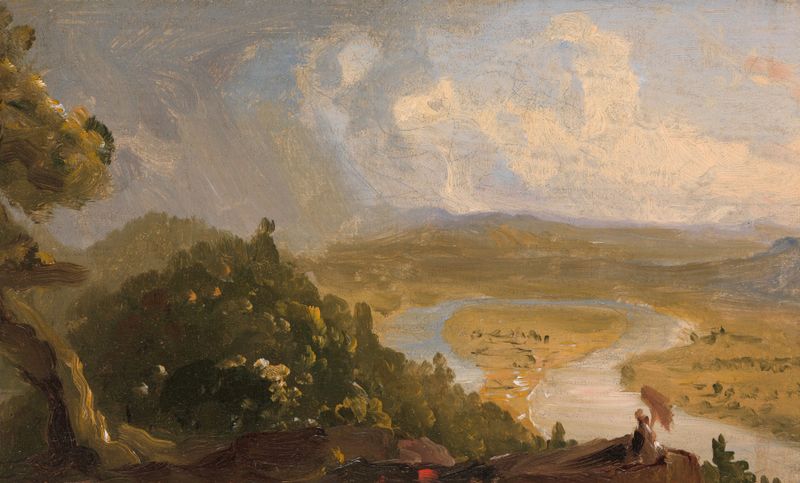
Sketch for View from Mount Holyoke, Northampton, Massachusetts, after a Thunderstorm (The Oxbow)
Thomas Cole
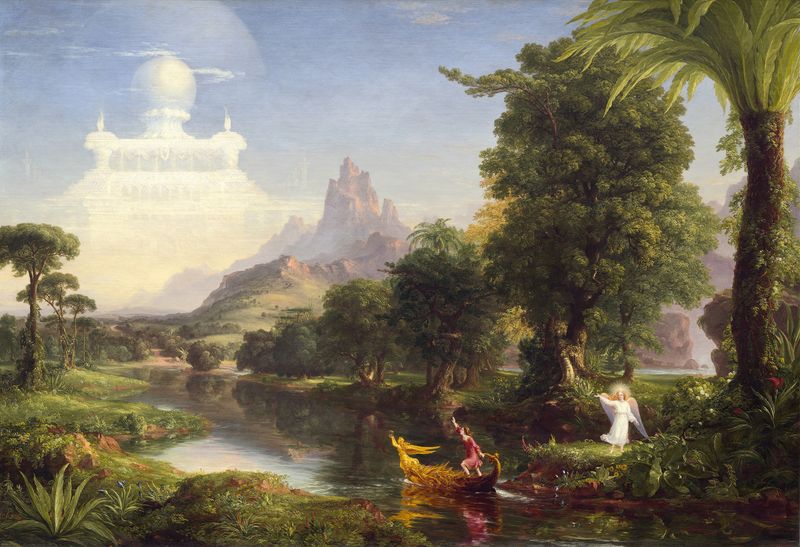
The Voyage of Life – Youth
Thomas Cole
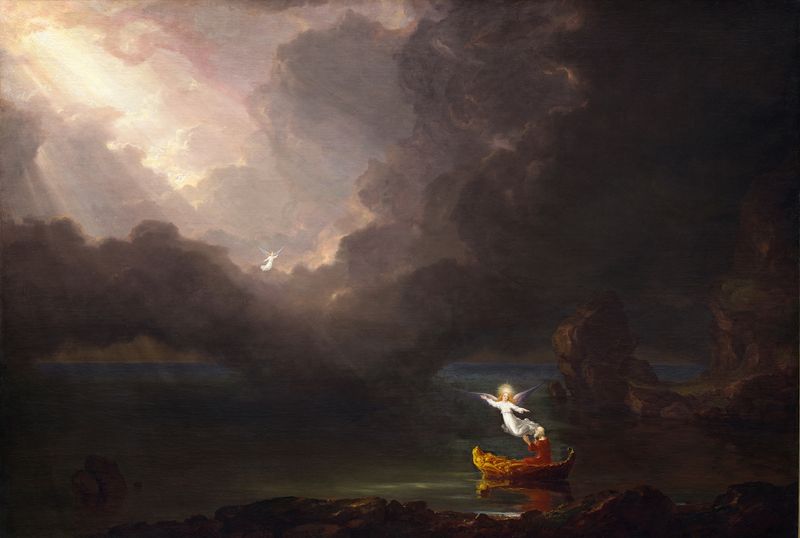
The Voyage of Life – Old Age
Thomas Cole
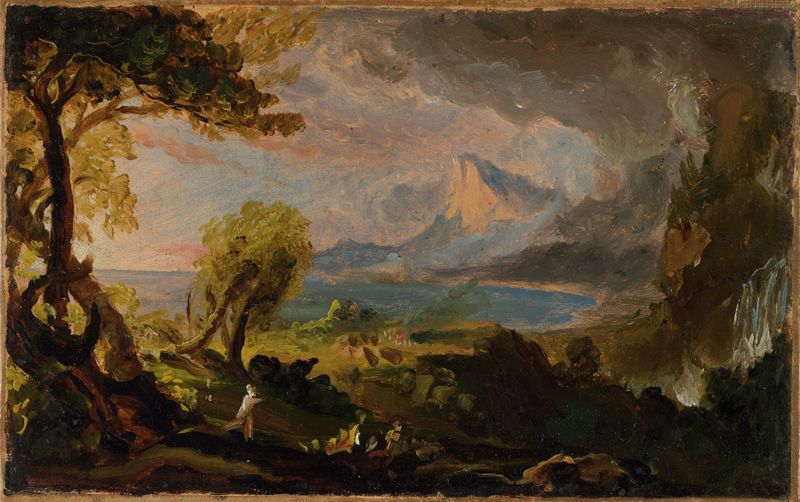
The Course of Empire–The Savage State
Thomas Cole

Landscape
Thomas Cole

New England Scenery
Thomas Cole

Sunrise in the Catskills
Thomas Cole
Tornado in an American Forest
Thomas Cole
The Voyage of Life – Childhood
Thomas Cole
More Religious Art
Browse all →
The Return of the Prodigal Son
Rembrandt van Rijn

The Garden of Earthly Delights
El Bosco

Count Orgaz’ funeral
El Greco

The Hundred Guilder Print: the central piece with Christ preaching, the plate arched
Rembrandt van Rijn

The Descent from the Cross
Rogier van der Weyden

The return of the prodigal son
Rembrandt van Rijn