
The Pond At The Edge Of The Village — History & Facts
Where does light end, and longing begin? In the quiet embrace of The Pond At The Edge Of The Village, one can almost hear the whispers of memories carried by the gentle breeze. Look to the left, where soft ripples dance across the water's surface, reflecting the muted hues of dusk. Notice how the trees frame the scene, their branches arching gracefully, creating a natural corridor that invites the viewer to wander. The warm palette, infused with golden yellows and earthy greens, evokes a sense of tranquility, as if time has slowed just for this moment. Yet, beneath the serene surface lies a poignant contrast between the idyllic landscape and the solitude it implies.
The absence of figures hints at isolation, inviting contemplation on the beauty of what is lost or perhaps what remains unseen. Each brushstroke reveals the artist's longing for connection, elevating the simple pond to a symbol of nostalgia and yearning for simpler times. Eugène Galien-Laloue painted this work during a time when he explored the subtleties of rural life in France, likely in the late 19th to early 20th century. The world around him was rapidly transforming, with the rise of industrialization impacting traditional village life.
Capturing this juxtaposition, he sought to preserve the charm of the past, reflecting both a personal and collective yearning for the familiar amidst the changes.
More Artworks by Eugène Galien-Laloue
Browse all →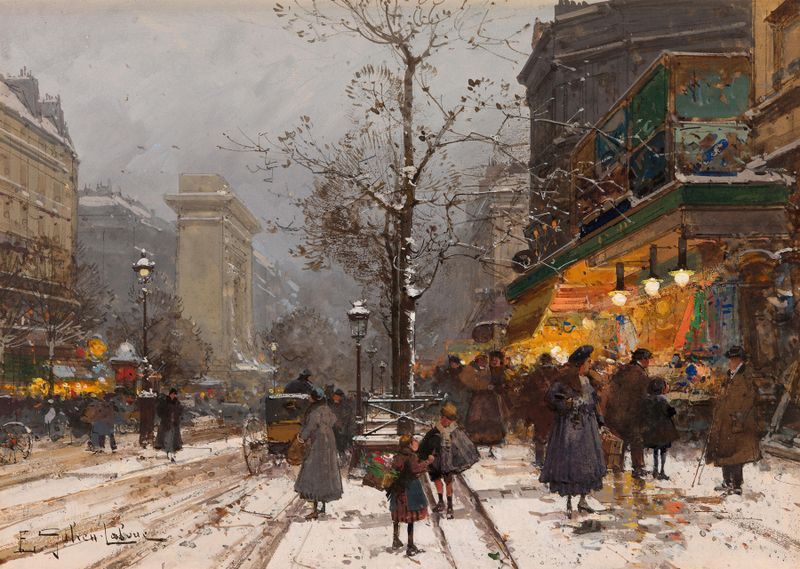
Boulevard Bonne – Nouvelle sous la neige
Eugène Galien-Laloue
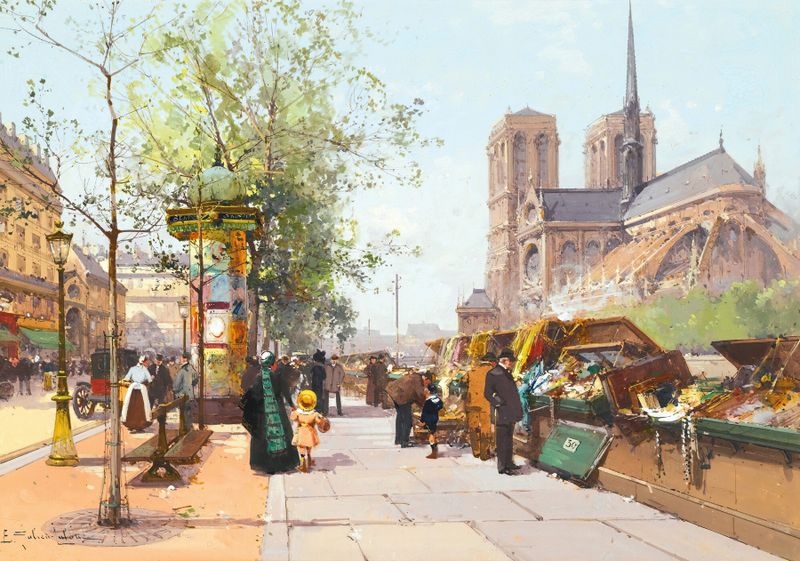
Notre Dame De Paris
Eugène Galien-Laloue
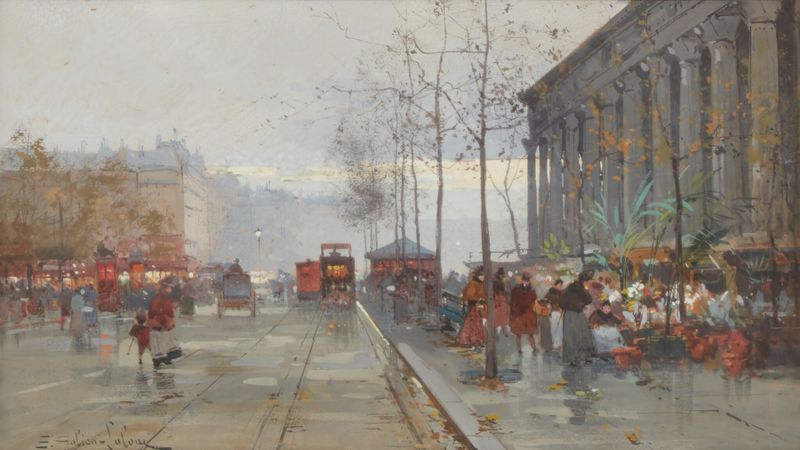
Le Marché aux fleurs de la Madeleine
Eugène Galien-Laloue
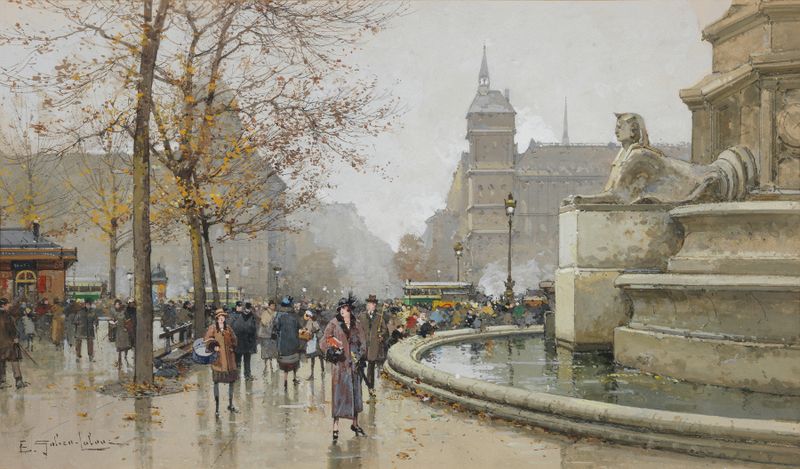
La fontaine du Palmier, place du Châtelet
Eugène Galien-Laloue
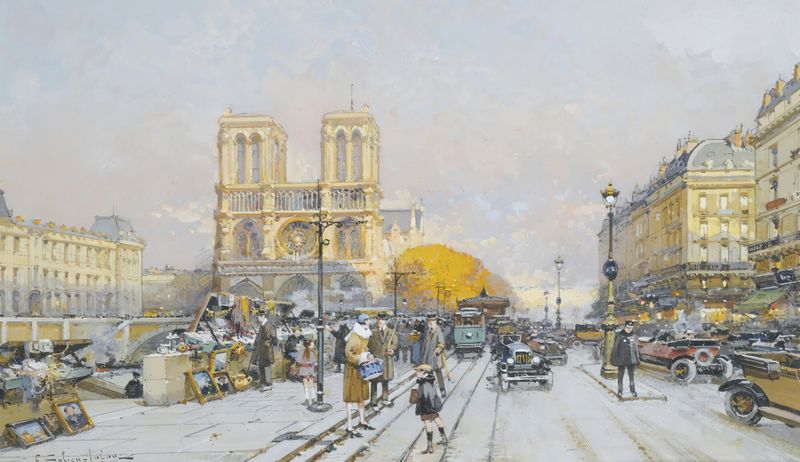
Notre Dame
Eugène Galien-Laloue
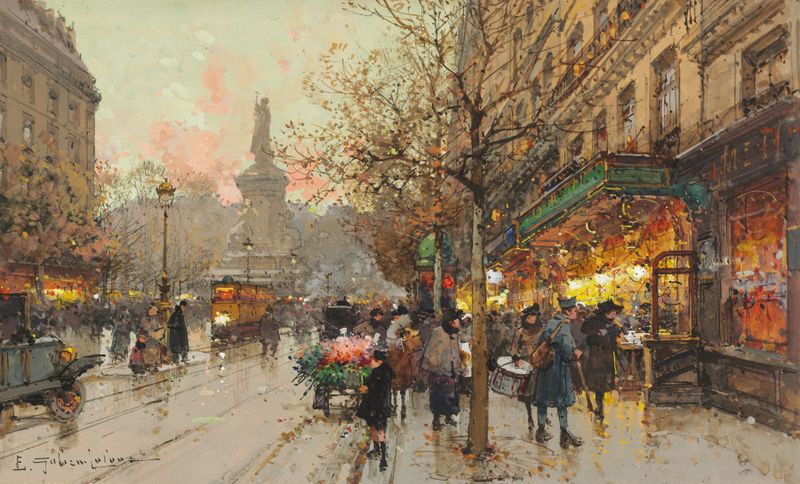
Place De La République
Eugène Galien-Laloue
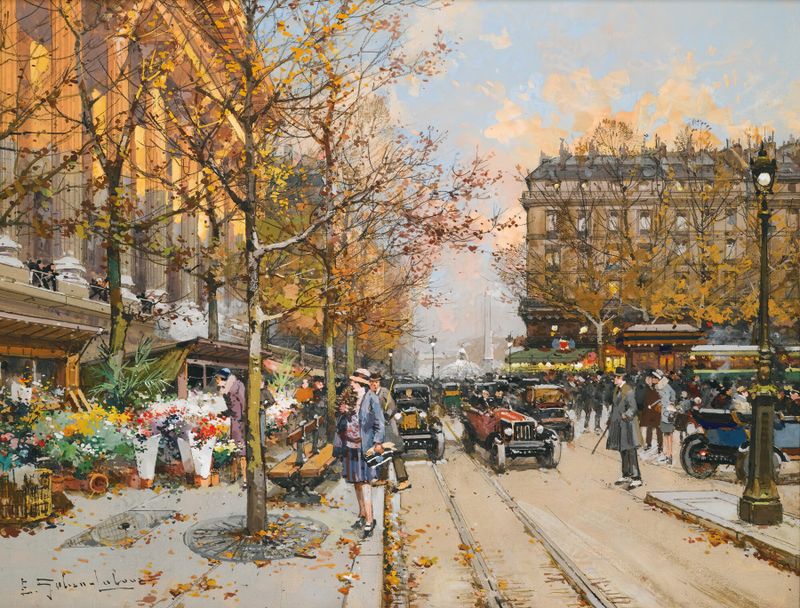
Place De La Madeleine
Eugène Galien-Laloue
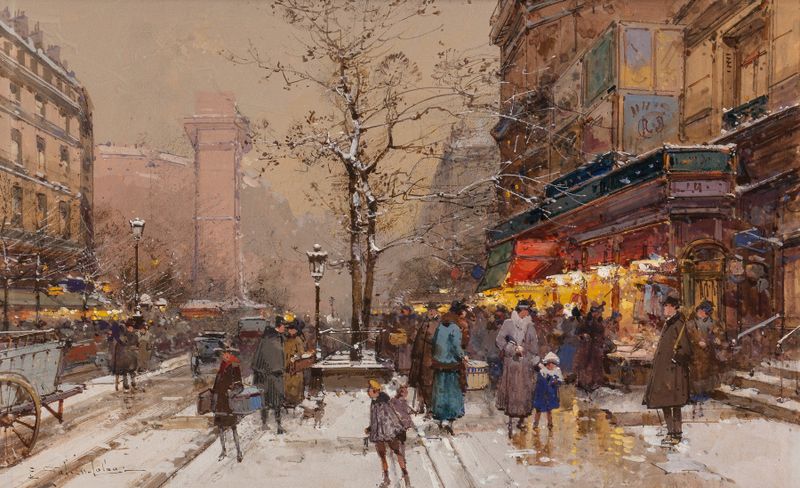
Porte Saint-Denis
Eugène Galien-Laloue
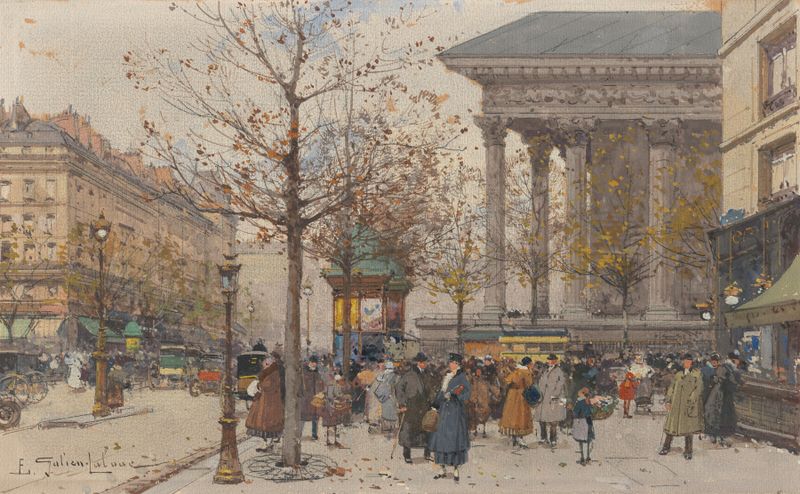
Vue animée de la Madeleine
Eugène Galien-Laloue
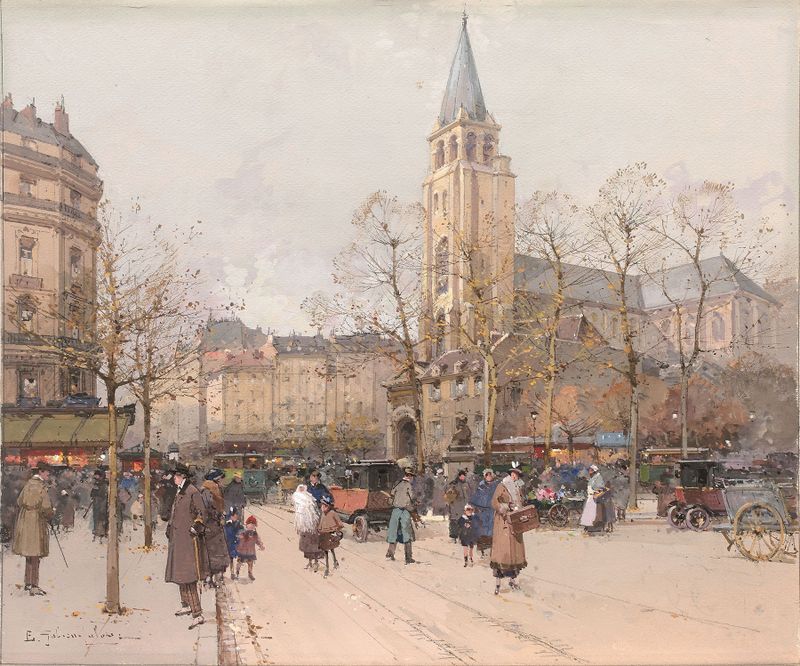
Vue des boulevards à Saint-Germain-des-Prés
Eugène Galien-Laloue





