
The Repose — History & Facts
In The Repose, we see a tranquil landscape filled with soft greens and blues. The painting features a serene scene of trees and a gentle stream, inviting the viewer to pause and reflect. The light filtering through the foliage adds a warm glow to the composition.
Corot's brushwork creates a sense of calm and harmony in nature. The painting is executed in oil on canvas, showcasing Corot's skillful handling of color and light. The dimensions are approximately 70 x 90 cm, making it a sizable work that captures the viewer's attention. The soft, blended brushstrokes give the landscape a dreamlike quality.
Corot's technique emphasizes the beauty of the natural world. Jean-Baptiste-Camille Corot was a pivotal figure in the Romantic movement, known for his landscapes that often depict serene moments in nature. The Repose reflects his ability to convey tranquility and beauty through his art. Interestingly, Corot was also a mentor to several Impressionist painters, influencing the direction of modern art.
This work exemplifies his transition from classical to more modern interpretations of landscape.
More Artworks by Jean-Baptiste-Camille Corot
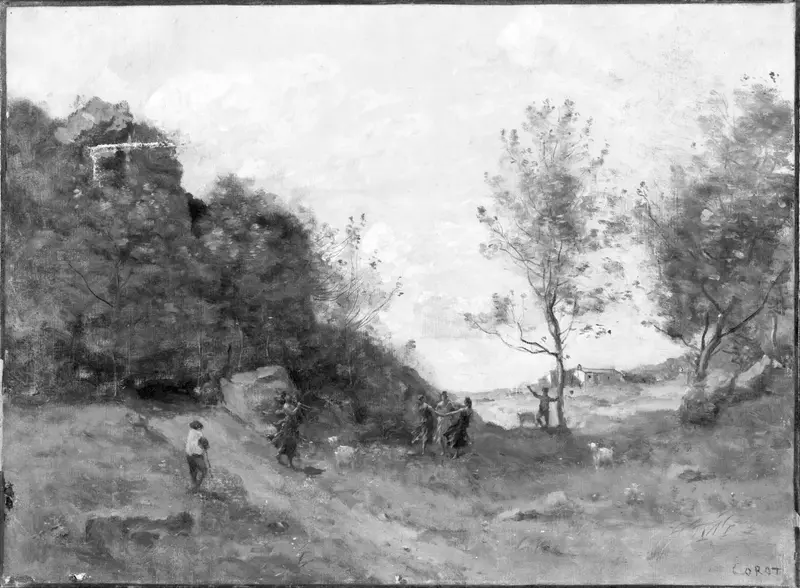
Goatherd in a Landscape
Jean-Baptiste-Camille Corot
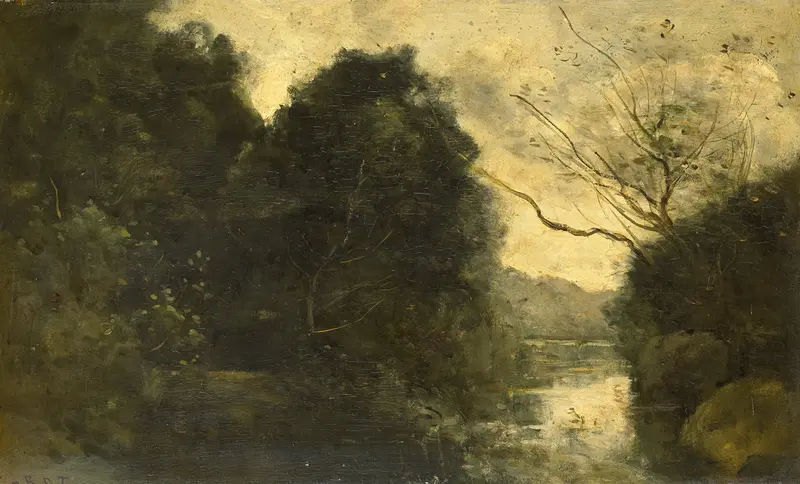
Pond in the Woods
Jean-Baptiste-Camille Corot
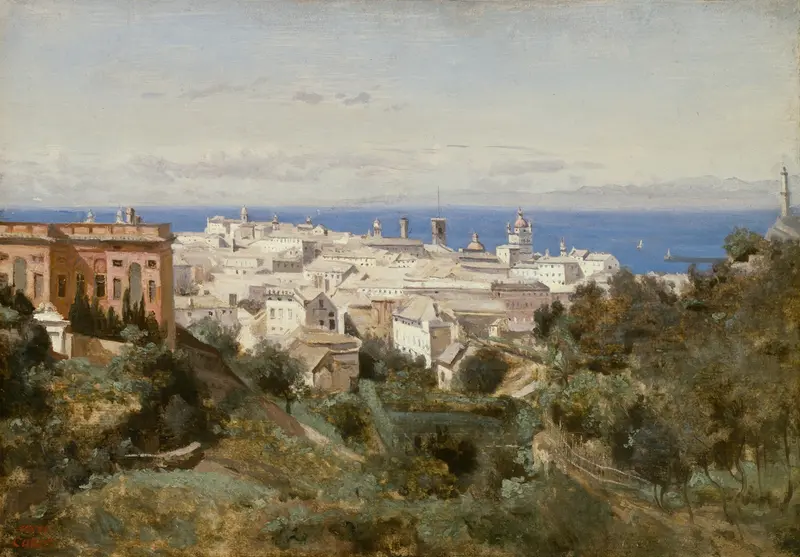
View of Genoa
Jean-Baptiste-Camille Corot

La solitude. Souvenir de Vigen (Limousin)
Jean-Baptiste-Camille Corot

Landscape with Pollard Willows
Jean-Baptiste-Camille Corot
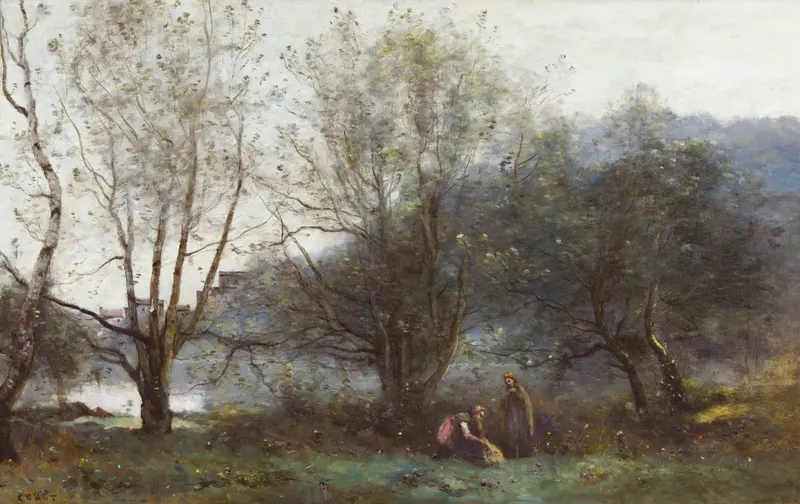
Les Étangs De Ville D’avray
Jean-Baptiste-Camille Corot
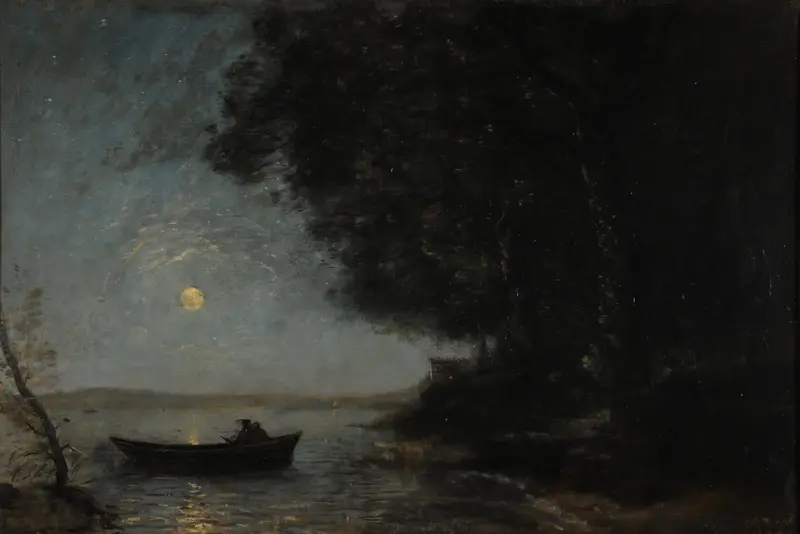
Le lac ; effet de nuit
Jean-Baptiste-Camille Corot
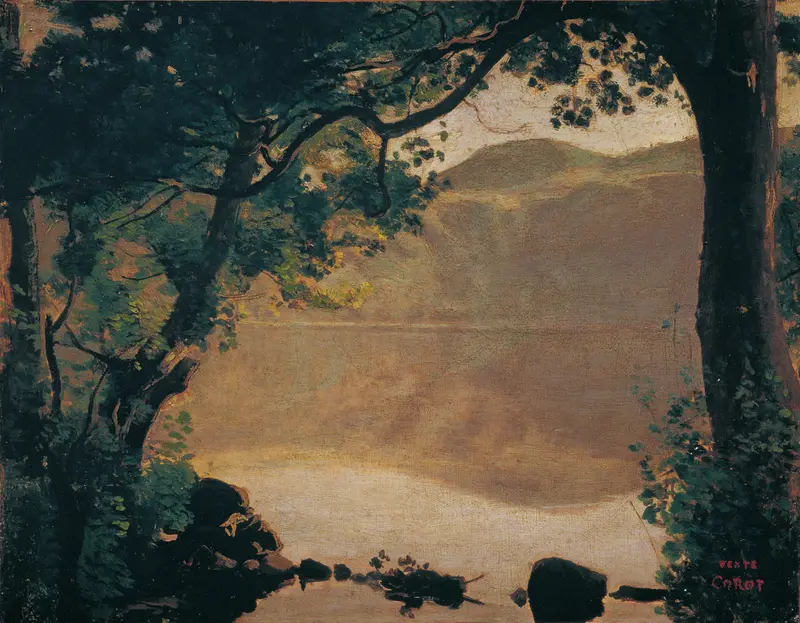
Der Nemisee
Jean-Baptiste-Camille Corot

Les Maisons Cabassud À Ville D’avray
Jean-Baptiste-Camille Corot
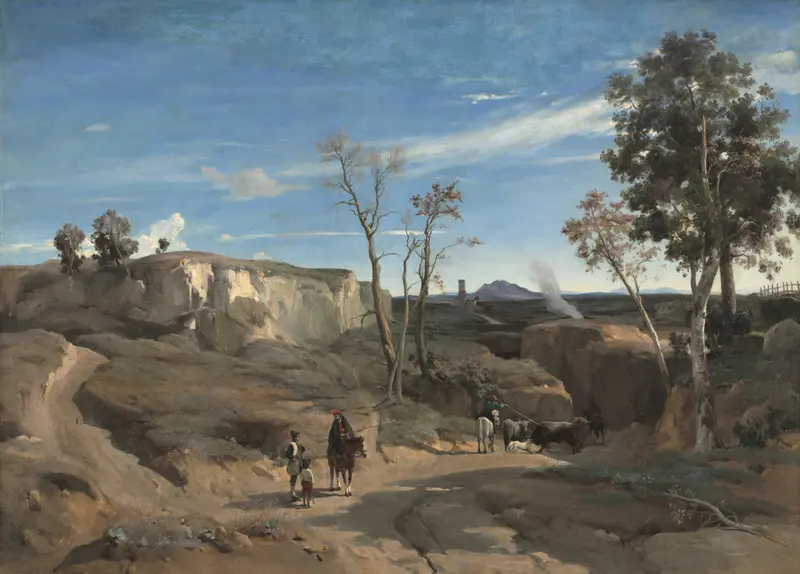
La Cervara, the Roman Campagna
Jean-Baptiste-Camille Corot
More Landscape Art

Starry Night
Vincent van Gogh

View of Delft
Johannes Vermeer

Water Lilies
Claude Monet

The Grand Canal, Venice, looking north-west from the Ca' Corner to the Ca' Contarini degli Scrigni, with the campanile of Santa Maria della Carità
Canaletto

Windsor Castle
Canaletto

The Grand Canal looking North-East from the Palazzo Dolfin-Manin to the Rialto Bridge
Canaletto