
The Riding School at Akershus Castle — History & Facts
In the heart of Akershus Castle, the air is alive with anticipation. Riders poised on their steeds radiate a mix of excitement and trepidation as they prepare for the day's lesson. Sunlight filters through the wooden beams above, casting a warm glow that dances across the polished floor, highlighting the vibrant colors of the horses' coats and the rich fabrics of the riders’ attire. Look to the left, where a richly adorned horse stands still, its muscular form beautifully defined against the soft hues of the room.
Notice how Gude captures the subtle play of light, illuminating the golden mane that flows like silk, while shadows cradle the corners, hinting at the depth of the space. The composition draws your eye through the scene, leading from the central action of riding instruction to the delicate expressions of concentration on the riders’ faces, revealing their intimate connection to the moment. Beneath the surface of this vivid scene lies a complex web of emotions—yearning, ambition, and the weight of tradition. The eager postures of the riders suggest a deep desire to master their craft, to achieve harmony between horse and rider.
In contrast, the commanding presence of the instructor, poised with authority, emphasizes the tension between aspiration and discipline, bridging the gap between freedom and responsibility within equestrian pursuits. Hans Gude painted The Riding School at Akershus Castle in 1846, during a time when Norway was emerging as a distinct cultural identity amidst political changes in Europe. Living in Düsseldorf, Gude was influenced by the Romantic movement, striving to capture human emotion in connection with nature. This work reflects his dedication to portraying not just the physicality of the subjects, but also their inner aspirations and the significance of tradition in their lives.
More Artworks by Hans Gude
Browse all →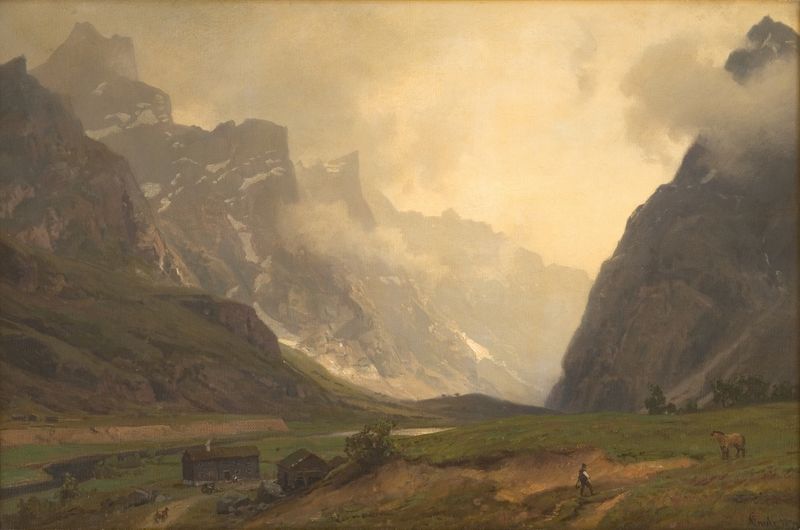
The Troll Peaks in Romsdalen, The Foot of Romsdalshorn to the Right
Hans Gude
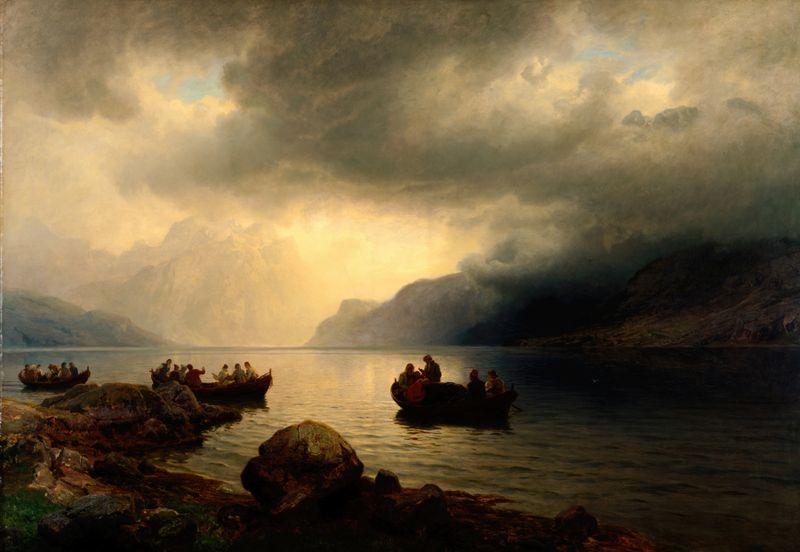
Funeral Procession on the Sogne Fjord
Hans Gude
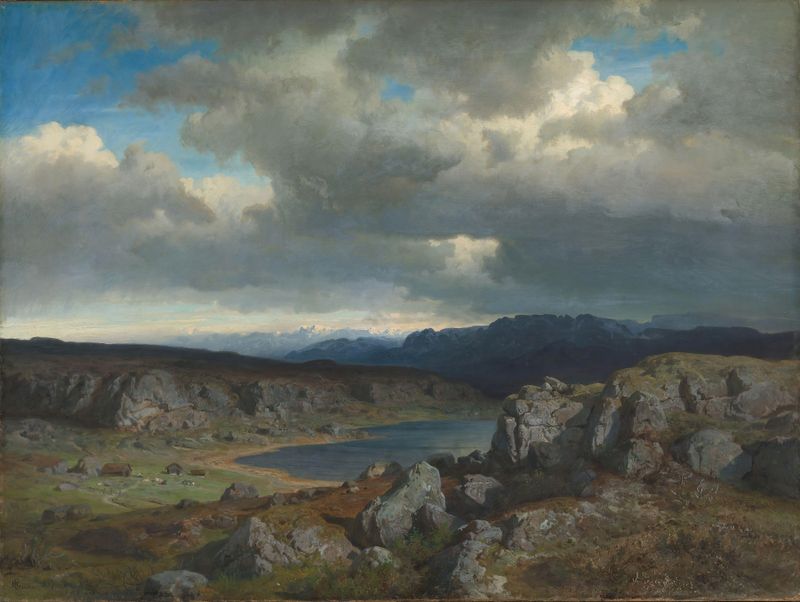
Norwegian Highlands
Hans Gude
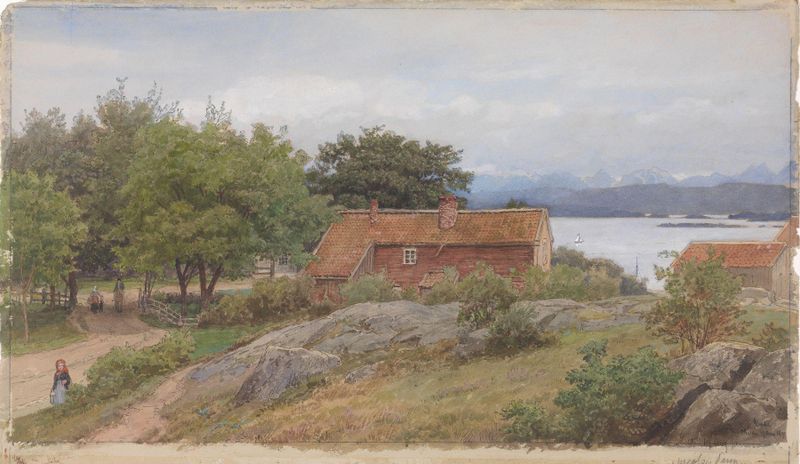
Landskap med bondegård ved Molde
Hans Gude
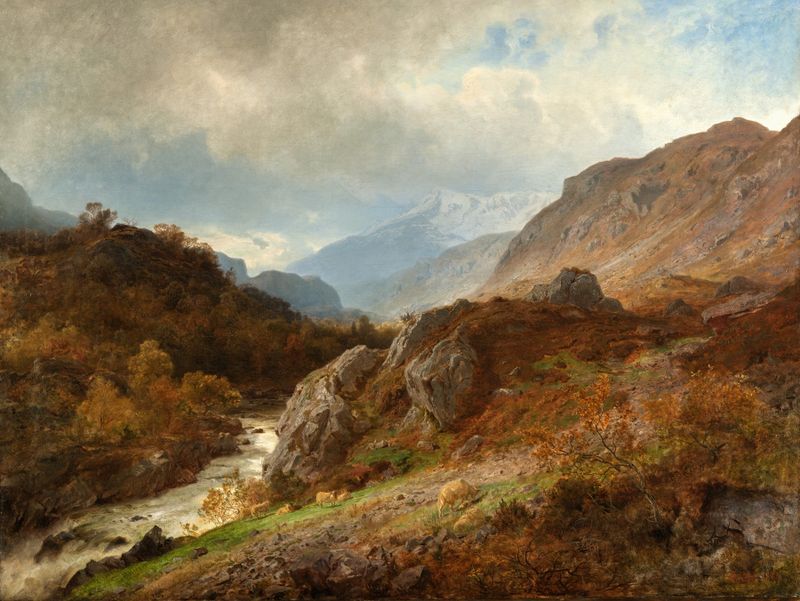
Mountain Landscape
Hans Gude
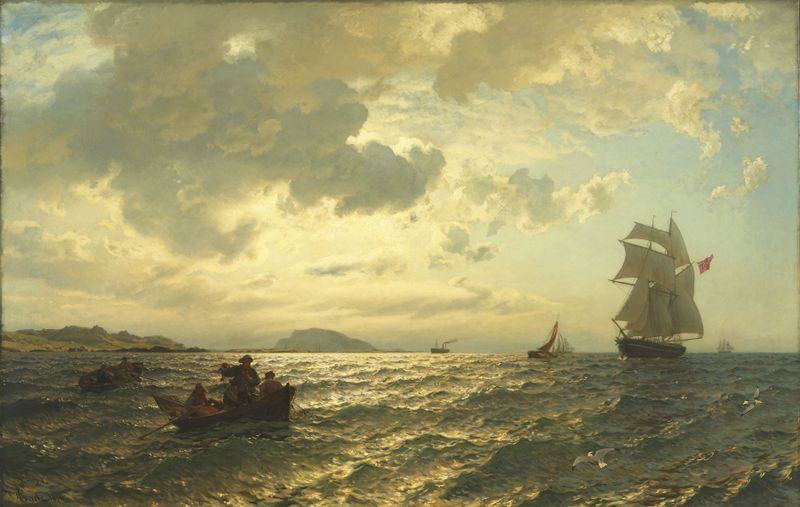
Fresh Breeze on the Norwegian Coast
Hans Gude
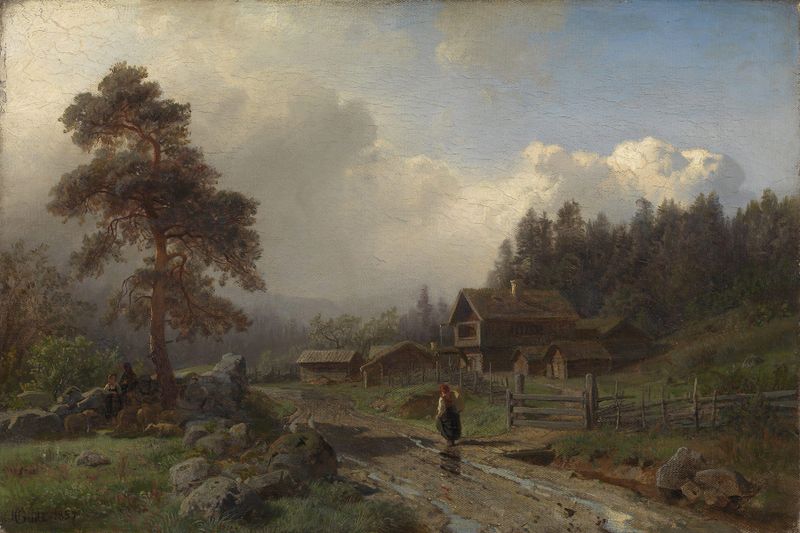
Norwegian Landscape in Rain
Hans Gude
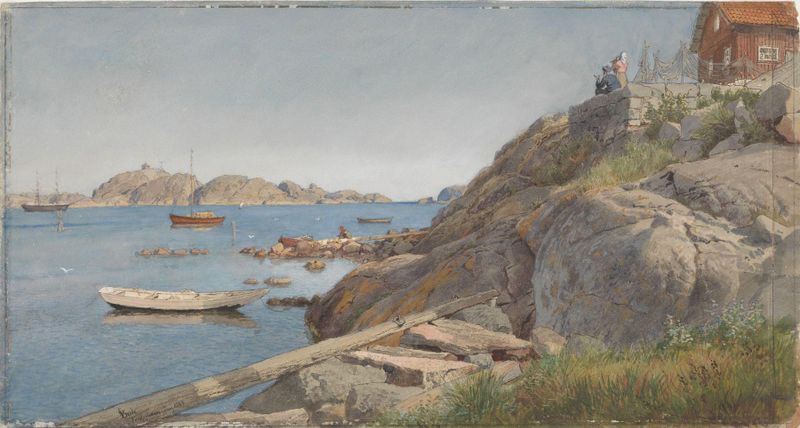
Landscape by Stavern
Hans Gude
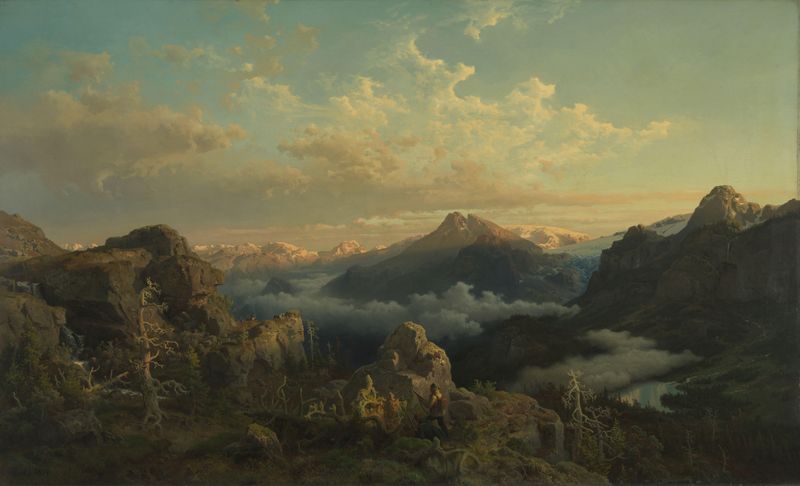
Norwegian Highlands in Sunrise
Hans Gude
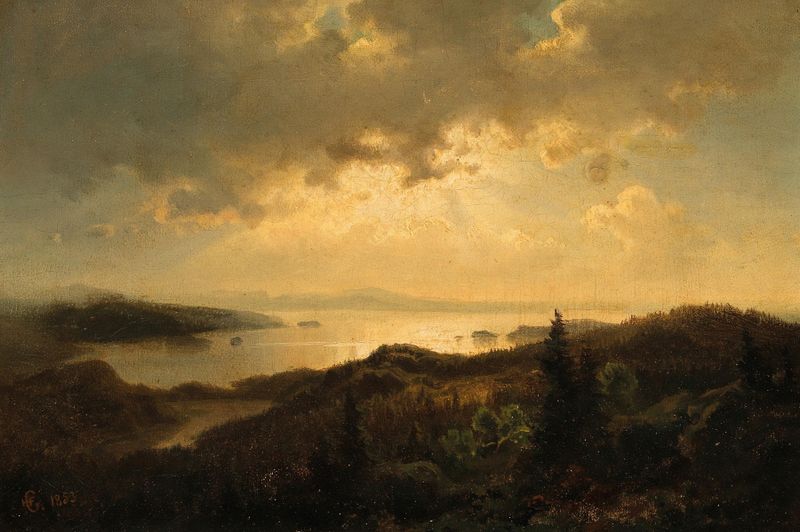
A Scene at Dusk in Norway
Hans Gude





