
The River — History & Facts
Could beauty survive in a century of chaos? In The River, a shadowy veil envelops the landscape, inviting contemplation of nature's enduring grace amidst turmoil. Look to the center of the canvas, where a winding river reflects a dusky sky, its surface shimmering with hints of twilight. The rich, muted palette of greens and blues evokes a melancholic serenity, while the enigmatic brushwork creates an ethereal quality that pulls the viewer into the scene. The darker hues, lurking along the edges, instill an undercurrent of mystery, suggesting depths both seen and unseen. Delve deeper into the painting, and notice how the soft light dances upon the gentle current, illuminating the path that threads through the dense foliage.
The juxtaposition of light and shadow speaks to the dichotomy of hope and despair, as if the river is a lifeline cutting through the encroaching darkness. In the quiet solitude of this landscape, a solitary tree stands resolute, its gnarled branches reaching out, embodying both the fragility and resilience of life against the backdrop of an uncertain world. During the years Ryder painted this work, from 1884 to 1894, he was exploring themes of nature's sublime beauty amidst existential reflection. Known for his symbolic landscapes, Ryder was deeply influenced by the Romantic movement and the turmoil of his time, where industrialization began to encroach upon the wild.
This painting encapsulates his belief in nature's power to reveal deeper truths, serving as a poignant reminder in an era marked by significant societal upheaval.
More Artworks by Albert Pinkham Ryder
Browse all →
The Toilers of the Sea
Albert Pinkham Ryder
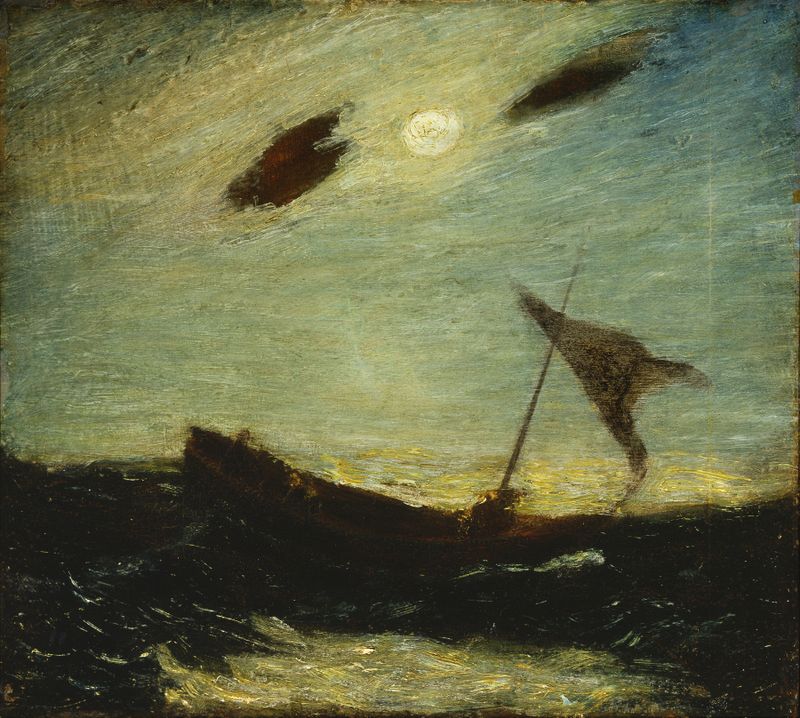
Moonlight
Albert Pinkham Ryder

The Lorelei
Albert Pinkham Ryder

With Sloping Mast And Dipping Prow
Albert Pinkham Ryder

The Temple of the Mind
Albert Pinkham Ryder

Moonlight Marine
Albert Pinkham Ryder

The Lovers’ Boat
Albert Pinkham Ryder

Harvest
Albert Pinkham Ryder

Under a Cloud
Albert Pinkham Ryder
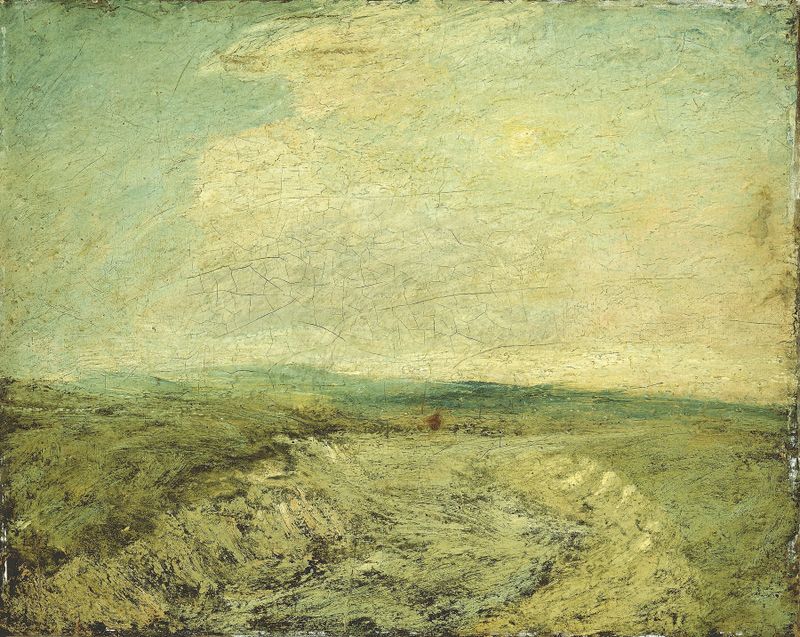
The Essex Canal
Albert Pinkham Ryder





